
Louisiana Car Accidents | New Orleans Office
Has Your Own Insurance Company Stopped Treating You Fairly?
When an insurer delays, undervalues or denies a claim it should be paying, you may have options beyond the claim itself. Here is how these disputes are often evaluated.
By Przemek Lubecki · Published November 21, 2026
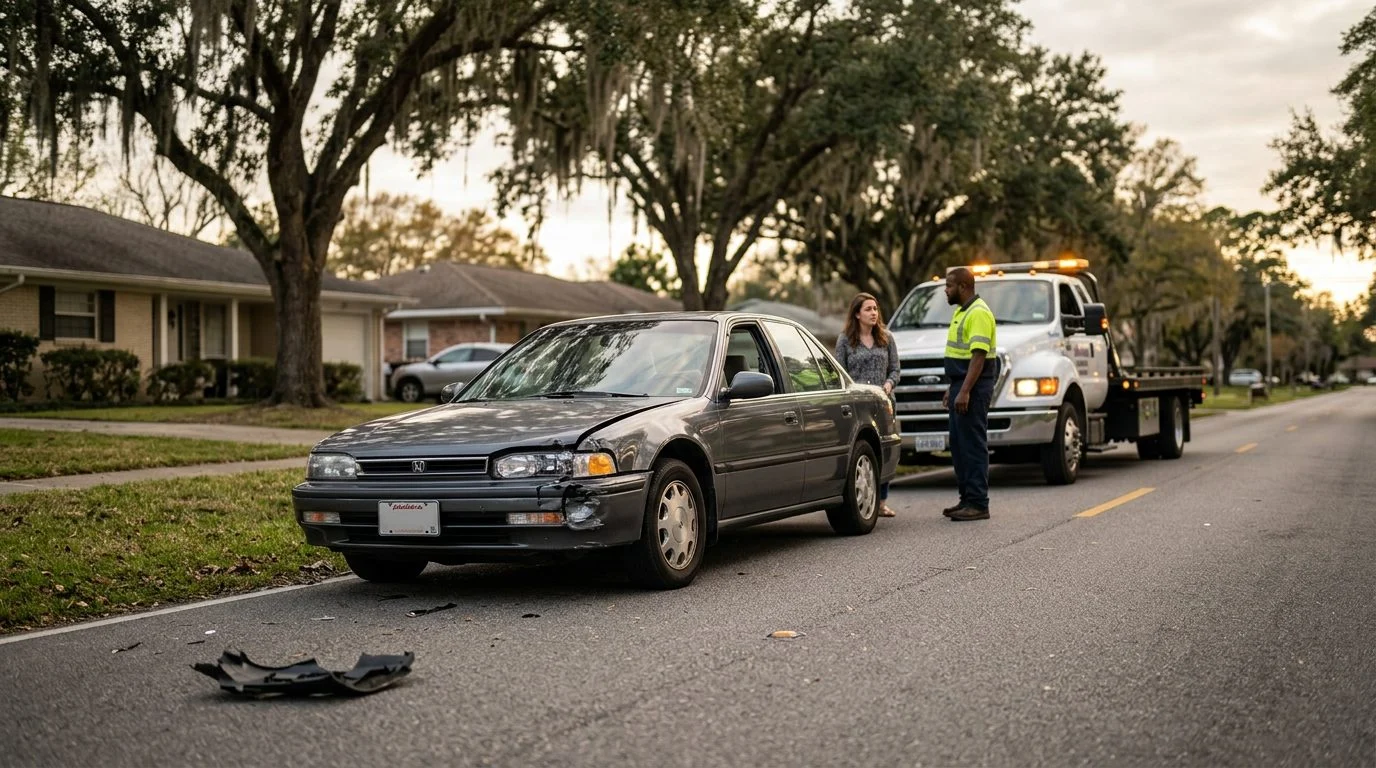
Your own insurance company is supposed to help after a crash. When it goes quiet, offers too little, or says no, you may wonder whether you can sue it. That question is the core of a bad faith claim after a car accident in Louisiana.
It can be possible. Whether that applies depends on the policy, how the insurer handled the claim, and the dates involved. This page explains the rules in plain words, the warning signs, and the steps to take before anything is filed.
The Short Answer: Can You Sue Your Own Insurer for Bad Faith in Louisiana?
The useful question is how the insurer handled your claim from start to finish.
An insurer can disagree with you about fault, injuries, or what your claim is worth. What matters is whether the company investigated, explained its decisions in writing, and kept the claim moving.
Your policy matters too. Coverage depends on the words in the policy and the coverage you bought. A claim the policy excludes is a different problem from a covered claim that was handled poorly. The sections below cover what Louisiana law expects, where these disputes come up, and what to do first.
If your own insurer has delayed, reduced, or denied your claim after a crash, you may be weighing whether to keep waiting or to take formal steps. Talk it through with our team — the first consultation is free, confidential, and carries no obligation.

What Louisiana Law Requires of Your Insurance Company
Every claim has its own facts, so your situation is best reviewed individually.
Some rules are clear. Louisiana requires automobile liability policies to offer uninsured motorist coverage unless the named insured rejects it, selects lower limits, or selects economic-only coverage (La. R.S. 22:1295). Economic-only coverage excludes noneconomic loss, such as pain and suffering (La. R.S. 22:1295).
For an injured occupant, the uninsured motorist coverage on that vehicle is primary (La. R.S. 22:1295). That means it responds first. Your declarations page shows the coverages and limits you selected.
Where Bad Faith Disputes Usually Come Up After a Car Accident
These disputes most often involve your own policy. Three types of coverage come up again and again.
Uninsured and underinsured motorist claims come first. If the at-fault driver had no insurance or too little, your own motorist coverage may be the source of payment. Louisiana sets two years to bring an action under uninsured motorist provisions, counted from the accident (La. R.S. 9:5629).
Medical payments and collision claims come next. Delays on these claims can leave medical bills unpaid or leave you without a working car. Ask for each decision in writing.
A claim against the at-fault driver’s liability insurer follows different rules. Louisiana generally does not allow a direct action against that insurer, except in listed situations, such as when the insured is insolvent (La. R.S. 22:1269). Know which insurer you’re dealing with before you act.
Warning Signs Your Insurer May Be Handling Your Claim Unreasonably
Long silence, repeated requests, and unexplained numbers are the patterns to watch. One slow week may have an innocent cause, so the dates and the pattern matter more than any single event.
Watch for these signs:
- No response for a long stretch after you submit proof of loss.
- Requests for papers you already sent.
- A denial or reduction with no written reason.
- Treating doctors’ records or bills that the file never addresses.
- A settlement offer below your documented bills, made before treatment ends or before you know how serious your injuries are.
Medical bills deserve a close look. If a health insurer or Medicare paid a contracted provider, your recovery of those expenses is limited to the amount actually paid plus your cost share, not the amount billed (La. R.S. 9:2800.27). That rule can explain why a low offer may not match the bill. Medicare generally pays second when liability or no-fault insurance is involved (CMS Medicare Secondary Payer overview).
Documents and Records to Gather Before You Act
Start with your policy, your claim number, and a dated record of every contact with the insurer.
Gather these items:
- Your policy and declarations page.
- The claim number and the adjuster’s name and contact information.
- Every letter, email, and claim portal message, with dates.
- A written log of phone calls: date, time, the person you spoke with, and what was said.
- The crash report, medical records, bills, and wage loss papers.
Crash reports are confidential. They are available only to the parties to the crash, parents or guardians of a minor who is a party, insurers (or an insurance support organization under contract to provide claims and underwriting) of a party, any healthcare provider or their agent who treated a party, succession representatives of those parties or their attorneys, and news-gathering organizations that request documents related to a specific crash (La. R.S. 32:398). Upon request, they must be made available within seven working days after the crash investigation is complete (La. R.S. 32:398).
If you gave a recorded or written statement, you can ask for a true copy. The person who took it must furnish one within twenty days after your written demand (La. R.S. 13:3732). Keep copies of everything, and send important requests in writing.
Steps to Protect Your Claim Before Filing Anything
Put your demand in writing, and slow down before you sign anything.
A written demand should state the claim, the amount you are seeking, and a reasonable deadline for a response. That record can matter later. Don’t sign a broad release until you know the full course of your treatment. Know what you’re agreeing to before you give any recorded statement.
Deadlines are the other clock. Louisiana sets two years for delictual (tort) actions, running from the day the injury or damage is sustained (La. Civ. Code art. 3493.1). Filing suit in a competent court and proper venue, or serving process within the prescriptive period, interrupts that period, and the interruption continues as long as the suit is pending (La. Civ. Code art. 3463). But interruption is considered never to have occurred if the plaintiff abandons the suit, voluntarily dismisses the suit at any time either before the defendant has made any appearance of record or thereafter, or fails to prosecute the suit at the trial. The dismissal of a suit pursuant to a compromise does not constitute a voluntary dismissal.
Acting early keeps your options open. A consultation can review your file and timeline with you.
Not sure what your next step is?
Talk it through with our team — the first consultation is free, confidential, and carries no obligation.
How Injury Damages and Insurance Disputes Fit Together
The injury claim and the insurer’s conduct are two separate questions. The injury claim asks what the crash caused. The insurer question asks how the company responded.
Fault is part of the injury claim. For accidents and injuries on or after January 1, 2026, a person found 51% or more at fault recovers nothing. A person found less than 51% at fault recovers damages reduced by their share of fault (La. Civ. Code art. 2323).
Settlements can also be tricky. A settlement of a property damage claim under a vehicle liability policy is not treated as an admission of liability on other claims from the same accident (La. R.S. 22:1290). Keep that in mind when you review any release.
Can I sue my own car insurance company in Louisiana?
It can be possible in some cases. The policy, the insurer’s handling of the claim, and the dates all matter.
How long do I have to file an uninsured motorist claim?
Louisiana sets two years from the accident for actions under uninsured motorist provisions (La. R.S. 9:5629).
Can I get a copy of my crash report?
Parties to the crash, their insurers, and their attorneys can request it. It must be made available within seven working days after the investigation is complete.
What if my insurer’s offer is less than my medical bills?
Ask for the reason in writing and keep the offer. If a health insurer or Medicare paid the bills to a contracted (in-network or participating) provider, recovery is limited to the amount actually paid plus cost share (La. R.S. 9:2800.27).
Talk Through Your Insurance Dispute With Przemek Lubecki
If your own insurer has delayed, reduced, or denied your claim after a crash, you may be weighing whether to keep waiting or to take formal steps. That is a hard place to stand alone.
Przemek Lubecki is the responsible lawyer for this page. American Trial Lawyer’s office is in New Orleans. You can request a free case evaluation or call 855-LUBECKI.
The first consultation is free, confidential, and without obligation to continue. If the firm takes a case, you may owe case costs and expenses in addition to any fee. The firm may associate or refer a case to other law firms, and any such arrangement will be disclosed to you.
What We Focus On in Insurance Disputes
Full File Review
We look closely at your policy, the claim file, and the timeline of how your insurer has responded.
Protecting Your Position
We pay close attention to recorded statements, releases and settlement offers, since early decisions can affect later options.
Plain-Language Answers
We explain what the policy says and what the insurer's conduct may mean, without legal jargon.
Respect for Your Recovery
Serious injuries and the loss of a loved one take a toll. We aim to keep you informed at every step.
Free First Consultation
The first consultation is free, confidential and carries no obligation to continue.
Possible Referrals
American Trial Lawyer may associate or refer a case to other law firms where that is in the client's interest.
Before You Sign Anything
Insurers may ask for recorded statements, medical authorizations or a signed release soon after a crash. Talk with a lawyer before you agree to a settlement or sign documents you do not fully understand.
Common Insurer Conduct We Review
Delay
Long gaps without a decision, repeated requests for the same paperwork, or claims that stall without explanation.
Low Offers
Settlement figures that do not reflect medical care, lost income or the full impact of the crash on your life.
Unexplained Denials
A denial that does not clearly state the policy language or facts the insurer relied on.
Pressure Tactics
Calls or letters that push you to accept quickly, or that make you feel your claim is not worth pursuing.
Talk with Przemek Lubecki about your insurance claim. Office in New Orleans.
Related practice areas
- Car Accident Claims in Orleans Parish
- Car Accident on the Lake Pontchartrain Causeway
- Own or Other Driver’s Insurer for a Louisiana Car Claim?