
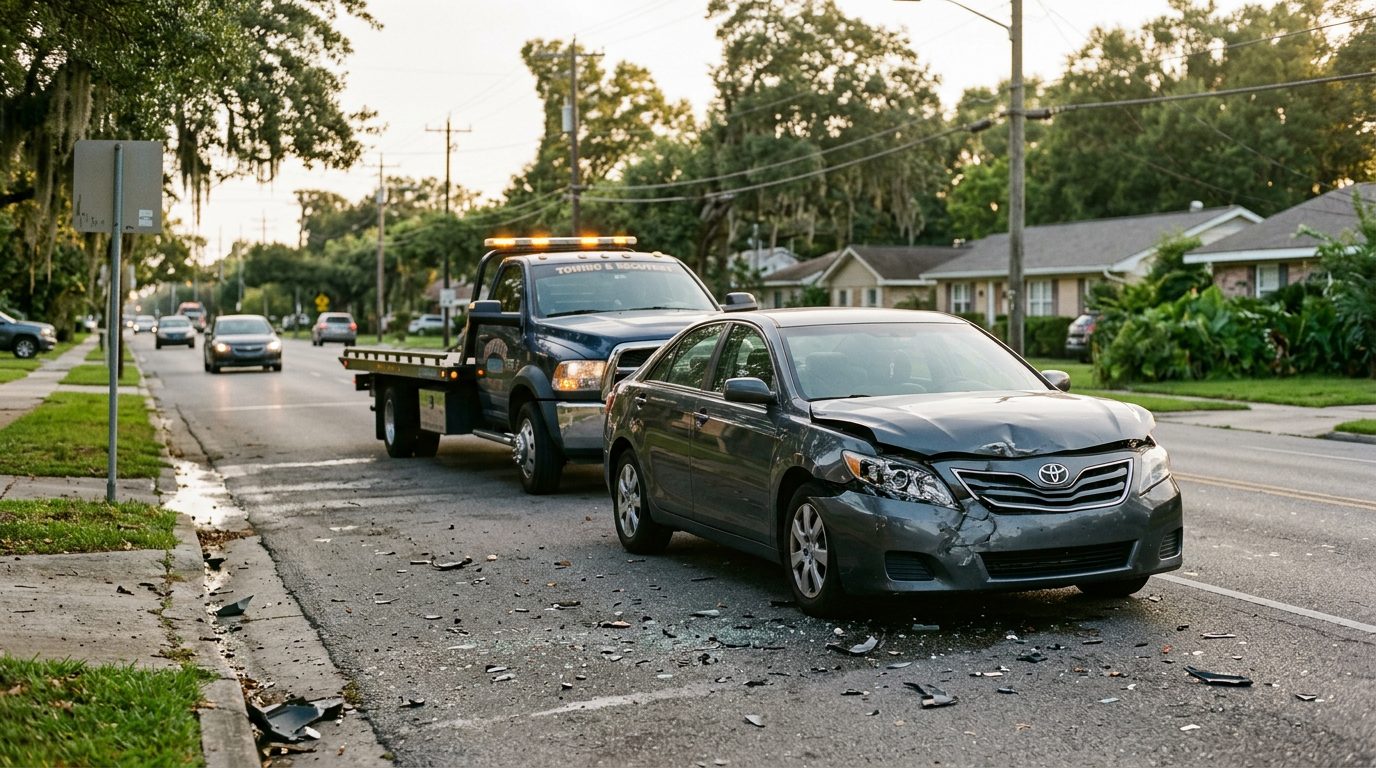
Car and Truck Accidents | New Orleans, Louisiana
Hurt by a Red-Light Runner? Learn Where You Stand in New Orleans
Przemek Lubecki and our team at American Trial Lawyer focus on people injured in crashes across Orleans Parish and Louisiana, and on families facing a loss.
By Przemek Lubecki · Published November 22, 2026
If another driver ran a red light and you were hurt, you probably want to know if you can hold them responsible. Maybe you’re asking because a family member is still recovering.
After a crash, many people wonder if they have a claim. Louisiana law lets a person hurt by another’s fault seek damages.
Short Answer: Can You Sue a Driver Who Ran a Red Light?
Yes, a person hurt in a crash caused by a driver who ran a red light may be able to bring a claim for damages under Louisiana law. A claim is not automatic. It turns on how the crash happened, what injuries resulted, and what evidence exists.
Many people asking this are helping someone else. A parent, spouse, or adult child may be the one who was hurt, and the same basic questions apply.
This page offers general information about Louisiana law and the facts that usually matter most. Your own crash will have its own details.
If a red light crash has left you or someone you love hurt, you don't have to work out the next steps alone. Our team is glad to talk it through with you. Talk it through with our team — the first consultation is free, confidential, and carries no obligation.
How Louisiana Negligence Law Applies to a Red-Light Crash
Louisiana makes a person pay for damage their fault causes. Under Louisiana Civil Code article 2315, whoever’s fault caused the damage must repair it. Carelessness counts too. Civil Code article 2316 makes a person responsible for the damage he occasions not merely by his act, but by his negligence, his imprudence, or his want of skill.
Was there a duty to drive with reasonable care? Was that duty broken? Did the break cause the crash and the injury? What losses followed? Evidence of that act can be strong proof of fault.
Louisiana also uses a comparative fault rule, which means shared fault (each person’s percentage). Under the current text of Civil Code article 2323, an injured person who is 51% or more at fault cannot recover damages. If the injured person is less than 51% at fault, damages are reduced by that share. This current text took effect January 1, 2026, so the crash date matters.
The other driver may argue you also contributed to the crash. Fault can be divided among several people. Those questions are decided on evidence, not on assumptions.
Proving the Red Light: Evidence and Camera Tickets
The strongest proof usually combines the police crash report with photos, video, and witness accounts. Louisiana law helps here. Under La. R.S. 32:398, crash reports are made available only to the parties, their parents or guardians if a party is a minor, their insurers, their attorneys, and certain others, upon request and within seven working days after the crash investigation is complete. The investigating agency also provides crash photographs and video to any interested person on request, for a reasonable fee.
Other proof to gather:
- Photos of the intersection, the signal, and vehicle damage
- Dashcam or nearby business video
- Traffic camera footage, if any exists
- Names and phone numbers of witnesses
- Your own notes written soon after the crash
Some video is recorded over quickly, so early requests help.
A red light camera ticket or traffic citation is a separate matter. It moves through traffic procedures. A civil claim asks who owes compensation for your injuries.
Who May Be Responsible Besides the Driver
Responsibility can reach beyond the driver in some crashes. Under Civil Code article 2320, masters and employers answer for damage caused by their workers while those workers are doing the work they were employed to do, but responsibility only attaches when the master or employer might have prevented the act which caused the damage and did not do it. That can matter when a work truck or company vehicle runs a light on the job.
A government body follows different rules. A claim over a broken signal can follow these notice rules.
Insurance matters too. Under La. R.S. 22:1295, Louisiana auto policies must include uninsured motorist coverage unless the insured rejects it or selects lower limits or economic-only coverage. That coverage can matter if the at-fault driver has no insurance or too little.
The firm may associate or refer a case to other law firms where that is appropriate.
Time Limits: Why Early Action Matters
For most injury claims from a red-light crash, Louisiana gives two years from the date of injury to file suit. Under Civil Code article 3493.1, fault-based claims have a two-year filing deadline, called prescription, that starts the day the injury is sustained.
Claims under uninsured motorist provisions have their own clock. Under La. R.S. 9:5629, those actions are prescribed by two years from the date of the accident.
An insurance claim is not a lawsuit. Under Civil Code article 3462, prescription is interrupted when the action is commenced in a court of competent jurisdiction and venue. So talking with an adjuster does not, by itself, stop the clock. Writing down the crash date and keeping copies of every bill now can help later.
Injuries, Families, and Wrongful Death After a Red-Light Crash
A claim may address losses such as medical bills, lost income, and how an injury changes daily life. Every case is different, so no one can say in advance what a claim is worth.
Some injuries are not fully understood right away. A brain injury may take time to diagnose and describe. Keep every medical record and follow the treatment plan your doctors give you. Our team handles brain injury matters.
When a red-light crash causes a death, Louisiana law lets certain family members bring a wrongful death claim. Under Civil Code article 2315.2, the statute names who may sue: a surviving spouse and children first; the surviving father and mother only if the deceased left no spouse or child surviving, and a father or mother who abandoned the deceased during his minority is deemed not to have survived him; the surviving brothers and sisters only if the deceased left no spouse, child, or parent surviving; and the surviving grandparents only if the deceased left no spouse, child, parent, or sibling surviving. The filing period is generally one year from the death or two years from the injury, whichever is longer. The firm handles wrongful death cases. Losing someone is hard, and the legal questions can add stress.
Not sure what your next step is?
Talk it through with our team — the first consultation is free, confidential, and carries no obligation.
What to Do Next and How to Talk With Przemek Lubecki
Start with your health, then protect your proof. Keep these steps simple:
- Get medical care and keep every record.
- Write down the crash report number and witness names.
- Save photos, texts, and notes while memories are fresh.
- Keep bills, pay records, and notes about missed work.
Przemek Lubecki is the responsible lawyer for this page. American Trial Lawyer, LLC represents people hurt in truck, commercial vehicle, and car crashes, and families in wrongful death cases, across Orleans Parish, the New Orleans metro, and Louisiana. The office is in New Orleans.
Frequently asked questions
Can you sue someone for running a red light?
Yes, a person hurt in a crash may be able to bring a claim. Whether it succeeds depends on how the crash happened.
How long do you have to file a claim in Louisiana?
For most injury claims from a crash, the deadline is generally two years from the date of injury (La. Civ. Code art. 3493.1).
Does a red light ticket decide a civil claim?
If a driver ran a red light and you are now dealing with injuries or a loss, you don’t have to work out the next steps alone. Call 855-LUBECKI (Office in New Orleans) or request a free case evaluation. The first consultation is free, confidential, and without obligation to continue.
Steps to Take After a Red-Light Crash
Get medical care
Your health comes first. Get checked by a medical provider even if your injuries seem minor, and follow the treatment plan you are given.
Keep your records
Save the police report number, photos of the scene and vehicles, medical bills, and notes about your symptoms and missed work.
Talk with a trial lawyer
Before speaking at length with an insurance adjuster, consider a confidential conversation with a lawyer who can review what happened.
How We Approach a Red-Light Case
Evidence from the crash
We look closely at police reports, traffic camera footage, witness accounts and vehicle damage.
Your injuries and recovery
We take the time to understand your medical care, your daily limits and the impact on your family.
Families in wrongful death cases
When a crash has taken a life, we work with surviving family members with patience and care.
Clear, plain-language updates
You will hear from us in plain language about where your case stands and what the next steps are.
Important: Referrals to Other Firms
American Trial Lawyer may associate with or refer a case to other law firms. Any co-counsel or referring firm is a separate firm and is not part of American Trial Lawyer, LLC. Your case may be handled with or by another firm, and we will explain that to you before anything is decided.