
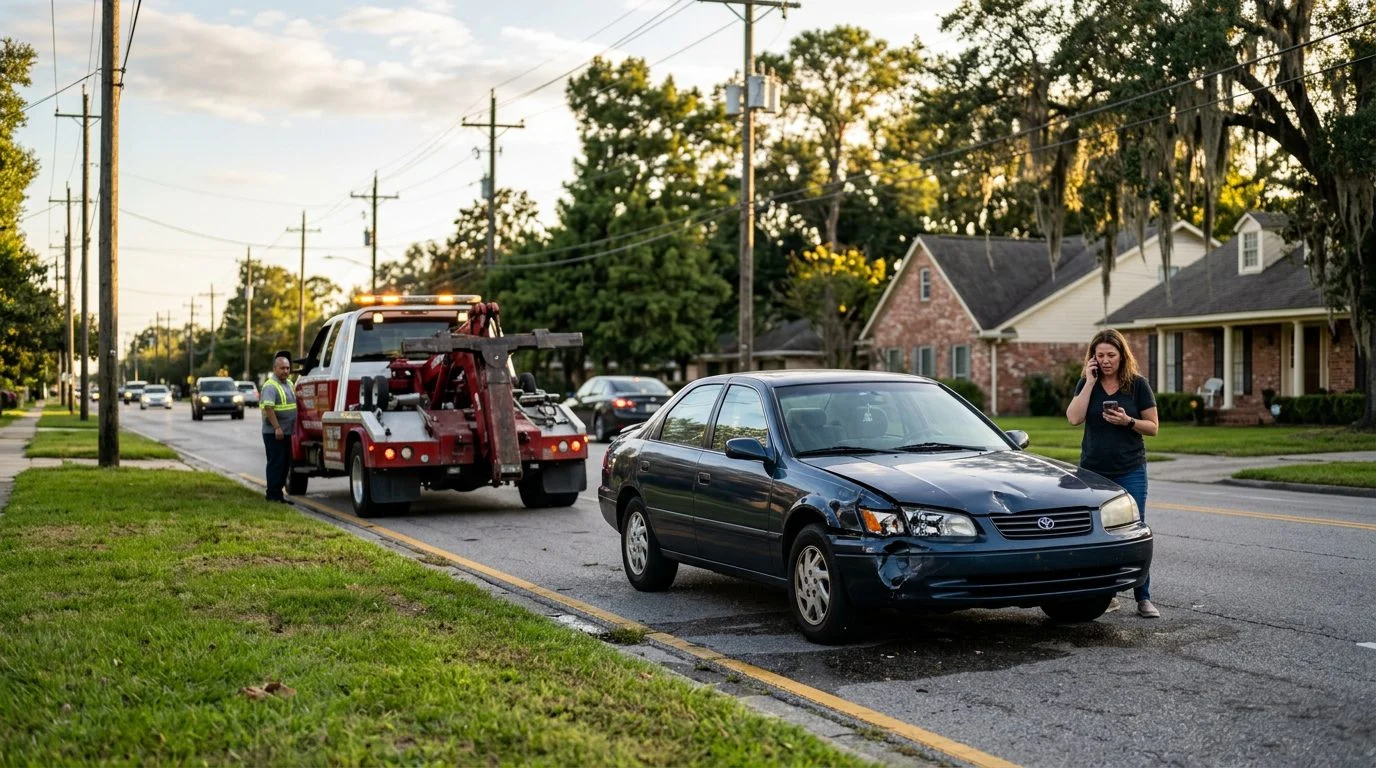
Car Accidents | New Orleans, Louisiana
Received a Quick Settlement Offer After Your Car Accident?
An offer that arrives days after a crash can feel like relief. Before you respond, have a trial lawyer look at it alongside your injuries and your losses.
By Przemek Lubecki · Published November 14, 2026
A letter or phone call from an insurance adjuster can come soon after a crash, offering money quickly. If you’re hurt and weighing that offer, you’re probably wondering whether it’s enough. A quick settlement offer after a car accident in Louisiana isn’t automatically wrong, but it may be made before the full effects of the crash are known.
The short answer: a quick offer is a question, not a verdict
An early offer is a number to check, not a decision you must make on the spot. It may be fair in some cases and too low in others. The only way to know is to test it against your full situation.
Przemek Lubecki is the responsible lawyer for this page. The firm’s office is in New Orleans. The firm handles car accident claims for people in Orleans Parish, the New Orleans metro area, and across Louisiana. You may be reading this while still in pain, while sorting out bills, or on behalf of a family member. You don’t need every answer yet. The sections below cover the factors that matter before you respond.
If an offer in front of you has you wondering whether it accounts for your injuries, you don't have to work through that alone. We're glad to talk it through with you. Talk it through with our team — the first consultation is free, confidential, and carries no obligation.
Why insurers often make early offers
Early offers often arrive before treatment is finished and before the full cost of care is known. An injury can still change when the offer lands. A number set early may not reflect later symptoms, new appointments, or time away from work.
Watch for a few common pressure points. These include a short window to answer, a request for a recorded statement, and a request for medical records before you’ve finished treatment. A recorded statement is something you can discuss before you agree to give one.
If you do give a recorded statement, you have a right to a copy. A person who takes a recorded statement from an injured person, or has possession of it, must furnish a true and complete copy within twenty days after written demand (La. R.S. 13:3732). Asking for that copy is a simple step to take early.
What shapes the value of a car accident claim
The value of a car accident claim depends on your injuries, your losses, and the facts of the crash. It does not come from a simple formula. Several factors usually carry weight.
Injury severity comes first. The type of injury, and how long treatment is expected to last as your medical providers describe it, shapes the claim. Lost wages come next. Time missed from work and any reduced ability to earn can count. Self-employed people often face extra questions about income.
Pain and suffering is also part of the picture. It’s hard to measure with a bill alone. Louisiana law leaves much of the assessment of damages in cases of offenses, quasi offenses, and quasi contracts to the judge or jury (La. Civ. Code art. 2324.1).
Finally, check the other driver’s insurance coverage early. Available coverage can limit what can be collected, even when fault is clear. Ask about it before you decide anything.
How Louisiana comparative fault can change the picture
Under Louisiana’s comparative fault rule, your recovery is reduced by your own share of fault. For accidents on or after January 1, 2026, a person found 51% or more at fault recovers no damages. The current rule comes from La. Civ. Code art. 2323.
An insurer may argue that you share the blame. That argument can shape an early offer. An adjuster raising fault doesn’t make the point correct. Think carefully before describing how the crash happened on a recorded line, and know how your words could be used.
Why delayed symptoms and future care can be missed
An offer made before your symptoms are fully checked may leave out injuries that appear later. Neck, back, and head symptoms can show up hours or days after a crash. Keep notes on any new pain, numbness, headaches, or sleep problems. For more on timing and documentation, read this guide to delayed neck and back pain after a car accident.
Future care is another common gap. Under La. Civ. Code art. 2315, damages for future medical treatment are not included unless that treatment is directly related to a manifest physical or mental injury or disease. Your doctors’ notes help show that connection.
Medical bills work differently too. When a health insurer or Medicare paid a contracted provider, recovery for those bills is limited to the amount actually paid. It also includes your cost-sharing, not the billed amount (La. R.S. 9:2800.27). Keep every record, bill, and appointment note.
What signing a release means
A release is a document that usually closes out further claims over the accident once you sign it. Read it closely before you sign anything. Read every page, not just the payment amount.
Ask what the release covers. Ask whether it includes future medical costs. Ask whether it closes claims against other parties, such as an employer or another company connected to the vehicle or trip. You can ask for time to review the document.
A check or a quick payment is not a reason to sign in a hurry. Get your questions answered first, and take the time you need.
This page covers car accident claims. Our firm may associate or refer a case to other law firms when that makes sense for the client.
Not sure what your next step is?
Talk it through with our team — the first consultation is free, confidential, and carries no obligation.
Louisiana’s filing deadline and why it matters now
Louisiana’s general deadline for negligence claims, called delictual actions, is two years from the day of injury. Under La. Civ. Code art. 3493.1, the period runs from the day the injury or damage is sustained. The article has one exception: prescription does not run against minors or interdicts in actions involving permanent disability brought under the Louisiana Products Liability Act or state law governing product liability actions in effect at the time of the injury or damage. Confirm how it applies to your accident.
Louisiana’s rules on when prescription is interrupted are set out in La. Civ. Code art. 3462. Under La. Civ. Code art. 3462, unless otherwise expressly provided by legislation, prescription is interrupted when the owner commences action against the possessor, or when the obligee commences action against the obligor, in a court of competent jurisdiction and venue. Waiting while you decide can have real consequences.
Self-employed drivers and business owners may face extra income questions. This guide to lost wages for self-employed car accident victims addresses those questions.
Talk through your offer with the New Orleans office
If an offer is on the table and you’re unsure whether it fits your injuries, a conversation can help you sort out the next steps. Your questions about the offer, your deadline, and your records are all worth raising.
Some crashes involve a driver who was impaired. Louisiana law allows exemplary damages upon proof that an intoxicated driver acted with wanton or reckless disregard for others’ safety and that intoxication was a cause of the injuries (La. Civ. Code art. 2315.4). If that applies to your facts, this page on drunk driver car accident claims explains more.
Quick answers
Should I accept a quick settlement offer after a car accident in Louisiana?
Not before you know what it covers. Compare it with your medical care, lost income, and any release language.
How long do I have to file a car accident claim in Louisiana?
The general period is two years from the day of injury, under article 3493.1, with exceptions (La. Civ. Code art. 3493.1).
Article 3462 ties full interruption to filing an action in a court of competent jurisdiction and venue; if the action is filed in an incompetent court or improper venue, prescription is interrupted only as to a defendant served by process within the prescriptive period.
Can I get a copy of my recorded statement?
Yes. The person who took it must give you a true copy within twenty days after your written demand.
If an offer in front of you has you wondering whether it accounts for your injuries, you don’t have to work through that alone. Request a free case evaluation or call 855-LUBECKI. The 855 number is toll-free, and the office is in New Orleans. The initial consultation is free, confidential, and without obligation to continue.
What to Check Before You Respond
Your full medical picture
Injuries from a crash can appear or worsen over time. An offer made early may not reflect care you still need.
Lost income and future needs
Time missed from work, reduced earning ability and future treatment all belong in the review.
The release language
Read every word of any release.
Losses beyond the bills
Pain, daily limitations and the effect on your family are real losses, even though they are harder to total.
Read Before You Sign
Ask a lawyer to review the paperwork before you accept any payment. This firm may associate or refer a case to other law firms.
Questions to Ask Yourself
Is my treatment finished?
If you are still seeing doctors, the true cost of your injuries may not be known yet.
Have I counted every lost dollar?
Include wages, overtime, and time spent on appointments and recovery.
Does the offer cover future care?
A payment today may not account for therapy, surgery or medication later.
What am I giving up?
Know exactly what the release says before you agree to it.