
Car Accidents | New Orleans, Louisiana
Worried Your Insurance Rates Will Rise After a Car Accident?
Przemek Lubecki and the team at American Trial Lawyer help people in New Orleans and across Louisiana understand how a crash claim can affect their premiums, and what to ask their insurer.
By Przemek Lubecki · Published November 17, 2026
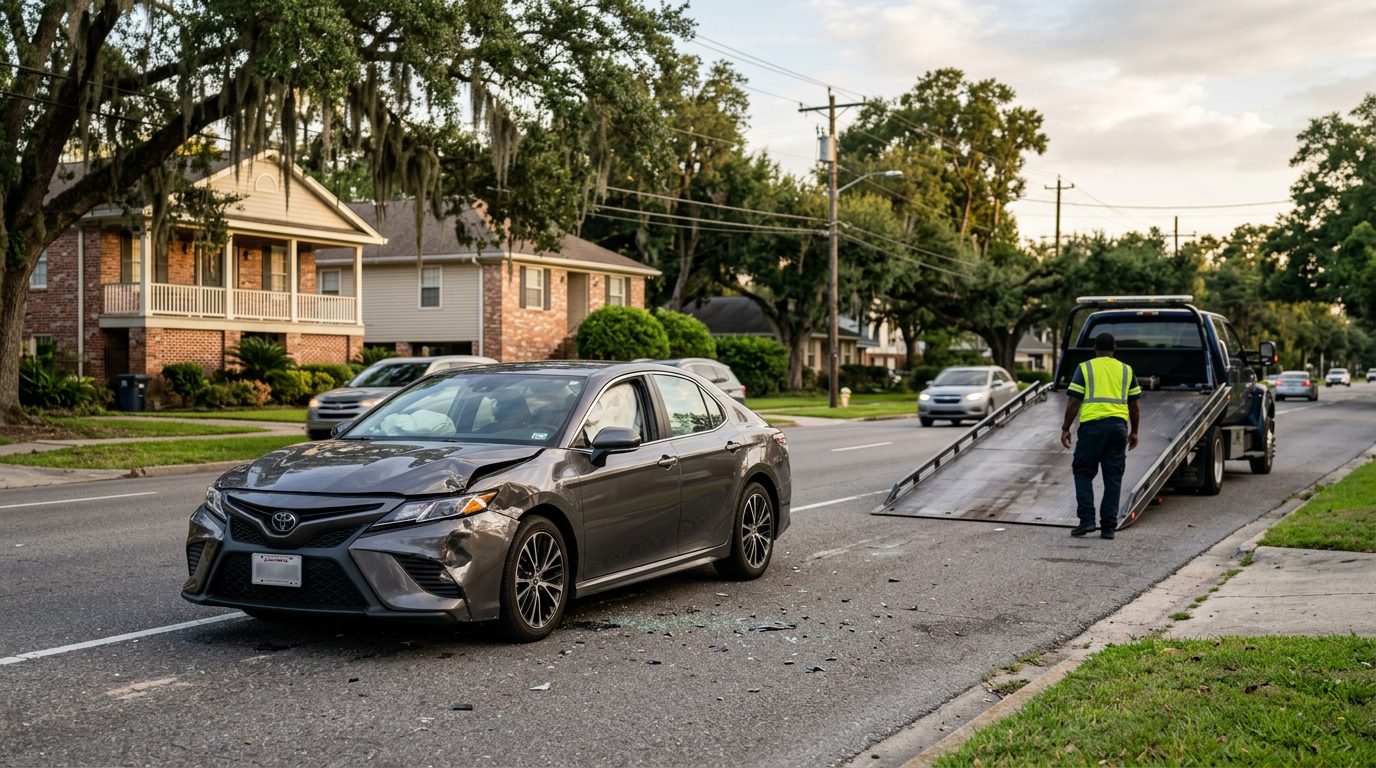
If you were hurt or your car was damaged, you may wonder whether insurance rates after a car accident claim in Louisiana will go up. The short answer is that it depends on the facts of the crash and on your insurer’s own rules.
Several things shape the result: who was at fault, what appears on your claim history, what coverage you carry, and how your insurer reviews your policy at renewal. Louisiana law shapes who is responsible for the crash.
How Fault and Claim History Affect Your Car Insurance Premium
Fault and claim history are common factors insurers review at renewal. Each insurer weighs them under its own rules, so the same crash can be rated differently by different companies.
Under Louisiana law, a person who causes damage through negligence must repair it. La. Civ. Code art. 2315 says every act that causes damage to another obliges the person by whose fault it happened to repair it. La. Civ. Code art. 2316 adds that a person is responsible for damage caused by negligence, imprudence or want of skill.
The average cost of car insurance in Louisiana varies by insurer, driving record, location and coverage. A statewide average does not show what your own bill will be. Start with your policy terms and your renewal notice.
Before a renewal arrives, it helps to know what is listed on your claim history. The factors in this section are general. Your insurer’s rating decisions control your actual premium.
If a recent crash has left you with a higher renewal notice and questions about your coverage, you don't have to sort it out alone. Talk it through with our team — the first consultation is free, confidential, and carries no obligation.
How Insurers Treat Non-Fault Drivers Differently From At-Fault Drivers
A driver found at fault is generally more likely to see a premium increase at renewal than a driver who was struck and not at fault. The insurer decides how each claim is rated.
Even a non-fault claim may still appear in your claim history. Ask your insurer how it records a claim where you were not at fault, and ask for that answer in writing.
Request your rating details and any written notice of a rate change. A rate increase is not a cancellation, so read the renewal notice closely to see exactly what changed. One common mistake is to assume a renewal change is final without asking what it was based on.
Property damage payments follow their own rule. Under La. R.S. 22:1290, a settlement made under a vehicle liability policy for damage to or destruction of property owned by another person is not treated as an admission of liability by the insured, or as the insurer’s recognition of such liability, on any other claim from the same accident.
Liability Coverage, Full Coverage, and Uninsured Motorist Protection
Liability coverage pays for harm you cause to others. Full coverage usually adds collision and comprehensive coverage for your own vehicle. The premium gap is set by your insurer, so ask for it in writing rather than assuming it.
Uninsured and underinsured motorist coverage matters when the other driver has no insurance or not enough. Under La. R.S. 22:1295, this coverage protects insured persons who are legally entitled to recover nonpunitive damages from owners or operators of uninsured or underinsured motor vehicles because of bodily injury or death.
The same statute lets a named insured reject this coverage, choose lower limits, or select economic-only coverage. Economic-only coverage may exclude noneconomic loss, such as pain, suffering and mental anguish. Whether uninsured motorist coverage applies to your injuries depends on the facts of your crash and the insurance policies involved.
Changing coverage after a crash can affect both protection and premium. Review the full policy before you make any change.
When Fault Is Unclear in a Multi-Car Accident
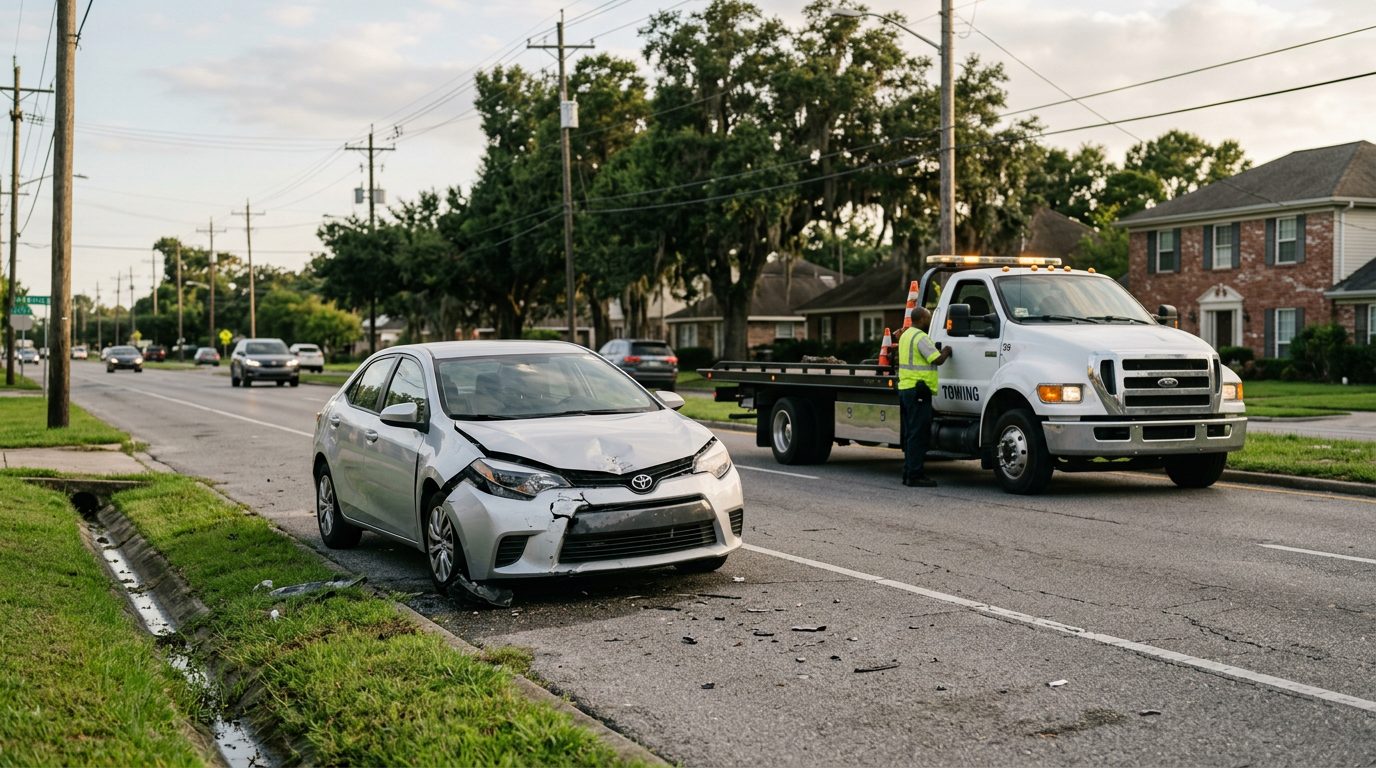
When several vehicles are involved, fault may be disputed. The insurer’s fault finding can take time.
Louisiana law looks at everyone who contributed. Under La. Civ. Code art. 2323, fault is determined for all persons causing or contributing to an injury, whether or not they are a party to the action, even if their identity is not known or reasonably ascertainable.
Under Louisiana’s modified comparative fault rules, a claimant found 51 percent or more at fault cannot recover damages, subject to exceptions the statute states separately, including for intentional tortfeasors. A person found less than 51 percent at fault has damages reduced in proportion to that fault (La. Civ. Code art. 2323), except that where the injury results partly from the person’s own negligence and partly from the fault of an intentional tortfeasor, the claim is not reduced. This is modified comparative fault, a shared-fault rule.
Keep records. Under La. R.S. 32:398, crash reports are confidential. Under La. R.S. 32:398, the reports are available only to the parties to the crash, parents or guardians of a minor party, insurers of a party or an insurance support organization under contract to provide claims and underwriting, healthcare providers who treated a party, succession representatives and attorneys of the parties, and news organizations requesting a specific crash; upon request, they are made available within seven working days after the investigation is complete. Keep dated notes of every call and every written decision from your insurer.
What to Say and What to Avoid When Speaking With Your Insurer
Stick to facts you know, and ask for a copy of any statement you give. Under La. R.S. 13:3732, a person who takes a written, recorded or transcribed statement from an injured person must give that person a true and complete copy, and anyone holding the statement must provide a copy to the person who made it, or his personal representative, within twenty days after written demand.
A statement is not usable in a related civil action if the person holding it refused, on request, to provide a copy.
Avoid guessing about speed, fault or injuries. Don’t sign a document you have not read. It’s reasonable to ask for time to review your policy and claim papers before a detailed statement.
Your injury claim and your policy questions are separate matters. Keep notes on each one. Questions about your injury or your coverage can be discussed with a lawyer before you respond.
Review Your Policy and Your Claim With Our Team
Our team can help you read your renewal notice, your coverage and the status of your claim. Przemek Lubecki is the responsible lawyer for this page. Our office is in New Orleans, and we serve people in Orleans Parish, the New Orleans metro and Louisiana with car accident claims.
The firm may associate or refer a case to other law firms when a matter calls for it.
Frequently asked questions
Will my insurance go up if I was not at fault?
Your insurer’s rating rules and how it records the claim decide that. Ask for your rating details in writing.
Can I get a copy of my crash report?
Crash reports are confidential and are made available only to the parties to the crash, parents or guardians of a minor who is a party, insurers of a party or an insurance support organization under contract to provide claims and underwriting, healthcare providers who treated a party, succession representatives and attorneys of the parties, and news-gathering organizations requesting documents about a specific crash. Upon request, they are made available within seven working days after the investigation is complete.
If a recent crash has left you with a higher renewal notice and questions about your coverage, you don’t have to sort it out alone. Request a free case evaluation or call 855-LUBECKI. The first consultation is free, confidential and without obligation to continue.
Questions to ask your insurer
Request your rating details in writing
Ask your insurer to explain in writing which factors were used when your premium changed.
Confirm how the claim is recorded
Ask how the claim appears in your policy history and how it is labeled on your account.
Watch your renewal date
Keep track of renewal notices and any changes to your coverage or premium.
Keep a record of every conversation
Write down the date, the person you spoke with and what was said. Save any letters or emails.
Common concerns after a crash
Higher premiums
Many drivers worry that a claim will lead to a higher bill at renewal. The reasons for a change are worth asking about.
Not-at-fault drivers
Being hurt by someone else's driving does not always mean the claim is treated the same way on your own policy.
Claim records
How a claim is noted on your record can matter for future quotes, so it helps to understand the notation.
Medical bills and vehicle repairs
Crash costs can pile up quickly. Organizing bills, repair estimates and insurer letters makes them easier to review.
Talk with a lawyer before you settle
Insurance adjusters work for the insurance company, not for you. Speaking with a lawyer before you sign a release or accept an offer can help you understand your options.
Referrals
American Trial Lawyer may associate or refer a car accident case to other law firms.