
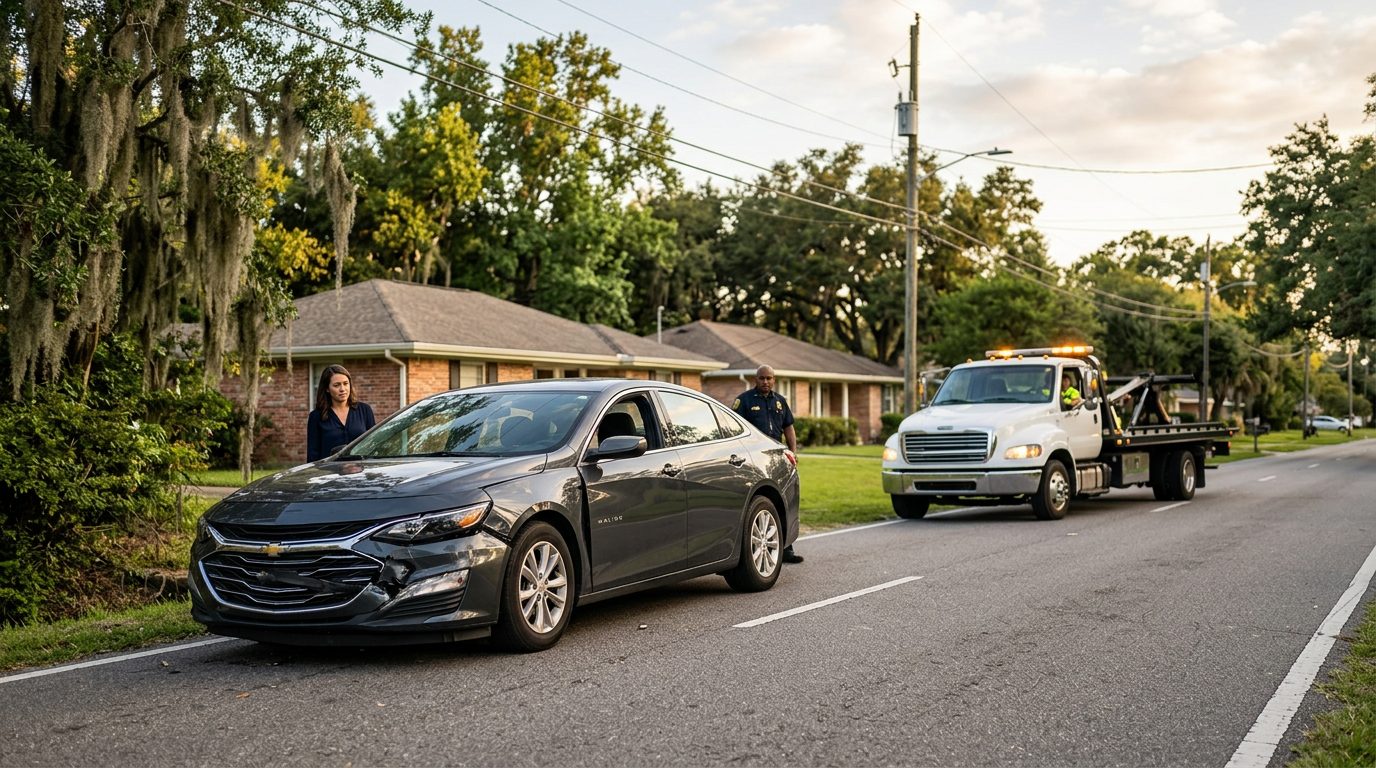
Car Accidents | New Orleans, Louisiana
Wondering How Long a Louisiana Car Accident Claim Takes?
Przemek Lubecki, responsible lawyer at American Trial Lawyer in New Orleans, explains what shapes the pace of a claim and how to keep yours organized from the start.
By Przemek Lubecki · Published November 11, 2026
If you’re asking how long a car accident claim takes in Louisiana, the honest answer is that no fixed timeline applies. Your injuries, the insurer’s response, and whether the case must go to court all shape the pace. This page explains the usual stages and what makes a claim move faster or slower.
The Short Answer: No Fixed Timeline
A Louisiana car accident injury claim has no set length. Some claims settle through negotiation and never reach a courtroom. Others take longer, especially when treatment is ongoing, fault is disputed, or a lawsuit becomes necessary.
Three things do most of the work. The first is your medical picture: how serious the injuries are and whether treatment is still continuing. The second is the insurer’s response, including how fast it investigates and answers. The third is whether the parties can agree on fault and value or need a court to decide. This page describes common stages and pace factors. It is not a promised schedule for your case.
If you're still in treatment or waiting on an insurer's answer, our team can talk through where your claim stands and what comes next. Talk it through with our team — the first consultation is free, confidential, and carries no obligation.

The Usual Stages of a Louisiana Car Accident Claim
Most claims follow the same general path. The stages are medical treatment, gathering documentation, the insurer’s investigation, a written demand, negotiation, and, if needed, a lawsuit.
Treatment usually starts first and runs as long as your doctors recommend. Documentation builds up alongside it. The insurer opens its own review of the crash and your records. A written demand then sets out your claim. Negotiation follows, and a lawsuit comes only if the claim cannot be resolved another way.
These stages often overlap. Treatment may continue while the insurer is already reviewing the crash. A demand may go out before every bill is in. Knowing where your claim sits helps you see what the next step is.
Why Medical Treatment Often Sets the Pace
Medical treatment often sets the pace because a claim is hard to value until doctors know the full picture. Some injuries take weeks to show their full effects. Doctors need that time to describe any ongoing care.
Medical bills matter too. Under La. R.S. 9:2800.27, when a health insurer or Medicare paid a contracted provider, recovery is limited to the amount actually paid. It also includes any cost-sharing the injured person paid or owes. It is not the amount billed. That is one reason complete, accurate records matter.
Keep every bill, explanation of benefits, and provider note. Missing records can slow the file down.
Documentation and the Insurance Investigation
A complete file is the fastest way to keep an insurance review moving. Records that commonly support a claim include the crash report, photos of the scene and vehicles, medical records and bills, wage records, and repair estimates.
Louisiana crash reports are confidential. Upon request, crash reports must be made available within seven working days after the crash investigation is complete, but only to the parties to the crash; parents or guardians of a minor party; a party’s insurers or an insurance support organization under contract to them; healthcare providers (or their agents) who treated a party; succession representatives; the attorneys of the parties or succession representatives; and news-gathering organizations, under La. R.S. 32:398.
The insurer will review these records. It may also ask for a recorded statement or more documents. If you gave a recorded statement, you can ask for a copy in writing. Under La. R.S. 13:3732, the person who took it must provide a true and complete copy within twenty days after your written demand.
Gaps in records and disputes over who caused the crash both slow the review. Keep your own file in one place, with dates, so you can answer questions quickly.
The Demand Letter and Negotiation
A demand letter is a written request to the insurer. It lays out the facts of the crash, the injuries, the treatment, and the losses being claimed.
Negotiation is back-and-forth communication. The insurer may respond, ask questions, or dispute part of the claim. The exchange can take several rounds before any resolution is reached. No one can predict how negotiation will end. An offer that looks reasonable can still be disputed.
Each round goes faster when the file already answers the insurer’s questions. A clear record of what happened helps at every step.
When a Louisiana Claim Becomes a Lawsuit
A lawsuit is usually considered when the insurer and the injured person cannot agree on fault or on the value of the claim. Filing is only one step in a longer process.
Lawsuits involve formal steps that notify the parties named in them. Discovery follows. That means exchanging records and taking depositions, which are sworn testimony from witnesses. Pretrial motions may be argued, and the court sets a trial schedule. Court calendars and the complexity of the case affect how long each step runs.
Many cases resolve before trial, so a lawsuit does not always mean a trial. Our firm may associate or refer a case to other law firms when that is likely. If that happens to your case, we will tell you.
Not sure what your next step is?
Talk it through with our team — the first consultation is free, confidential, and carries no obligation.
Factors That Can Lengthen or Shorten the Process
Injury severity is one factor. A claim with ongoing treatment usually stays open longer than one where the injuries have settled. Each new diagnosis or treatment phase can change the timeline.
The number of parties matters too. Several drivers, a commercial vehicle owner, or a company that dispatched the driver can add insurers and records. Under La. Civ. Code art. 2324, when liability is not solidary, a joint tortfeasor is not liable for more than its own degree of fault.
Fault is another factor. Under La. Civ. Code art. 2323, a person whose own negligence is 51 percent or more recovers no damages, but if the injury is partly the result of an intentional tortfeasor’s fault, the claim for recovery of damages shall not be reduced. Under La. Civ. Code art. 2323, a person whose own negligence is less than 51 percent has damages reduced in proportion to their share, but if the injury is partly the result of an intentional tortfeasor’s fault, the claim for recovery of damages shall not be reduced. This current text took effect January 1, 2026. Disputes over percentages can slow negotiation.
Rideshare crashes add a step. Under La. R.S. 45:201.8, a transportation network company and any insurer that may provide coverage must cooperate to exchange relevant information within ten business days of a request.
If Medicare is involved, its payment rules add steps.
Filing Deadlines Are a Separate Question
How long a claim takes is not the same as how long you have to file it. The deadline to bring a lawsuit is a separate question. Our car accident claim guide for Orleans Parish covers deadlines and the broader claim process in one place.
Talk With Przemek Lubecki About Your Claim
You may be still in treatment, waiting on an insurer, or deciding whether your claim should become a lawsuit. Przemek Lubecki is the responsible lawyer for this page, and our office is in New Orleans.
Frequently Asked Questions
How long does a car accident claim take in Louisiana?
There is no fixed timeline. Length depends on your injuries, the insurer’s response, and whether a lawsuit becomes necessary.
Can I get a copy of my recorded statement?
Yes. The person who took it must give you a true and complete copy within twenty days after your written demand.
Are Louisiana crash reports public?
They are confidential. They are confidential.
If you want to talk through where your claim stands, you don’t have to sort out the timeline alone. Request a free case evaluation with Przemek Lubecki or call 855-LUBECKI. The first consultation is free, confidential, and without obligation to continue.
What Shapes the Pace of a Claim
Your injuries and treatment
Recovery and medical care often set the pace, because a claim usually reflects the full picture of your injuries.
The insurer's response
How quickly an insurance company reviews, questions or disputes a claim can make a large difference.
Records and evidence
Police reports, medical bills, photos and witness information take time to gather and organize.
Whether a lawsuit becomes necessary
Some claims resolve without court. Others require a lawsuit, which adds steps and time.
Steps That Help Keep Your Claim Moving
Keep every record
Save the crash report, repair estimates, pay stubs and all medical bills and appointment notes.
Track your treatment
Attend follow-up visits and tell your providers about every symptom, even minor ones.
Log your expenses
Write down out-of-pocket costs, missed work and daily limits caused by the injury.
Talk with a lawyer early
Early guidance can help you understand your options and avoid mistakes that slow a claim down.
Be Careful Before Speaking With an Insurer
Insurance adjusters may ask for a recorded statement or a signed medical authorization soon after a crash. Consider speaking with a lawyer before you agree to either. Depending on the facts of your case, American Trial Lawyer may associate or refer a case to other law firms.