
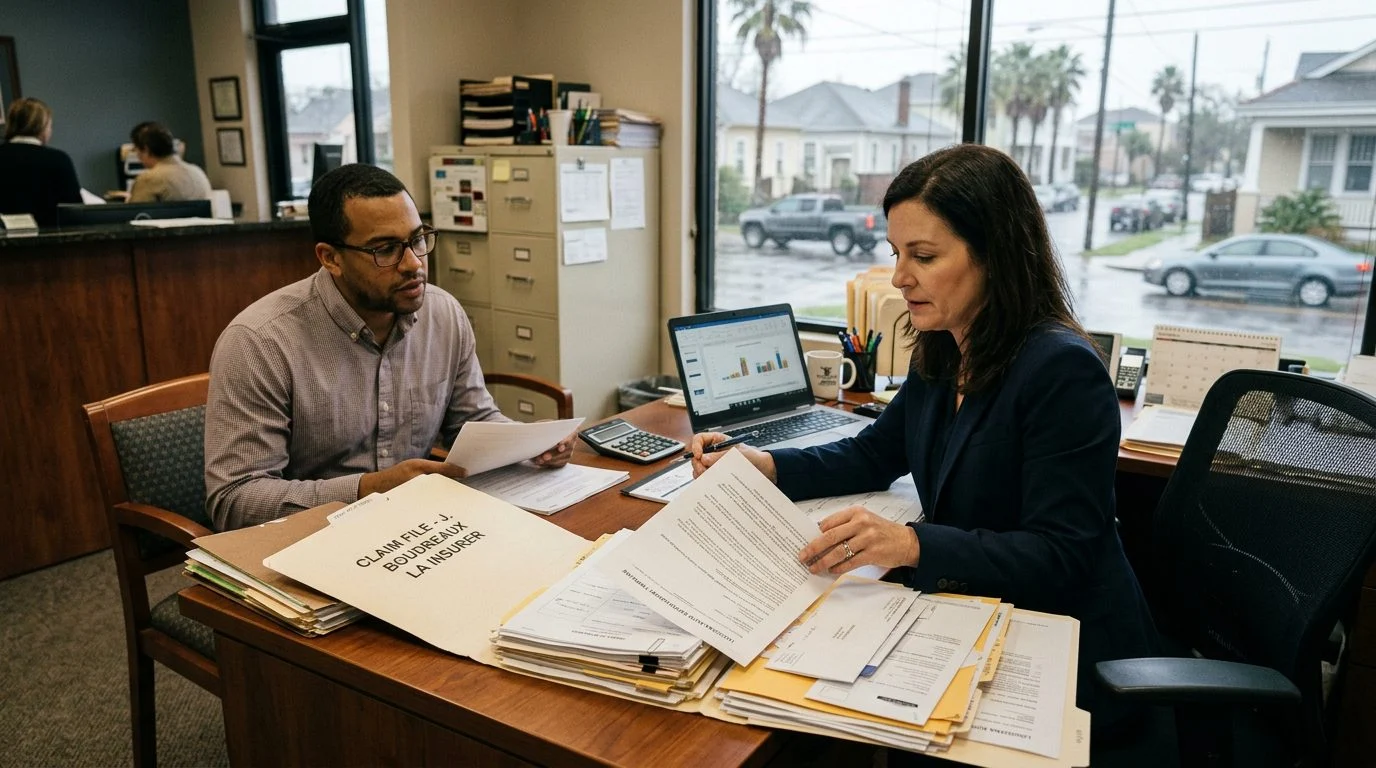
Insurance Claims | New Orleans, Louisiana
Why Insurance Claims Take Time, and How to Protect Your Position
Przemek Lubecki and the New Orleans office walk through the stages insurers typically move through after a serious crash, and the choices that can shape the pace of a claim.
By Przemek Lubecki · Published November 11, 2026
If you’re asking how long an insurance company has to settle a claim in Louisiana, you’re probably waiting on a crash claim right now. Maybe you were hurt, or maybe you’re a family member handling calls for someone who was.
Short answer: no single settlement deadline covers every injury claim in Louisiana. How long a claim takes depends on the facts, the investigation and the medical picture. The deadline to file a lawsuit runs on a separate clock, generally two years from the injury (La. Civ. Code art. 3493.1).
This page explains what drives the pace, how the two clocks differ, and what to track while your claim is open. It covers Louisiana rules only.
Is there one deadline for an insurer to settle a Louisiana claim?
No single settlement date covers every injury claim from a crash in Louisiana. A claim against the at-fault driver’s liability insurance, a claim under your own policy, and a claim involving a commercial truck can each move at a different pace. Each has its own parties, paperwork and facts.
That’s why a timeline from a neighbor’s case, or from a case in another state, is a poor guide to yours. Other states set their own rules, and this page does not cover them.
Think of it as two clocks. The first is how long your claim takes to resolve with the insurer. The second is the deadline to file a lawsuit, which we cover in the fourth section below. Insurance timing is only one part of the picture.
If you're waiting on an insurer after a crash, you don't have to work out the timeline alone, and we'd welcome a free, confidential talk about where your claim stands. Talk it through with our team — the first consultation is free, confidential, and carries no obligation.

What does Louisiana require about insurance details and crash reports?
Under La. R.S. 32:398, every law enforcement officer who investigates a crash as required by Subsection B of that section must instruct the driver of each vehicle involved in the crash to report certain information to all parties suffering injury or property damage as an apparent result of the crash. That information includes the name and address of the vehicle’s owner and driver, the vehicle’s license number, the name of its liability carrier, and the name, address and telephone number of the insurance agent who procured the liability policy covering the vehicle.
Crash reports are confidential, but they are available on request to the parties, their attorneys and their insurers, among others. The law says they must be made available within seven working days after the crash investigation is complete. The report is designed to show the cause, the conditions at the time, and the people and vehicles involved, so it’s an early document worth requesting.
Why does investigating and valuing a crash claim take so long?
Investigation and medical proof often take the longest, because an insurer needs the facts before it can evaluate a claim. The usual steps include the police report, photos and vehicle damage records, witness statements, and the insurer’s own review of how the crash happened. Each of these records has to be requested, received and checked.
Medical records and bills come next. Doctors may need time to describe the injury and its likely course, so the medical picture can take shape slowly. A claim is often hard to value until that picture is clearer.
Louisiana also limits what you can recover for medical care that a health plan paid. Under La. R.S. 9:2800.27, when a health insurer or Medicare has paid all or part of a bill to a contracted provider, recovery is limited to the amount actually paid plus the cost-sharing you paid or owe, not the amount billed. Sorting out paid versus billed amounts adds real paperwork.
Truck and commercial vehicle claims can add steps, such as requests for company records.
Is the deadline to file a lawsuit the same as the settlement period?
No. Under La. Civ. Code art. 3493.1, delictual (tort) actions are subject to a two-year period, often called prescription, that runs from the day the injury is sustained. The article was amended with an effective date of July 1, 2024.
The article has one exception: the two-year period does not run against minors or interdicts in permanent-disability claims brought under the Louisiana Products Liability Act or state product liability law, so the date and the type of claim both matter. Put the crash date on your calendar, and write down the date two years later.
Talks with an insurer run on their own track. A claim can still be under negotiation when the filing date gets close, so keep the two dates on separate lists.
Do insurance companies usually settle injury claims?
Some claims resolve through negotiation without a lawsuit, and some do not. Which path a claim takes can’t be predicted at the start.
Negotiation often begins with a demand letter and the insurer’s response, followed by back-and-forth talks. If the claim doesn’t resolve, the injured person may file a lawsuit, and the case moves through court procedure over a longer period. Each stage takes its own time.
One common mistake is signing a release before treatment ends. At that point, the medical bills and the full course of the injury may not be known yet.
What can lengthen or shorten a Louisiana claim?
The main factors that change the pace are injury severity, fault questions, insurer cooperation and the type of coverage involved. Each varies by claim, so one timeline should not be assumed for another.
Serious injuries, such as a brain injury, often need a longer medical picture before a claim can be valued. A fracture or head injury may also need follow-up visits before doctors can say much about recovery.
Fault can slow a claim. When more than one driver may share blame, sorting out the shares takes time.
Direct action limits who can sue whom. Whether an injured person may sue an at-fault party’s liability insurer directly is governed by La. R.S. 22:1269, which lists the situations in which that right exists. The statute allows direct action in listed situations, such as when the insured is insolvent or bankrupt.
Rideshare crashes follow their own rules. For a prearranged ride, La. R.S. 45:201.6 requires at least one million dollars for death, bodily injury and property damage. Under La. R.S. 45:201.8, in a claims coverage investigation, the company and any insurer potentially providing coverage must cooperate to facilitate the exchange of relevant information with directly involved parties within ten business days of a request.
Not sure what your next step is?
Talk it through with our team — the first consultation is free, confidential, and carries no obligation.

What should you do while you wait on an insurer in Louisiana?
Keep a written record of the claim, and understand what you sign before you sign it. You may be dealing with a crash you didn’t choose, an insurer that hasn’t answered, and maybe a family member handling calls for you. That’s a lot to carry.
Keep copies of the police report, medical bills and records, repair estimates, and every letter. Write down the date and a short summary of each call. Before you give a recorded statement or sign a release, make sure you understand what it covers.
American Trial Lawyer, LLC may associate or refer a case to other law firms. Przemek Lubecki is the trial lawyer responsible for this page. The firm’s office is in New Orleans, Louisiana, and it represents people hurt in truck, commercial vehicle and car crashes across Louisiana.
Does Louisiana set one number of days for an insurer to settle?
No single number of days applies to every injury claim, so the timeline varies by case. Each claim has its own facts, records and parties.
How long do I have to file a lawsuit in Louisiana?
Generally two years from the day of injury, under La. Civ. Code art. 3493.1. There are limited exceptions, so check the date early.
Can I sue the other driver’s insurance company directly?
Generally not. Direct action is allowed only in listed situations, such as when the insured is insolvent or bankrupt, under La. R.S. 22:1269.
How do I get a crash report in Louisiana?
Parties and their attorneys can request it. Under La. R.S. 32:398, upon request, crash reports must be made available only to the parties to the crash, parents or guardians of a minor party, their insurers or insurance support organizations (for claims and underwriting), healthcare providers who rendered services to a party, succession representatives and their attorneys, and news-gathering organizations requesting documents for a specific crash, within seven working days after the investigation is complete.
If you’re waiting on an insurer after a crash in Louisiana, you don’t have to map out the timeline alone. Call 855-LUBECKI (Office in New Orleans) or request a free case evaluation. The first consultation is free, confidential and without obligation.
What Shapes the Pace of a Claim
The Facts of the Crash
Police reports, photos, witness accounts and vehicle data all help establish what happened. Gathering them early can keep the file organized.
Your Medical Picture
Injuries, treatment and recovery often unfold over months. Insurers commonly want a clear medical record before they evaluate a claim.
Number of Parties
Truck, commercial vehicle and rideshare crashes can involve several insurers, companies and drivers, which adds steps to the review.
Negotiation Rounds
Offers, counteroffers and requests for more information take time. Each round depends on the details the other side has to review.
Protecting Your Claim
Recorded statements, early offers and release forms deserve careful thought before you respond. Speaking with a lawyer first can help you understand your options.
Before You Sign Anything
An insurer may contact you soon after a crash with a quick offer or a request for a recorded statement. Please speak with a lawyer before you agree to anything or sign a release.
Claims That Often Involve More Steps
Serious Injury Claims
Brain injuries and other serious harm may need detailed medical documentation and longer evaluation before a claim is fully assessed.
Wrongful Death Cases
Families facing a loss often have many questions about records, parties and timing. The firm focuses on guiding families through each step.
Truck and Commercial Vehicle Crashes
Company policies, driver logs and multiple insurers can add layers to the investigation. The firm may associate or refer a case to other law firms when that serves the client.
Rideshare and Motorcycle Crashes
Rideshare coverage can depend on the driver's app status at the time of the crash, and motorcycle claims often draw close scrutiny. Each case is reviewed on its own facts.