
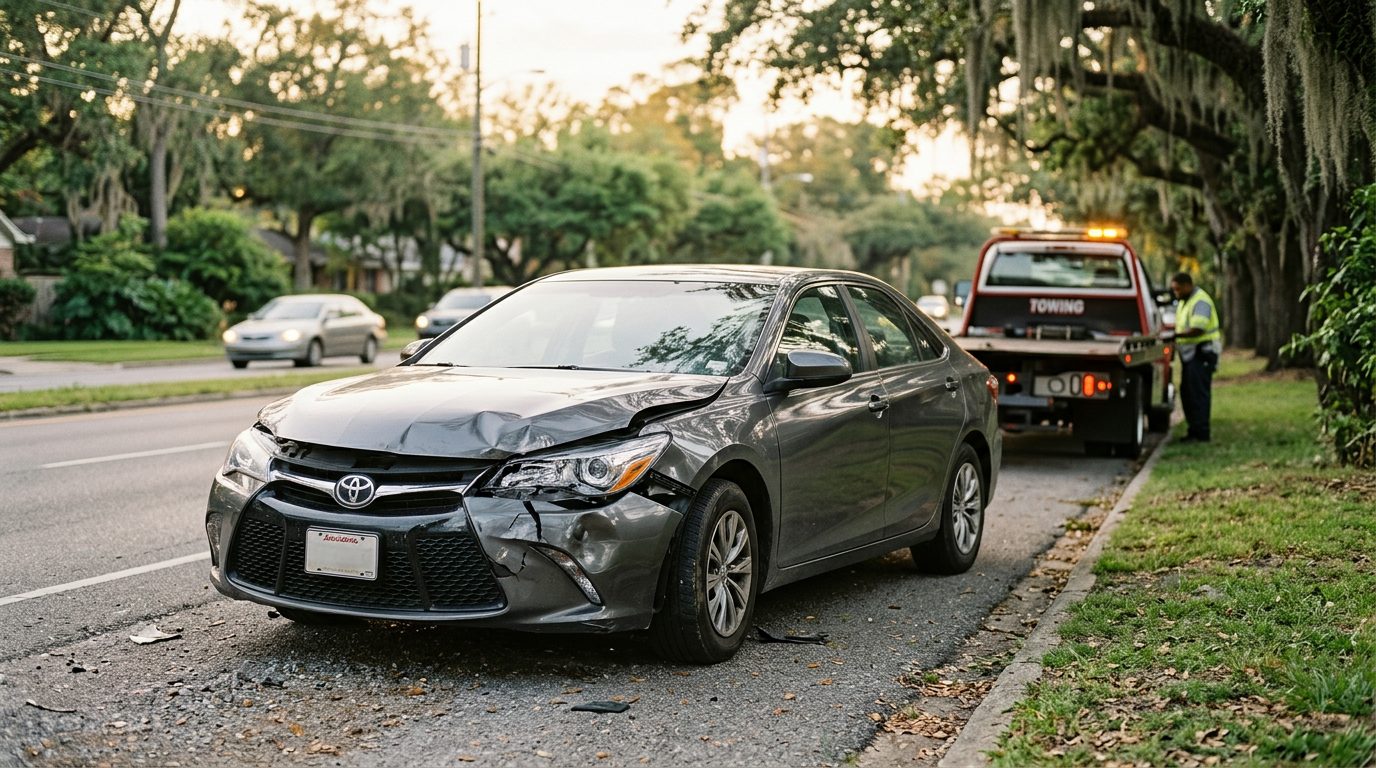
Car Accidents | New Orleans, Louisiana
Police Crash Report, Car Accident in New Orleans: What to Know and Where to Start
A crash report can shape the next steps after a serious collision. Here is how to find it, what it covers, and how American Trial Lawyer can help you read it. Przemek Lubecki leads the firm's New Orleans office.
By Przemek Lubecki · Published November 1, 2026
A police crash report is the written record an officer makes after a car accident. To get the police crash report for a New Orleans crash, first confirm which agency handled the scene, then request the report from that agency. Inside city limits, that is usually the New Orleans Police Department (NOPD). This guide covers each step, from gathering details to checking the report for mistakes.
Why the Police Crash Report Matters After a New Orleans Car Accident
The crash report is the official record of what the investigating officer documented. It usually lists the date, time, and location of the crash, the vehicles and drivers involved, and any injuries the officer noted. Insurers and other people involved often ask about it.
Having your own copy early helps you know exactly what was written down. Many people wait until a problem comes up. By then, memories of the scene may have faded, and comparing the report with your own notes is harder.
Requesting the report does not start a claim or commit you to any step. It is a record-keeping task you can complete at any point after the crash. Keep it with your photos, medical bills, and insurance papers so everything stays in one place.
If a crash left you injured or a loved one gone, you may have a claim worth discussing, and our team will go over it with you at no cost. Talk it through with our team — the first consultation is free, confidential, and carries no obligation.

Which Agency Has Your Crash Report: NOPD or Louisiana State Police?
The agency that investigated the crash holds the report, and inside New Orleans that is usually NOPD. Louisiana law splits the duty. State police or the sheriff’s office investigate crashes outside city limits, and a city’s police department investigates crashes inside its limits (La. R.S. 32:398). Check the agency name on any paperwork you received at the scene. That name tells you where to send your request.
Access is limited. Louisiana law makes crash reports confidential and exempt from the state public records law. They are available only to certain people (La. R.S. 32:398). Those people include the parties to the crash, a parent or guardian of a minor party, insurers of a party, certain healthcare providers, succession representatives, and the attorneys for those parties. The City of New Orleans police report page states that released reports may be redacted to protect privacy (NOPD police report requests).
What to Have Ready Before You Request the Report
Gather the basics before you call or visit. Write down the date, the approximate time, and the street or intersection. Add the report or incident number if the officer gave you one. Also have the drivers’ names and the vehicles’ license numbers.
The officer must instruct each driver to report to all parties suffering injury or property damage as an apparent result of the crash the driver’s name and address, the vehicle’s license number, and the name of the liability carrier for the vehicle and the name, address, and telephone number of the insurance agent who procured the liability policy providing coverage for the vehicle (La. R.S. 32:398). Keep that exchange paperwork. It shows what you were given at the scene. Keep that exchange paperwork. It shows what you were given at the scene.
Have a photo ID ready so you can show who you are. Because access is limited to listed people, be prepared to explain how you are connected to the crash.
How to Request the Crash Report Online, by Mail, or in Person
You request the report from the agency that handled the crash, using that agency’s current process. Common routes are an online request, a written request by mail, or an in-person visit to the records office. The Louisiana State Police Traffic Records Unit page explains who may request crash reports and where copies are available.
Confirm current online options, mailing addresses, and office hours with the agency before you go. These details can change. Include the report number, the crash date, and your contact information in your request. Keep a copy of what you sent and any receipt or confirmation number.
How Long It Can Take and What a Copy May Cost
Timing starts once the investigation is finished. Under Louisiana law, the investigating agency must send its report to the state Department of Transportation and Development within forty-eight hours after completing the investigation (La. R.S. 32:398). Upon request, the report must be made available to listed people within seven working days after the investigation is complete (La. R.S. 32:398).
Agencies may charge a fee for a copy of a crash report, not to exceed five dollars per report of two pages or less, and not to exceed twenty dollars, inclusive of all service fees and other charges, per report over two pages (La. R.S. 32:398). Ask the records office what it charges and how it accepts payment before you send money. If the report is not ready, ask whether a supplemental version will be issued and how to get it when it is.
Insurance coverage information is a separate record. The Department of Public Safety and Corrections forwards it for a fifteen dollar fee on written request (La. R.S. 32:871).
What to Check on the Report and What to Do If Something Is Wrong
Read the report line by line as soon as you receive it. Check the date, time, location, vehicle details, driver and passenger names, and witness names. Then read the officer’s description of how the crash happened.
Write down any error. Examples include wrong vehicle details, missing injuries, or a diagram that does not match the scene. Note the date you found each problem. Ask the agency in writing how to submit a correction or supplement, and keep copies of everything you send.
Fault matters too. Under La. Civ. Code art. 2323, as amended effective January 1, 2026, a person whose injury, death, or loss results partly from his own negligence and partly from the fault of another person, and whose degree or percentage of negligence is equal to or greater than fifty-one percent, shall not be entitled to recover damages. However, if a person suffers injury, death, or loss as a result partly of his own negligence and partly as a result of the fault of an intentional tortfeasor, his claim for recovery of damages shall not be reduced. Under La. Civ. Code art. 2323, if the degree or percentage of negligence attributable to the person suffering injury, death, or loss is less than fifty-one percent, the amount of damages recoverable shall be reduced in proportion to that degree or percentage. The report’s account of who did what can shape that discussion, so accuracy matters.
If you were injured and gave a recorded or written statement about the crash, the person who took it or has possession of it must give you a true and complete copy within twenty days after your written demand (La. R.S. 13:3732).
Not sure what your next step is?
Talk it through with our team — the first consultation is free, confidential, and carries no obligation.
Talking With a New Orleans Car Accident Lawyer About Your Report
A lawyer may review the crash report with you when a crash caused serious injury or a death, or when an insurer is questioning fault. The report is one record among several. Medical records, photos, and insurance information matter too.
Przemek Lubecki is the responsible lawyer for this page, and the firm’s office is in New Orleans. The firm’s lawyers and staff can review the report and related records with you during a case evaluation. Car accident matters may be associated with or referred to other law firms.
Under La. Civ. Code art. 3493.1, delictual (tort) actions are subject to a liberative prescription of two years, which commences to run from the day the injury or damage is sustained; this applies to many injury claims from crashes. The prescription does not run against minors or interdicts in actions involving permanent disability that are brought under the Louisiana Products Liability Act or state law governing product liability actions in effect at the time of the injury or damage. The first consultation is free, confidential, and without obligation to continue.
How do I get a police crash report after a car accident in New Orleans?
Find the agency that handled the scene, usually NOPD inside city limits. Then request the report from that agency using its current process.
Who can get a Louisiana crash report?
Access is limited to these groups by statute.
Does requesting the report start a claim?
No. Requesting a copy is a record-keeping step and does not start a claim.
If a crash left you hurt or a family member gone, request a free case evaluation with this firm, and the firm’s team will review your records with you.
Four Steps to Getting Your Crash Report
1. Identify the responding agency
Check which agency responded to the scene. Inside New Orleans city limits, that is often the New Orleans Police Department (NOPD), but the responding agency is what matters.
2. Gather your crash details
Have the date, time, location, and the other driver's information or insurance details ready. These help match your request to the correct report.
3. Request the report
Ask the agency that handled the scene for a copy, following its current request process. Keep a record of when and how you made the request.
4. Review it with a lawyer
A crash report is one piece of the picture. Our team can review it with you and explain how it fits into your situation.
Why Talk With American Trial Lawyer Early
Help reading the report
Crash reports use codes and abbreviations. We can walk you through what the report says and what it leaves out.
Protecting your position
Speaking with a lawyer before you give recorded statements or sign documents about the crash can help you avoid mistakes.
Support for families
When a crash is fatal, our team helps families understand the report while they grieve.
Free and confidential
Your first consultation is free, confidential, and without obligation to continue.
Before You Talk to the Insurance Company
Adjusters may ask for a recorded statement soon after a crash. Speak with a lawyer first so you understand what you are agreeing to.