
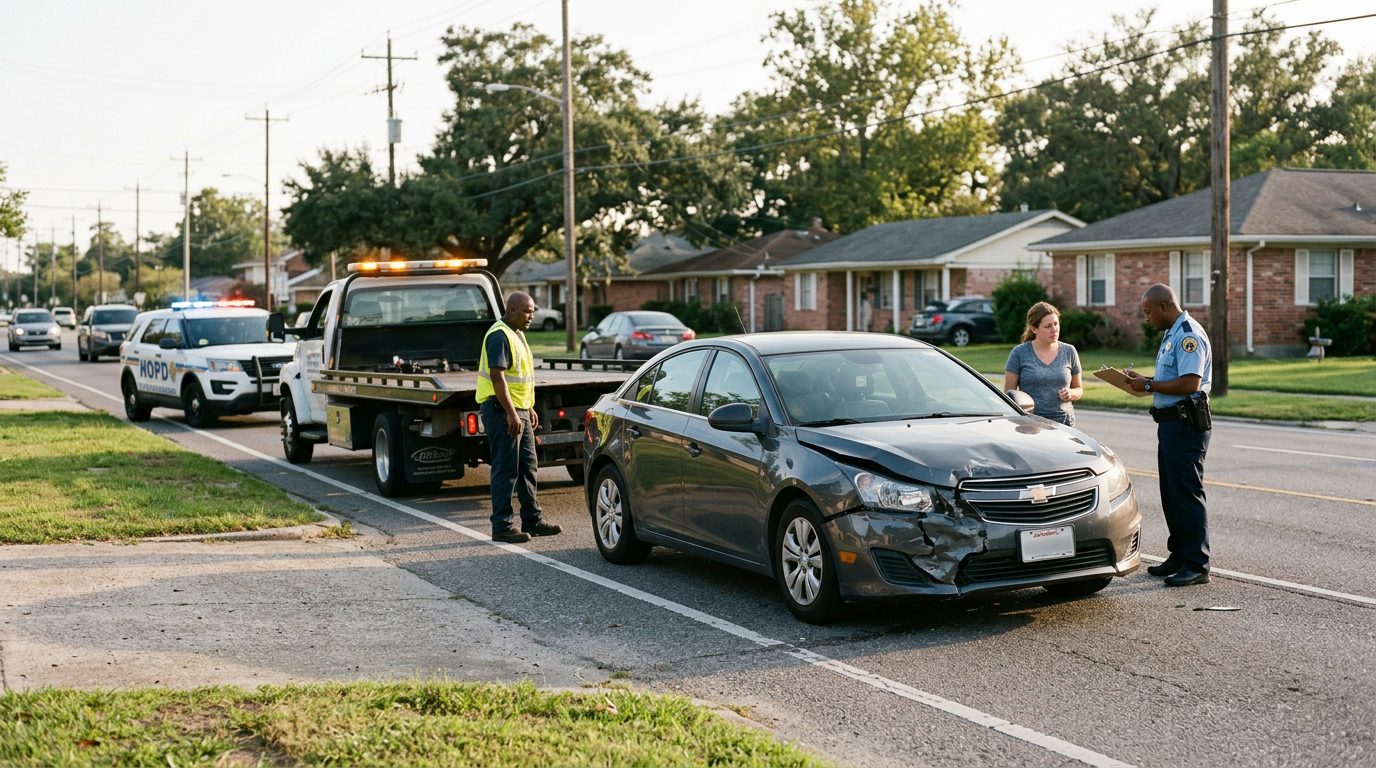
Car Accidents | New Orleans, Louisiana
Getting Your Police Report After a New Orleans Car Accident
A crash report can be hard to track down in the days after a collision. Here is how to find it and what to do with it.
By Przemek Lubecki · Published November 15, 2026
If you were in a crash in New Orleans, you may need a copy of the police report after a car accident in New Orleans for insurance and medical paperwork. You request it from the agency that investigated the crash, which is usually the New Orleans Police Department (NOPD) for crashes inside city limits, but the reports are available only to the parties to the crash, parents or guardians of a minor who is a party to the crash, and insurers of any party which is the subject of the report, along with others the law lists.
This guide explains what the report contains, how to request it, and what to do if it has errors or is missing. It is general information about Louisiana law.
What Is a Police Report After a Car Accident?
A police crash report is the official written record an officer prepares after a crash. It usually lists the date, time and place, the vehicles and drivers involved, and any witnesses and injuries noted at the scene. It also includes the officer’s notes and a diagram.
The report records what the officer saw and what people told them. It is not a court ruling on who was at fault. Fault is decided later, through the claim process.
Under La. R.S. 32:398, the driver of a vehicle involved in a crash resulting in injury to or death of any person, or property damage in excess of five hundred dollars, generally must give his name, address and the registration number of the vehicle he was driving and, upon request and if available, show his license or permit to drive to anyone injured in the crash or to the driver or occupant of any vehicle damaged in it. Each driver must give their name, address and vehicle registration number to any person injured in the crash and to the driver, occupant or person attending a damaged vehicle. La. R.S. 32:398
Your own copy is worth getting early. Insurers, the parties to the crash and certain others named in the law may request it, since the report is confidential and available only to those people; details are easier to confirm while they are fresh.
If a crash in New Orleans has left you with injuries and a report you can't get or don't trust, you don't have to sort it out alone. Talk with Przemek Lubecki. Talk it through with our team — the first consultation is free, confidential, and carries no obligation.
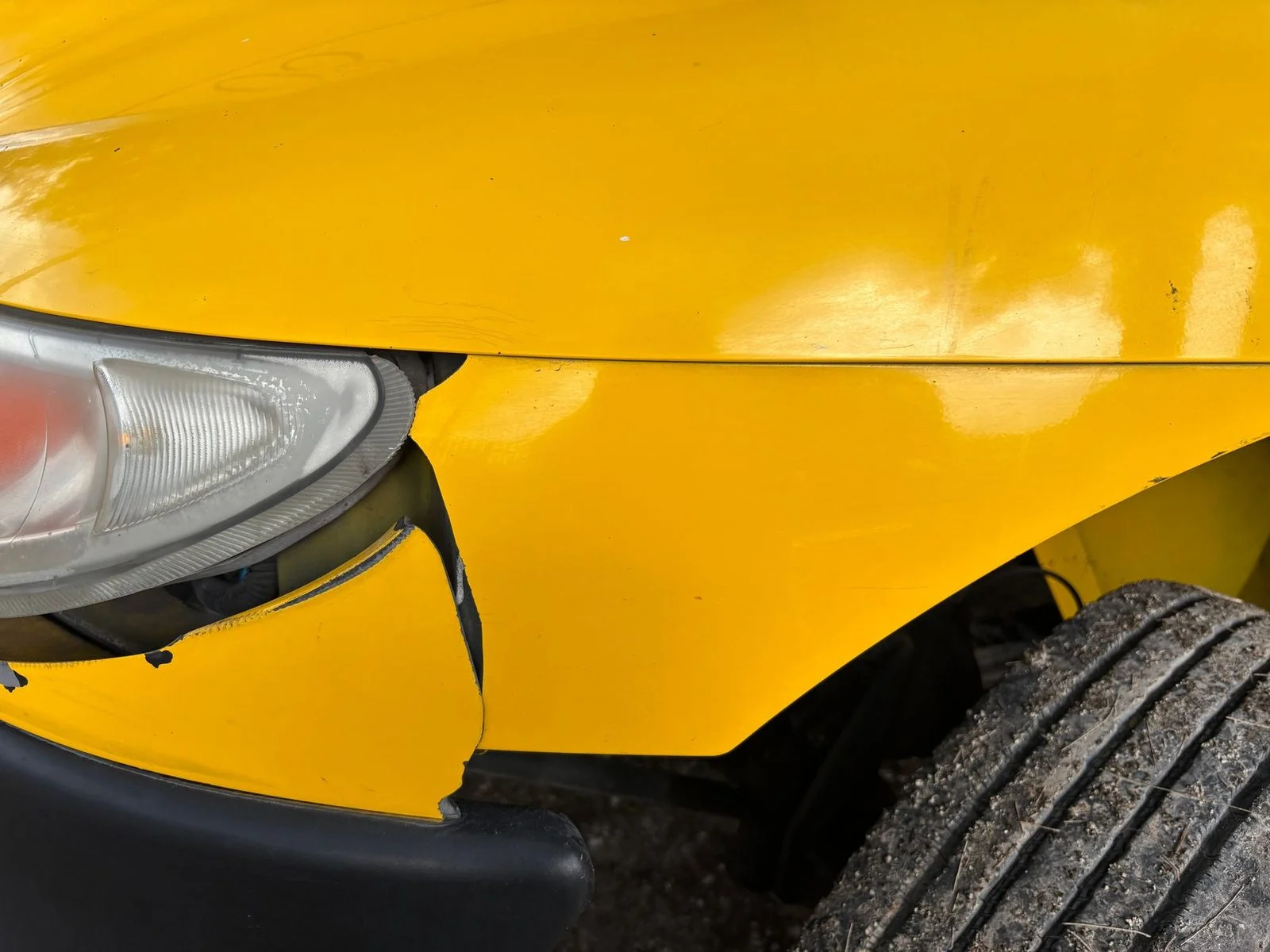
Which Agency Investigated Your Crash?
The agency that responded and investigated is the one to ask, and location decides which agency that is. Under Louisiana law, city police investigate crashes inside city limits. State police or the sheriff’s office investigate crashes outside those limits. La. R.S. 32:398
The test is where the crash happened, not where you later went for treatment. For a street crash inside New Orleans, that usually means NOPD. A crash on a highway or in another parish may fall to state police or a sheriff’s office. Crashes in Metairie, Kenner, Jefferson Parish, St. Bernard Parish or Slidell can be handled by a different police department or sheriff’s office than the one you expect.
Check the card or ticket the officer gave you. It often shows the agency name and an event or report number. If you have neither, call the agency you think responded and ask whether it has a report for that date and location. Sending the request to the wrong office adds delay.
What You Need Before You Request the Report
Gather these details before you ask. The more facts you have, the easier the report is to find.
- The date and approximate time of the crash
- The exact location or nearest intersection
- The names of the drivers involved
- Vehicle plate numbers and insurance information
- The event or report number, if one was given
- The officer’s name and badge number, if you noted them
At the scene, an injured person can ask the driver to show a license, if one is available. La. R.S. 32:398 Write down what you receive that day, along with the time.
Bring identification and be ready to say how you are connected to the crash. Ask the agency what it needs from you before you go.
How to Request a Police Report in New Orleans
The simplest step is to ask the investigating agency directly. Ask which options it offers, such as in person, by mail, or online. Confirm the current process before you go, since requirements can change.
Louisiana law lets state police, local police and sheriffs charge a reasonable fee for copies of photographs, video, audio and electronic documents. La. R.S. 32:398 Ask what the copy fee is and how to pay it.
Released reports may be redacted to protect privacy. City of New Orleans police report requests
If the report isn’t ready when you ask, ask when it will be. Asking early leaves time to fix errors before the claim moves on. Keep a note of the date of each request and any confirmation number.
Reading the Report and Checking for Errors
Compare every line of the report with your notes, photos and memory. Start with the parties and vehicles, then the insurance listed, the narrative, the diagram, the injuries noted and the witness information.
Look closely at names, plate numbers, the time, the direction each vehicle was traveling, street names and lane positions. A wrong direction or a missing witness can change how the crash reads on paper. Pay attention to the narrative too. It is the officer’s summary, and it may rely on what drivers told the officer at the scene.
If something looks wrong, ask the agency how to request a correction or supplement. Make the request in writing and keep a copy.
If someone took a written or recorded statement from you about the crash, Louisiana law gives you a right to a copy. La. R.S. 13:3732 The law also bars use of a written, recorded, or transcribed statement by an injured person in a related civil case if the holder refused, upon request of the person who made it, to furnish a true and complete copy.
What to Do If the Report Is Missing or Delayed
A missing report is often a timing issue, and you can ask the agency for its status. Give the event number and the date of the crash. Keep a log of each call, email and visit.
Keep your own record while you wait. Save photos, write down what happened while it’s fresh, and note witness names and contact details. Keep notes from every medical visit too. These help show what happened whether or not a report is in hand.
Louisiana keeps records of insurance coverage declared after an accident. Any interested person can request that information in writing for a fifteen dollar fee. La. R.S. 32:871
The adjuster handling the claim may also have a copy of the report. Ask what they have on file. If the report is still missing after a long wait, keep asking in writing so you have a record of each request.
Not sure what your next step is?
Talk it through with our team — the first consultation is free, confidential, and carries no obligation.
How the Report Fits Into a Car Accident Claim
A police report is one piece of evidence. Photos, medical records, repair estimates and witness accounts are others. Each one adds detail, and together they give a fuller picture of the crash.
Louisiana uses comparative fault, which means each person’s share of blame can matter. For accidents and injuries occurring on or after January 1, 2026, a person found 51% or more at fault recovers nothing. For accidents and injuries occurring on or after January 1, 2026, a person found less than 51% at fault has damages reduced by their percentage of fault, except where the injury resulted partly from their own negligence and partly from the fault of an intentional tortfeasor; in that case, the claim for recovery of damages is not reduced. La. Civ. Code art. 2323 That is why the fault details in the report deserve careful review.
Under La. Civ. Code art. 2323, when someone is hurt, killed, or harmed in a claim for damages, the percentage of fault of every person who caused or contributed to that harm must be determined, whether or not that person is a party to the lawsuit. Under La. Civ. Code art. 3493.1, the general period for a delictual action is two years, and that period commences on the day that injury or damage is sustained; it does not run against minors or interdicts in actions involving permanent disability brought under the Louisiana Products Liability Act or state law governing product liability actions in effect at the time of the injury or damage.
For an overview, read our car accident claim guide for Orleans Parish. Medical bills often come up alongside the report, so see health insurance repayment in a Louisiana car accident settlement as well.
American Trial Lawyer, LLC may associate with or refer a car accident case to other law firms, and any such arrangement would be explained to the client.
How do I get a police report after a car accident in New Orleans?
Ask the agency that investigated the crash. For a street crash inside city limits, that is usually the New Orleans Police Department.
Which agency has the report for a New Orleans crash?
The agency that responded and investigated the crash has it. Inside city limits, city police investigate.
Does the police report decide who was at fault?
No. The report records what the officer observed and was told. It is not a court ruling on fault.
Talk Through Your Situation With Przemek Lubecki
Trying to get a report while you’re still recovering, dealing with a damaged car, or helping a family member after a New Orleans crash can feel like a lot. You don’t have to work through every step by yourself.
Przemek Lubecki is the responsible lawyer for this page. The firm’s office is in New Orleans. American Trial Lawyer, LLC handles car accident matters in Orleans Parish and the New Orleans metro area.
If you want to talk through what happened, request a free case evaluation or call 855-LUBECKI. The initial consultation is free, confidential and without obligation to continue.
Talking With Przemek Lubecki
Free first consultation
The first consultation is free, confidential and comes with no obligation to continue. Call 855-LUBECKI to get started.
Office in New Orleans
Our office is in New Orleans, and we represent people injured in crashes across Orleans Parish, the New Orleans metro and Louisiana.
Help with the crash file
We can review the report with you and explain what it contains, so you understand what to do next.
Clear communication
Our team keeps you informed about each step, in plain language, so you are never left guessing.
Keep your own records
Write down the date, time, location and the other driver's information while the details are fresh. Photos of the scene and vehicles, and the names of any witnesses, can help you later. The firm may associate or refer a case to other law firms.
How to Request Your Report
Identify the agency
Find out which agency responded to the scene. Inside city limits, the New Orleans Police Department usually investigates.
Note the report number
If the officer gave you a report or incident number, keep it with your other crash paperwork. It makes the request easier.
Request a copy
Ask the investigating agency for a copy of the crash report. Ask about any fee or process they require.
Review it with a lawyer
Officers can make mistakes or leave things out. Having a lawyer review the report with you can help you understand its contents.