
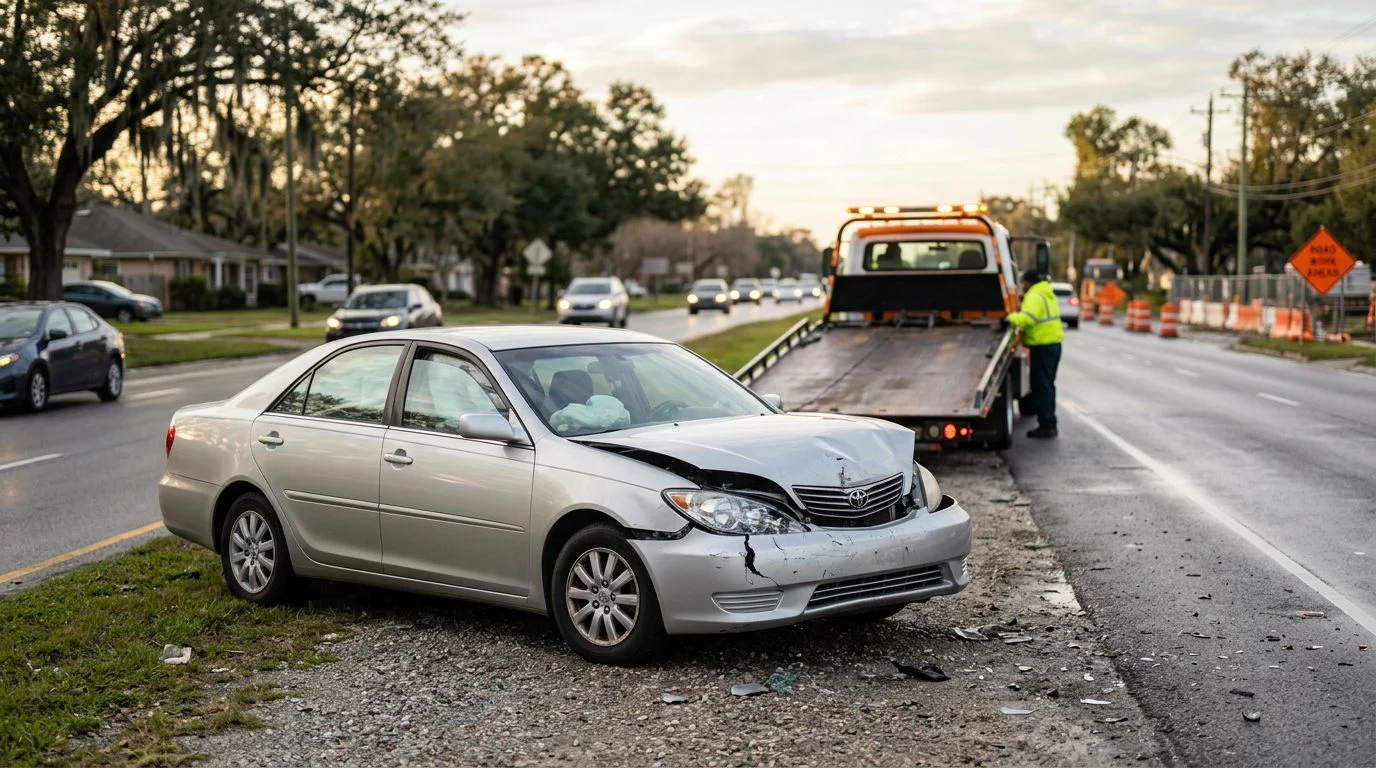
Construction Zone Car Accidents | New Orleans, Louisiana
Hurt in a Construction Zone Crash? Understanding Who May Be Responsible
Work zones bring shifting lanes, narrowed roads and hazards that drivers may not expect. Przemek Lubecki of American Trial Lawyer, LLC, with an office in New Orleans, helps people hurt in these crashes and their families look at who may be legally responsible.
By Przemek Lubecki · Published November 1, 2026
A construction zone car accident in New Orleans can involve more than one responsible party. That may include the driver who caused the crash, a contractor, a traffic-control company, a public road owner or an employer. This page explains how Louisiana law looks at each of those roles. It is general information, not legal advice about your situation.
Short answer: who can be responsible in a work zone crash
More than one party may share responsibility, because Louisiana looks at everyone whose fault contributed to the harm. The main rule is comparative fault, or shared fault. La. Civ. Code art. 2323 provides that when a person is hurt partly through his own negligence and partly through the fault of others, and the percentage of negligence attributable to the injured person is equal to or greater than fifty-one percent, that person is not entitled to recover damages. Under La. Civ. Code art. 2323, where a person’s share of negligence is less than fifty-one percent, the damages recoverable are reduced in proportion to that share.
Fault is decided for everyone who caused or contributed to the harm, whether or not that person is a party to the case. Louisiana also makes a person answerable for damage caused by negligence, imprudence or want of skill, under La. Civ. Code art. 2316.
Work zones appear on many kinds of roads in Orleans Parish, from city streets to Interstate 10 segments where lanes narrow quickly. Each road has its own owner and crew. Who controlled the zone often matters most.
If a lane closure or road crew was part of your crash, our team is ready to talk through which parties may be responsible and whether you may have a claim. Talk it through with our team — the first consultation is free, confidential, and carries no obligation.

How work zones change what drivers and crews must do
Work zones narrow lanes, move traffic and lower speed limits, so warnings matter to every driver. Signs, cones, barrels, flaggers and lane markings tell drivers what to expect. When those warnings are missing, blocked or unclear, they become a central question in a claim.
Drivers still have to slow down, watch for merging traffic and follow posted detours. Louisiana law says a driver may not follow another vehicle more closely than is reasonable and prudent, under La. R.S. 32:81. Outside a business or residential area, a motor truck may not follow another motor truck within four hundred feet. One truck may still pass another.
Under the general negligence rule, a crew that leaves a live lane unsafe can be answerable for the harm it causes. Crews that keep traffic away from workers and equipment lower that risk.
The at-fault driver
The driver who hits a slowed line of cars, drifts into a closed lane or fails to yield to a flagger may be liable. Under the negligence rule in La. Civ. Code art. 2316, a driver answers for harm caused by their negligence or imprudence.
Common driver errors in work zones include speeding through a reduced-speed zone, distracted driving, following too closely and unsafe lane changes. Each of these comes down to what a careful driver would have done at that exact spot.
The at-fault driver’s liability insurance is one place a claim may be presented. If the driver was working for a company at the time, that company’s role becomes a separate question, covered below.
Contractors, subcontractors and traffic-control companies
The general contractor may be responsible for the overall work zone plan, lane closures and signs, even if a subcontractor installed the devices. A separate subcontractor or flagging company may answer for how the zone was staffed and maintained that day.
Failures that come up in these claims include knocked-over signs, barrels placed too close to live lanes, unmarked lane shifts, missing flaggers and equipment left in an active lane. Contracts, permits and traffic-control plans often help show which company controlled which part of the zone.
The same negligence rule in La. Civ. Code art. 2316 applies to these companies as it does to drivers. When several parties contributed, La. Civ. Code art. 2323 governs how fault shares are counted.
The firm may associate or refer a case to other law firms, including when a claim involves several parties.
Public road owners and the limits of immunity
When a state highway or city street is the road, the state, the Louisiana Department of Transportation and Development or the City of New Orleans may be responsible for the roadway. Who owns and controls the road is a key question.
Louisiana law limits claims against public bodies. Under La. R.S. 9:2800, a person generally cannot sue a public entity based solely upon liability imposed under Civil Code Article 2317 over the condition of things in its care unless the entity had actual or constructive notice of the particular defect before the crash (subject to the exceptions in Subsections A and B). The entity also must have had a reasonable chance to fix it and failed to do so.
The statute defines a “public entity” to include the state and its departments and political subdivisions. It defines a “public site or area” to include streets, sidewalks and parks. It also says that breaking a public entity’s own rules is not negligence per se.
These notice and control questions are technical. They make it important to look early at the road’s signs, reports and repairs around the time of the crash.
Commercial vehicles and employers: garbage trucks, dump trucks and work vehicles
An employer may be answerable for an employee driver’s negligence on the job, but only under specific conditions. Under La. Civ. Code art. 2320, employers answer for damage caused by employees in the functions they were employed to perform. Responsibility attaches only when the employer might have prevented the act and did not.
Commercial crashes can involve company records such as driver logs, maintenance files, dispatch information and onboard data. These records can show how a truck was operated and kept up.
Not sure what your next step is?
Talk it through with our team — the first consultation is free, confidential, and carries no obligation.
Hit-and-run and uninsured drivers
If the driver leaves the scene or has no insurance, the injured person may look to their own uninsured or underinsured motorist coverage, if they have it. Under La. R.S. 9:5629, actions under the uninsured motorist provisions of a policy are prescribed, or time-barred, two years from the date of the accident.
Reporting the crash to police right away helps the record. Write down any partial license plate, the vehicle description, the direction of travel and witness names. These details can matter if the other driver is never found.
A fatal hit-and-run raises separate wrongful death questions for surviving family members. Check your own auto policy for uninsured motorist terms, since coverage and notice requirements differ from one policy to another.
Evidence to preserve and time limits to know
Start with photos and video of signs, cones, barrels, lane closures and the roadway. Add the police crash report, witness names, medical records and damage to the vehicle. Work zones change quickly as crews finish a shift or move equipment, so early photos can matter.
Written or photographed records of detours, lane shifts and flagger positions can help show how the zone was set up that day.
Louisiana sets time limits, called prescription, for injury claims. Under La. Civ. Code art. 3493.1, delictual (injury) actions are subject to a two-year period that runs from the day injury or damage is sustained. The article has exceptions, so timing should be checked against the facts of each case.
For wrongful death, La. Civ. Code art. 2315.2 sets the time to bring the claim at one year from the death or two years from the day the injury was sustained, whichever is longer.
Bringing your questions to a free consultation with Przemek Lubecki
If a construction zone car accident in New Orleans involved a lane closure or road crew, you may be trying to sort out who should answer for it. Bring the crash report number, photos, insurance information, medical summaries and a timeline of the crash and your recovery. Przemek Lubecki is the responsible lawyer for this page, and the New Orleans office handles these matters. To talk through who may be responsible, request a free case evaluation or call 855-LUBECKI. The first consultation is free, confidential and without obligation.
Can I sue a construction company after a construction zone car accident in New Orleans?
A construction company may be responsible if its own negligence helped cause the crash. Its role depends on what it controlled and what it did or failed to do.
Can I recover damages if I was partly at fault?
How long do I have to file an injury claim in Louisiana?
Under La. Civ. Code art. 3493.1, the period is generally two years from the day of injury. The article has exceptions.
Does uninsured motorist coverage apply after a hit-and-run?
It may, if you carry that coverage on your own policy. Under La. R.S. 9:5629, actions for damages from motor vehicle accidents brought under uninsured motorist provisions in motor vehicle insurance policies are prescribed by two years from the date of the accident.
What We Look At in a Work Zone Crash
Who controlled the work zone
Work zones often involve more than one company or agency. The layout, signage and traffic controls may each have a different responsible party.
Records and reports
Crash reports, work zone plans, photos and maintenance logs can help show how the scene was set up and what was in place at the time.
More than one party
A crash can involve a driver, a contractor, a subcontractor or a government entity. We look at each possible source of responsibility.
Your recovery comes first
Your health and your family's needs come first. We take the time to explain your options in plain language.
Referrals to Other Firms
American Trial Lawyer, LLC may associate or refer a case to other law firms. Any co-counsel or referring lawyer is not part of American Trial Lawyer, LLC.
Steps That Can Help Protect Your Claim
Get medical care
Seek medical attention right away, even if your injuries seem minor. Keep copies of every record and bill.
Document the scene
If you are able, take photos of the lanes, signs, barriers and vehicles, and note the time and weather.
Write down what you recall
Record your memory of the crash while it is fresh, including any warnings you saw or did not see.
Talk with our team
Our team can review your situation and explain what information may matter most for your case.