
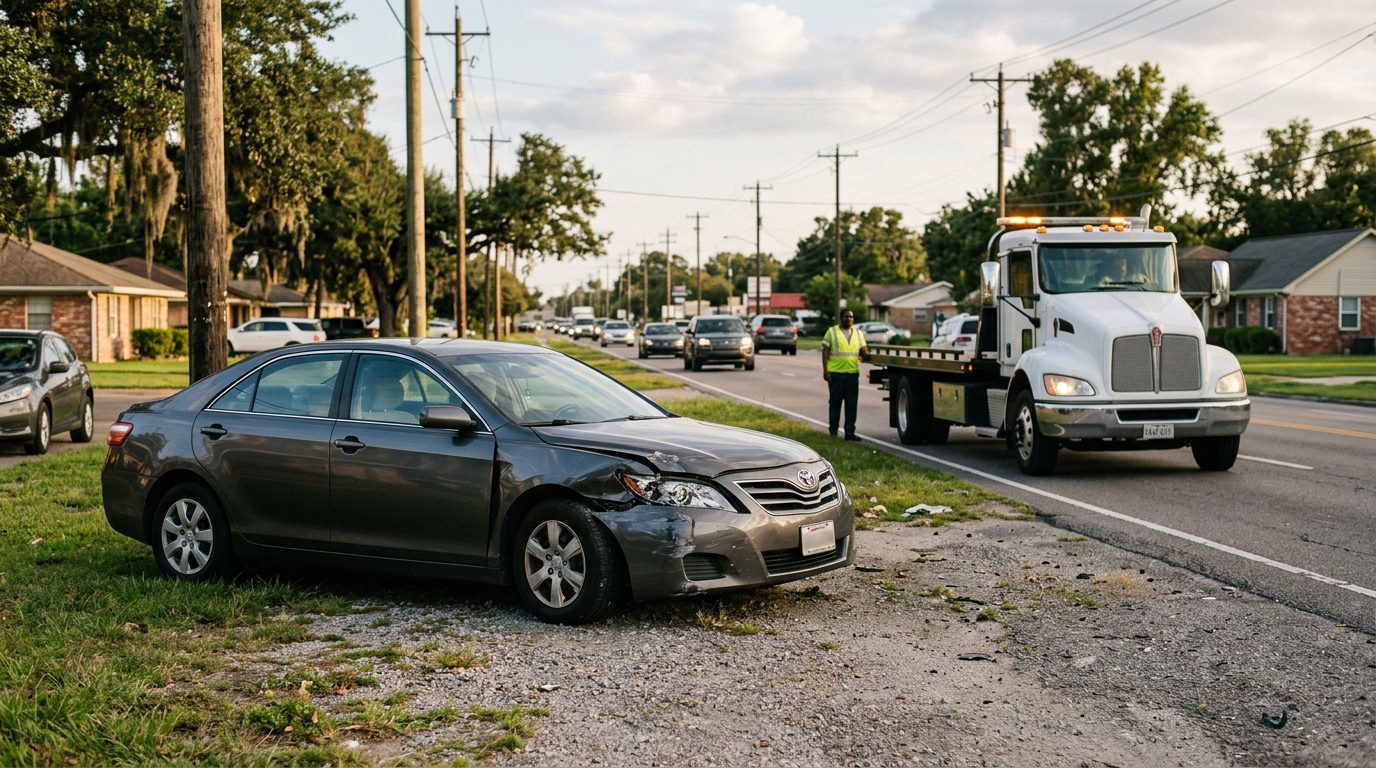
Car Accidents | New Orleans, Louisiana
Neck Pain Showing Up Days After a Crash? Get It Looked At
Przemek Lubecki and our team at American Trial Lawyer represent people hurt in car, truck and commercial vehicle collisions across New Orleans and Louisiana.
By Przemek Lubecki · Published November 15, 2026
Many people feel shaken but fine right after a crash. A day or two later, the neck gets stiff or the low back starts to ache. If your pain started hours or days after a collision, a late start does not mean the pain is unrelated to the crash.
Neck and back pain can start days after a crash
Yes, neck pain days after a car accident is a common pattern. Feeling okay at the scene does not rule out a soft tissue injury. Soft tissue means the muscles, ligaments, and tendons that support your neck and spine.
A late start is a reason to get checked, not a reason to wait. Many people assume that if the pain didn’t start right away, it must be something else. That assumption can delay care that helps.
This page explains common patterns and practical steps. It does not diagnose your condition, and only a medical provider can do that. If you were in a truck, commercial vehicle, or rideshare crash, the same delayed patterns can appear. The size of the impact does not always match how much pain shows up later.
Not sure what your next step is?
Talk it through with our team — the first consultation is free, confidential, and carries no obligation.

Why neck and back symptoms can show up later
Adrenaline is the first reason. It is a natural stress hormone the body releases during a crash. It can dull pain for a while, so people often feel fine in the first hours.
Inflammation is the second reason. Hurt muscles, ligaments, and tendons become swollen and irritated over the next hours and days. That swelling can bring stiffness and soreness that grows instead of fading.
Muscle guarding is the third. When an area is hurt, the body tightens the muscles around it to protect it. That tightening often makes the neck or back feel worse by the next morning, especially after sleep.
Nerve irritation can also add to the pain. Nerve irritation or damage, including damage from trauma, can cause sharp, shocking pain that follows the path of the affected nerve, according to FloridaHealthFinder’s neuralgia entry. That is one reason pain can seem to move or spread down an arm or leg.
Common delayed neck and back injuries after a car accident
The most common delayed injuries are neck sprains and strains, often called whiplash. A neck sprain or strain can cause pain, stiffness, limited turning of the head, and tenderness in the neck and shoulders.
Back strains are also common. A back strain can cause muscle pain and spasm across the middle or lower back. People often describe it as a deep ache that gets worse with bending, lifting, or sitting for a long time.
Some people get headaches that start at the base of the skull, along with neck stiffness. Headaches that keep coming back deserve a medical checkup.
Disc injuries are less common, but they are serious. A disc injury needs a medical exam and imaging. Only a medical provider can tell which injury is present, so do not try to guess from symptoms alone.
Symptoms to watch for in the days after a crash
Watch for pain that grows instead of fading. Pain that gets worse over several days is a sign to contact a medical provider.
Other signs to note:
- Morning stiffness or trouble turning your head
- Pain that spreads into the shoulders, arms, or hands
- Headaches, dizziness, or trouble concentrating
- Pain that interferes with sleep, driving, lifting, or work
Keep a simple daily symptom log. Write down the date, where it hurts, what it feels like, and what you could not do that day. A log like this shows how symptoms change over time. It also gives your provider a clear picture of your recovery.
Headaches, dizziness, or concentration problems after a head impact may point to a brain injury. Those symptoms deserve prompt medical attention, even if the neck pain seems mild.
When to seek medical care right away
Get medical care for any new neck or back pain after a crash. Do not wait to see whether it goes away on its own.
Go to an emergency room now if you have any of these signs:
- A severe or worsening headache
- Numbness or weakness in the arms or legs
- Loss of bladder or bowel control
- Confusion or trouble speaking
- Chest pain or fainting
Tell the provider about the crash directly. Describe every symptom, including the ones that seem minor. Be specific about when each one started and how it has changed.
An early exam creates a dated medical record. That record links your symptoms to the crash. It helps your health care now, and it matters if a claim comes up later.
Keeping records that support your health and your claim
Keep copies of every medical visit, test result, imaging report, prescription, and treatment plan. Save the crash report, photos of the vehicles and the scene, and the names of any witnesses.
Under La. R.S. 32:398, crash reports are confidential. They are available only to certain people, including the parties to the crash, their insurers, their healthcare providers, and their attorneys. Upon request, they are made available within seven working days after the crash investigation is complete.
Medical bills matter too. Under La. R.S. 9:2800.27, when a health insurer or Medicare paid a contracted provider, recovery of medical expenses is limited to the amount actually paid, plus cost-sharing amounts. It is not limited to the amount billed. Keep both the bills and the insurance explanations that show what was paid.
Track missed work, lost hours, and activities you can no longer do. Write down the dates. A clear timeline helps your provider and helps you remember details that fade over weeks.
Not sure what your next step is?
Talk it through with our team — the first consultation is free, confidential, and carries no obligation.
Can I still pursue a claim if I did not feel hurt at the scene?
A delayed start does not automatically prevent a claim. The answer depends on the facts of the crash, the care you received, and the records that exist.
Timing matters. Under La. Civ. Code art. 3493.1, delictual (tort) actions are subject to a two-year prescriptive period, which starts running from the day the injury or damage is sustained. Exceptions can apply, so the exact deadline is worth reviewing with a lawyer early.
Fault also matters. For injuries on or after January 1, 2026, La. Civ. Code art. 2323 bars recovery when the injured person is 51% or more at fault. Notwithstanding that rule, if the injured person’s own negligence and an intentional tortfeasor’s fault combine to cause the injury, the claim for recovery of damages shall not be reduced. La. Civ. Code art. 2323 When the injured person is less than 51% at fault, damages are reduced in proportion to that person’s share of fault, unless the injured person’s own negligence and an intentional tortfeasor’s fault combine to cause the injury, in which case the claim for recovery of damages shall not be reduced.
Insurers often ask when symptoms began and when care started. That is why an early exam and accurate dates matter. For an overview of car accident claims in Orleans Parish, see car accident claims in Orleans Parish.
The firm may associate or refer a case to other law firms. That decision is made case by case.

What not to do after whiplash, and talking with a lawyer about the claim
Do not ignore persistent pain. Do not wait for it to clear without a medical evaluation. Do not return to heavy lifting, contact sports, or long hours at the wheel without your provider’s guidance.
Be careful with recorded statements. Under La. R.S. 13:3732, a person who takes a written, recorded, or transcribed statement from you must give you a true and complete copy. That copy must be furnished within twenty days after you make a written demand for it.
This page is general information, not medical advice.
Is neck pain days after a car accident normal?
It can happen. Soft tissue pain often starts after a crash, so get new pain checked promptly.
How long do I have to file a claim?
The general rule is two years from the day the injury is sustained (La. Civ. Code art. 3493.1). Exceptions can apply.
Should I see a doctor if I felt fine after the crash?
Yes. A medical provider should evaluate new neck or back pain that follows a crash.
Przemek Lubecki is the responsible lawyer for this page. He is a trial lawyer with American Trial Lawyer, LLC, and our office is in New Orleans. If new neck or back pain appeared after your crash and you’re unsure what to do next, you can contact our office for a free case evaluation or phone 855-LUBECKI. The initial consultation is free, confidential, and without obligation to continue.
How We Work With You
Confidential Conversations
What you share with us about your crash, your injuries and your history is kept confidential.
Plain-Language Answers
We explain your situation in clear terms, without legal jargon, so you can make informed decisions.
Office in New Orleans
Our office is located in New Orleans, and we serve people throughout Orleans Parish, the New Orleans metro area and Louisiana.
Call 855-LUBECKI
Reach our office to talk about what happened and whether our firm can help.
Do Not Wait to Get Checked
Pain that starts days after a crash can still be related to that crash. Seek medical attention promptly, follow your doctor's instructions and keep records of your symptoms and appointments.
Steps to Take Now
See a Medical Provider
Describe all of your symptoms, including neck pain, headaches, stiffness or pain that has appeared since the crash.
Keep Your Records
Save medical bills, prescriptions, appointment notes, photos and the crash report, if you have them.
Write Down Your Symptoms
Note when pain starts, what makes it better or worse, and how it affects work, sleep and daily tasks.
Talk With Our Firm
Contact our office for a free, confidential consultation. We may associate or refer your case to other law firms when appropriate, and we will tell you if that is the case.