
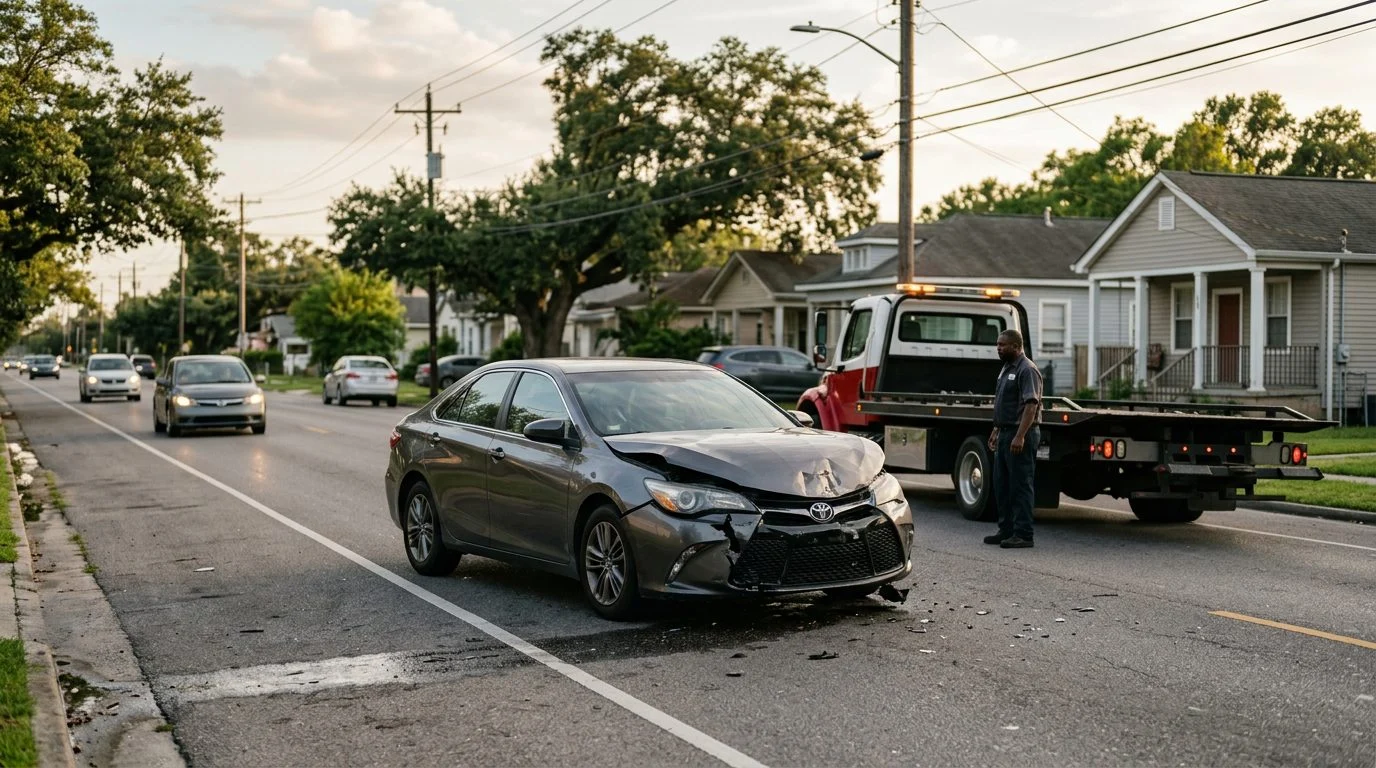
Car Accidents | New Orleans
Your Car Is Damaged After a Crash? Start With a Clear Plan.
Przemek Lubecki and the team at American Trial Lawyer, LLC explain how to protect your vehicle claim, your records and your next steps after a New Orleans collision.
By Przemek Lubecki · Published November 10, 2026
A crash that only damages your car can still turn into a stressful week. You feel fine, but the other driver is on the phone and an adjuster wants a call back.
If your car was damaged but you were not hurt in a New Orleans crash, the core steps are simple. Check everyone’s safety, get the crash on record, exchange insurance details, photograph the damage, and report the claim to your own insurer before you accept any offer. The sections below explain each step, with the Louisiana rules that apply.
Start With Safety and the Scene
Move to a safe spot first if the cars can be moved, and turn on your hazard lights. Then check every person in both vehicles, even people who say they feel fine.
Pain can take hours or days to show up. Neck stiffness, headaches, and back pain are common examples. A medical check soon after the crash gives you a record of how you felt that day.
Call the police from the scene. Ask the officer for a report number before you leave. Write it down with the officer’s name, so you can ask for the report later.
If your car was damaged and you weren't hurt, you don't have to sort out the insurance calls alone. Our New Orleans office can talk through your crash with you. Talk it through with our team — the first consultation is free, confidential, and carries no obligation.
Do You Need a Police Report After a Car Crash in New Orleans?
Yes, a police report is worth requesting, even when no one was hurt. Under La. R.S. 32:398, the police department investigates crashes inside city limits. State police or the sheriff’s office investigates crashes outside them.
The report records the time, place, vehicles, and parties involved.
If no officer came to the scene, you can still document the crash yourself. Keep every note and form you create.
Exchanging Driver and Insurance Information
Get the other driver’s full name, address, phone number, driver’s license, plate number, insurer, and policy number. Also write down the make, model, and color of their car.
Under La. R.S. 32:398, a driver in a crash resulting in injury to or death of any person or property damage in excess of five hundred dollars must give name, address, and registration number. Subsection J of La. R.S. 32:398 concerns notifying the medical/conviction unit of the Department of Public Safety and Corrections when an investigating officer has reason to believe a driver’s medical condition may be cause for license revocation or suspension. That notice is made only after the officer first consults with a superior officer, who must concur with the issuing officer’s belief. The officer must also instruct each driver to report the liability carrier and the insurance agent’s details to all parties suffering injury or property damage as an apparent result of the crash.
The city’s “New Orleans Police Auto Accident Driver Information Exchange” form (NOPD Form 260) works well as a checklist. Use it to make sure nothing is missed.
If the other driver won’t share details or leaves the scene, write down what you saw. Note the plate number, make, color, direction of travel, and the time. Then report what you know to police.
Documenting the Damage and the Scene
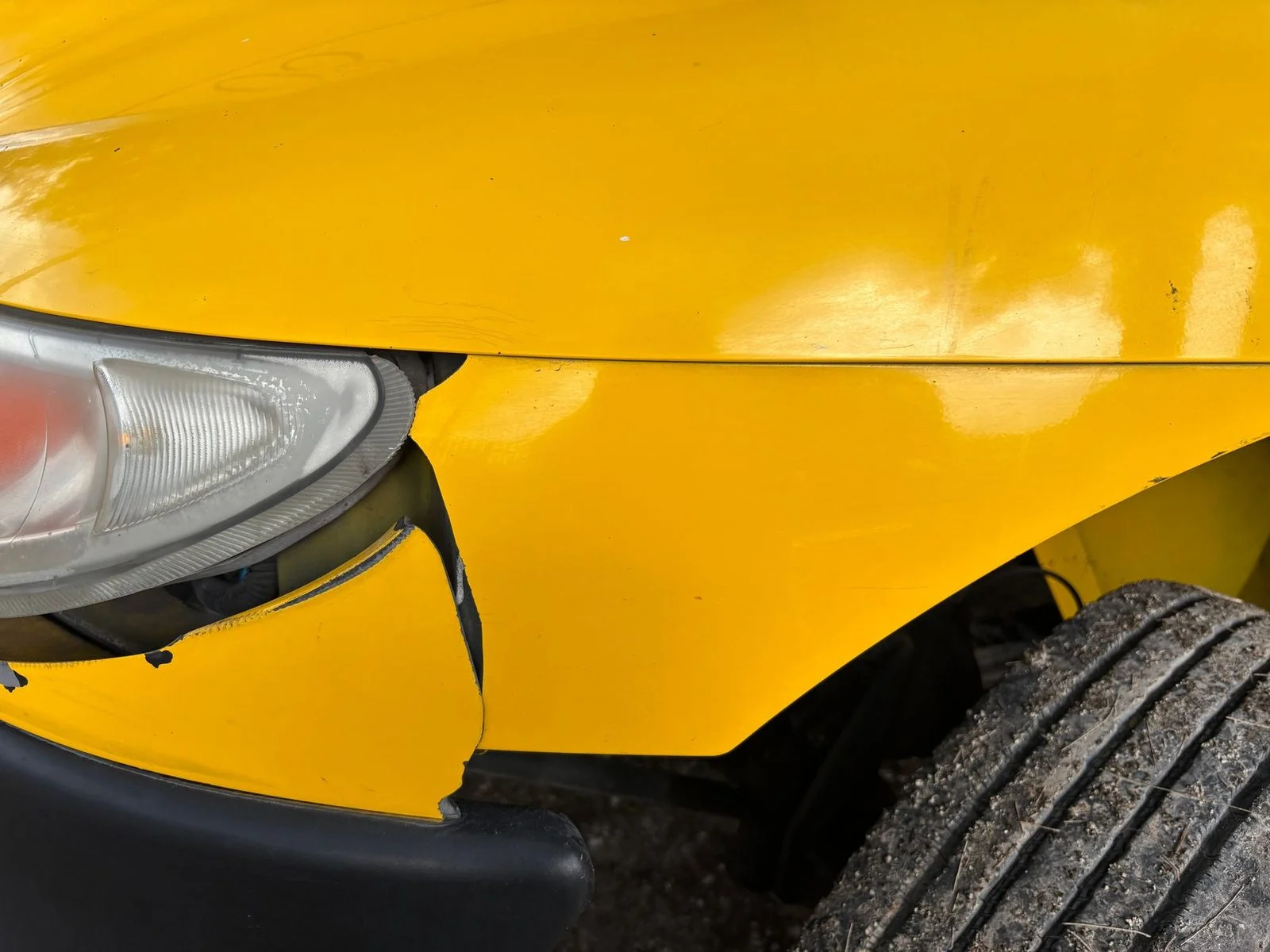
Take photos of both vehicles from several angles. Get close-up shots of the damage, plus the roadway, traffic signals, lane markings, and any skid marks. Take them before the cars are moved, if it’s safe to do so.
Write a short timeline while the details are fresh. Note the time, weather, lighting, each car’s direction of travel, and what each driver said. A timeline written that day is easier to trust than one written weeks later.
Get names and phone numbers of any witnesses. Ask nearby businesses whether they have cameras, and ask soon, since video may be kept only a short time.
Keep receipts for towing, storage, and any rental or ride costs. Keep every repair estimate, even the ones you don’t accept.
Reporting to Your Insurer and Understanding Your Coverage
Report the crash to your own insurer promptly. Write down each claim number, adjuster name, and the date of every call.
Under many policies, collision coverage pays for damage to your own car. Liability coverage responds to claims the other driver makes against you. The exact terms of your policy decide what applies to your car.
Louisiana law also requires insurers to extend a policy’s coverage to temporary substitute and rental vehicles, as La. R.S. 22:1296 describes. That matters while your car is in the shop.
Repair estimates and total-loss evaluations come next. Ask the insurer to explain its valuation in writing, and keep a copy.
When the Other Driver Is Uninsured or Cannot Be Found
Your own uninsured motorist coverage may apply when the other driver has no insurance or cannot be identified. For property damage, if the policy does not afford collision coverage and the named insured requests it in writing (unless the named insured has rejected uninsured motorist coverage), La. R.S. 22:1295 requires the insurer to provide coverage for the lesser of the car’s actual cash value or the minimum property damage liability amount. Under La. R.S. 22:1295, when a policy does not afford collision coverage and the named insured has requested uninsured motorist property damage coverage in writing (and has not rejected uninsured motorist coverage), that coverage is subject to a deductible of two hundred fifty dollars for any one accident.
Under La. R.S. 32:866, recovery may be restricted in certain situations where a driver did not carry required liability insurance. A Louisiana Supreme Court ruling addresses this rule. Under La. R.S. 32:866, there is no recovery for the first one hundred thousand dollars of property damage based on a motor vehicle accident occasioned by an owner or operator of a motor vehicle involved in the accident who fails to own or maintain compulsory motor vehicle liability security, and the statute sets out exceptions to this limitation. The statute lists exceptions.
Claims under the uninsured motorist provisions of a policy must be brought within two years of the accident, under La. R.S. 9:5629.
Not sure what your next step is?
Talk it through with our team — the first consultation is free, confidential, and carries no obligation.
Handling an Early Settlement Offer or Adjuster Call
Adjusters often call early. A first offer may not cover all of your repair costs, rental time, or other losses. It may arrive before you know the full extent of the damage.
Keep your notes simple. Write down the adjuster’s name, the date, and what was said. Don’t guess at how much damage there is during a recorded call. Ask for offers in writing.
Don’t sign a release until you know the final repair costs. A release ends the claim, so take your time with it.
Louisiana’s general damage rule says the person whose fault caused damage must repair it. Damages can include sales taxes the owner paid on the repair or replacement, under La. Civ. Code art. 2315.
Settling a property damage claim under a vehicle liability insurance policy is also not an admission of liability by the insured or the insurer for other claims from the same crash, under La. R.S. 22:1290.
When to Talk With a New Orleans Car Accident Lawyer
Talk with a lawyer when fault is disputed, the other driver is uninsured or missing, an insurer denies or delays your claim, or new symptoms appear later.
Fault matters in Louisiana. Under La. Civ. Code art. 2323, a person whose share of fault is 51 percent or more cannot recover damages. Below 51 percent, damages are reduced in proportion to that share. This is comparative fault (shared fault).
Time limits matter too. Louisiana generally allows two years to file a delictual action (a fault-based claim), counted from the day the damage is sustained, under La. Civ. Code art. 3493.1. That article has exceptions.
Przemek Lubecki is the responsible lawyer for this page. The firm’s New Orleans office serves people in Orleans Parish, the New Orleans metro, and Louisiana matters. The firm may associate or refer a case to other law firms.
What should I do if my car was damaged but I was not hurt in a New Orleans crash?
Check everyone’s safety, get a report number, exchange insurance details, and photograph the damage. Then report the claim to your own insurer.
Can I still recover if the other driver was uninsured?
Possibly, through your own uninsured motorist coverage, subject to your policy and the statute’s limits.
The first consultation is free, confidential, and without obligation. If you’re sorting out a crash that damaged your car, call 855-LUBECKI or request a free case evaluation.
Practical steps after a property damage crash
Check for safety first
Move to a safe spot if you can, turn on hazard lights, and call 911 if anyone needs medical help or the road is blocked.
Document the scene
Photograph both vehicles, the damage, the road, traffic signs and signals from several angles before anything is moved.
Exchange information
Write down names, phone numbers, insurance company and policy details, license plate numbers and the other driver's contact information.
Report the claim
Notify your own insurer promptly and keep copies of every estimate, invoice, rental receipt and letter you receive.
How our team can help with your vehicle claim
Clear answers to your questions
We explain the insurance process in plain language so you know what to expect at each stage.
Help organizing your records
We help you gather photos, estimates, repair bills and correspondence in one place.
Attention to your side of the story
We listen closely to what happened and what you need, and we focus on protecting your interests.
Based in New Orleans
Our office is in New Orleans, and we serve people across Orleans Parish, the New Orleans metro area and Louisiana.
Be careful before you sign anything
Do not sign a repair estimate, release or settlement form from the other driver's insurer until you understand what it covers. The firm may associate or refer a case to other law firms when that is in the client's best interest; we will tell you if that happens.
Talk with Przemek Lubecki about your crash. Your first consultation is free, confidential and comes with no obligation to continue.
Related practice areas
- Car Accident Claims in Orleans Parish