
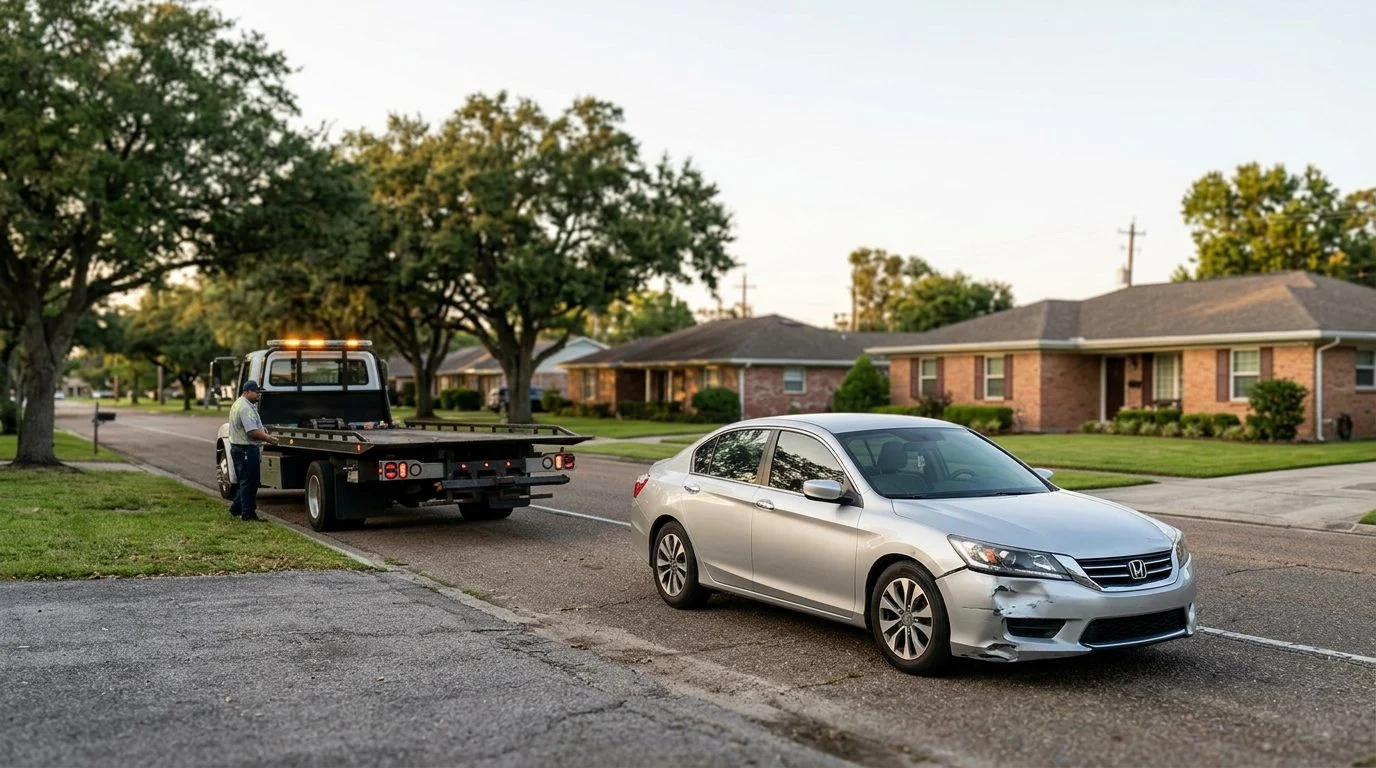
Car Accidents | New Orleans, Louisiana
Does Every Louisiana Car Accident Claim End in Court?
Find out how most injury claims are resolved, when a lawsuit becomes necessary, and what the process can look like for you and your family.
By Przemek Lubecki · Published November 17, 2026
If you were hurt in a car accident in Louisiana, you may wonder whether you have to go to court. The short answer is no, not automatically. A car accident claim starts with the insurance companies involved. A lawsuit is one possible next step, and only if the claim cannot be resolved.
Many people feel uneasy about the word “court.” Knowing the difference between a claim and a lawsuit can make the next decision feel clearer. This page explains each stage in plain language, from the claim with insurers to the filing deadline.
Claim or Lawsuit: What Is the Difference?
A claim is a request for payment made to the insurers involved. A lawsuit is a court case filed when that request cannot be resolved. The claim stage happens through letters, phone calls, and negotiation, and it does not require a courtroom appearance.
A lawsuit is therefore a separate, more formal step, not the first move in a car accident claim. Both sides look at injuries, medical bills, and who caused the crash during this stage. Whether a particular case reaches court depends on the facts, including the injuries, the dispute over fault, and how the insurer responds.
You may be asked to send documents before any offer is made. Louisiana also uses a comparative fault rule, which means your share of blame matters (La. Civ. Code art. 2323). If an insurer argues you share blame, the amount you can recover may change, so fault is often central.
If an insurer's offer has you wondering whether to keep negotiating or file suit, we can talk through your situation with you. Talk it through with our team — the first consultation is free, confidential, and carries no obligation.
How a Car Accident Injury Claim Moves Forward
A claim usually moves through four stages: gathering records, presenting the claim, negotiating, and deciding whether to file suit.
Gathering records comes first. That means medical records and bills, the police report, and photos of the vehicles and the scene. Presenting the claim means sending it to the at-fault driver’s insurer. Negotiation is the back-and-forth over injuries, bills, and fault.
Medical treatment often sets the pace. Injuries that need follow-up care may take time to document, so a claim can stay open while treatment continues. Keep a simple log of appointments, missed work, and out-of-pocket costs. Ask the insurer to put requests in writing, and keep a copy of every letter or email you send. The insurer may ask about prior injuries, so be honest about your health history.
You may be asked for a recorded statement. Under La. R.S. 13:3732, a person who takes a recorded statement from an injured person must give that person a true and complete copy. The copy is due within twenty days after a written demand.
Every case differs, so the steps that fit your accident can vary.
When a Lawsuit May Be Needed
A lawsuit may be considered when negotiation does not produce a resolution the injured person can accept. Common reasons include disputed fault, an insurer that will not negotiate in good faith, and disagreement about the value of the injuries.
Louisiana law places the duty to repair damage on the person whose fault caused it. Under La. Civ. Code art. 2315, every act that causes damage to another obliges the person by whose fault it happened to repair it. Fault is weighed in a suit as well. Under La. Civ. Code art. 2315, a person whose fault causes damage to another is obliged to repair that damage.
Filing a lawsuit starts a formal court process. That process has set deadlines, rules for evidence, and rules for answering the other side’s requests for information. A lawsuit also means the other side can ask for documents and information, a process called discovery. Once suit is filed, the case moves through scheduled filings and court dates. A lawsuit can be a long process, and the timeline varies from case to case.
Choosing whether to file is a decision made after weighing the insurer’s response, the timing rules, and the strength of the evidence.
What a Deposition Is and Whether You’d Attend One
A deposition is sworn testimony given outside the courtroom, usually at a lawyer’s office, with a court reporter recording the questions and answers. Attorneys for the parties may ask questions, and the testimony can be used later in the case.
A deposition is a different event from a trial. No judge or jury is present. It is a step inside a lawsuit, not part of the claim stage.
Questions often cover the crash, your injuries, and your treatment. The other side’s attorneys may also ask about your prior health and the work you missed. A deposition can feel intimidating, and that is normal. Take your time before answering, and ask for a question to be repeated if you need to. Clear, truthful answers matter because the testimony can be used later.
What a Trial Is and When It Comes Up
A trial is a hearing in court where evidence is presented and a judge or jury decides the case. Trial is the final stage of a lawsuit, not the starting point of a car accident claim.
A case can also end earlier, through a settlement or a dismissal. Both sides present witnesses, documents, and other evidence, and the decision rests on that evidence and the law. If you file a lawsuit, you may need to testify, appear on scheduled court dates, and respond to requests from the other side.
A trial date also means planning around court schedules, which can affect work and family life. Learning the stages in order can make each one feel less unfamiliar. Knowing that trial is one possible stage can make the process easier to plan for.
The Filing Deadline in Louisiana
In general, Louisiana gives two years from the date of injury to file a personal injury lawsuit. The rule comes from La. Civ. Code art. 3493.1, which sets two years of liberative prescription (the legal deadline to sue) for delictual actions, meaning fault-based injury claims. The clock starts on the day the injury is sustained.
Every case has its own timeline, so it is worth discussing the facts of your situation with a lawyer early.
Keep a record of the accident date, since every later step is measured from it. Deadlines can feel far away while you are still recovering. Still, the clock runs from the injury date, not from the end of treatment or a settlement talk. Prescription is the legal word for this deadline, so you will see it in court papers.
Filing matters too. Waiting too long can limit your options, because the filing deadline keeps running.
Not sure what your next step is?
Talk it through with our team — the first consultation is free, confidential, and carries no obligation.
Talk With Przemek Lubecki About Your Decision
The next step is a conversation about your own situation.
Przemek Lubecki is the responsible lawyer for this page. American Trial Lawyer, LLC has its office in New Orleans, Louisiana. The firm may associate or refer a case to other law firms.
The initial consultation is free, confidential, and carries no obligation to continue. A short conversation can help you see where your situation stands and how the timing rules apply. You are welcome to bring your questions, your papers, and your timeline.
If an insurer’s offer has you weighing whether to keep negotiating or file suit, you can request a free case evaluation or call 855-LUBECKI (office in New Orleans).
Frequently Asked Questions
Do most Louisiana car accident claims end up in court?
No. Many car accident injury claims are resolved through negotiation with insurance companies without a trial. A lawsuit is usually filed when settlement talks do not resolve the claim fairly.
When does a car accident claim need to go to court in Louisiana?
A claim may need to go to court when the insurer disputes who was at fault, disagrees about the value of the injuries, or does not make a settlement offer that reflects the losses. Court proceedings can include formal exchange of information, motions, and, in some cases, a trial before a judge or jury.
What is the deadline to file a car accident lawsuit in Louisiana?
Louisiana law sets a time limit, called prescription, for filing suit, and for many injury claims it runs for a period of years from the accident date. Cases that involve a government entity can involve different procedures, so it is wise to have the facts reviewed promptly.
How does Louisiana’s fault rule affect a car accident lawsuit?
Each case is different, and how fault is assessed can affect what a person may recover, so a lawyer can explain how these principles may apply to the facts of your case. How fault is assigned depends on the evidence in each case. A free, confidential consultation can help explain how these rules may apply to a specific situation.
Key Questions About Car Accident Claims
Most claims are negotiated
Many car accident injury claims are resolved through negotiation with insurance companies without a trial.
When a lawsuit may be filed
A lawsuit is often considered when settlement talks do not resolve the claim fairly.
What a trial involves
A trial is a formal court process in which evidence is presented to a judge or jury to decide disputed issues.
Outcomes are not promised
Every case is different. No one can promise how a claim will end, whether it settles or goes to court.
Protect Your Claim Early
Keep medical records, repair estimates, photos and insurance correspondence. Talk with a lawyer before giving a recorded statement to an insurance company, so you understand your options first.
How We Approach Your Case
Prepared for trial
We prepare every case as though it may go to trial, while keeping settlement options open for you.
Plain-language guidance
We explain your options clearly so you can make informed decisions at each stage.
Focus on families
We understand how a serious crash can affect work, health and home, and we treat your situation with care.
Office in New Orleans
We serve Orleans Parish, the New Orleans metro area and Louisiana from our New Orleans office.