
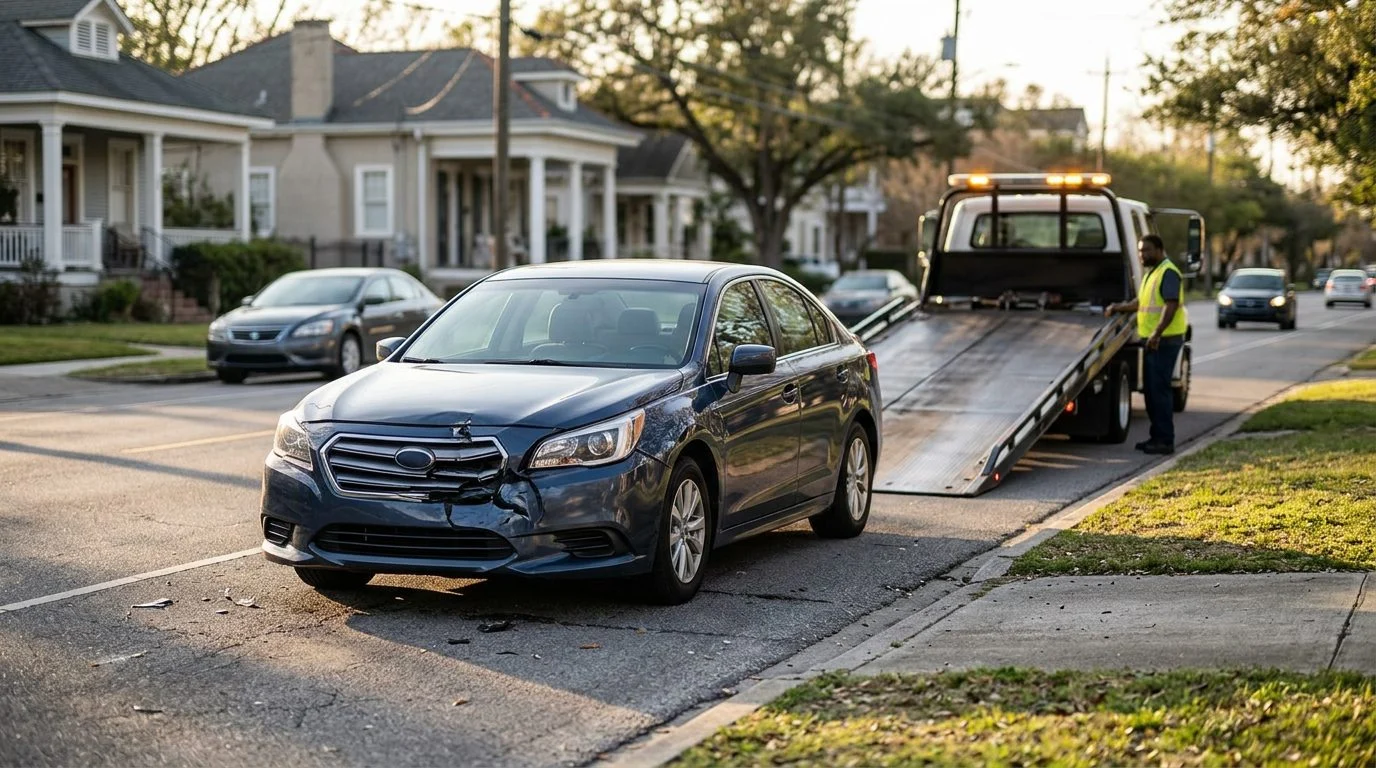
Car Accidents | New Orleans, Louisiana
Hurt in a Crash With a Police Car? Know the Early Steps
Przemek Lubecki and the American Trial Lawyer team represent people injured in car crashes involving police vehicles in New Orleans and across Louisiana. Office in New Orleans. Your first consultation is free, confidential and without obligation.
By Przemek Lubecki · Published November 2, 2026
If a New Orleans Police Department car or another city-owned vehicle hit you, or caused a loved one’s death, you may have a claim. Claims against public bodies follow Louisiana rules that differ from a crash with a private driver. Knowing those rules early helps you protect your options. This page explains what they mean for you and what happens after you reach out.
What is a police or city vehicle car accident claim, and who is it for?
A police or city vehicle car accident claim is a personal injury or wrongful death claim that comes from a crash involving a police, city or other public entity vehicle. It is for people hurt in these crashes in Orleans Parish and the New Orleans metro area, and for families of people who died in them.
- Drivers, passengers, cyclists and pedestrians who were injured in a crash with a police or city vehicle.
- Families of someone killed in such a crash.
- Anyone who is not sure who was responsible or which steps apply.
The main difference is who may be responsible. Under La. Civ. Code art. 2315, a person whose fault causes damage to another must repair it. Under La. Civ. Code art. 2320, an employer can be answerable for damage its employees cause while doing their jobs. That happens only when the employer might have prevented the act and did not. (Fourth Circuit art. 2320 opinion)
This page falls under the firm’s car accident and wrongful death work.
If a police or city vehicle was part of your crash, or of a loved one's death, you may have a claim, and you don't have to sort out the notice rules alone. Talk it through with our team — the first consultation is free, confidential, and carries no obligation.
Why do claims against public vehicles follow different rules?
Claims against public bodies follow special rules. These can add steps and limits that a private-driver case would not have. Here are the main ones to know.
- No jury against a political subdivision. La. R.S. 13:5105 says no suit against a political subdivision shall be tried by jury, unless the political subdivision, by general ordinance or resolution, waives that prohibition.
- Where suit is filed. La. R.S. 13:5106 says no suit against the state, a state agency or a political subdivision can be brought in a court other than a Louisiana state court.
- Policy and discretionary decisions. La. R.S. 9:2798.1 says liability is not imposed for policymaking or discretionary acts within a public body’s lawful powers. That protection does not cover acts or omissions that are not reasonably related to the legitimate governmental objective for which the policymaking or discretionary power exists, or acts that constitute criminal, fraudulent, malicious, intentional, willful, outrageous, reckless, or flagrant misconduct.
- The form and timing vary by entity and by case, so review should happen promptly.
The general deadline for most injury claims is two years under La. Civ. Code art. 3493.1. Do not assume that general rule is the only timing rule that applies when a public body is involved.
What notice and filing steps help protect the claim?
Start by identifying the right public body, then gather the records that show what happened. The entity named affects where notice goes. So the first question is who owned the vehicle or employed the driver.
- The responsible body. That could be the City of New Orleans, the New Orleans Police Department, another agency, or a contractor.
- The crash report. Under La. R.S. 32:398, a city’s police department investigates crashes within city limits. Crash reports and their information are confidential. Upon request, they must be made available within seven working days after the investigation is complete.
- Your own records. Keep photos, citation numbers, officer names and unit numbers when you have them, witness names, and every medical record.
- Video. Dashcam and body-worn camera footage may not be kept forever, so ask for it early.
- The written notice. A notice typically describes the date, place and facts of the crash, the people and vehicles involved, the injuries, and the damages claimed.
Do not wait for the agency or an insurer to contact you before you act on the notice question. Our team at American Trial Lawyer can check the timing for your case.
What can a claim include?
A claim can seek money for losses the crash caused. Common categories include medical costs, lost income and pain and suffering.
- Past medical costs, such as emergency care, hospital stays, surgery, imaging, rehabilitation and medication, and future medical costs only where they are directly related to a manifest physical or mental injury or disease. (Medicare secondary payer rules)
- Lost wages and lost earning capacity when an injury keeps you from work or changes the work you can do.
- Vehicle and property damage, plus transportation costs while you recover.
- Pain and suffering and loss of enjoyment of life, including after a serious brain injury.
- Loss of consortium. La. Civ. Code art. 2315 allows damages for loss of consortium, service and society, recoverable by the same people who could bring a wrongful death claim. La. Civ. Code art. 2315 reads: “Damages do not include costs for future medical treatment, services, surveillance, or procedures of any kind unless such treatment, services, surveillance, or procedures are directly related to a manifest physical or mental injury or disease.”
For families, La. Civ. Code art. 2315.2 lets a surviving spouse and children sue first. If none survive, the parents may sue, then siblings, then grandparents, in that order.
Your own share of fault also matters. Under La. Civ. Code art. 2323, as amended and effective January 1, 2026, a person suffering injury, death, or loss partly as a result of his own negligence and partly as a result of another person’s fault is not entitled to recover damages if the degree or percentage of negligence attributable to that person is equal to or greater than fifty-one percent. If the degree or percentage of negligence attributable to a person suffering injury, death, or loss is less than fifty-one percent, the amount of damages recoverable is reduced in proportion to that percentage of negligence (La. Civ. Code art. 2323).
The amount and availability of each category turns on the evidence and on any limits that apply to the public body. No outcome or amount can be promised.
How does the process work, step by step?
The process starts with a free, confidential consultation. It then moves through evidence, notice, investigation, and either negotiation or a lawsuit.
- Free consultation. You speak with the firm with no obligation to continue. The firm reviews the crash facts, your injuries and any papers you already have.
- Evidence. The firm identifies the public body, requests the crash report and any available video, and advises you on keeping photos, bills and messages.
- Notice. The firm prepares and presents any written notice the claim requires, within the period that applies.
- Investigation. The firm gathers medical records, wage records, and opinions from treating providers and others as the case requires.
- Negotiation or suit. The firm discusses the claim with the responsible entity and its insurer or counsel. If needed and appropriate, it files suit in a Louisiana state court.
Timing varies with your injuries, the public body’s response and court schedules. The firm sets expectations after reviewing your facts rather than promising a schedule.
Why American Trial Lawyer for a government vehicle claim?
Przemek Lubecki is the responsible lawyer for this page. The firm’s office is in New Orleans. The firm represents people seriously hurt in truck, commercial vehicle and car crashes, and families in wrongful death cases, across Orleans Parish, the New Orleans metro and Louisiana.
- Plain explanations. The firm explains notice and filing steps in plain language and tells you what it needs from you.
- Trial focus. The firm is a personal injury trial law firm, so it plans each case with a possible trial in mind.
- Association. The firm may associate or refer a case to other law firms when that is likely. If that happens, you will be told.
- No promised results. No outcome can be promised in any case.
- Free first consultation. It is confidential and comes with no obligation to continue.
Not sure what your next step is?
Talk it through with our team — the first consultation is free, confidential, and carries no obligation.
Questions people ask about police and city vehicle crash claims
Does the police report decide the claim?
No. The crash report is one piece of evidence, and other evidence matters too.
Can I still bring a claim if I did not send notice right away?
The answer turns on the specific facts and rules that apply, so contact American Trial Lawyer to have your situation reviewed promptly.
Should I talk to the city’s adjuster first?
Speak with our team at American Trial Lawyer before giving any recorded statement, because statements can affect the claim.
Will the firm handle my case alone?
The firm may associate or refer a case to other law firms when that is likely, and you will be told if it does.
If a police, city or other public vehicle was part of your crash, or of a loved one’s death, and you’re unsure whether a notice needs to go out soon, request a free case evaluation with Przemek Lubecki at the New Orleans office. You can also call 855-LUBECKI for a free consultation.
Key steps to protect your claim
Get the crash report
Ask for the official report and keep a copy of any citation, incident number or tow receipt connected to the crash.
Get medical care
See a doctor promptly, even if injuries seem minor at first. Keep every record, bill and referral.
Write down what you remember
Record the date, location, weather, traffic signals and what officers and drivers said while the details are fresh.
Identify witnesses
Collect names and contact details for anyone who saw the crash, including passengers and nearby businesses with cameras.
Do not wait to ask for review
Claims involving public vehicles can follow procedures that differ from ordinary car claims. Early review helps identify which steps apply to you.
Questions to raise at your free consultation
What notice is required?
Ask which notice steps apply to a crash involving a police vehicle and who must be contacted.
What evidence should I keep?
Bring photos, reports, medical records and any letters you have received from insurers or agencies.
Who is responsible?
Discuss which drivers, agencies or other parties may be involved based on the facts of your crash.
What happens next?
Review the likely steps, timing questions and how a case would move forward in your situation.
Important: do not delay
Notice steps in claims against public agencies can be strict and easy to miss. American Trial Lawyer may associate or refer a case to other law firms. Contact our New Orleans office early so your situation can be reviewed.
Talk with Przemek Lubecki about your crash
Related practice areas
- Car Accident Claims in Orleans Parish: What Injured Drivers and Passengers Need to Know