
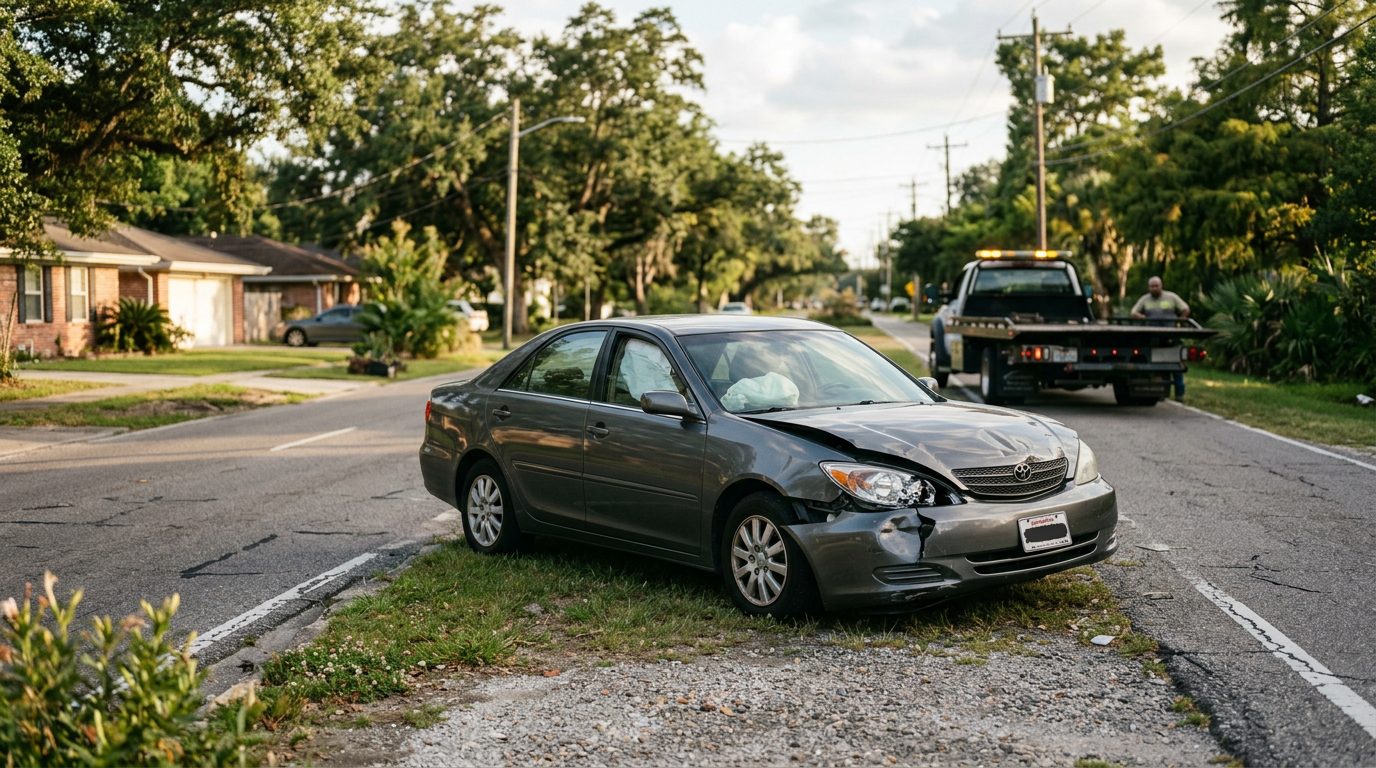
Car Accidents | New Orleans, Louisiana
What Louisiana Civil Code Article 2315 Means for Your Car Accident Claim
Read on for the basics in plain language. The first consultation is free, confidential and without obligation to continue.
By Przemek Lubecki · Published November 16, 2026
If you were hurt in a car crash, you may be asking whether you have a claim and what Louisiana law says about it. If another driver’s fault left you hurt in a car accident, Louisiana Civil Code article 2315 says a person whose fault causes damage to another must repair that damage.
This page explains how article 2315 works in plain language. It covers negligence, damages, borrowed cars, comparative fault, and filing deadlines.
What Louisiana Civil Code Article 2315 Says
Article 2315 is the general rule behind most injury claims in Louisiana, including car crashes. Its first part says that every act of man that causes damage to another obliges him by whose fault it happened to repair it (La. Civ. Code art. 2315).
Put simply, if your fault harms someone else, you may have to repair that harm. The article does not list traffic rules. It states a broad principle, and courts apply it to the facts of each crash.
Article 2316 explains what “fault” can include. It says a person is responsible for damage caused not only by an act, but also by negligence, imprudence, or want of skill (La. Civ. Code art. 2316). That language matters most when a driver’s conduct is in question.
If a crash left you hurt and unsure who is responsible, you don't have to sort out your claim alone. Request a free case evaluation with Przemek Lubecki at our New Orleans office. Talk it through with our team — the first consultation is free, confidential, and carries no obligation.
Negligence in a Car Crash: The Core Elements
Negligence in a car crash means driving in a way that falls below what a careful driver would do in the same situation. A claim usually asks four questions. Was there a duty? Was it breached? Did the breach cause the injury? Were there damages?
Understanding these parts can help you know which questions to ask about your own situation. These ideas can also be connected to the same crash, and how they apply depends on the facts of each case. Proof on one part does not automatically prove the others.
A common mistake is to assume that proof the other driver was careless is enough. The injured person also needs to connect that carelessness to their own injuries and losses. Evidence such as the crash report, photos, and witness statements often shows whether that link is clear.
Duty, Breach, and Cause in Fact on the Road
Every driver owes a duty to others on the road to drive with care. Louisiana law says a driver must drive “in a careful and prudent manner, so as not to endanger the life, limb, or property of any person” (La. R.S. 32:58).
A breach happens when a driver falls short of that duty. Following too closely is one example. Louisiana law says a driver “shall not follow another vehicle more closely than is reasonable and prudent” (La. R.S. 32:81). Other conduct people often raise includes distracted driving and running a red light. Whether any of these happened is a question for the evidence.
Whether an injury was connected to the conduct in question depends on the facts of each case. A rear-end collision is a common example. It would not have happened if the following driver had kept a safe distance. The crash itself is not enough on its own. The question is whether the driver’s conduct was a real cause of the harm. An injury that came from a separate event can complicate that link.
Damages Recoverable Under Article 2315
Damages are the losses a person can claim because of a crash. Some are bills and receipts. Others are harder to put a number on.
Actual damages often include medical bills, lost wages, and damage to the vehicle. Article 2315 also says damages may include sales taxes an owner paid on repair or replacement of damaged property (La. Civ. Code art. 2315).
Medical bills raise a practical question. When a health insurer or Medicare paid a contracted provider, recovery is limited to the amount actually paid and any cost sharing, not the amount billed (La. R.S. 9:2800.27). Future medical care has its own limit. Article 2315 says damages do not include future treatment costs unless they are directly related to a manifest physical or mental injury or disease.
Other harms, such as physical pain and loss of enjoyment of life, do not come with a bill. Their weight depends on the injury and how it changes daily life. Support usually includes medical records, bills, wage records, and repair estimates.
If Medicare paid for care, the CMS guidance says a liability insurer pays first for accident-related care, and Medicare pays second (CMS Medicare Secondary Payer overview). Medicare payments made in the meantime are conditional. They must be repaid when a settlement, judgment, award, or other payment is made.
If a crash causes a death, family members may have a wrongful death claim. Article 2315 says loss of consortium, service, and society can be recovered by the same persons who would have a wrongful death claim.
Borrowed Cars and Who May Be Responsible
A crash in a borrowed car raises questions about both the driver and the car’s owner. The answer depends on the facts. Those facts include who owned the car, who was driving, and how permission to use it was given.
Louisiana Civil Code article 2324 says that where liability is not solidary, a joint tortfeasor “shall not be liable for more than his degree of fault” (La. Civ. Code art. 2324); those who conspire to commit an intentional or willful act are answerable in solido. In plain terms, when more than one person is at fault, each person generally answers for their own share.
More than one insurance policy may also apply. An insurer may cover the driver, the owner, or both, depending on the policy terms. Finding out which policies apply early helps you understand who is involved.
Keep a simple record. Write down who owned the car, who was driving, and how the car was borrowed. Save the insurance information from everyone involved, and keep photos of the vehicles. A common mistake is waiting weeks to write these details down, when they are harder to recall.
Fault and Comparative Negligence in Louisiana
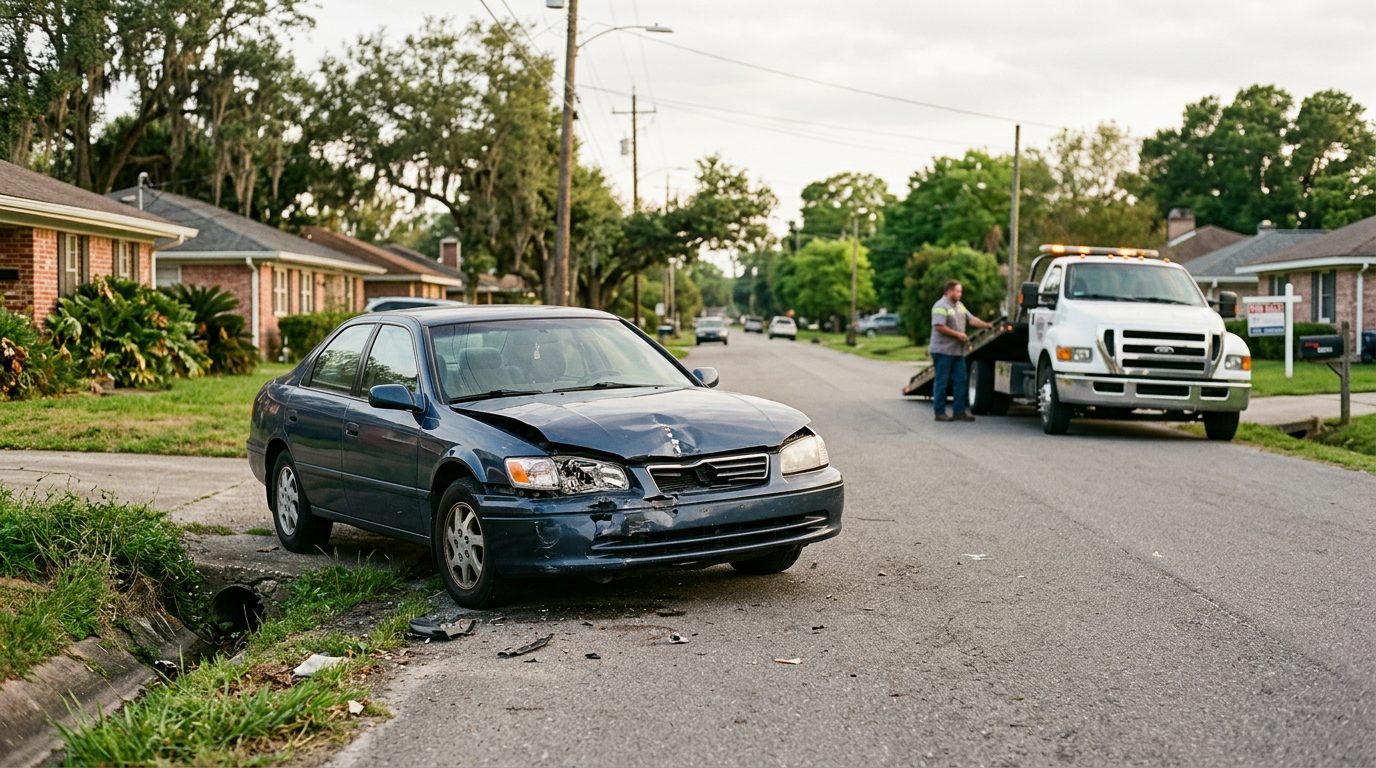
Louisiana compares the fault of everyone involved in a crash. Under article 2323, as amended in 2025 and effective January 1, 2026, a person at 51 percent or more at fault from their own negligence is not entitled to recover damages, but if the person’s injury is partly from their own negligence and partly from the fault of an intentional tortfeasor, the claim for recovery of damages is not reduced (La. Civ. Code art. 2323).
A person less than 51 percent at fault can still recover (La. Civ. Code art. 2323). Under the same article, their damages are reduced in proportion to their own share of fault. For example, a 20 percent share of fault would reduce the recovery by 20 percent.
The article also says fault is determined for all persons who caused or contributed to the injury. That includes people who are not parties to the lawsuit. Fault can be assigned to someone who is not in the case.
Fault percentages are often disputed. The evidence, such as the crash scene, the vehicle damage, and witness accounts, is what decides them.
Not sure what your next step is?
Talk it through with our team — the first consultation is free, confidential, and carries no obligation.
Filing Deadlines and Whether a Claim Becomes a Lawsuit
For most injuries, Louisiana’s general deadline is two years from the day the injury happened. Article 3493.1 sets a two-year liberative prescription (a filing deadline) for delictual actions, which runs from the day injury or damage is sustained (La. Civ. Code art. 3493.1).
Wrongful death follows a different rule. Under article 2315.2, the right of action prescribes one year from the death or two years from the day injury was sustained, whichever is longer (La. Civ. Code art. 2315.2).
Many car accident claims start with an insurance company. If the claim cannot be resolved that way, it may become a lawsuit. A lawsuit is a civil case filed in court. Filing a claim with an insurer is a different step from filing a lawsuit.
Waiting to see how an insurer responds can use up time you need. Starting to gather records early keeps your options open.
Frequently Asked Questions About Article 2315 and Car Accident Claims
Does a car accident count as a civil lawsuit?
A car accident claim for damages is a civil matter. A lawsuit is one way to pursue it when the claim cannot be resolved another way.
What if I was partly at fault?
You may still recover under article 2323 if your share of fault is below 51 percent. Under La. Civ. Code art. 2323(C), if a person suffers injury partly from his own negligence and partly from the fault of an intentional tortfeasor, his claim for recovery of damages shall not be reduced. Your damages would be reduced by your percentage if your share of negligence is less than fifty-one percent, unless the other person’s fault is that of an intentional tortfeasor, in which case your claim is not reduced.
Do I have to prove negligence to recover damages?
A claim generally has to show that the defendant’s negligence, imprudence, or want of skill caused the injury, as article 2316 describes.
How long do I have to file a car accident claim in Louisiana?
For most injuries, the general period is two years from the injury under article 3493.1 (La. Civ. Code art. 3493.1). Wrongful death claims follow article 2315.2.
Talking With Przemek Lubecki About Your Crash
If you were hurt in a crash and aren’t sure who is responsible, you don’t have to work through the law alone. You may be facing medical bills, a question about who was at fault, a borrowed or shared vehicle, and a decision about whether to pursue a claim.
If you’re deciding whether to pursue a claim after a crash, call 855-LUBECKI or request a free case evaluation with Przemek Lubecki at our New Orleans office.
The first consultation is free, confidential, and without any obligation to continue. Przemek Lubecki is the responsible lawyer for this page at American Trial Lawyer, LLC.
American Trial Lawyer may associate or refer a car accident case to other law firms.
This page is general information about Louisiana law. It is not legal advice about your situation, and it does not predict how any claim will be resolved.
What This Page Covers
How it connects to your claim
We look at how the general principle relates to the facts of a collision, the injuries and the losses involved.
Protecting your position
Early decisions about statements, records and insurance communications can matter. Understanding the basics helps you ask better questions.
Questions to bring to a lawyer
Every case depends on its own facts. A conversation with a lawyer can help you understand how these ideas apply to your situation.
Important to Know
This page is general information, not legal advice. Your situation is unique, and time limits may apply to your claim, so speak with a lawyer promptly. Some car accident cases may be associated with or referred to other law firms, and we will tell you if that is the case.
Common Questions After a Crash
Is a car accident claim a civil matter?
A claim for damages from a crash is a civil matter. A lawsuit is one way to pursue it when the claim cannot be resolved another way.
What if I was partly at fault?
Fault can be shared among drivers. The article's details matter, so it is worth discussing the specific facts with a lawyer.
How do insurance adjusters fit in?
Insurers often ask for recorded statements early. Speaking with a lawyer before giving one can help you understand your options.
Who can help me review my case?
Przemek Lubecki and our team in New Orleans focus on serious injury and crash claims and can explain how these rules may apply to you.