
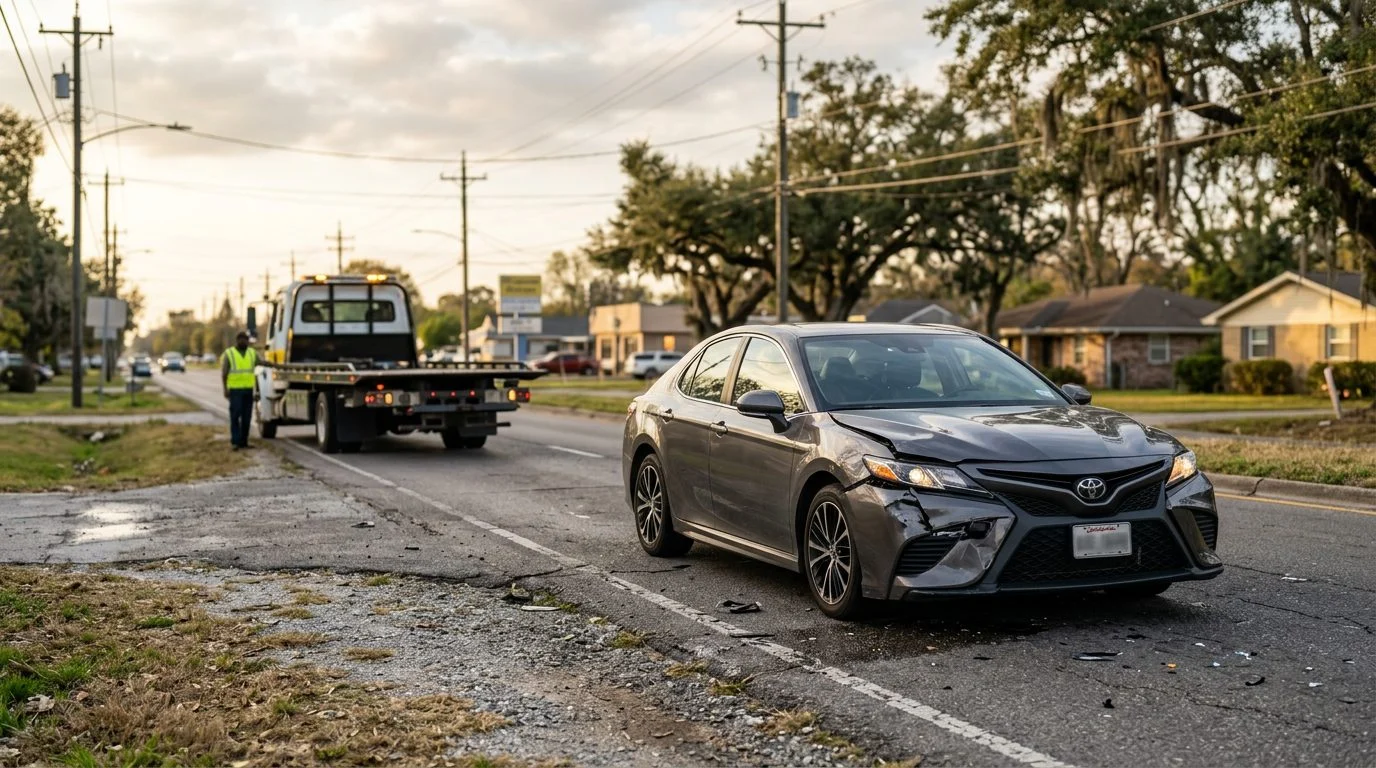
Car accident injuries | New Orleans, Louisiana
Who Pays the Medical Bills After a Louisiana Car Accident?
Bills can arrive from several directions at once. Here is how to keep track of them and where to start when the questions pile up.
By Przemek Lubecki · Published November 10, 2026
After a car accident, one of the first questions is often what the medical bills will add up to. There is no single average medical bill after a car accident that fits most people. The total depends on your injuries, the care you need, and what each provider charges.
The amount printed on a bill is also not always the amount used in an injury claim. Here is how it works.
Why there is no single average medical bill after a car accident
No single average describes the bills of most people hurt in a crash. A sore neck treated at urgent care and a fractured spine needing surgery produce very different totals. Even two people with similar injuries can end up with different bills.
Two questions shape the total most. How serious were the injuries? How much care did they require? Beyond that, the total depends on how long treatment lasts, which providers you see, and whether those providers are in your health plan’s network. Charges also vary from one hospital or clinic to another.
A number from someone else’s accident cannot tell you what your own bills will be. Many people are surprised by how many separate bills one crash creates. Each doctor, lab, and pharmacy may send its own statement. This guide explains the kinds of costs and how they get paid, so you know what to look for on your statements. It is not a price list.
If medical bills keep piling up while you recover, you don't have to sort them out alone. Our team can talk through your options in a free, confidential consultation. Talk it through with our team — the first consultation is free, confidential, and carries no obligation.

What goes into medical bills after a car accident
Medical bills after a car accident usually come from emergency care, testing, treatment, and follow-up. Common charges include:
- Ambulance and emergency transport
- Emergency room care
- Hospital admission
- Imaging, such as X-rays and MRIs
- Surgery
- Prescriptions
- Physical therapy
- Follow-up visits with doctors
Emergency care is often the first large bill. Ambulance rides and emergency visits can be billed separately from the hospital stay and from the doctors who treat you there. That is why one crash can generate many statements.
Bills often keep coming for months after the crash. Physical therapy and other ongoing care can continue long after the first emergency visit. New statements keep arriving as treatment continues.
Some losses are not medical bills at all. Lost income is one example. Future medical care is another, and Louisiana law treats it differently. Under La. Civ. Code art. 2315, damages do not include costs for future medical treatment unless that treatment is directly related to a manifest physical or mental injury or disease.
Keep a folder for every bill, lab result, and receipt. It helps you see what was treated and when. Treatment records also show how the injury was handled over time, which matters when bills are reviewed later.
Who pays medical bills after a car accident in Louisiana
Medical bills after a car accident are often paid by more than one source. Common sources include your health insurance, medical payments coverage on your own auto policy if you have it, and the at-fault driver’s liability insurance through a claim.
Medicare can also play a role. Medicare coordinates payment with other insurance and may pay certain bills conditionally.
Each source can have its own rules about which bills it covers. One source may pay a bill that another will not. That is why it helps to track which source paid each bill, and how much.
Payment sources are often combined. A health plan may pay part of a bill while auto coverage pays the rest. If you’re unsure which sources apply, your medical records and insurance statements are the place to start.
Should you use health insurance or auto insurance first?
Which insurance to use first depends on the facts of your case. The policies involved and the providers treating your injuries both matter.
Health insurance can have lower out-of-pocket costs in some cases, depending on your plan and whether your providers are in network. Medical payments coverage is part of your own auto policy, not the other driver’s. It is a separate source of payment from the at-fault driver’s insurance.
The billed-versus-paid rule in Louisiana has an exception for auto medical payments. The statute says it does not apply to benefits received through an automobile liability policy that provides medical payments coverage. See La. R.S. 9:2800.27.
Each choice can affect later reimbursement claims, so the order matters. That concern is reasonable, and it is a reason to look carefully at the sequence before you choose. Ask each provider to explain what your insurance will and won’t cover.
Keep every bill, explanation of benefits statement, and payment record from the first day. An explanation of benefits shows what was billed, what was paid, and what may still be owed.
How medical bills factor into an injury claim
Medical bills are one part of an injury claim, not the whole claim. In a claim against the at-fault driver, past medical expenses are one category of damages, alongside other losses.
Louisiana’s billed-versus-paid rule shapes that category. When a health insurer or Medicare paid a contracted provider, recovery is limited to the amount actually paid plus the cost sharing you paid or owe. It is not the amount billed. See La. R.S. 9:2800.27.
Cost sharing includes copayments, coinsurance, and deductibles.
Fault also matters. Under art. 2323, if a person suffers injury, death, or loss partly from his own negligence and partly from another’s fault, and that person’s share of negligence is 51 percent or more, he cannot recover damages; this bar does not apply where the other party is an intentional tortfeasor. Under La. Civ. Code art. 2323, if a person’s own negligence is equal to or greater than 51 percent, that person is not entitled to recover damages. If the person’s negligence is less than 51 percent, the recoverable damages are reduced in proportion to that negligence. Where injury results partly from the person’s own negligence and partly from the fault of an intentional tortfeasor, the claim is not reduced.
Bills alone do not predict what a claim is worth. Under La. Civ. Code art. 2324.1, in assessing damages in cases of offenses, quasi offenses, and quasi contracts, much discretion must be left to the judge or jury. American Trial Lawyer, LLC may associate or refer a car accident case to other law firms.
Common mistakes that affect medical bills and claims
Gaps in treatment can make later bills harder to connect to the crash. Following through on recommended care, and telling each provider about all your symptoms, helps keep the medical record clear.
Some problems are simple but costly. Bills get lost in the mail, insurance letters go unanswered, and new symptoms go unmentioned at appointments. Each one can make the medical picture harder to read later. Write down new symptoms, dates, and missed work as they happen.
Think before you answer questions from an insurance company about the crash or your injuries. For more on that, read what not to tell an insurance company after a car accident.
Whether medical bills come out of a settlement is a separate question. For that, see medical bills and car accident settlements. Taking these steps early makes the paperwork easier to manage later.
Not sure what your next step is?
Talk it through with our team — the first consultation is free, confidential, and carries no obligation.
Frequently asked questions
These answers are brief because each case turns on its own records. For a wider look at truck and car accident claims, see truck and car accident claims in New Orleans.
How much is a hospital visit after a car accident?
Hospital charges vary by facility, services, and insurance network. A bill cannot be estimated without the actual records.
Is a particular settlement amount a good settlement for a car accident?
No general answer exists. The value of a claim turns on the injuries, the treatment, and the facts of each case.
Talk with the New Orleans team about your medical bills
If you’re still recovering and the bills keep coming, this can feel like too much to sort out at once. If you’re helping an injured family member, you may not know where to start.
Our team at American Trial Lawyer, LLC offers a free, confidential first consultation with no obligation to continue. It is a chance to ask about your own bills, insurance, and next steps. Call 855-LUBECKI (Office in New Orleans) or request a free case evaluation.
Przemek Lubecki is the responsible lawyer for this page. The office is in New Orleans, Louisiana.
Documents worth keeping from day one
Every itemized bill
Ask each provider for an itemized statement, not only the summary total, and keep copies of what you receive.
Bills that arrive over time
Statements often trickle in for weeks or months after treatment. Save each one, even when it looks like a duplicate.
Insurance letters and explanations
Keep explanation of benefits forms and coverage letters from your own insurer and any other insurer involved in the crash.
Records from the crash scene
Crash reports, photos and witness names help make clear how the injuries and treatment connect to the collision.
Do not rely on a guess
Provider charges vary by facility, services and insurance network, so no one can estimate a final bill without the actual records. Also, American Trial Lawyer may associate or refer a case to other law firms.
Common questions about medical bills
Can I see a doctor before I know who pays?
Your health comes first. Getting medical care after a crash is important, and you can raise billing questions separately.
What if a bill is sent to collections?
Write down the account details and send us copies of any collection notices so they can be reviewed with the rest of your records.
Does a settlement cover bills automatically?
Every claim depends on its own facts. Bring your bills and records to a consultation so the questions can be looked at together.
Should I talk to an insurer first?
Be careful about recorded statements or signing forms before you understand what they cover. A conversation with our office can help you plan your next step.
Talk with Przemek Lubecki about your medical bills
Related practice areas
- Truck Accidents in New Orleans and Orleans Parish
- Louisiana Truck Crash Claim: Hours-of-Service Violations