
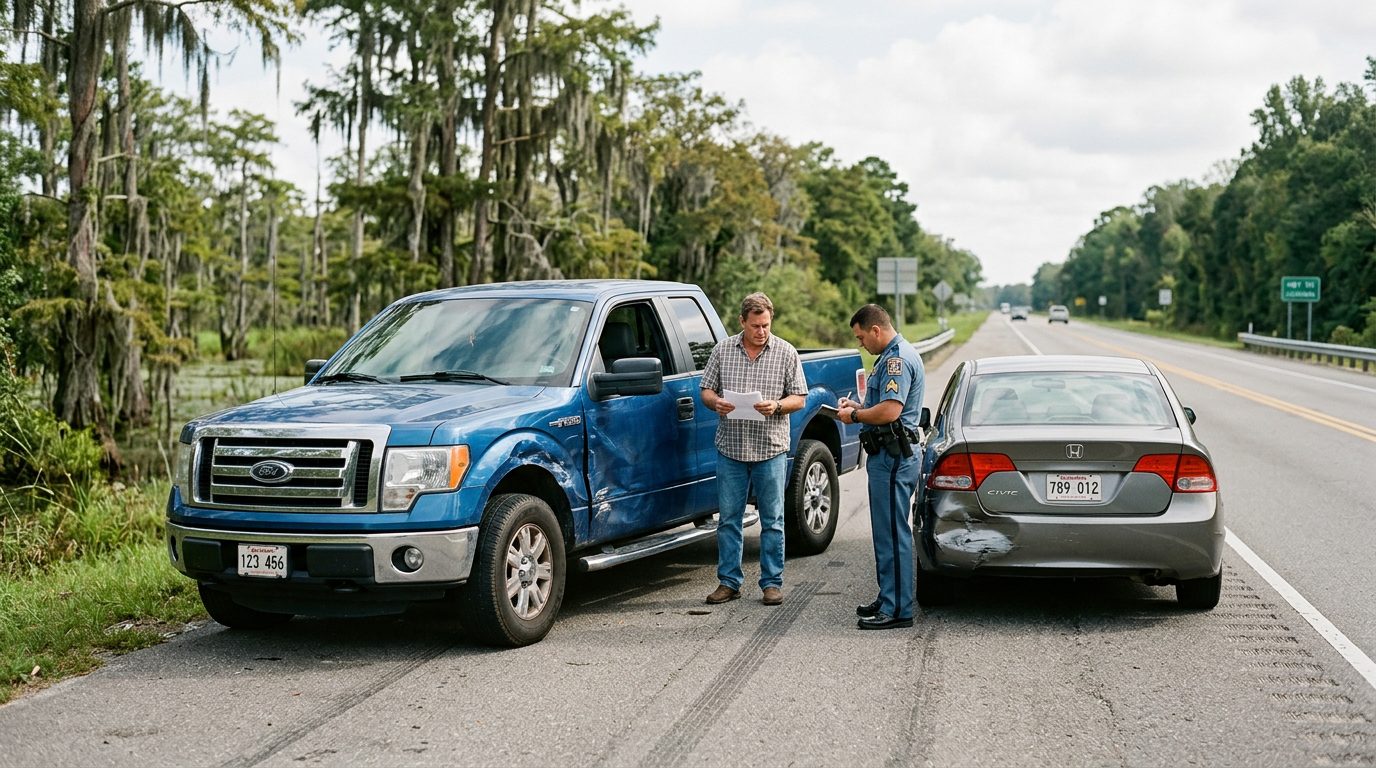
Car Accidents | New Orleans, Louisiana
When the Other Driver Has No Insurance, Know What Your Policy Can Cover
Plain-language guidance from Przemek Lubecki, trial lawyer at American Trial Lawyer in New Orleans, on uninsured motorist coverage after a crash in Louisiana.
By Przemek Lubecki · Published October 28, 2026
What is uninsured motorist coverage and what does it cover in Louisiana? In short, it is a part of your own auto policy. It can apply after a crash with a driver who has no insurance, and your policy’s limits set how much is available.
Many people first hear about UM coverage after a crash. An adjuster may mention it, or the other driver may have no insurance at all. Your own policy is the starting point, not the other driver’s policy. This guide explains the basics in plain language. It is general information, not advice about your own claim.
What uninsured motorist coverage means in plain terms
To start with the basic answer, uninsured motorist coverage is part of your own policy, unless an insured named in the policy rejects coverage, selects lower limits, or selects economic-only coverage. It can apply when the other driver’s insurance can’t pay. Louisiana law generally requires registered vehicles to carry liability insurance or another form of security the statute allows (La. R.S. 32:861). Not every driver follows that rule, and UM coverage helps fill that gap.
UM coverage is paid through your own insurer, under your own policy. It is separate from the at-fault driver’s liability coverage, which answers for that driver’s responsibility to others. The amount available depends on the limits stated in your policy.
Louisiana law also sets what a motor vehicle liability policy must show. La. R.S. 32:861 requires every self-propelled motor vehicle registered in this state to be covered by an automobile liability policy with liability limits as defined by R.S. 32:900(B)(2) or 900(M), a binder for same, a motor vehicle liability bond, a certificate of the state treasurer that cash or securities have been deposited, or a certificate of self-insurance as provided by R.S. 32:1042. The exceptions are agricultural or forest vehicles during seasons when they are not used on the highway, vehicles used primarily for exhibit or kept primarily for use in parades, exhibits, or shows, and lease-bound mobile rig haulers. It must state the named insured’s name and address, the coverage, the premium, the policy period, and the limits of liability (La. R.S. 32:900). Your declarations page is the place to start. The Louisiana Office of Motor Vehicles also publishes compulsory insurance information.
Not sure what your next step is?
Talk it through with our team — the first consultation is free, confidential, and carries no obligation.

How UM and underinsured motorist coverage work in Louisiana
Louisiana law sets strict form rules for rejecting or changing UM coverage. Under La. R.S. 22:1295, rejecting UM coverage, selecting lower limits, or selecting economic-only coverage must be done on a form prescribed by the commissioner. The named insured or the insured’s legal representative must sign that form.
A properly completed, signed form creates a rebuttable presumption. La. R.S. 22:1295 reads: “If the form is signed but not properly completed, such that the rebuttable presumption does not apply, there shall be no uninsured motorist coverage or modified uninsured motorist coverage, as applicable, if it is determined that the insured or his representative intended to reject or modify the uninsured motorist coverage.” That means the law presumes the insured knowingly made the choice, and the presumption can be challenged. Under La. R.S. 22:1295, the insured on a commercial automobile insurance policy has the option of selecting uninsured motorist coverage on a form promulgated by the commissioner. If that form shows no choice of this coverage and no premium paid includes it, it is presumed that no uninsured motorist coverage was selected for the policy, and the provisions of this section do not apply. Read any form you sign.
Underinsured motorist (UIM) coverage is a related part of many policies. It applies when the at-fault driver has some insurance, but not enough to cover the injured person’s losses. Many policies combine UM and UIM, so check your declarations page for both.
Time limits matter too. Under La. R.S. 9:5629, actions for damages from motor vehicle accidents brought under a policy’s uninsured motorist provisions are prescribed by two years from the date of the accident. “Prescribed” means the legal time limit has run out after that period.
What the bodily injury portion of UM coverage may pay for
UM bodily injury coverage addresses injuries to people. It may pay for covered losses such as medical bills, lost income, and other damages the policy describes, up to your limits. The policy’s definitions decide what counts.
Louisiana’s medical expense rule affects these numbers. When a health insurer or Medicare paid a contracted provider, recovery of those medical expenses is limited to the amount actually paid, plus any cost sharing such as copayments and deductibles. It is not the amount billed (La. R.S. 9:2800.27).
Pain and suffering and other non-economic losses depend on the policy language and Louisiana law. Read how your policy defines each category. Keeping bills, pay stubs, and repair estimates together makes the losses easier to review.
Common situations include a hit-and-run, a driver with no insurance, or a driver whose limits are too low for the losses. These questions come up after car, truck, motorcycle, and rideshare crashes alike.
One detail surprises many readers. In a crash with no physical contact, UM bodily injury coverage may apply. The injured person must prove, through an independent and disinterested witness, that the injury was the result of the actions of the driver of another vehicle whose identity is unknown or who is uninsured or underinsured (La. R.S. 22:1295).
Property damage under uninsured motorist coverage
Some policies include an uninsured motorist property damage part. Not every policy includes it, so check.
Property damage is separate from UM bodily injury. The two parts can have different limits and deductibles, so read each one on its own. Louisiana’s damages rule says damages include sales taxes the owner paid on repair or replacement of the damaged property (La. Civ. Code art. 2315). Repair estimates and receipts help show what was damaged.
Vehicle claims can have their own notice steps. Keep every letter and notice your insurer sends, and note the date you received each one.
Standard policies, economic-only policies and stacking
A standard UM policy covers the losses its wording describes, up to the stated limits. The policy you have, not a general rule, defines its scope.
An economic-only choice is made on the same prescribed form under La. R.S. 22:1295. An economic-only choice excludes all noneconomic loss, and its scope otherwise comes from the policy wording and any endorsements (La. R.S. 22:1295). Standard and economic-only choices matter because they change what the policy covers. Check the declarations page and endorsements to see which one you have.
Stacking means adding UM limits from more than one vehicle or policy. Under La. R.S. 22:1295(c), if the insured has any limits of uninsured motorist coverage in a policy of automobile liability insurance, those limits shall not be increased because of multiple motor vehicles covered under that policy. Under La. R.S. 22:1295(c), such limits also shall not be increased when the insured has insurance available under more than one uninsured motorist coverage provision or policy. However, if you are hurt while occupying an automobile not owned by you, your resident spouse, or a resident relative, the UM coverage on that vehicle is primary. If that coverage is exhausted, you may recover as excess from one other uninsured motorist coverage available to you. Look for multi-vehicle language in your policy wording.
Frequently asked questions about uninsured motorist claims
Each answer below is general, because the facts of your crash and your policy matter.
Can I reject uninsured motorist coverage in Louisiana?
Yes, but the rejection must be made on the prescribed form and signed by the named insured or the insured’s legal representative (La. R.S. 22:1295). You can change that choice later by submitting a new form during the life of the policy. La. R.S. 22:1295 reads: “Any changes to an existing policy, regardless of whether these changes create new coverage, except changes in the limits of liability, do not create a new policy and do not require the completion of new uninsured motorist selection forms.”
What is the time limit to file a UM claim?
Under Louisiana law, actions for damages under a policy’s uninsured motorist provisions are prescribed by two years from the date of the accident (La. R.S. 9:5629).
Does UM coverage apply in a hit-and-run?
It may, in some cases. Bodily injury coverage can apply without physical contact, but only if an independent and disinterested witness shows the injury resulted from the actions of a driver whose identity is unknown or who is uninsured or underinsured (La. R.S. 22:1295).
What about giving a recorded statement to my insurer?
Statements can affect a claim, so take care with them. If you gave a written or recorded statement, Louisiana law says the person who took it, or anyone holding it, must give you a true and complete copy within twenty days after your written demand, and if they refuse, the statement cannot be admitted in evidence or otherwise used in any civil action relating to its subject matter (La. R.S. 13:3732).
Not sure what your next step is?
Talk it through with our team — the first consultation is free, confidential, and carries no obligation.
Talk with the New Orleans office about your situation
You may be reading this after a crash, sorting through calls from an adjuster, or helping a family member whose claim is still open. That can feel like a lot to handle alone. If you are still asking what is uninsured motorist coverage and what does it cover in Louisiana for your own policy, you don’t have to work that out by yourself.
Przemek Lubecki is the responsible lawyer for this page, and the firm’s office is in New Orleans. To talk through your declarations page and the facts of your crash, call 855-LUBECKI (Office in New Orleans) or request a free case evaluation. Bring your declarations page and any letters from your insurer to the call. The first consultation is free, confidential, and without obligation.
The firm may associate or refer a case to other law firms. Any co-counsel is separate from American Trial Lawyer, LLC.
Situations where this coverage may come up
Crash with an uninsured driver
Coverage may be relevant when the at-fault driver has no liability insurance.
Crash with an underinsured driver
Some policies address injuries when the at-fault driver's limits are not enough to cover the harm.
Hit-and-run collisions
When the driver who caused the crash cannot be identified, the terms of your own policy become especially important.
Your policy wording
What is covered depends on the language in your policy and the facts of the crash, so the exact terms matter.
Do not assume you are covered
Insurers may ask you to give recorded statements or sign forms soon after a crash. Before you sign anything about uninsured or underinsured coverage, talk with a lawyer about what you are agreeing to.
Common questions about this coverage
Can coverage be rejected or changed?
Louisiana law sets out the forms and steps used to make these choices. Ask about your own policy before you sign anything.
Does it apply to my injuries?
Whether a claim fits depends on the crash, the parties involved and the terms of your policy. A free consultation can help you sort out the facts.
Who handles the claim?
Our team at the New Orleans office works with people hurt in car, truck, commercial vehicle, rideshare and motorcycle crashes across Louisiana.
When a case is referred
American Trial Lawyer may associate or refer a case to other law firms. Any referral will be disclosed to you.
Questions about your policy after a crash? Talk with us first.
Related practice areas
- Truck Accidents in New Orleans and Orleans Parish: How Injury Claims Work
- What not to tell your insurance company?
- Car Accident Lawyer Marrero Harvey Louisiana Guide