

Truck Accidents | New Orleans, Louisiana
Suing a Trucking Company in Louisiana: What to Expect, Step by Step
A plain-language guide from Przemek Lubecki and the team at American Trial Lawyer, based in New Orleans. Learn how these cases usually move, from the first call to the courtroom.
By Przemek Lubecki · Published October 23, 2026
Trucking Company Lawsuit Steps Louisiana: First Consultation to Filing
If a truck crash has left you or someone you love facing hard decisions, we're glad to talk through your situation at a free, confidential first consultation. Talk it through with our team — the first consultation is free, confidential, and carries no obligation.
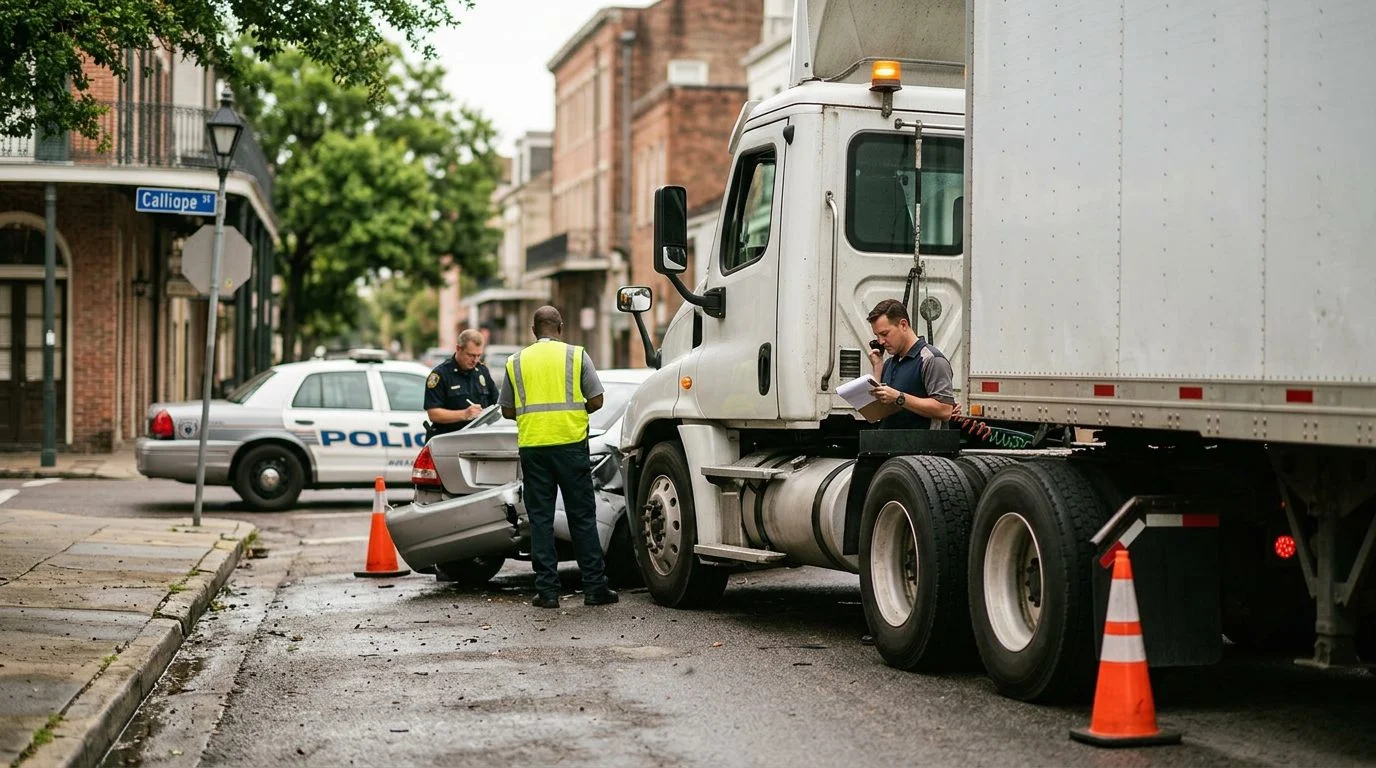
What are the steps from the first consultation through filing a lawsuit against a trucking company in Louisiana?
The trucking company lawsuit steps in Louisiana usually move through five stages. The process starts with a free, confidential first consultation. Next comes evidence preservation, then a pre-suit demand and negotiations. If the claim is not resolved, a lawsuit is filed in the proper Louisiana court.
Each stage builds on the one before it. Evidence gathered early can shape the later stages. The route is not a checklist you finish in order, and some steps overlap. The timing changes with each case.
Here is the route in short:
- First consultation
- Evidence preservation and investigation
- Liability, damages and the pre-suit demand
- Filing the lawsuit
- Discovery, preparation and trial
This page is general information. The firm may associate or refer a case to other law firms. Przemek Lubecki is the responsible lawyer for this page, and the office is in New Orleans.
Stage one: the first consultation and what to bring
The first step is a conversation. The first consultation is free, confidential and without obligation. You can use it to explain what happened and what worries you most.
Write down the date, time and location of the crash while you remember them. Keep a list of who you spoke with and what was said. You don’t need every document to start. Bring what you have, which may include:
- Any crash report number you have.
- Photos of the scene, the vehicles and any injuries
- Medical records and bills
- Records of lost pay or missed work
- Letters from insurance companies
If you are speaking for an injured relative or a family member who died, share what you know. You don’t need every answer on the first call.
A crash with a large truck is frightening. The days that follow can feel overwhelming. Taking one step at a time makes the path easier to see.
Stage two: preserving evidence and early investigation
Truck crash evidence can disappear quickly, so early steps matter. Trucks are often repaired and returned to service, and electronic data can be overwritten. Federal rules require trucking companies to keep some records for set minimum periods. Alcohol and drug testing collection records must be kept for at least two years. Negative test results must be kept for at least one year. 49 C.F.R. § 382.401
Under 49 C.F.R. § 382.401, certain driver alcohol and drug test records must be kept for a minimum of five years. The duty to test surviving drivers after certain crashes is in 49 C.F.R. § 382.303. 49 C.F.R. § 382.303 If an alcohol test is not given within two hours, the company must record why. After eight hours, it must stop trying. For drug testing, attempts stop after 32 hours.
Driver logs show how long the driver was working and driving. Each change of status must list the city, town or village and the state; if a change occurs at a location other than a city, town or village, show the nearest highway number and milepost, service plaza, or intersecting highways, followed by the nearest city, town or village and state. 49 C.F.R. § 395.8
A preservation letter is a written request. It goes to the trucking company and its insurer. It asks them to keep specific records, such as driver logs, maintenance files, dispatch messages and testing records. The investigation then looks at the scene, the vehicle damage, the driver’s hours and training, and the company’s hiring and safety practices. Related pages on this site cover truck crash evidence in more detail.
Stage three: liability, damages and the pre-suit demand
Liability asks who caused the crash and how. The answer can involve the driver, the trucking company, a cargo loader, a maintenance provider or another party. Louisiana makes employers answerable for damage their workers cause while doing their jobs. Responsibility attaches only when the employer might have prevented the act and did not. La. Civ. Code art. 2320
Louisiana also divides fault between the people involved. Under La. Civ. Code art. 2323, a person suffering injury, death, or loss whose own negligence is equal to or greater than fifty-one percent shall not be entitled to recover damages. Under La. Civ. Code art. 2323, if the negligence attributable to a person suffering injury, death, or loss is less than fifty-one percent, the amount of damages recoverable shall be reduced in proportion to that degree or percentage of negligence. Under La. Civ. Code art. 2323, the amount of damages recoverable is reduced in proportion to the degree or percentage of negligence attributable to the person suffering the injury, death, or loss, where that share is less than fifty-one percent.
Damages are the losses caused by the crash. For an injured person, they can include medical care, lost income and pain and suffering. In a wrongful death case, the surviving family members can seek the losses they have suffered. Related pages on this site explain how fault is assessed in more detail.
A pre-suit demand is a written request to the insurer or company to resolve the claim before any lawsuit. It usually describes the injuries, the losses and the facts the claim rests on. Negotiations can take time, and no one can predict how they will end.
Stage four: filing the lawsuit in a Louisiana court
A lawsuit is filed when the claim is not resolved. Louisiana generally gives two years from the day the injury is sustained for delictual (injury) actions. La. Civ. Code art. 3493.1 The law has exceptions, so the deadline depends on the facts.
Under La. Civ. Code art. 2315.2(B), a wrongful death action prescribes one year from the death of the deceased or two years from the day that injury or damage is sustained, whichever is longer. La. Civ. Code art. 2315.2
Filing location matters for the clock. Prescription, the legal deadline, is interrupted when a suit is filed in a court with proper jurisdiction and venue. If the venue is improper, the clock stops only for a defendant served within the deadline. If the court is competent but the venue improper, prescription is suspended for seven days as to a defendant not served within the deadline. La. Civ. Code art. 3462
The case begins with a petition, which names the defendants. Those may include the trucking company and the driver. Each then files an answer. Choosing the court is part of this step. The firm may associate or refer a case to other law firms.
Not sure what your next step is?
Talk it through with our team — the first consultation is free, confidential, and carries no obligation.
Stage five: discovery, preparation and trial
Discovery is one of the trucking company lawsuit steps in Louisiana that follows filing. It is the exchange of information between the parties. It can include written questions, requests for documents and depositions. A deposition is a sworn interview taken outside the courtroom. These interviews may include the driver and company representatives. The truck and its records may also be inspected.
This stage can take a long time, because each side needs time to gather records and prepare its witnesses. Many cases resolve during or after discovery. Others move toward trial. Preparing for trial means organizing the evidence, witnesses and damage records into a clear case. You’ll hear from the firm as each stage moves forward.

If you are weighing these steps for your own family, contact our New Orleans office
A free, confidential first consultation is the first step, and it carries no obligation to continue. Walking through these trucking company lawsuit steps in Louisiana starts with that conversation.
If a relative is in the hospital or a family member has died, paperwork and deadlines can pile up fast. You may be making decisions you never planned to make. Before choosing a next step, it helps to know which records exist and who holds them.
Frequently asked questions
How long do I have to sue a trucking company in Louisiana?
Louisiana generally allows two years from the day of injury for injury claims, but the law has exceptions (La. Civ. Code art. 3493.1). Art. 3493.1 sets a two-year prescription for delictual actions, running from the day that injury or damage is sustained, but wrongful death claims are governed by the separate timing rule in art. 2315.2(B).
Who can bring a wrongful death claim?
Louisiana law sets an order. A surviving spouse and children come first, then parents, siblings and grandparents if no one above them survives.
Can I get a copy of a crash report?
Crash reports are confidential and go to the parties, their attorneys and insurers.
What happens after a lawsuit is filed?
The defendants respond, and the case moves into discovery, the exchange of information between the parties.
If a truck crash has left you or someone you love facing hard choices, call 855-LUBECKI (Office in New Orleans) to talk with the office of Przemek Lubecki, or request a free case evaluation.
How We Approach a Trucking Lawsuit
Careful Review of the Facts
We look closely at the crash report, driver logs, and the company's records to understand what happened and who may be responsible.
Preserving Key Evidence
Trucking companies often have records that disappear quickly. We focus early on requesting and protecting that evidence.
Attention to Your Recovery
We keep your medical needs and daily life in view while the case moves forward, and we explain each decision in plain terms.
Clear Communication
You will know where your case stands and what comes next, without legal jargon.
Good to Know Before You Decide
This firm may associate or refer a truck accident case to other law firms. Every case is different, and nothing on this page is a promise about how any claim will turn out.
The Typical Steps in a Trucking Lawsuit
1. Get Medical Care and Keep Records
Your health comes first. Follow your doctors' advice and keep copies of every bill, report, and prescription related to the crash.
2. Speak With a Trial Lawyer
A first conversation helps you understand your options. Your initial consultation is free, confidential, and without obligation.
3. Investigate the Crash
We gather the police report, photos, witness information, vehicle data, and the carrier's safety and maintenance records.
4. Identify Everyone Involved
Trucking cases can involve the driver, the trucking company, a cargo or leasing company, and others. We work to identify each party that may share responsibility.
5. Present the Claim
We prepare a detailed demand and open a discussion with the insurers and defense lawyers. Many cases resolve at this stage.
6. Prepare for Trial if Needed
If a fair resolution is not reached, we prepare the case for litigation and for presentation before a judge or jury.