
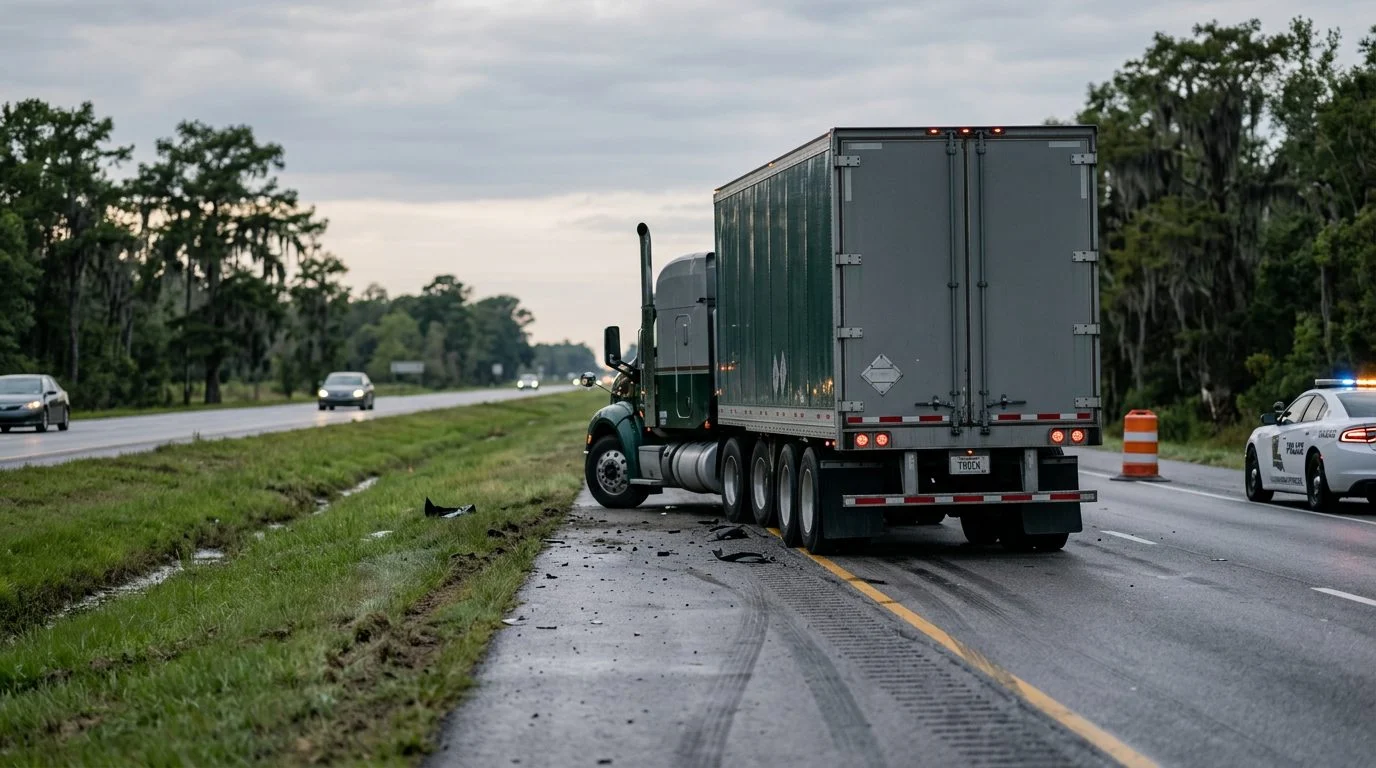
Truck Accidents | New Orleans, Louisiana
Hurt in a Crash With a Trucking Company? Talk With a New Orleans Trial Lawyer
Przemek Lubecki represents people seriously injured in truck, commercial vehicle and car crashes, and families in wrongful death cases, from the New Orleans office across Orleans Parish, the metro area and Louisiana. Your first consultation is free, confidential and comes with no obligation to continue. You may owe case costs and expenses in addition to the fee.
By Przemek Lubecki · Published October 19, 2026
Can I sue a trucking company after a crash in Louisiana? Often, yes. In many cases, an injured person can bring a claim against the trucking company as well as the driver. Whether that claim works depends on the facts, including who employed the driver and what the company did.
The Short Answer: Yes, You Can Often Sue the Trucking Company
In many Louisiana truck crashes, the trucking company can be part of the claim. There are two main routes.
The first route is responsibility for the driver. Louisiana law makes employers answerable for damage caused by their workers while the workers do the jobs they were hired to do. Louisiana Civil Code art. 2320 The employer’s responsibility applies only when it might have prevented the harmful act and did not.
The second route is the company’s own fault. A claim can focus on choices the company made, such as how it hired, trained, supervised, or maintained its trucks and drivers.
A claim is a civil case for money damages. It is separate from any traffic ticket or criminal charge. Some claims resolve without a trial. Insurers and lawyers are involved from the start.
Not sure what your next step is?
Talk it through with our team — the first consultation is free, confidential, and carries no obligation.
Who Can Be Named in a Louisiana Truck Crash Claim
The driver, the company that employed or dispatched the driver, and the truck’s owner can each be named when the facts support it. Other parties can be too.
- The driver, for his or her own negligence, such as careless driving or distraction.
- The motor carrier, the company that employed, leased, or dispatched the driver.
- The truck or trailer owner, when it is a different company, such as a leasing company.
- Others whose conduct contributed, such as a maintenance contractor, when the evidence supports it.
Louisiana assigns each defendant responsibility for its own share of fault. A defendant is not liable for more than its degree of fault. Louisiana Civil Code art. 2324 Naming every responsible party early matters, because more than one insurance policy may apply.
Louisiana law also requires a driver in a crash with injury to give his or her name, address, and vehicle registration number. La. R.S. 32:398 Those details help identify who may be named.
What a Claim Can Cover
A claim seeks money to repair harm that someone’s fault caused. Louisiana Civil Code art. 2315 Losses can include:
- Medical bills for emergency care, surgery, rehabilitation, and treatment that follows.
- Lost wages, and lost earning ability if injuries affect future work.
- Pain and suffering and loss of enjoyment of life, judged case by case.
- Property damage, including the vehicle and personal belongings.
- Wrongful death losses for the family, including loss of consortium, service, and society.
Future medical costs have a limit. They are recoverable only when directly related to a manifest physical or mental injury or disease. Louisiana Civil Code art. 2315 Brain injury claims often rely on medical records and testing over time, because symptoms can change.
The value of any claim turns on injuries, proof of fault, and available insurance. No amount can be promised before the facts are reviewed.
Louisiana Rules That Shape Your Claim
Three rules shape most claims: the filing deadline, shared fault, and federal trucking records.
Deadlines. For most injury claims, Louisiana allows two years from the day the injury happened. Louisiana Civil Code art. 3493.1 That text took effect July 1, 2024. Most delictual actions have a two-year prescription under Louisiana Civil Code art. 3493.1. Wrongful death claims are governed by Louisiana Civil Code art. 2315.2: one year from the death or two years from the injury, whichever is longer, except that medical malpractice wrongful death actions prescribe one year from the death. Louisiana Civil Code art. 2315.2 Missing a deadline can end a claim.
Shared fault. The amended comparative fault rule took effect January 1, 2026. Under La. Civ. Code art. 2323, if the degree or percentage of negligence attributable to the person suffering injury, death, or loss is equal to or greater than fifty-one percent, that person shall not be entitled to recover damages (La. Civ. Code art. 2323). Under La. Civ. Code art. 2323, if the degree or percentage of negligence attributable to the person suffering injury, death, or loss is less than fifty-one percent, the amount of damages recoverable shall be reduced in proportion to that degree or percentage (La. Civ. Code art. 2323). Louisiana Civil Code art. 2323 The article has a separate exception when another party’s fault was intentional. We can check which version applies to your crash.
Federal rules. Drivers must record their duty status for each 24-hour period. 49 C.F.R. § 395.8 Those logs can show how long a driver had been working. Many commercial trucks cross state lines, so federal rules can apply alongside Louisiana law.
Evidence to Protect Early
Trucking records have minimum keep periods, so early requests matter. 49 C.F.R. § 391.51
Key evidence includes:
- Police and crash reports. Louisiana makes crash reports available to the parties, their attorneys, and insurers, generally within seven working days after the investigation is complete. La. R.S. 32:398
- Photos and video of the scene, the vehicles, and the injuries.
- Electronic logging device data and dashcam footage, if they exist.
- Maintenance and inspection records.
- Witness names and contact details, collected while memories are fresh.
- Medical records and a timeline of your treatment.
Keep your own records too. Save receipts, missed-work notes, and a daily symptom journal. Before you give a recorded statement to any insurer, you can talk with a lawyer first.
What to Expect: Step by Step
A claim often moves through these steps, though each case differs.
- First consultation. You describe the crash, your injuries, and your questions.
- Investigation. Gather the crash report, records, and footage. Send requests and preservation letters to the carrier.
- Claim and demand. Document injuries and losses, then present the claim to the insurer.
- Negotiation. Settlement talks can happen at any stage. You decide whether to accept any offer, and you should review its terms closely first.
- Filing suit, if needed. The case moves through discovery, depositions, and motions.
- Trial or settlement. Timelines vary with complexity, the court’s schedule, and each side’s position. No specific timeline is promised.
Have questions about what happened?
Ask our team directly. The first conversation is free, confidential, and there is no obligation to continue.
Why Contact Przemek Lubecki and American Trial Lawyer
Przemek Lubecki is the lawyer responsible for this page. The office is in New Orleans, Louisiana.
Przemek Lubecki is a trial lawyer who represents people seriously hurt in truck, commercial vehicle, and car crashes, and families in wrongful death cases. The firm also handles rideshare and motorcycle crash claims, brain injury, and negligent security matters.
The New Orleans office serves people in Orleans Parish, the New Orleans metro (including Metairie, Jefferson Parish, Kenner, and St. Bernard Parish), Slidell, and across Louisiana.
Our team includes support staff who help with office and case administration. The firm may associate or refer a case to other law firms.
Each rule above links to its official text.
Frequently Asked Questions
Can you sue a trucking company if their truck hits you?
Yes, in many cases. A claim can name the driver and the company when the facts support fault on each side.
How long do I have to file?
For most injury claims, Louisiana allows two years from the injury (La. Civ. Code art. 3493.1). Delictual actions are subject to a two-year prescription under La. Civ. Code art. 3493.1; wrongful death claims are instead governed by La. Civ. Code art. 2315.2: one year from the death or two years from the injury, whichever is longer.
How long does a truck accident lawsuit take?
Timelines vary with complexity, discovery, and court schedules. No specific timeline is promised.
What affects the value of a claim?
Injury severity, medical care, lost income, proof of fault, and available insurance all matter. No amount can be promised before review.

Talk Through Your Situation With Przemek Lubecki
If a truck or commercial vehicle crash has left you or someone you love hurt, facing bills, or grieving a loss, you don’t have to sort out the legal questions alone. Your first consultation is free, confidential, and carries no obligation to continue. You may owe case costs and expenses in addition to any fee.
To talk through whether a claim against the trucking company may be possible, call 855-LUBECKI or request a case evaluation.
Questions to Think About After a Trucking Crash
Who was driving?
Note the driver's name, the company on the truck, and any markings or DOT numbers you can see or remember.
Who owns and operates the truck?
The carrier, the lessor, or a contractor may each have a role in the trip. Ask about all of them.
What records exist?
Police reports, photos, medical records, and any messages or paperwork from the insurer can all matter to your case.
How are you doing?
Getting medical care for injuries, even ones that seem minor at first, protects your health and documents what happened.
Be Careful With the Trucking Company's Insurer
An insurance adjuster may call you soon after a crash.
Why Families and Injured Drivers Call Us
A trial lawyer at the center
Przemek Lubecki is the responsible lawyer for this page and for your case. Our team of support staff keeps the work organized.
Based in New Orleans
Our office is in New Orleans, and we take cases from Orleans Parish, Jefferson Parish, St. Bernard Parish, the wider metro area and across Louisiana.
Plain answers
We explain the process in clear language so you can make decisions with confidence.
Confidential first talk
Your first consultation is free, confidential and comes with no obligation to continue. You may owe case costs and expenses in addition to the fee.
Referrals may happen
The firm may associate or refer a case to other law firms. If that happens, we will tell you.
Want to know where you stand?
Tell us what happened and our team will walk you through the options available to you, at no cost.