
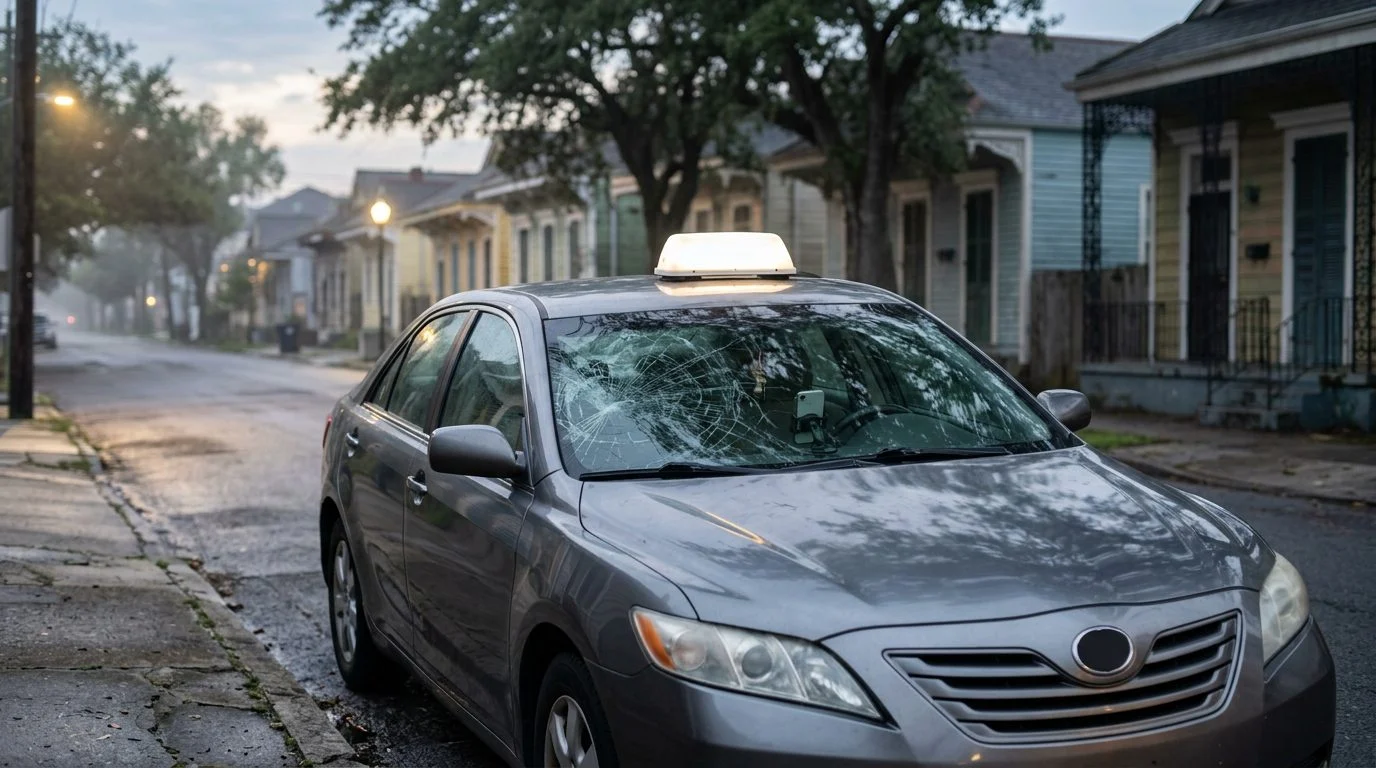
Rideshare Accidents | New Orleans, Louisiana
Hurt in an Uber Crash on the Causeway or Crescent City Bridge?
Rideshare crashes can involve more than one driver, company and insurer. Przemek Lubecki and our team help injured people and families sort out the questions that come first.
By Przemek Lubecki · Published November 18, 2026
If you were in an Uber accident on the Causeway bridge in Louisiana, you may be asking who pays for your injuries. Often, more than one driver and more than one insurer is involved. Who pays depends on what the rideshare driver was doing in the app, who caused the crash, and which policies apply.
This guide explains those pieces in plain words. It also lists what to protect first, so your options stay open while you focus on your health.
Why a Crash on the Causeway or the Crescent City Connection Is Different
A crash on either bridge can involve several vehicles and several insurers at once.
The Lake Pontchartrain Causeway and the Crescent City Connection are long, high-traffic routes. Commuters from New Orleans, the Northshore and Jefferson Parish use them every day.
Bridge crashes can start a chain reaction. A rideshare car may be struck by a passenger vehicle, and a commercial truck may be in the same traffic. Each vehicle can bring its own driver, owner and insurer into the claim.
Bridges also leave little room to stop or pull over. Where vehicles came to rest, how traffic was moving and how the lanes were marked can all matter later. Write down what you remember while it is fresh. That is why the first facts you gather can shape the whole claim.
For a broader look at rideshare crashes in New Orleans, read our rideshare accident guide for New Orleans.
If you were hurt as a passenger or driver in a rideshare crash on the Causeway or the Crescent City Connection and you're unsure which insurers may pay, we're glad to review your situation with you. Talk it through with our team — the first consultation is free, confidential, and carries no obligation.
Who May Be Responsible for Your Injuries
Responsibility may rest with whichever driver’s negligence caused the crash, and in some cases with a company too.
The at-fault driver could be another motorist, the rideshare driver or the driver of a commercial vehicle. One crash can have more than one at-fault party, and each share is judged on its own facts.
Some employers answer for harm caused by an employee while doing the job. Under the Louisiana employer liability rule, employers are answerable for damage their employees cause while doing the work they were employed to do. Whether a company is part of a claim depends on who was driving, for whom, and why.
Finding the responsible parties usually starts with the crash report, the vehicles involved and the order of events. Insurers may ask for your account early. Keep your notes accurate and stick to what you saw and felt.
How Rideshare Insurance Coverage Works by App Status
Rideshare insurance in Louisiana depends largely on what the driver was doing in the app at the moment of the crash.
Under La. R.S. 45:201.6, a transportation network company driver, or a transportation network company on the driver’s behalf, must maintain primary automobile insurance that meets the section’s requirements, which differ for the pre-trip acceptance period and for a prearranged ride. The pre-trip acceptance period covers a driver who is logged on and waiting for requests. A prearranged ride covers the time a driver is engaged in one.
Under La. R.S. 45:201.6, automobile insurance during the pre-trip acceptance period must be in the amount of not less than fifty thousand dollars for death and bodily injury per person and not less than one hundred thousand dollars for death and bodily injury per incident. A transportation network company may satisfy this obligation through a driver’s policy only if the company verifies that the policy is maintained by the driver and is specifically written to cover the driver’s use of a vehicle related to a transportation network company’s digital network. Under La. R.S. 45:201.6, automobile insurance during the pre-trip acceptance period must be in the amount of not less than twenty-five thousand dollars for property damage. During a prearranged ride, La. R.S. 45:201.6 requires automobile insurance in the amount of not less than one million dollars for death, bodily injury, and property damage. La. R.S. 45:201.6 sets these amounts.
If a driver’s insurance has lapsed or does not provide the required coverage, the rideshare company must provide that coverage from the first dollar of a claim and must defend the claim. Insurers may also exclude certain coverage during those periods, under La. R.S. 45:201.7. A personal auto policy may not cover rideshare driving in every period.
Save app status records, trip details and insurance information early. They help show which period applied.
When Several Insurers Are Involved on One Crash
Several insurers may each owe part of a claim, depending on which policies apply to each person.
Liability coverage from an at-fault driver pays for harm that driver caused. It is often the first place to look for the other side’s share.
If the at-fault driver has no insurance or not enough, uninsured and underinsured motorist coverage may apply, although an insurer of a personal vehicle policy may exclude that coverage for a loss or injury that occurs while the driver is logged on to a transportation network company’s digital network during the pre-trip acceptance period or engaged in a prearranged ride. That exclusion does not remove the uninsured and underinsured motorist coverage that a rideshare driver’s policy must still include. Louisiana’s rideshare insurance law requires a transportation network company driver, or the transportation network company on the driver’s behalf, to maintain primary automobile insurance that includes uninsured and underinsured motorist coverage to the extent required by law. That coverage is issued under R.S. 22:1295, which lets a named insured reject the coverage, select lower limits, or select economic-only coverage.
When a health insurer or Medicare pays a contracted provider, Louisiana’s medical expense rule limits recovery to the amount actually paid plus cost-sharing amounts, not the amount billed.
If you have Medicare, Medicare’s secondary payer rules say liability insurance pays first for accident-related care.
Multiple insurers may dispute their shares. That is one reason an Uber accident on a long bridge can take longer to sort out.
How Louisiana Fault Rules Affect Who Pays
Fault rules under Louisiana law can affect whether an injured person may recover, and how they apply depends on the facts of each crash.
Questions about who was at fault often come up after a crash, and they can affect how a claim is evaluated.
Check which rule applies to your crash date before you compare results.
Fault is often disputed on bridges, especially in lane changes, sudden stops and chain-reaction crashes. The same photos and reports can support different views of who did what.
How fault is divided depends on the facts of each crash and the evidence available.
Evidence Worth Preserving After a Bridge Crash
The crash report, photos, witness contacts and app records are the first pieces of evidence to protect.
Louisiana crash reports are confidential. Under Louisiana’s crash report law, they are available on request to listed people, including the parties and their attorneys, within seven working days after the investigation is completed. Ask for yours early.
Other items to gather now include photos of the vehicles, lanes and signs, names and phone numbers of witnesses, any dashcam footage, and medical records, bills and notes about symptoms. For vehicle damage questions, see rideshare vehicle damage in New Orleans.
Crashes involving a commercial truck may raise questions about driving time. The FMCSA hours-of-service summary explains the driving-time limits and required rest breaks for property-carrying truck drivers.
Not sure what your next step is?
Talk it through with our team — the first consultation is free, confidential, and carries no obligation.
Deadlines and Why Timing Matters
Louisiana generally gives two years to file an injury claim, counted from the day the injury happened (La. Civ. Code art. 3493.1).
Under Louisiana’s delictual action rule, negligence-based injury claims are subject to a two-year liberative prescription, which is a filing deadline. That time starts running from the day the injury or damage is sustained. A claim filed too late can be lost.
The statute has exceptions, so the timing in any one case needs a careful review. Wrongful death claims have separate timing rules, and families should review them early rather than assume they match an injury claim.
Evidence also becomes harder to find over time. Video gets overwritten, and witnesses move or forget details. Early steps help keep your options open while you focus on recovery.
Lost Wages, Medical Costs and Other Losses to Track
Medical bills, lost income and time away from work are losses worth tracking from the first day.
Injured people may face medical bills, lost income, reduced ability to work and other losses. Your own records show which of these losses apply to you.
Keep a simple log. Note each date you missed work, the pay you lost, mileage to appointments and any out-of-pocket costs. Save every bill and receipt in one folder.
For how lost pay is documented after a crash, read lost wages after a rideshare crash.
Keep both the medical bill and the insurer’s payment record, because the amount paid can matter, as explained above.
How American Trial Lawyer Handles Bridge Rideshare Cases
American Trial Lawyer, LLC is led by Przemek Lubecki, the responsible lawyer for this page, and its office is in New Orleans, Louisiana.
The firm handles rideshare accidents, car accidents, truck and commercial vehicle accidents, and other crash matters in Louisiana. Our team can review the crash report, the vehicles involved and the insurance details with you.
The firm may associate or refer a case to other law firms. You will be told if that happens with your matter.
The first consultation is free, confidential and without obligation to continue. If a delivery app driver was involved, see delivery app driver crashes in New Orleans.
Talk With Us About Your Crash on the Bridge
Who pays after a bridge crash often comes down to a few facts you can gather now.
Those facts include the app status, the crash report, the vehicles involved and the policies in place. If you’re unsure which insurer may pay, that is a fair question to bring to us.
Frequently asked questions
Who pays for an Uber accident on the Causeway bridge in Louisiana?
More than one insurer may pay. The answer depends on who caused the crash, the app status and the policies in place.
How does fault affect a Louisiana injury claim?
Fault is assessed case by case under Louisiana law, so the facts of your crash matter. Our office offers a free, confidential consultation that can help you understand how the rules may apply to your situation.
How long do I have to file an injury claim in Louisiana?
Louisiana generally gives two years from the day the injury happened (La. Civ. Code art. 3493.1). The statute has exceptions, so review your timing early.
If you were a passenger, driver or family member in a rideshare crash on the Causeway or the Crescent City Connection, we can talk through what you’re facing. Request a free case evaluation or call 855-LUBECKI. Our office is in New Orleans.
How we can help
Focused on people hurt in rideshare crashes
We represent injured riders, drivers and families in wrongful death cases arising from Uber and other rideshare crashes across Louisiana.
Clear answers about your options
We explain how a claim may be pursued, which parties may be involved and what information will matter most.
Office in New Orleans
Our office is in New Orleans, serving Orleans Parish, the New Orleans metro, Jefferson Parish, St. Bernard Parish, Slidell and the rest of Louisiana.
Compassion from the first call
A serious crash is stressful. We listen carefully and take the time to understand what you and your family are facing.
Your case may be referred
Depending on the facts of your crash, American Trial Lawyer may associate or refer your case to other law firms.
Steps that can help protect your claim
Get medical care
See a doctor or go to an emergency room as soon as you can, even if your injuries seem minor at first. Keep every record and bill.
Document the scene
If it is safe, take photos of the vehicles, the roadway, your injuries and any visible damage. Write down what you remember while it is fresh.
Save app and trip records
Screenshots of the rideshare app, trip details, receipts and messages can help show what was happening at the time of the crash.
Talk with a trial lawyer
Before you speak with an insurance adjuster, consider a free, confidential consultation to understand your situation.