
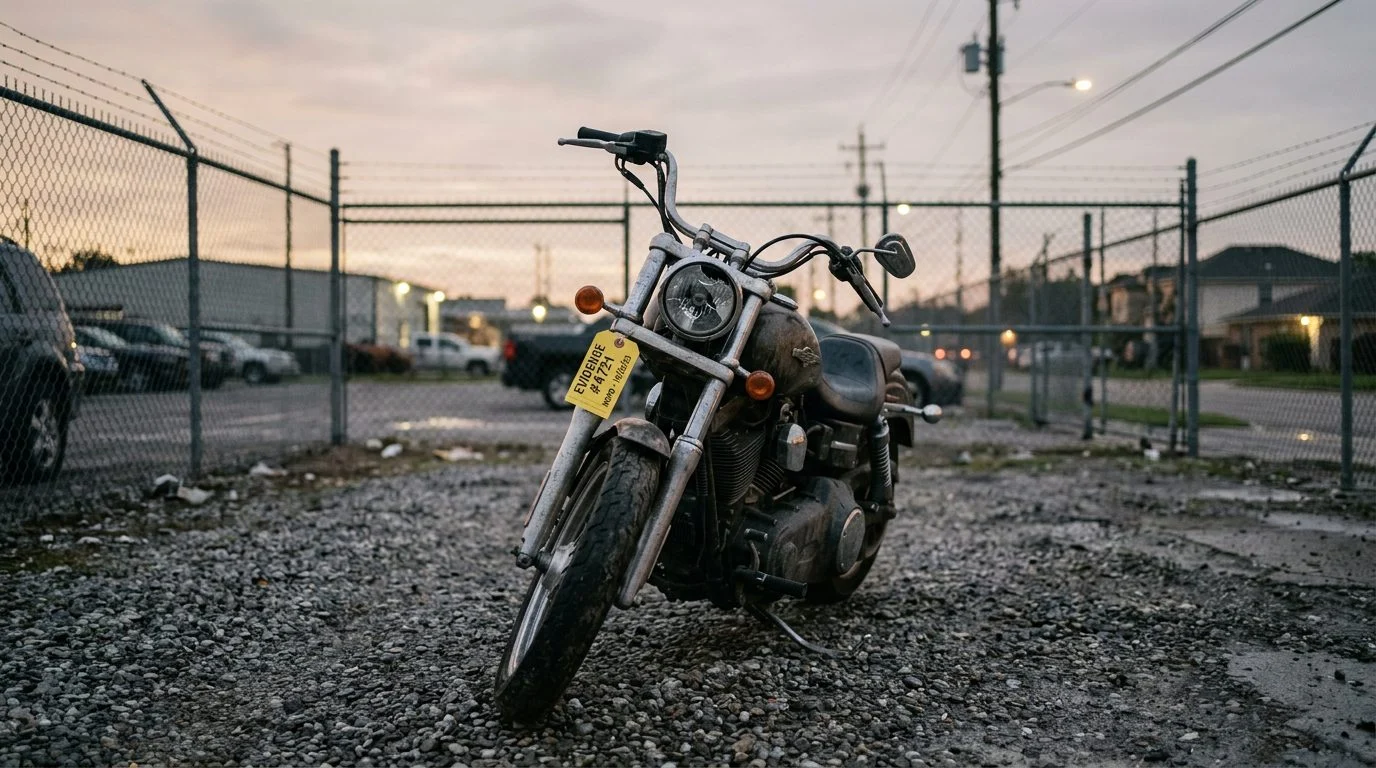
Motorcycle Accidents | New Orleans, Louisiana
What Puts Riders at Risk on Louisiana Roads
Przemek Lubecki, trial lawyer at American Trial Lawyer, explains the patterns behind motorcycle crashes and what injured riders and families can do next.
By Przemek Lubecki · Published November 18, 2026
Watching a motorcycle crash unfold, or reading the report after one, leaves many people asking the same question. Crashes rarely come down to one cause, but a driver failing to see a rider is one common pattern in these cases.
What is the number one cause of motorcycle accidents?
No single cause explains every motorcycle accident, so a true number one is hard to pin down. A common pattern is a driver who does not see the motorcycle and turns or changes lanes into its path. A left turn across a rider’s lane is a classic example. The driver judges the gap, sees a car, and goes. The rider was already there, often closing fast, with little room to react.
A motorcycle is narrower and smaller than a passenger car. That makes it easy to miss in mirrors, at intersections, and in heavy traffic. For the wider picture of crash types, read our motorcycle accidents guide.
If you are trying to understand a motorcycle crash that hurt you or someone you love, we can talk it through with you, with no obligation to continue. Talk it through with our team — the first consultation is free, confidential, and carries no obligation.
Other drivers who do not see the motorcycle
Many of these crashes involve a driver who moves into a rider’s lane or path without a clear look. Under La. R.S. 32:79, on a roadway divided into two or more clearly marked lanes, a vehicle should be driven as nearly as practicable entirely within a single lane. The driver should not move out of that lane until the move can be made with safety.
Louisiana also requires every driver on public roads to drive in a careful and prudent manner, so as not to endanger others. That duty appears in La. R.S. 32:58.
A rider who had the right of way may still have had no time to act. In these cases, the other driver’s account and the police report often become central to how the crash is understood.
Lane splitting, speed, and high-performance motorcycles
Lane splitting means riding between lanes of traffic or between rows of cars. Under La. R.S. 32:191.1(C), lane splitting is prohibited, with an exception only for police officers. Under La. R.S. 32:191.1, no person may operate a motorcycle between lanes of traffic or between adjacent lines or rows of vehicles, except police officers in the performance of their official duties.
The same section says every motorcycle is entitled to the full use of a lane. No motor vehicle may be driven so as to deprive a motorcycle of that use, except as to motorcycles operated two abreast in a single lane. It also bars passing another vehicle in the same lane that vehicle occupies.
Riding between cars leaves less room for error for the rider. Nearby drivers may not expect a motorcycle to appear beside them.
Speed shortens the time everyone has to react. A faster bike or a faster car leaves less distance to stop or steer. High-performance motorcycles can also be harder to control at speed, especially for a less experienced rider. Speed and lane position are the kinds of facts that crash investigations examine.
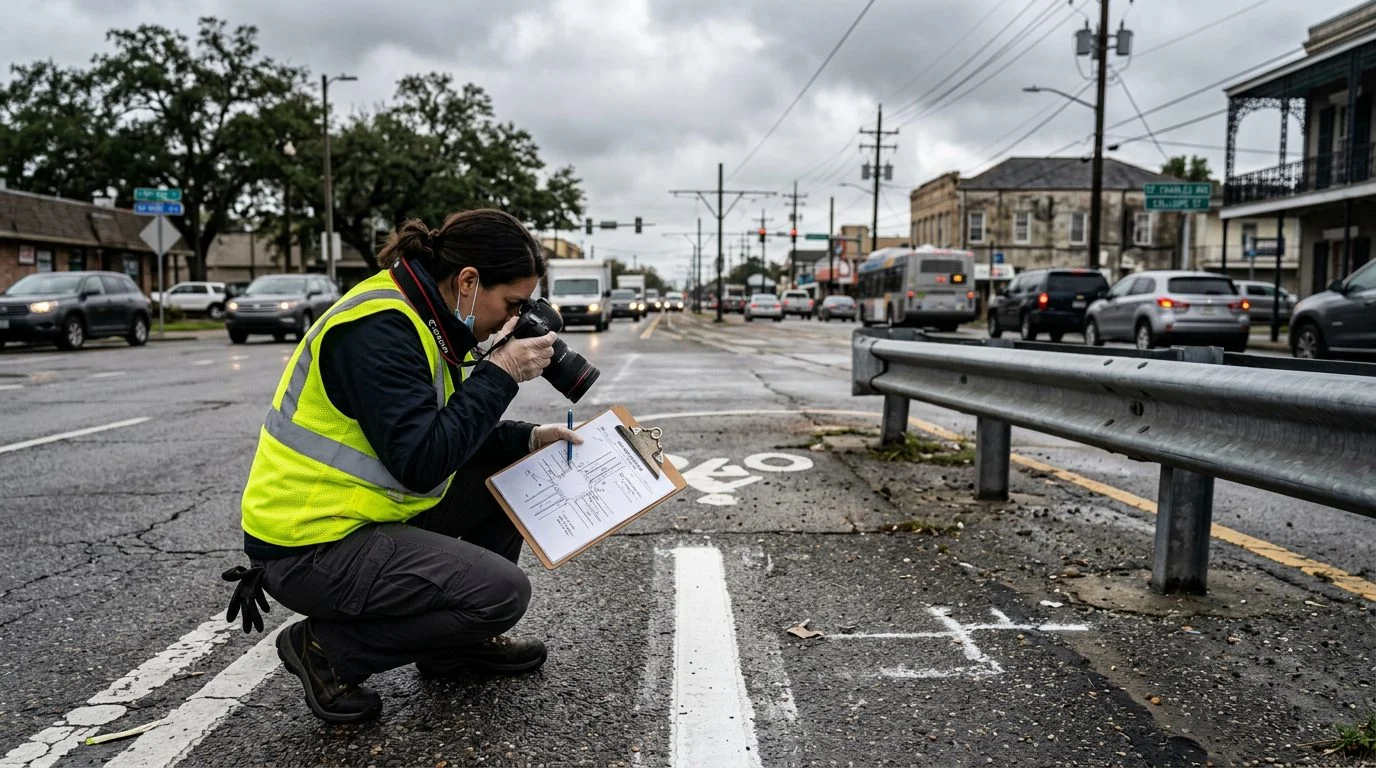
Alcohol, fatigue, and rider error in motorcycle crashes
Impairment is a serious factor, and it can affect riders and drivers alike. When a driver’s intoxication causes injuries through wanton or reckless conduct, Louisiana law allows exemplary damages on top of other damages. See La. Civ. Code art. 2315.4.
Fatigue, inexperience, and poor judgment of speed or distance can also change how a rider handles a curve or a gap in traffic. These errors are often part of the story when a crash is reviewed.
Louisiana also divides fault between the people involved. Under La. Civ. Code art. 2323, a person who suffers injury partly from their own negligence, and whose own negligence is equal to or greater than fifty-one percent of the fault, cannot recover damages. A person found less than 51% at fault recovers damages reduced in proportion to their share of fault, except that if the injury results partly from their own negligence and partly from the fault of an intentional tortfeasor, their claim for recovery of damages shall not be reduced. The amended article took effect January 1, 2026.
Road hazards and the injuries these crashes cause
Road conditions can add to a crash. Uneven pavement, loose debris, wet surfaces, and poorly marked lanes can catch a rider off guard. A rider may have little time to react when a hazard appears in the path. These conditions are part of the story when a crash’s cause is sorted out.
Head and brain injuries are among the most serious harms riders face. They can have effects that last well beyond the crash. You can read more on our brain injury page.
If a rider dies, Louisiana law names who may sue. Under La. Civ. Code art. 2315.2, the surviving spouse and children come first. The surviving father and mother may sue if the deceased left no spouse or child, but a father or mother who has abandoned the deceased during his minority is deemed not to have survived him. The right of action prescribes one year from the death or two years from the day that injury or damage is sustained, whichever is longer, except that for medical malpractice actions it prescribes one year from the death of the deceased. Because these time limits run from a set date, early attention matters.
What this means if you are dealing with a motorcycle crash in Louisiana
If you are dealing with a motorcycle crash in Louisiana, the cause often depends on facts recorded early. You may be reading this after a crash you did not choose, trying to make sense of a report, or worried about someone you love who was hurt or killed.
Under La. R.S. 32:398, a driver in a crash involving injury must give his name, address, and vehicle registration number. Police and sheriff’s offices provide copies of crash reports. Witness names, photos, and vehicle damage can also help explain what happened.
American Trial Lawyer, LLC may associate or refer a case to other law firms when a case calls for it. Przemek Lubecki is the responsible lawyer for this page. Our office is in New Orleans, and we serve people across Orleans Parish, the New Orleans metro, and Louisiana, including Metairie, Jefferson Parish, Kenner, St. Bernard Parish, and Slidell. Our New Orleans, Orleans Parish, and Metairie motorcycle accident pages offer local context.
Common questions
Is there one cause behind most motorcycle crashes?
No single cause explains every crash. A driver failing to see a rider is a common pattern.
Is lane splitting allowed in Louisiana?
Louisiana law bars operating a motorcycle between lanes of traffic or between rows of vehicles.
Can a family sue after a motorcycle death?
Louisiana law names who may sue, starting with the surviving spouse and children.
If you want to talk through a motorcycle crash that hurt you or someone you love, call 855-LUBECKI or request a free case evaluation. The first consultation is free, confidential, and carries no obligation to continue.
Crash patterns we see most often
Drivers who do not see the rider
A motorcycle is smaller and easier to overlook, and a driver may simply fail to notice it in traffic.
Left turns across a rider's path
A vehicle turning in front of an oncoming motorcycle leaves the rider very little time to stop or swerve.
Lane changes and blind spots
A car or truck moving into the lane a rider occupies can cause a crash in an instant.
Road hazards and poor conditions
Potholes, debris, wet pavement and poorly maintained roads can take a rider down even when no other vehicle is involved.
How we approach a motorcycle case
Plain-language answers
We explain the facts of your crash and your options without legal jargon, so you can make informed decisions.
Careful investigation
We look closely at the crash scene, the vehicles involved and the records that help show what happened.
Attention to families
When a crash has caused a death, we treat the grieving family with patience and respect.
Confidential first conversation
The initial consultation is free, confidential and without obligation to continue.
Speak with a lawyer early
Evidence from a crash, such as photos, witness contact details and vehicle damage, can be lost quickly. Talking with a lawyer early helps protect what you still have.