

Motorcycle Accidents | New Orleans, Louisiana
Riding Without a Helmet in Louisiana? Talk With a Trial Lawyer Before You Decide
After a crash, questions about fault, injuries and insurance can feel overwhelming. Przemek Lubecki and our team can look at what happened with you, in a free, confidential consultation.
By Przemek Lubecki · Published November 9, 2026
You were riding without a helmet, and now you’re hurt and wondering if you can still file a claim in Louisiana. Not wearing a helmet does not, by itself, end a claim for injuries from a crash someone else caused.
The helmet fact is one of several facts that can affect fault and how injuries are tied to the crash. Here is how it usually works.
Does not wearing a helmet automatically end a Louisiana claim?
No, a helmet fact does not automatically end a claim. An insurer or defense lawyer may raise it, but it is one question among several. The other questions include how the crash happened, whether another driver or a road condition contributed, and which injuries the crash caused. Insurers sometimes tell riders they have no claim without a helmet. That statement leaves out most of the legal picture. The helmet fact matters most when it connects to fault or to the injuries. That connection is decided on the crash facts, the medical records and the evidence in each case. Every crash turns on its own facts, so no two claims look the same.
If you were riding without a helmet and got hurt, you may still have a claim, and our team can talk through what your crash facts mean for you. Talk it through with our team — the first consultation is free, confidential, and carries no obligation.
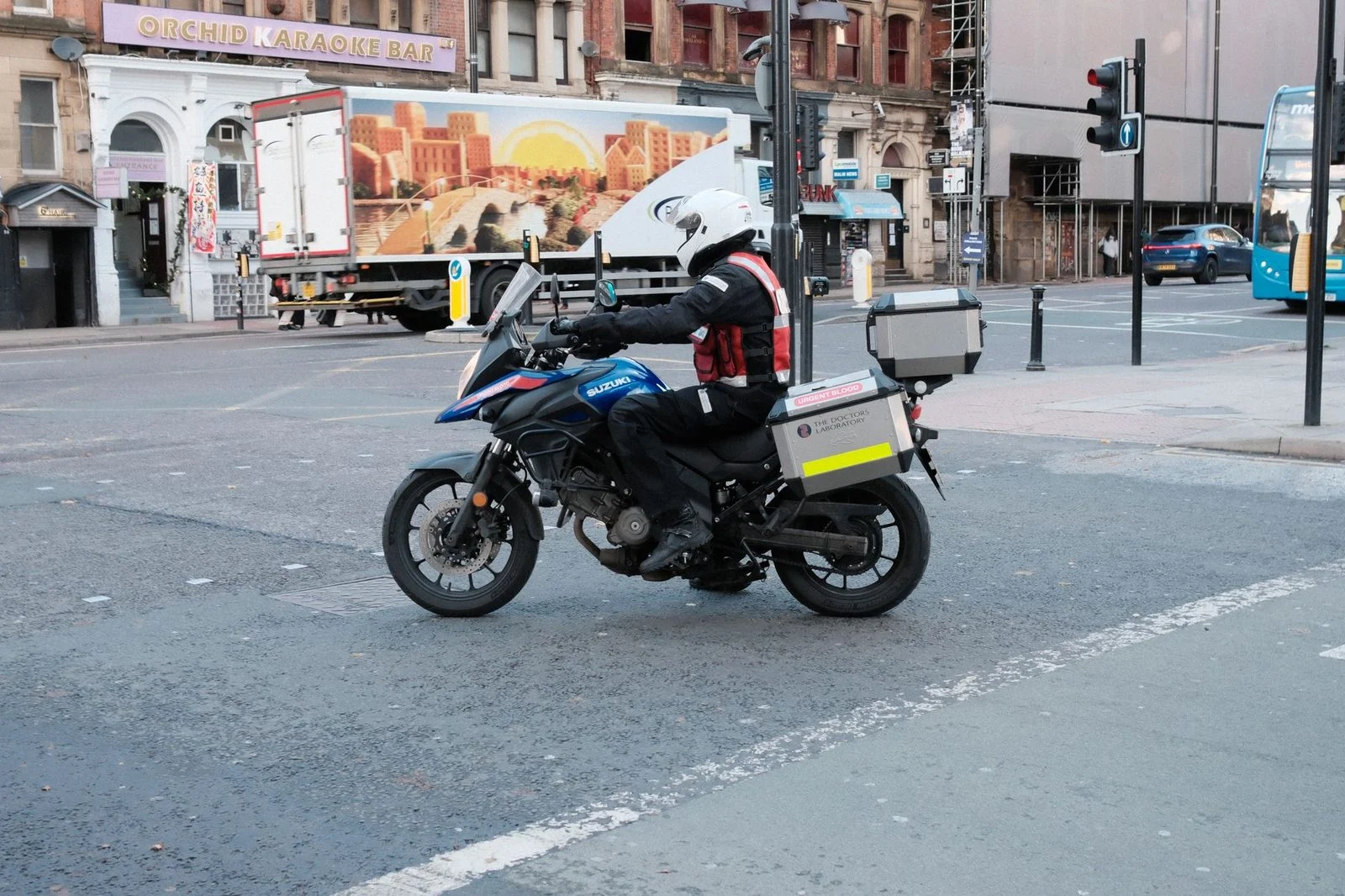
Do you have to wear a helmet on a motorcycle in Louisiana?
Yes, Louisiana law requires a rider to wear a safety helmet. Under La. R.S. 32:190, no one may operate or ride a motorcycle, motor-driven cycle or motorized bicycle unless wearing a helmet. The helmet must be secured with a chin strap while the vehicle is in motion. The law has narrow exceptions. Police authorities of a village, town, city, or parish may issue a permit exempting members of organizations sponsoring, conducting, or participating in parades or other public exhibitions from the helmet rule, but only while those members are actually participating. Certain autocycles with roll bars or equivalent supports are also exempt. A violation carries, upon conviction, a fifty-dollar fine that includes all court costs. That traffic penalty is separate from an injury claim. A ticket asks whether the law was broken. An injury claim asks who caused the harm and what it cost. The same crash can raise both questions, but the answers are not the same.
How does Louisiana’s fault rule apply when no helmet was worn?
Louisiana reduces a claim by the injured person’s own share of fault. For newer crashes, a high enough share can bar the claim completely. Under La. Civ. Code art. 2323, fault is determined for everyone who caused or contributed to the injury. For injuries on or after January 1, 2026, a person whose own negligence is 51% or more recovers no damages, unless the injury also resulted from the fault of an intentional tortfeasor, in which case the claim is not reduced. Under La. Civ. Code art. 2323(A)(2)(b), if the degree or percentage of negligence attributable to the person suffering injury, death, or loss is less than fifty-one percent, the amount of damages recoverable is reduced in proportion to that degree or percentage of negligence, unless the injury resulted partly from the fault of an intentional tortfeasor, in which case the claim is not reduced. The helmet question and the fault question are separate. Not wearing a helmet is not the same as causing a crash. Article 2323 applies to any claim for damages, whatever the legal theory behind it.
How can the helmet fact come up in an injury claim?
The helmet fact usually comes up when the argument is about head and brain injuries. Insurers and defense lawyers may argue that a helmet would have reduced those injuries. The Insurance Institute for Highway Safety reports general evidence that motorcycle crashes and lack of helmet use increase the risk of traumatic brain injury and death. That research shows general risk. It does not show what happened in one crash. The real question in a case is which injuries the crash itself caused and which, if any, were made worse. Emergency room records, imaging and treating doctors’ notes often answer that question. Early records matter. The same injury can be described very differently depending on what was written down and when. Keep every visit summary, bill and symptom note you receive.
What evidence shows how the crash happened?
The police report, scene photos, witness names and vehicle damage often matter most. Under La. R.S. 32:398, crash reports are confidential. They are available only to the parties to the crash, parents or guardians of a minor who is a party, insurers, or an insurance support organization under contract to provide claims and underwriting, of a party, healthcare providers or their agents who rendered healthcare services to a party, succession representatives, the parties’ attorneys, and news-gathering organizations requesting a specific crash. On request, they are made available within seven working days after the crash investigation is completed. Agencies may charge up to five dollars for a report of two pages or fewer. They may charge up to twenty dollars for a longer report, inclusive of all service fees and other charges. Photos of the scene, the vehicles and the rider’s gear can show how the crash unfolded. Evidence about the other driver’s conduct, traffic signals and road conditions can matter as much as the helmet fact. Write down what you remember while it is fresh. Collect witness names and phone numbers early, before memories fade.
Can an insurance adjuster ask for a recorded statement?
Under La. R.S. 13:3732, a person who takes a written, recorded or transcribed statement from an injured person must give that person a true and complete copy. On written demand, the copy must be provided within twenty days. A statement is not admissible in a related civil action if the holder refuses a copy after a request. Be accurate. Don’t guess about speed, distance or injuries you’re unsure of. You don’t have to decide the claim on the phone. You can say you need time to review your notes. Ask for any statement you give to be put in writing.
Not sure what your next step is?
Talk it through with our team — the first consultation is free, confidential, and carries no obligation.
Do road defects change the picture?
Yes, a road defect can be the cause of a crash, and that cause does not depend on helmet use. A pothole, a missing warning sign or a dangerous road surface raises its own questions. Claims against a public entity such as a city or parish have additional requirements. Under La. R.S. 9:2800, a claim based only on the condition of a thing in a public entity’s care generally requires that the entity had actual or constructive notice of the defect before the crash. The entity also must have had a reasonable chance to fix it and failed to do so. For many personal injury claims, Louisiana generally gives two years from the day of injury to file, under La. Civ. Code art. 3493.1. That rule has exceptions. Early action helps keep the deadlines in view.
Who handles these claims at American Trial Lawyer?
Przemek Lubecki is the responsible lawyer for this page, and the firm’s office is in New Orleans. The firm represents people hurt in motorcycle crashes and families in wrongful death cases across Louisiana, including Orleans Parish and the New Orleans metro area. The firm may associate or refer a case to other law firms. Reading this page does not create an attorney-client relationship.
Quick answers
Does not wearing a helmet reduce my recovery? It can matter to fault and to which injuries the crash caused.

Can we talk about your motorcycle crash?
Yes, you can call to talk about what happened. If you rode without a helmet, were hurt, and aren’t sure what that means for your options, you don’t have to sort it out alone. Call 855-LUBECKI or request a free case evaluation. The first consultation is free, confidential and without obligation.
Facts That Often Come Up in Motorcycle Claims
How the crash happened
Police reports, vehicle damage, witness accounts and photographs often shape the story of a crash more than any single detail.
Your injuries
Medical records and treating providers help connect your injuries to the crash, which matters as much as the helmet question.
What the insurer says
Insurance adjusters may raise helmet use. Their questions are not the final word on your claim.
Your next step
Writing down what you remember and keeping your medical records organized can help when you speak with a lawyer.
How We Approach Your Motorcycle Case
Clear answers
We explain how a helmet fact may be used in your case, in plain language, so you know what to expect.
Careful review
We look at the crash facts, medical records and insurance positions before you make any decisions.
Free and confidential
The first consultation is free, confidential and without obligation to continue.
Responsible lawyer
Przemek Lubecki, trial lawyer, leads the firm's work from the New Orleans office and is responsible for the content of this page.
Be Careful Before You Speak With an Insurer
Adjusters may ask for a recorded statement soon after a crash. Speak with a lawyer first about what to say. This firm may associate or refer a case to other law firms when that is appropriate for the client.