
Truck Accidents and Wrongful Death | New Orleans, Louisiana
Helping Louisiana Families After a Truck Jackknife Crash
Przemek Lubecki and our team in New Orleans represent people seriously hurt in truck crashes and families grieving a loss in wrongful death cases. Learn what to know about a jackknife wreck, then talk with us about your questions.
By Przemek Lubecki · Published October 28, 2026
Looking for a truck jackknife wrongful death lawsuit Louisiana families can bring? This guide explains it in plain language. It gives general legal information, not advice about any one case.
What a Fatal Jackknife or Rollover Truck Crash Is
A jackknife happens when a truck’s tractor and trailer fold toward each other. A rollover happens when the truck tips onto its side or roof.
A jackknife often starts with hard or sudden braking, loss of traction or uneven braking. The trailer can swing across lanes and into other vehicles.
A rollover often involves speed through a curve or ramp, or a load that shifts. Both crashes can spread debris across the road and involve more than one vehicle.
A death in one of these crashes is not always limited to the truck driver. Other drivers, passengers and people nearby can be hurt or killed. Police reports, trucking records and witness accounts often help show how the crash happened.
This section is for family members reading about a loss they did not choose. It is also for anyone who wants to understand their options before deciding anything.
If a jackknife or rollover crash has left your family facing a wrongful death claim, we are glad to talk it through with you at no cost. Talk it through with our team — the first consultation is free, confidential, and carries no obligation.
Who Can Bring a Wrongful Death Claim in Louisiana
Louisiana law lets certain surviving family members sue when a person dies due to another’s fault.
Under La. Civ. Code art. 2315.2, a surviving spouse and children may sue. If there is no spouse or child, the surviving father and mother of the deceased, or either of them, may sue. If there is no spouse, child or parent, surviving brothers and sisters may sue. If there is no spouse, child, parent or sibling, surviving grandparents may sue.
Louisiana also has a survival action. Under La. Civ. Code art. 2315.1, the right to recover damages the injured person suffered before death goes to the same family members. If none of them survive, the succession representative may pursue it.
Families often ask about funeral bills, medical bills, lost financial support and the loss of a loved one’s companionship.
Louisiana uses comparative fault, or shared fault. Under La. Civ. Code art. 2323, if the degree or percentage of negligence attributable to the person suffering injury, death, or loss is equal to or greater than fifty-one percent, then the person suffering injury, death, or loss is barred from recovering damages. Separately, under paragraph C of the same article, if the injury, death, or loss results partly from that person’s own negligence and partly from the fault of an intentional tortfeasor, his claim for recovery of damages shall not be reduced. A smaller share reduces recovery by that share, under La. Civ. Code art. 2323, except where the person suffers injury, death, or loss as a result partly of his own negligence and partly as a result of the fault of an intentional tortfeasor, in which case the claim is not reduced.
Common Causes and Who May Be Responsible
Several causes can lead to a jackknife or rollover, and more than one party may share responsibility.
Common causes include sudden braking, speed that is too fast for conditions, wet or icy roads, poorly secured cargo, brake problems and driver fatigue.
Federal rules require cargo to stay secured. The federal cargo securement rules in 49 C.F.R. § 393.100 apply to trucks, truck tractors, semitrailers, full trailers and pole trailers. They require each commercial motor vehicle transporting cargo on public roads to be loaded and equipped, and the cargo secured, in accordance with that subpart to prevent the cargo from leaking, spilling, blowing or falling from the motor vehicle. Cargo must also be contained, immobilized or secured in accordance with that subpart to prevent shifting upon or within the vehicle to such an extent that the vehicle’s stability or maneuverability is adversely affected. See 49 C.F.R. § 393.100.
Drivers’ hours are also recorded. Motor carriers must require each driver to record duty status for each 24-hour period. See 49 C.F.R. § 395.8.
Possible responsible parties can include the driver, the motor carrier, a vehicle owner or lessor, a maintenance contractor and the party who loaded the cargo.
Employers answer for damage their employees cause in the work they do. Under La. Civ. Code art. 2320, that responsibility applies only when the employer might have prevented the act and did not.
An owner or custodian of a defective thing may also be answerable. Under La. Civ. Code art. 2317.1, the owner must have known, or reasonably should have known, of the defect, the damage must have been preventable by the exercise of reasonable care, and the owner must have failed to use reasonable care.
A freight broker can also be involved. In Montgomery v. Caribe Transport II, LLC, the U.S. Supreme Court held that a state-law claim that a broker negligently hired an unsafe carrier falls within a federal safety exception and is not preempted.
Evidence That Matters Early
The records that show what happened are often the ones that disappear first.
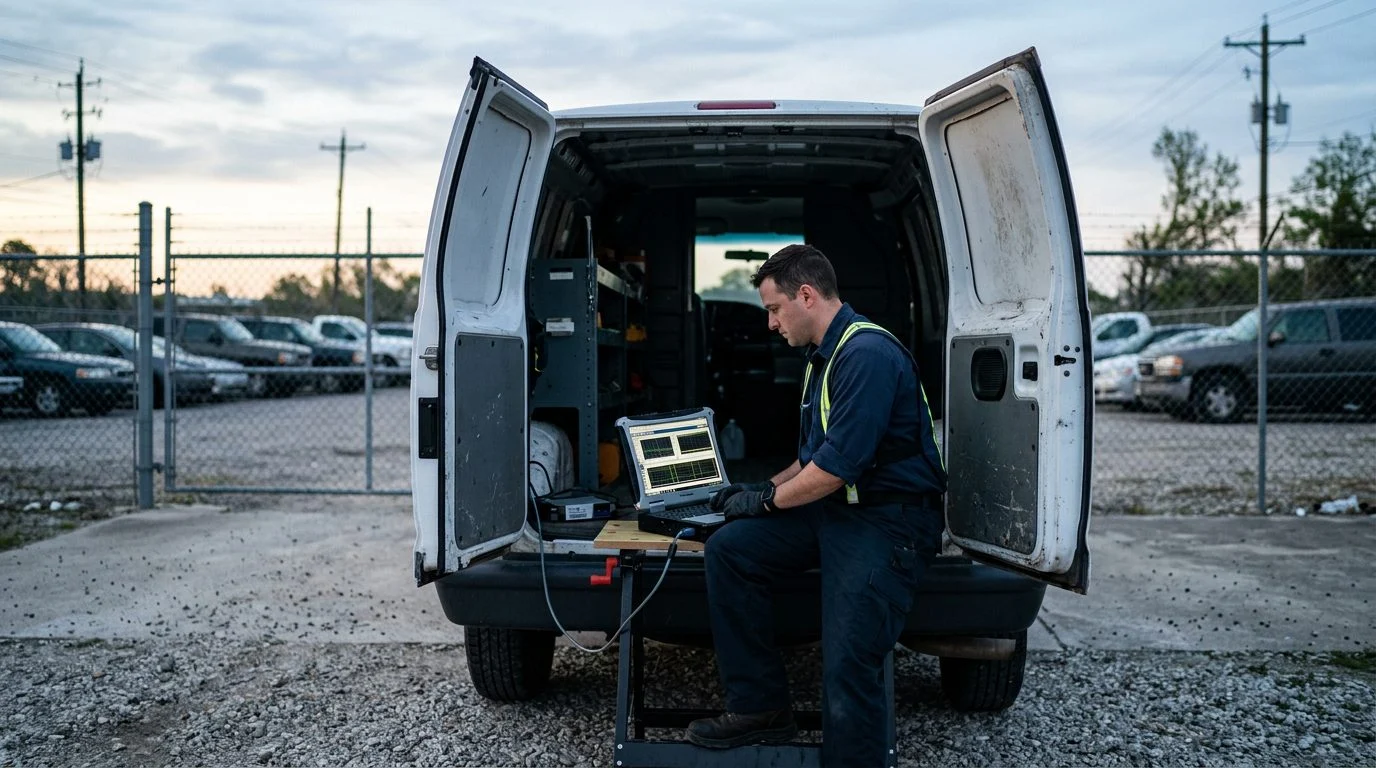
Electronic logging device and duty-status records can show whether a driver’s logs match where the truck went. See 49 C.F.R. § 395.8.
Carriers must keep duty-status records and supporting documents for at least six months from receipt. Because that is a minimum, early written requests to preserve evidence are common.
Other useful records include dispatch messages, delivery schedules, maintenance and brake records, repair history after earlier incidents, and bills of lading that show how cargo was loaded.
Scene evidence also matters. Skid marks, debris patterns, photos, witness names and any camera footage can all help.
The crash report matters too. Under La. R.S. 32:398, the reports required by that section and the information in them are confidential and are made available only to listed persons, including the parties to the crash and the attorneys of the parties or succession representatives. Upon request, they must be made available within seven working days after the crash investigation is completed.
Families can help by keeping the crash report, medical and funeral records, photos, and a list of insurer calls. Many families speak with a lawyer before giving any recorded statement to an insurer.
How a Louisiana Wrongful Death Claim Typically Moves Forward
A claim usually moves from a first conversation to investigation, then a demand to insurers, and sometimes a lawsuit.
- First conversation: Review the facts, the family’s relationships and the documents already in hand.
- Investigation: Request preservation of evidence, obtain the crash report (crash reports are confidential and made available only to the parties to the crash and other listed persons) and gather records.
- Demand and negotiation: Communicate with insurers or defense counsel about fault and damages.
- Filing suit if needed: The case is filed in a Louisiana court, followed by discovery and motions.
- Resolution: A claim may settle or go to trial. Timelines vary and depend on the facts.
Deadlines matter. Under La. Civ. Code art. 2315.2, the time limit is one year from the death or two years from the day the injury was sustained, whichever is longer. A lawyer confirms the deadline for each case.
The first consultation is free, confidential and without obligation to continue. If the firm takes a case, you may be responsible for case costs and expenses in addition to any fee.
Why American Trial Lawyer for a Louisiana Truck Crash Claim
American Trial Lawyer is a personal injury trial law firm based in New Orleans, Louisiana, led by trial lawyer Przemek Lubecki.
Przemek Lubecki is the responsible lawyer for the content on this page. The firm’s office is in New Orleans.
The firm represents people seriously hurt in truck, commercial vehicle and car crashes, and families in wrongful death cases. It also handles motorcycle, rideshare, brain injury and negligent security matters.
The firm serves people in Orleans Parish, the New Orleans metro area, including Metairie, Jefferson Parish, Kenner, St. Bernard Parish and Slidell, and across Louisiana.
The firm is a trial law firm. It prepares cases in case they need to go to court.
The firm may associate or refer a case to other law firms.
Not sure what your next step is?
Talk it through with our team — the first consultation is free, confidential, and carries no obligation.
Frequently Asked Questions About Fatal Truck Crash Claims
Is the truck driver always at fault in a jackknife crash?
No. Fault can involve braking, speed, cargo, maintenance and other drivers.
Can a family sue the trucking company too?
A claim can involve more than one party. A lawyer can review who may be responsible.
How long does a family have to file?
The time limit is the longer of one year from death or two years from the injury. A lawyer confirms the deadline for each case.
Do we have to give a recorded statement to the insurance company?
Many families speak with a lawyer first before giving any recorded statement.
What if the crash happened outside New Orleans?
The firm serves families across Louisiana, including the New Orleans metro area.
What does a first consultation involve?
It is free, confidential and without obligation to continue.
Talking Through Your Situation With a New Orleans Trial Lawyer
If you are reading this after a sudden loss, you may be planning a funeral, gathering paperwork and trying to understand a crash you did not choose.
You do not need every answer before you talk. A short, confidential conversation can help you learn what Louisiana’s rules would mean for your family.
If a jackknife or rollover crash has left your family facing a wrongful death claim, request a free case evaluation or call 855-LUBECKI for a free consultation with Przemek Lubecki, whose office is in New Orleans.
How We Approach Your Case
Careful, Confidential Review
We take time to understand how the crash happened and who may be involved before anyone makes decisions about your case.
Families Come First
We listen to what matters most to you, whether you were injured or you are caring for a loved one who died.
Clear Next Steps
We explain the process in plain language so you know what to expect at each stage.
Office in New Orleans
Our office is in New Orleans, and we serve people across Orleans Parish, the New Orleans metro area and Louisiana.
Common Questions After a Jackknife Crash
Is the truck driver always at fault?
Not necessarily. A jackknife can involve braking, speed, cargo loads, maintenance and the actions of other drivers. Each crash needs a careful review.
Can the trucking company be involved too?
A claim can involve more than one party. A lawyer can review who may be responsible for what happened.
What should a family do first?
Keep photos, the crash report, medical records and any letters from insurers. Then contact a lawyer to talk through your questions.
Important: Talk to a Lawyer Before Giving Recorded Statements
Insurance adjusters may contact you soon after a crash. Speaking with a lawyer first can help you understand what to say and what to hold back while the facts are still being gathered. Our first consultation is free, confidential and without obligation. Depending on the facts, American Trial Lawyer may associate or refer a case to other law firms.