
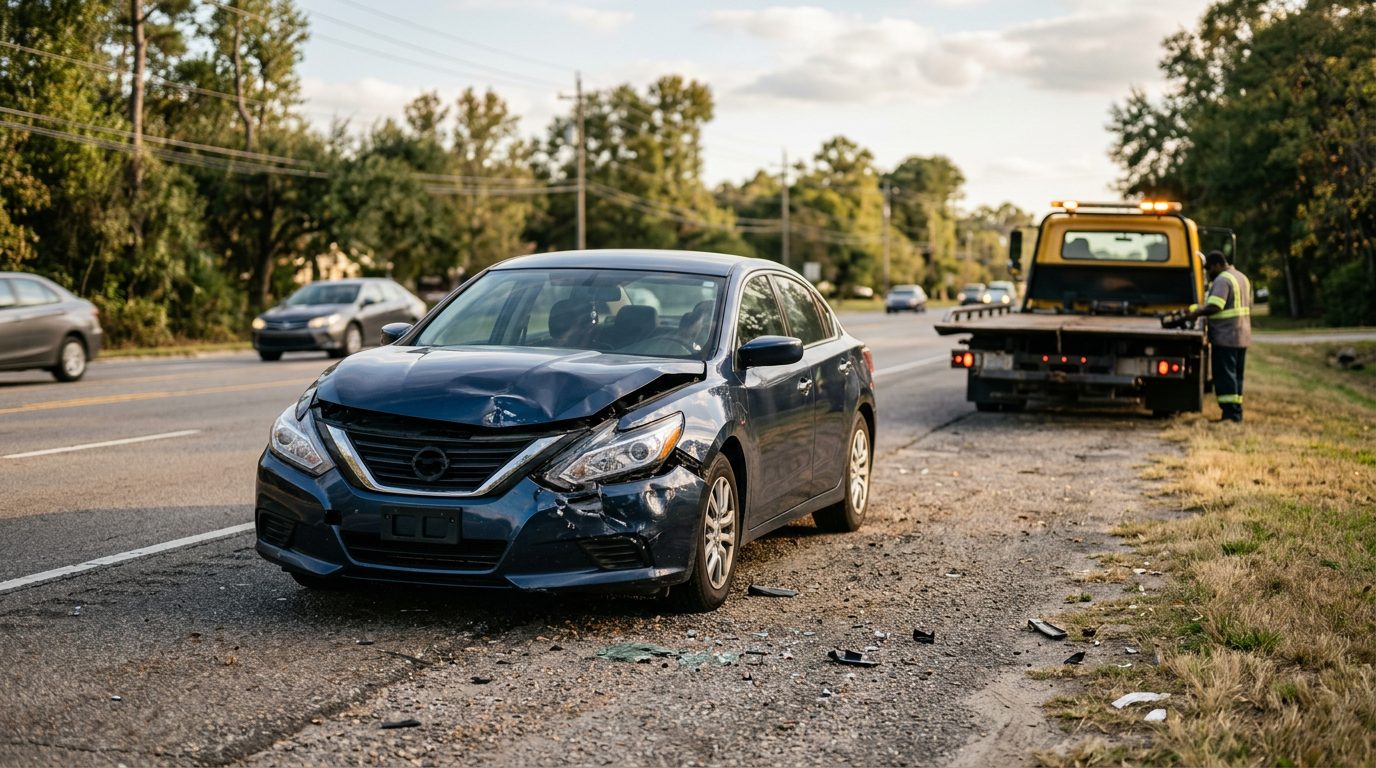
Truck Accidents | Wrongful Death | New Orleans, Louisiana
Fatal Truck Crash? Understanding the Insurance Limits That May Apply
Przemek Lubecki, a trial lawyer with an office in New Orleans, helps families in Louisiana understand how commercial insurance coverage can affect a wrongful death claim after a fatal truck crash.
By Przemek Lubecki · Published November 3, 2026
If a truck or commercial vehicle crash has killed someone you love, the insurance questions can feel urgent and confusing at once. In short, a trucking insurance policy limit is the most an insurer agrees to pay under a liability policy for covered claims. It is a ceiling, not a measure of what a family’s claim is worth. This guide explains how limits are written, what they may cover, and what Louisiana families often look at first.
What a trucking insurance policy limit is, and who this page is for
A policy limit is the maximum a liability insurer agrees to pay for covered claims. Trucking policies are often bought by the motor carrier or the company that owns the vehicle, not only by the driver.
This page is for spouses, children, parents, siblings, and grandparents working through a fatal crash involving a large truck or commercial vehicle. Louisiana law sets out which surviving relatives may bring a wrongful death suit, and it depends on who survived. See La. Civ. Code art. 2315.2.
You may be reading this while grieving, often for someone else. You don’t need to decide anything today. Use this page to get your bearings.
If a truck crash took someone you love, you don't have to work out the policy limits alone; our team can talk through your family's options in a free, confidential first consultation. Talk it through with our team — the first consultation is free, confidential, and carries no obligation.
How split liability limits are written: 100,000/300,000 and similar numbers
A split limit such as 100,000/300,000 sets two separate caps. The first number is usually the most the policy pays for one person’s injury or death. The second is usually the most it pays for all bodily injury claims from one crash.
Here is how that works. Suppose one crash injures three people. Each person’s claim is capped at the per-person amount. All three claims together share the per-accident amount.
Federal rules also set minimum insurance for some trucks. For a for-hire carrier moving nonhazardous property in interstate or foreign commerce, in a vehicle rated 10,001 pounds or more, 49 CFR 387.9 sets a $750,000 minimum. Other rules may apply to intrastate trips or other cargo, depending on the facts.
A printed limit is not the same as the final value of a claim. It shows how much coverage may be available. It does not decide what the loss is worth.
What the coverage pays for, and what it may not cover
A liability policy pays covered claims up to its limits. It pays only when the policy applies to the crash, so coverage is not automatic.
Louisiana also lets certain survivors pursue damages the person could have recovered for injuries before death. La. Civ. Code art. 2315.1 sets out who may bring that claim and how long it lasts.
Common coverage questions include:
- Was the vehicle listed on the policy?
- Was the driver a covered person?
- Was the policy in force on the date of the crash?
- Does any exclusion in the policy apply?
- Were the trailer and cargo covered?
Families often need the full policy and declarations pages, not only a summary. Those pages show the limits and the listed vehicles. A lawyer can help request them through the claim process.
Other insurance and parties that may matter beyond the truck’s policy
Other policies and companies can matter, depending on who controlled the truck and what caused the crash. The truck’s primary policy is not always the only source.
- Umbrella or excess policies may sit above the primary policy and add coverage.
- The driver’s own policy may apply in some situations.
- The employer or carrier may be answerable. Louisiana law makes masters and employers answerable for damage their servants cause while doing their jobs, but only when the employer might have prevented the act which caused the damage and has not done it. See La. Civ. Code art. 2320.
- Lessors, cargo shippers, loaders, and maintenance contractors may also be possible sources, depending on the facts.
Louisiana also shares fault among everyone involved. Under La. Civ. Code art. 2323, if the injured person’s negligence is fifty-one percent or greater, the person may not recover damages. Separately, paragraph C provides that if the injury is partly the result of the fault of an intentional tortfeasor, the claim for recovery of damages is not reduced. Under La. Civ. Code art. 2323, when the injured person’s own negligence is less than fifty-one percent, the damages recoverable are reduced in proportion to that negligence, except that if the injury is partly the result of the fault of an intentional tortfeasor, the claim for recovery of damages is not reduced.
How the insurance claim process usually works, step by step
Most fatal truck claims move through evidence, insurer contact, a written demand, and, if needed, a lawsuit. These steps are typical, not fixed. The timing depends on the facts.
- Preserve evidence early. Keep the police report, photos, witness names, medical and funeral records, and any dash-camera data. See La. R.S. 32:398.
- Expect early insurer contact. Insurers and trucking companies may reach out quickly. Talk over any recorded statement with a lawyer first. If an injured person gave a statement, that person or a personal representative may request a copy under La. R.S. 13:3732.
- The insurer evaluates the claim. It may dispute fault or damages. The policy limit often comes up once coverage is confirmed.
- A written demand presents the losses. A demand is not a lawsuit.
- A suit may follow if claims stay unresolved. Under La. Civ. Code art. 2315.2, the wrongful death right prescribes one year from death or two years from the injury, whichever is longer.
When limits may not be enough, and uninsured or hit-and-run crashes
When losses exceed available coverage, the policy limit becomes the practical ceiling. Several claimants from one crash may compete for the same per-accident amount.
Uninsured motorist coverage may apply to your family’s own policy in some crashes. Under La. R.S. 22:1295, when a person suffers bodily injury while occupying an automobile not owned by that person, a resident spouse, or a resident relative, the statute’s priorities of recovery put the uninsured motorist coverage of the occupied vehicle first in line. Under La. R.S. 22:1295(1)(b), any insurer delivering or issuing an automobile liability insurance policy in Louisiana “shall also permit the insured, at his written request, to increase the coverage applicable to uninsured motor vehicles provided for herein to any available limit up to the bodily injury liability coverage limits afforded under the policy.” If the occupied vehicle’s uninsured motorist coverage is used up, the injured occupant may recover as excess from other uninsured motorist coverage available to him, but only one other coverage can apply as excess. Whether it applies depends on the policy language and facts.
If the driver left the scene or cannot be identified, report the crash to police promptly. Then check your own auto policy for uninsured motorist coverage and any notice steps it requires. Acting early keeps those options open.
Not sure what your next step is?
Talk it through with our team — the first consultation is free, confidential, and carries no obligation.
Frequently asked questions
Is the policy limit the same as what my family can recover?
No. The limit is the most the insurer agrees to pay for covered claims. The value of a claim depends on the facts and the law.
Can the trucking company’s insurance pay if the driver was at fault?
It may, depending on the employment relationship, the policy, and the facts.
Who may bring a wrongful death claim in Louisiana?
Certain surviving spouses, children, parents, siblings, and grandparents may sue, depending on who survived. See La. Civ. Code art. 2315.2.
Early review helps protect the timeline.
Do I have to decide right away?
No. Evidence and notice steps can be time-sensitive, so an early review of the facts is worth considering.
Why families talk with American Trial Lawyer, and how to take the next step
Przemek Lubecki is the responsible lawyer for this page. The New Orleans office handles these matters from Louisiana.
American Trial Lawyer represents people seriously hurt in truck, commercial vehicle, and car crashes, and families in wrongful death cases. The firm serves Orleans Parish, the New Orleans metro, Jefferson Parish, St. Bernard Parish, Slidell, and Louisiana.
The firm may associate or refer a case to other law firms. The first consultation is free, confidential and without obligation to continue.
If your family is facing these questions after a loss, you don’t have to sort out the policy limits alone. Call 855-LUBECKI (Office in New Orleans) or request a free case evaluation.
How We Approach These Cases
Reviewing the Coverage
We look at the commercial insurance information connected to the crash, including the policies and limits that may be available to the family.
Considering Every Party
A fatal truck crash can involve the driver, the trucking company, the vehicle owner and other parties. We look at who may be responsible and what coverage may apply.
Keeping the Family Informed
We explain each step in plain language so families can make decisions with a clear understanding of their options.
Working With Other Firms When Needed
We may associate with or refer a case to other law firms when that serves the family. Przemek Lubecki remains the responsible lawyer for the content of this page.
Important Note
A policy limit is the most an insurer agrees to pay under a policy. It is not the same as the full value of a wrongful death claim, which depends on the facts of the crash and the law that applies.
Information That Can Help
Crash Report
The official crash report, along with any photos or witness information the family has gathered.
Trucking Company Details
The name of the carrier, the driver, and the company that operated or leased the truck.
Insurance Documents
Any certificates of insurance, policy information or letters from insurers that the family has received.
Medical and Funeral Records
Records of the injuries, medical care and funeral or burial costs connected to the crash.