
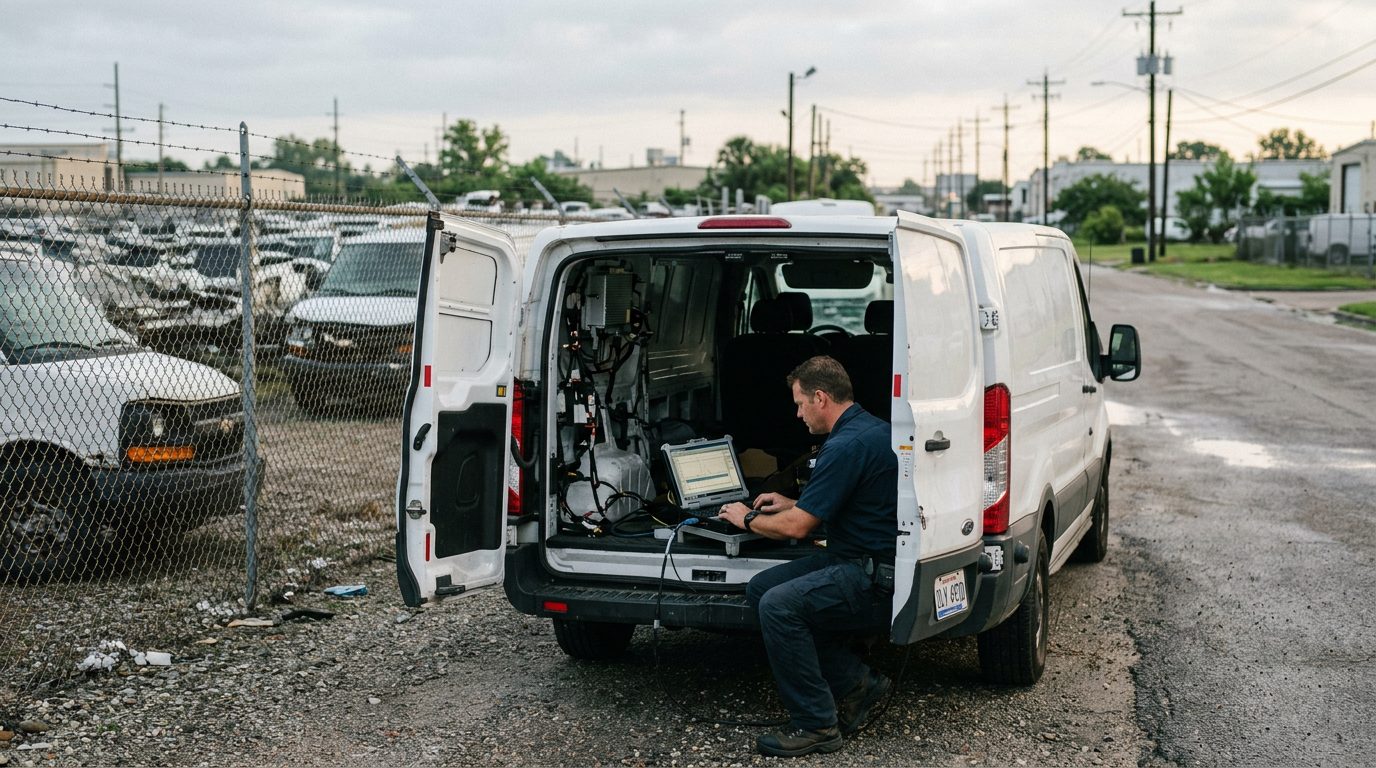
Commercial vehicle accidents | New Orleans, Louisiana
Hurt in a Delivery Van Crash in Louisiana? Here's How That Claim Can Differ
Delivery vans bring their own questions about who was responsible, what records exist, and how insurance applies. Przemek Lubecki and our team in New Orleans can help you sort through them.
By Przemek Lubecki · Published November 11, 2026
You were hurt when a delivery van or box truck hit you, or you lost someone in one. You want to know if your delivery van accident claim in Louisiana works like a regular car case. In most cases, the core questions are the same. The commercial side, including the company, the vehicle’s use, and its insurance, often adds layers a car claim does not have.
The short answer: the basics match, but the commercial layer often changes the claim
Any Louisiana crash claim asks who was at fault and what harm that fault caused. Under Louisiana Civil Code article 2316, a person is responsible for damage caused by negligence, imprudence, or want of skill. Under Louisiana Civil Code article 2315, whoever’s fault causes damage must repair it.
The first question is who owned, operated, and insured the vehicle at the time of the crash. The answer shapes who may be responsible and which insurance policies may apply. You don’t need the legal answer before you reach out. Gathering the basic facts is the first step.
If a company van or box truck crashed into you on a delivery route, you may have a claim, and you don't have to sort out the insurance alone. Talk it through with our team — the first consultation is free, confidential, and carries no obligation.
Why many delivery vans and box trucks count as commercial vehicles
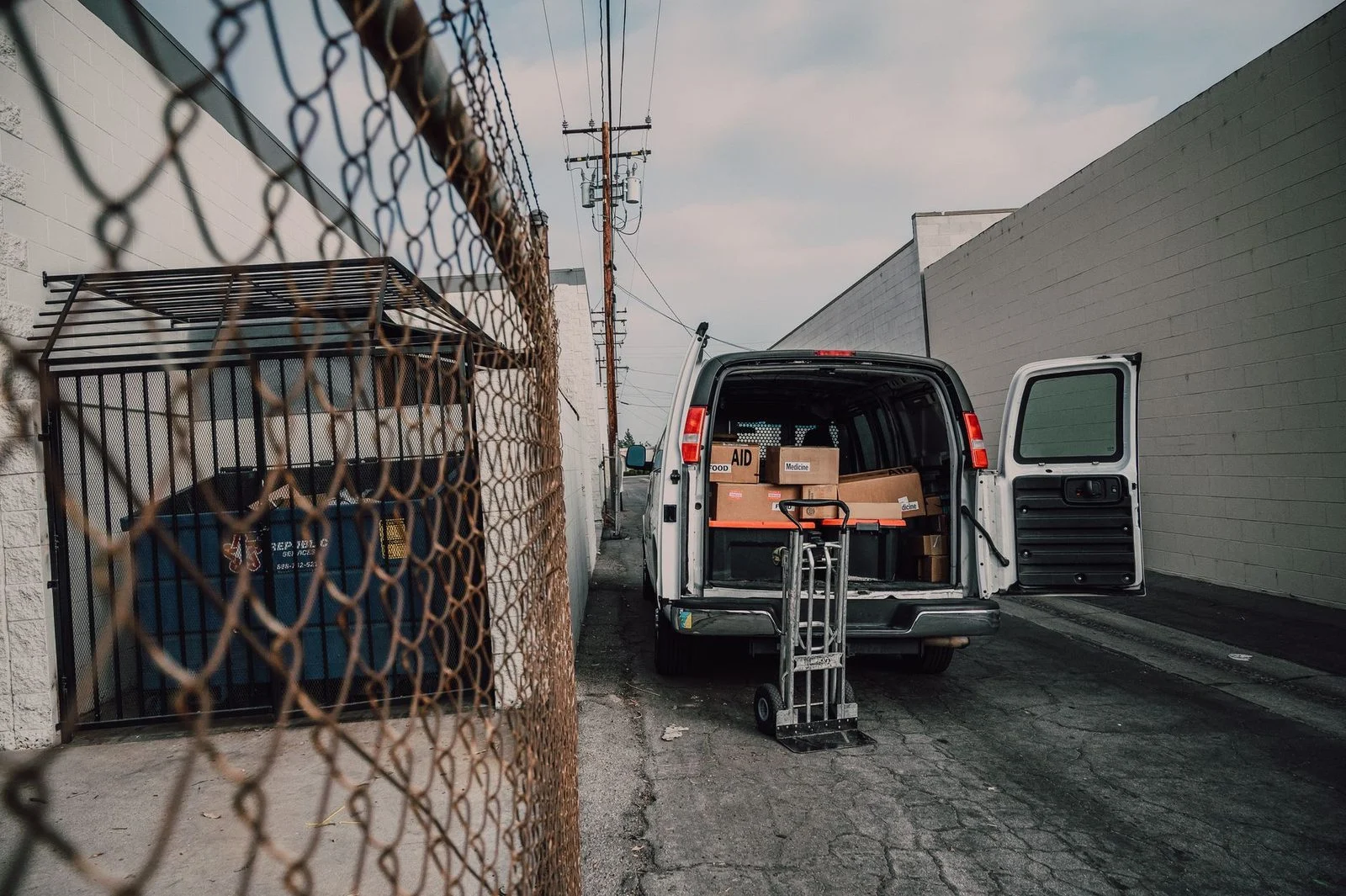
Many delivery vans and box trucks are registered to a business. They carry goods, follow a set route, and are driven by employees or contractors. A business or fleet auto policy often covers these vehicles, not only the driver’s personal policy. Those policies can have different terms, so the policy matters.
Look for clues at the scene and afterward. A company name or logo on the door, a dispatch app, a uniform, or a delivery schedule can all show commercial use. Take photos of these details. They help show how the vehicle was being used when the crash happened.
Louisiana’s crash reporting law also points to insurance. Under R.S. 32:398, the investigating officer must instruct each driver to report the name of the liability carrier and the name, address, and telephone number of the insurance agent who procured the policy to all parties suffering injury or property damage as an apparent result of the crash.
Who may be responsible when a delivery driver causes a crash
The driver may be responsible for his or her own negligence. The employer may also be responsible. Under Louisiana Civil Code article 2320, masters and employers are answerable for damage caused by their servants and overseers while doing the work they were hired to do.
That same article says responsibility attaches only when the employer might have prevented the act and did not. This is one reason the employer’s insurance often becomes central to the claim.
Other parties can also play a role. A vehicle owner or leasing company, a fleet manager, or a contractor responsible for loading, maintenance, or repairs may each be relevant. Under Louisiana Civil Code article 2324, when liability is not solidary under Paragraph A, a joint tortfeasor is not liable for more than its degree of fault. Each responsible party generally answers for its own share, so finding every responsible party early matters.
How federal trucking rules may reach a box truck or delivery van
Federal motor carrier rules apply to commercial motor vehicles in some situations. Whether a particular van or box truck is covered depends on how the federal rules define a commercial motor vehicle and how the vehicle is used. Some smaller vans may fall outside these rules, while some box trucks may fall inside them.
Where the rules apply, the records can matter. Under 49 CFR 391.51, a motor carrier must keep a driver qualification file for each driver it employs. That file includes items such as the driver’s application, motor vehicle record, and medical examiner’s certificate.
Under 49 CFR 395.8, covered drivers must record their duty status for each 24-hour period. Post-crash testing may also apply under 49 CFR 382.303 when the crash and any citation meet that rule’s conditions.
Even when federal rules don’t apply, the same questions still matter. Was the driver trained? Was someone supervising the route? Was the equipment kept in good repair?
Evidence that is often specific to delivery and box truck crashes
Delivery vehicles often create records a passenger car does not. These can include GPS and telematics data, electronic logs, dispatch and route records, and delivery app timestamps. Ask for these records early, because electronic data can be lost or overwritten over time.
Vehicles may also have event data recorders. The National Highway Traffic Safety Administration states that event data recorders in vehicles, including trucks, can preserve technical crash information and driver inputs. Under 49 CFR 379.7, records may be kept by any technology that accurately reflects the information and stays accessible for accurate reproduction later.
Keep the vehicle-related evidence alongside your own records. Save medical records, pay stubs, and a log of lost work time. Keep the crash report, photos of the vehicle markings, and any cargo or damage images.
Why insurance and the number of insurers can make the claim more involved
A commercial claim can involve the driver’s policy, the company’s or fleet policy, and sometimes an umbrella or excess policy. Each has its own terms and limits. More than one insurer may be involved at the same time.
Business insurers can handle investigation and negotiation differently than a personal auto insurer. That is one reason the file can take more time to organize.
No one can promise a particular result or settlement amount. The value of any claim depends on the injuries, the evidence, and the coverage available. Louisiana’s comparative fault rule matters here too. Under Louisiana Civil Code article 2323, for accidents and injuries on or after January 1, 2026, recovery is barred when the injured person’s negligence is 51 percent or more where the injury results partly from that person’s own negligence and partly from another’s fault; but if the injury results partly from that person’s own negligence and partly from an intentional tortfeasor’s fault, the claim is not reduced. When it is less than 51 percent, damages are reduced in proportion to that share.
Not sure what your next step is?
Talk it through with our team — the first consultation is free, confidential, and carries no obligation.
Time limits, the firm, and your next step
Time limits matter. Under Louisiana Civil Code article 3493.1, delictual actions are subject to a two-year liberative prescription that starts from the day injury or damage is sustained. That article also has exceptions, so it’s wise not to wait.
American Trial Lawyer, LLC is led by Przemek Lubecki, the lawyer responsible for this page’s content. The firm’s office is in New Orleans, Louisiana. The firm may associate or refer a case to other law firms.
Can I sue the driver and the company?
Often, the injured person may look at both the driver and the employer. Whether each is responsible depends on the facts, including who was working and who controlled the route.
Does the crash report say who was at fault?
The crash report is confidential and shared only with listed parties, such as the parties to the crash and their attorneys. Under R.S. 32:398, upon request, it must be made available within seven working days after the investigation is completed.
Do federal trucking rules cover every delivery van?
No. Federal motor carrier rules apply in some situations, and a claim may still turn on negligence rules that apply to any vehicle.
If a company van or box truck hit you on a delivery route, or you lost a family member in one, you may have a claim worth discussing. Call 855-LUBECKI or request a free case evaluation. The first consultation is free, confidential, and without obligation to continue.
Questions a delivery van claim may raise
More than one party
A delivery van crash may involve the driver, the company that dispatched the route, a contractor, or a vehicle owner. Each may need to be examined.
Company records
Dispatch logs, delivery schedules, GPS data and driver records can be important evidence, and they are not always kept for long.
Commercial insurance
Business vehicle policies can differ from personal auto coverage, and more than one policy may be involved.
Early steps matter
Preserving photos, witness information and medical records soon after a crash can make the facts easier to document.
Before you speak with an insurer
Insurance adjusters may contact you quickly after a crash. Before you give a recorded statement or sign any release, it can help to talk with a lawyer about what you are being asked. American Trial Lawyer may associate or refer a case to other law firms when that serves the client. If that happens, we will tell you.
How we can help
Listen first
We start with a free, confidential conversation about what happened, who was involved and what paperwork you already have.
Gather the facts
We look at the crash, the vehicles, the route and the records that may show how the crash occurred.
Explain your options
We discuss the possible paths forward in plain language, so you can decide what makes sense for your family.