
Rideshare Accidents | New Orleans, Louisiana
Hurt in an Uber or Lyft Crash? Get Clear Answers About Who Pays.
Przemek Lubecki and our team at American Trial Lawyer, LLC help people seriously injured in rideshare crashes understand the insurance questions that come next, from our New Orleans office.
By Przemek Lubecki · Published November 5, 2026
If an Uber or Lyft driver hit you in New Orleans, more than one insurance policy may be involved. Compensation may come from the driver’s personal auto policy, the rideshare company’s coverage, the at-fault driver’s liability insurance, or your own uninsured or underinsured motorist coverage. Which one applies depends on your role in the crash and what the driver was doing at the time.
This page is written under Przemek Lubecki, the responsible lawyer for its content. The firm’s office is in New Orleans, Louisiana.
Who May Pay for Your Injuries After an Uber or Lyft Crash
Several insurance sources may pay after a rideshare crash in Orleans Parish. The rideshare company’s coverage, the driver’s personal policy, the other driver’s liability insurance, and your own uninsured motorist coverage can each play a part. Your role in the crash shapes which one matters most.
Ask yourself where you were. Were you a passenger in the rideshare car, a driver in another vehicle, a pedestrian, or a cyclist? Each role raises different insurance questions.
Under Louisiana Civil Code article 2315, a person whose fault causes damage must repair it. That basic rule sits behind every claim, whatever the insurance source.
More than one insurer may be involved. Write down every company name and claim number you receive. Identifying each one early helps protect your claim.
If an Uber or Lyft driver hurt you and you can't tell which insurance applies, we can talk it through in a free, confidential first consultation with no obligation to continue. Talk it through with our team — the first consultation is free, confidential, and carries no obligation.
How the Driver’s App Status Affects Which Insurance Applies
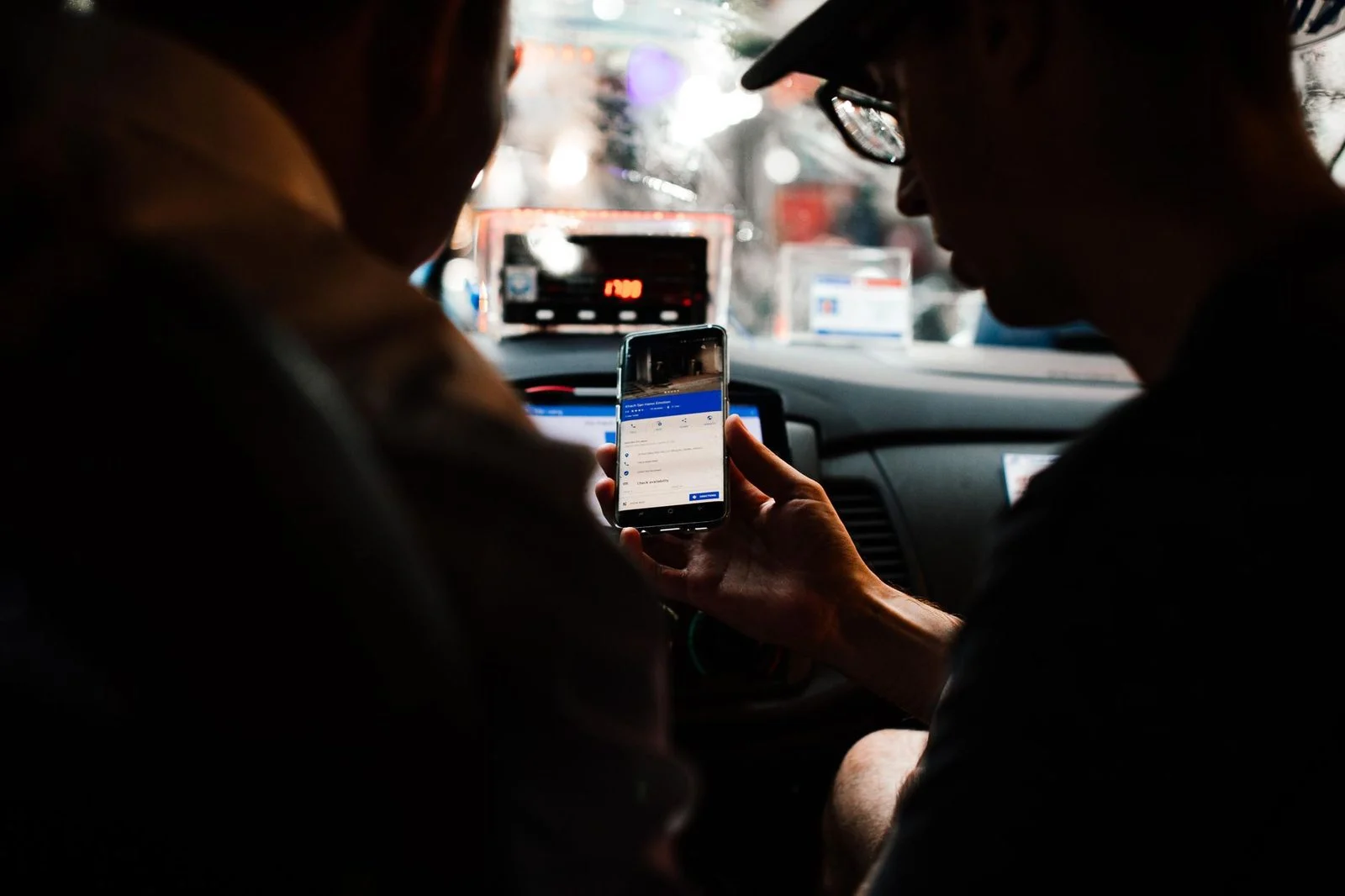
The driver’s app status often decides which insurance applies. Louisiana sets different minimum coverage for different phases of a trip.
When a driver is logged on and waiting for a ride request, La. R.S. 45:201.6 requires automobile insurance of not less than fifty thousand dollars for death and bodily injury per person, not less than one hundred thousand dollars for death and bodily injury per incident, and not less than twenty-five thousand dollars for property damage. During a prearranged ride, La. R.S. 45:201.6 requires automobile insurance of not less than one million dollars for death, bodily injury, and property damage. These minimums come from La. R.S. 45:201.6.
Your own auto policy may not respond during a trip. Louisiana allows insurers to exclude coverage while a driver is logged on or on a prearranged ride. See La. R.S. 45:201.7. The Insurance Information Institute notes that personal auto policies often exclude rideshare driving as commercial use.
Does Uber give you anything after a crash? Reporting the crash in the app creates a record. That report is separate from a claim for your injuries.
Passenger, Other Driver, or Pedestrian: Your Position Changes the Claim
If you rode in the rideshare vehicle, you may have a claim against the at-fault driver. Coverage tied to the trip may also be part of the picture.
If that coverage is not enough, or the driver is uninsured, your own uninsured or underinsured motorist coverage may apply.
Pedestrians and cyclists struck by a rideshare vehicle may have claims too. The same insurance sources can come into play, and the crash details drive the analysis.
Can You Sue Uber or Lyft Directly?
A claim can name the driver. Whether the rideshare company is a proper party is decided case by case. Uber and Lyft generally describe their drivers as independent contractors, and how that affects liability depends on the trip and the driver’s relationship with the company.
Under Louisiana Civil Code article 2320, masters and employers are answerable for the damage occasioned by their servants and overseers in the exercise of the functions in which they are employed, and responsibility attaches only when the master or employer might have prevented the act which caused the damage and did not do so. Whether that rule reaches a rideshare company turns on the facts of the trip.
Under Louisiana’s Direct Action Statute, R.S. 22:1269, an injured person generally may not bring a direct action against the at-fault party’s liability insurer, and only limited exceptions apply. Louisiana limits direct action against a liability insurer to listed situations, such as when the insured is insolvent or has died. La. R.S. 22:1269 reads: “B.(1) The injured person or, if deceased, the persons identified in Civil Code Articles 2315.1 and 2315.2, shall have no right of direct action against the insurer unless at least one of the following applies.” La. R.S. 22:1269 reads: “unless it contains provisions to the effect that the insolvency or bankruptcy of the insured shall not release the insurer from the payment of damages for injuries sustained or loss occasioned during the existence of the policy, and any judgment which may be rendered against the insured for which the insurer is liable which shall have become executory, shall be deemed prima facie evidence of the insolvency of the insured, and an action may thereafter be maintained within the terms and limits of the policy by the injured person, or his survivors, mentioned in Civil Code Art. 2315.1, or heirs against the insurer.” See La. R.S. 22:1269.
The firm may associate or refer a case to other law firms. Any co-counsel is not part of American Trial Lawyer, LLC.
Louisiana Fault Rules and Deadlines to Know
Louisiana reduces recovery by an injured person’s share of fault. Under La. Civ. Code art. 2323, as amended effective January 1, 2026, a person suffering injury, death, or loss whose own negligence is equal to or greater than fifty-one percent is not entitled to recover damages. Below fifty-one percent, La. Civ. Code art. 2323 reduces the damages recoverable in proportion to the degree or percentage of negligence attributable to the person suffering injury, death, or loss. If the injured person’s share of fault is less than fifty-one percent, the article does not prevent recovery; it reduces the damages recoverable in proportion to that person’s percentage of negligence. Notwithstanding these rules, including the fifty-one percent bar, the claim is not reduced when the injury results partly from the injured person’s own negligence and partly from the fault of an intentional tortfeasor.
La. Civ. Code art. 3493.1 provides that delictual actions are subject to a liberative prescription of two years, which commences to run from the day that injury or damage is sustained. Uninsured motorist claims are generally prescribed two years from the accident date under La. R.S. 9:5629.
Waiting can make evidence harder to collect. Witness memories fade and records get lost. That is a reason to act early.
What Affects the Value of a Rideshare Injury Claim
A claim’s value turns on several things. These include the injuries, the medical care needed, lost income, and how fault is assigned.
Medical bills often worry people most. In some cases, when a health insurer paid a contracted provider, recovery of past medical expenses is limited to the amount actually paid plus the patient’s cost sharing.
Missed work also matters. Keep pay stubs, schedules, and notes about time away from work and your ability to earn.
Not sure what your next step is?
Talk it through with our team — the first consultation is free, confidential, and carries no obligation.
Steps to Take After a Rideshare Crash in New Orleans
Get medical care first, and keep every record of visits and bills. Then gather proof while it is fresh.
- Photograph the scene, vehicles, and visible injuries.
- Write down the driver’s name, insurer, and app details, including the trip status if you know it.
- Note the names and contact details of any witnesses.
- Keep a log of missed work and related costs.
Who pays if an Uber driver hits me in Louisiana?
Compensation may come from the rideshare company’s coverage, the driver’s personal policy, the at-fault driver’s liability insurance, or your own uninsured motorist coverage. Which one applies turns on your role and the driver’s app status.
Can I sue Uber if a driver hits me?
A claim can name the driver. Whether the rideshare company is a proper party turns on the trip and the driver’s relationship with the company.
How long do I have to file?
Louisiana generally gives two years from the day of injury for tort claims (La. Civ. Code art. 3493.1). Some exceptions exist, so the timing should be checked early.
If you were hurt in a New Orleans crash with an Uber or Lyft driver and can’t tell which insurance applies, you don’t have to sort it out alone. Our team can review your situation in a free, confidential first consultation, with no obligation to continue. Request a free case evaluation or call 855-LUBECKI. Office in New Orleans.
What Often Shapes the Insurance Picture
Your role at the time of the crash
Whether you were a passenger, a driver, a pedestrian, or someone in another vehicle can change which insurance may be involved.
The driver's app status
Whether the app was off, waiting for a ride, or carrying a passenger at the moment of impact is a key detail we review.
The insurance policies involved
Rideshare company coverage, personal auto policies, and the at-fault driver's liability insurance may all come into the discussion.
Your own coverage
Your uninsured or underinsured motorist coverage may matter, and we help you understand what your own policy says.
Be Careful Before Speaking With an Insurer
Insurance adjusters may contact you quickly and ask for a recorded statement. Talking with a lawyer before you give a statement or sign any paperwork can help you understand your options.
Questions to Bring to Your Free Consultation
What was your role?
Were you the rider, the driver, a pedestrian, or in another vehicle?
What was the app doing?
Note whether the app was on, whether a trip was active, and any screenshots or receipts you have.
What insurance is listed?
Bring the other driver's information, the rideshare company's details, and your own policy.
Who has contacted you?
Write down any calls, letters, or offers from insurers or companies so we can review them together.