
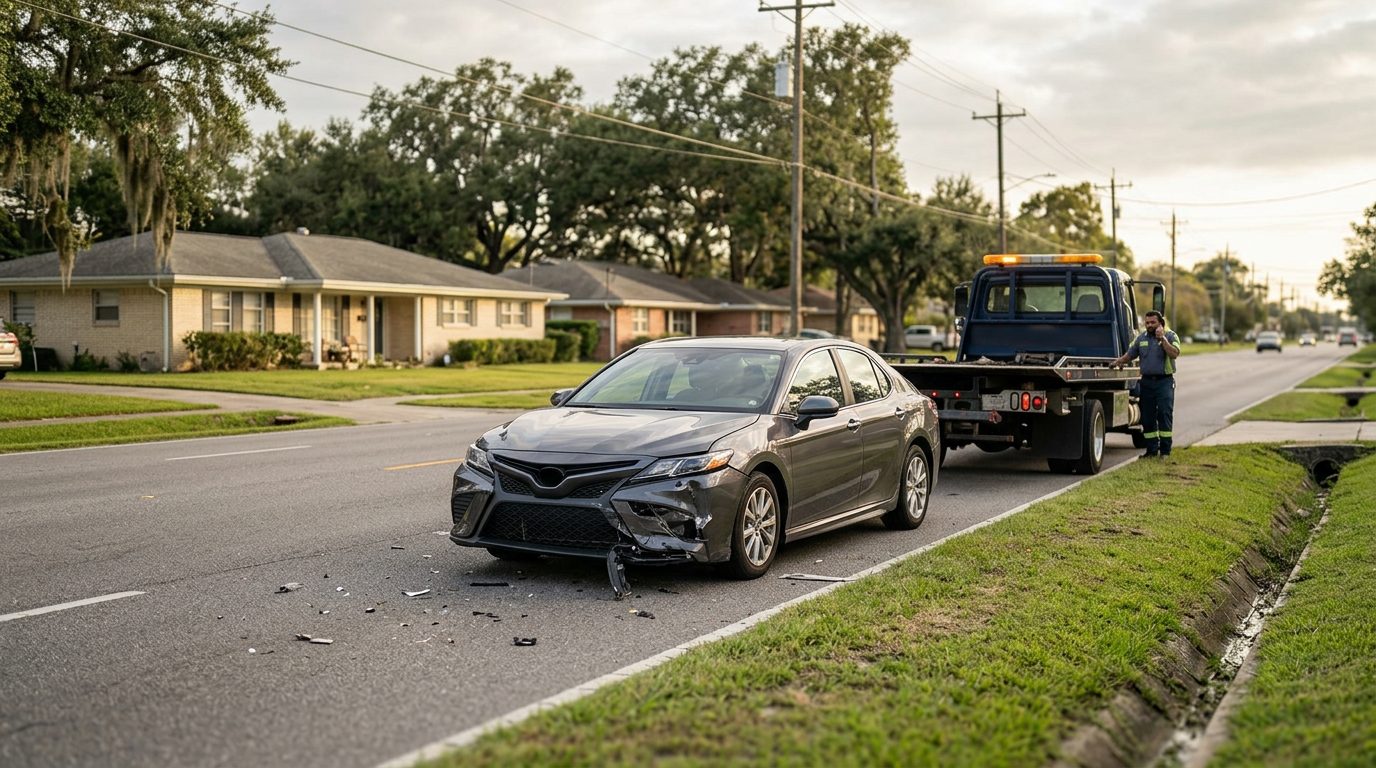
Car Accidents | New Orleans, Louisiana
My Boyfriend Drove My Car and Got in an Accident. What Do I Do Now?
Questions about insurance, injuries and paperwork can pile up quickly when someone else was driving your vehicle. Here is how to think them through.
By Przemek Lubecki · Published November 21, 2026
If your boyfriend was driving your car when it crashed, you may be asking what happens if my boyfriend is driving my car and gets in an accident. Owning the car does not automatically make you responsible for the crash. In Louisiana, the answer usually turns on who caused the crash, which insurance policies apply, and whether anyone was hurt.
This guide covers those questions in plain language, in the order most people face them. It is general information about Louisiana car accident claims, not advice about your policy or your crash.
The short answer: a crash in your car is not automatically your bill
A crash in your car does not automatically make you the one who pays. Louisiana law starts with who caused the harm. Under Louisiana’s Civil Code, every act that causes damage to another obliges the person by whose fault it happened to repair it, and that includes damage caused by negligence, meaning a failure to use reasonable care (La. Civ. Code art. 2315; La. Civ. Code art. 2316).
There are usually three separate questions. One is who was driving. Another is whether you, as the owner, face any claim. The last is what happens for anyone who was hurt. Each person may have different insurance and different facts, so this page takes them in that order.
Keep in mind that the facts of your crash, including who was at fault, shape every answer below. Even a minor crash can raise questions about coverage and reporting, so it helps to know the basic rules early.
Not sure what your next step is?
Talk it through with our team — the first consultation is free, confidential, and carries no obligation.
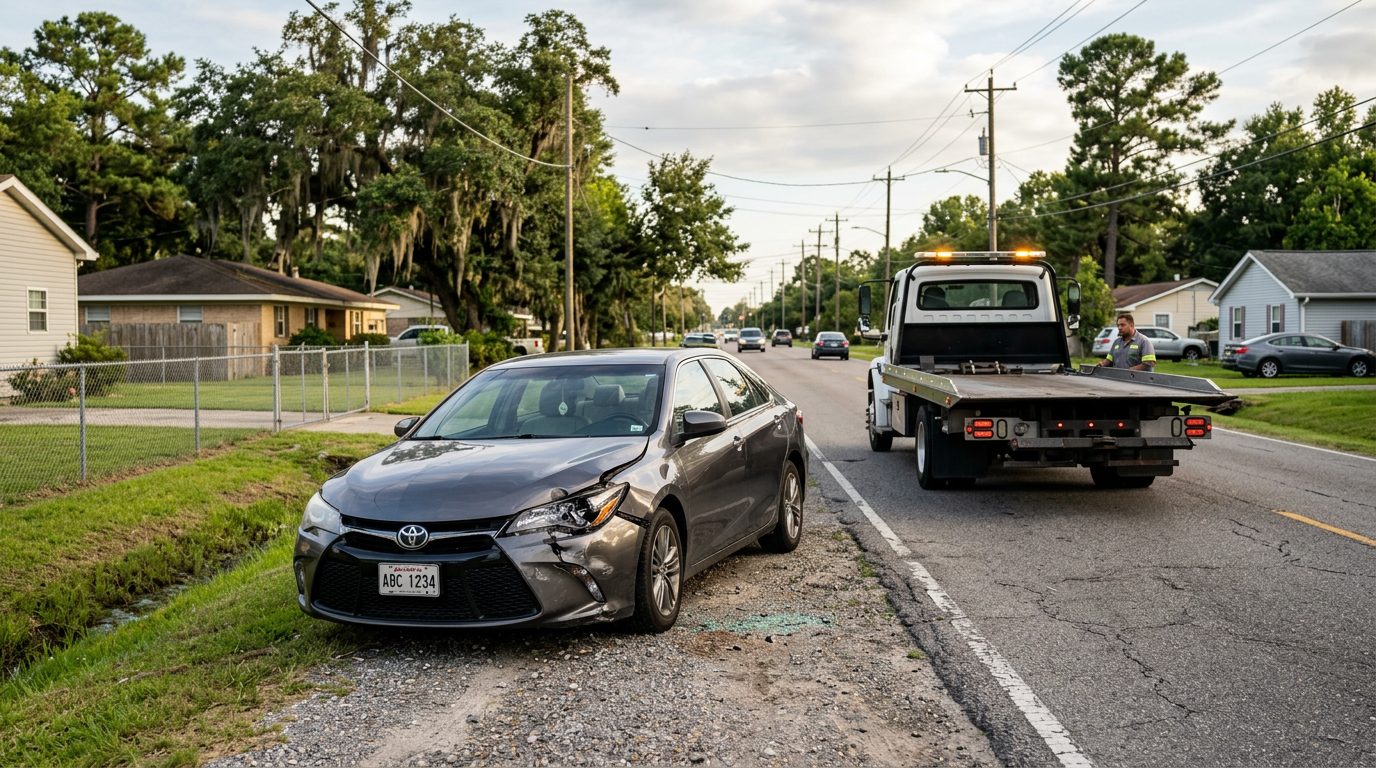
How car insurance usually works when someone borrows your car
In many cases, the insurance on the car, the driver’s own policy, or both may respond to the crash.
Many auto liability policies cover a person who drives the insured car with the owner’s permission. Insurers and courts often call that person a permissive driver. Which policy responds hinges on the policy wording, who lives in the household, and the coverage limits.
Some policies list specific drivers or exclude certain people, so the exact wording matters. A common mistake is assuming the owner’s policy covers every driver without checking the language first.
Louisiana law lets an operator of a vehicle involved in a crash that injures someone or damages property report a claim for property damages and damages for physical injury to the commissioner, and declare the insurance company, policy number, and coverage limits on the form (La. R.S. 32:871). If you own the car, tell your own insurer about the crash soon after it happens, even if you were not the one driving. Keep copies of any claim numbers and letters you receive.
How fault works in Louisiana, including when the crash was not your boyfriend’s fault
Louisiana looks at fault to decide who pays, so the driver who caused the crash is usually the central question.
When more than one person shares fault, the court divides it among them. Under the current text of article 2323 of the Louisiana Civil Code, a person whose share of negligence is 51 percent or more cannot recover damages, unless the injury was partly the result of an intentional tortfeasor’s fault, in which case the claim for recovery of damages is not reduced. A smaller share reduces the recovery in proportion to that share (La. Civ. Code art. 2323). The current text took effect January 1, 2026, and earlier versions said something else, so the date of your crash matters.
If another driver caused the crash, injured people can make a claim against that driver and their insurer. Each share of fault can change how a claim is valued, so the other driver’s conduct matters too.
Police reports, photos, witness statements, and vehicle damage are common sources of evidence used to sort out fault. Louisiana crash reports are confidential, but they are available only to the parties, parents or guardians of a minor party, insurers of any party which is the subject of the report (or an insurance support organization under contract to provide claims and underwriting), healthcare providers who rendered services to a party, succession representatives, attorneys, and news-gathering organizations requesting documents for a specific crash, and upon request are made available within seven working days following the completion of the crash investigation (La. R.S. 32:398).
Can the car owner be held responsible for a crash their boyfriend caused?
Your general responsibility comes from your own fault and the damage it causes. It can involve a known history of reckless driving or impairment.
Whether that applies depends on what you knew before the crash. In practice, the question often becomes what the owner knew about the driver’s habits and when they knew it.
Family and household ties can also change how a policy applies, so the wording is worth reading closely alongside the rest of the facts.
What if the car hit a tree or another object, or the damage seems minor?
Yes, a crash into a tree, pole, or wall is still an accident, even when no other vehicle is involved.
A single-vehicle crash is often handled under collision or comprehensive coverage on the car’s own policy. Liability coverage pays for injury or damage you cause to others, so it may not be the coverage that applies to damage to your own car. The deductible is also part of that answer, and your insurer can say which coverage fits.
Minor damage still counts. Under La. R.S. 32:398, a driver involved in a crash that results in injury to or death of any person, or property damage in excess of five hundred dollars, must give his name, address, and the registration number of the vehicle he was driving and, upon request and if available, exhibit his license or permit to drive to any person injured in the crash or to the driver, occupant, or person attending any vehicle or other property damaged in the crash.
Small damage can hide injuries that are not obvious at the scene. Reporting the crash, even when the damage looks small, creates a record that can matter later.
Practical steps to take after a crash involving your car
The first steps are checking for injuries, exchanging information, and writing down what happened while the details are fresh.
- Check everyone for injuries, and call 911 if anyone is hurt or the road is unsafe.
- Get the other driver’s name, address, and registration number, and the names of any witnesses.
- Take photos of the vehicles, the scene, and any visible injuries before the cars are moved, when it is safe.
- Notify your insurer and the other driver’s insurer, and keep every claim number and letter.
- Keep records of medical visits, prescriptions, missed work, and repair estimates.
- Before giving a recorded statement, know your rights. If someone takes a written, recorded, or transcribed statement from an injured person, they must give that person a true and complete copy of it, with no more than two copies required. Anyone having possession of any written, recorded, or transcribed statement or a copy of such statement must, at the request of the person who made it, furnish a true and complete copy within twenty days after written demand (La. R.S. 13:3732).
Ask for a copy in writing. Do not feel rushed into a quick settlement before the full extent of any injuries is known. For more on these topics, see our related guides on Orleans Parish car accident claims, parking lot claims, and how car accident claims are settled.
Not sure what your next step is?
Talk it through with our team — the first consultation is free, confidential, and carries no obligation.
Talking through your situation with the New Orleans office
Yes, you can talk through your situation with our New Orleans office. This is a stressful spot, and it is often one you did not choose. Your boyfriend may be worried too, and it can be hard to know who needs to act first.
Przemek Lubecki is the responsible lawyer for this page. The New Orleans office handles Louisiana car accident matters for people in Orleans Parish and the New Orleans metro area. This firm may associate or refer a car accident case to other law firms. The first consultation is free, confidential, and without obligation to continue.
Quick answers
How long do I have to file a claim?
Louisiana’s general rule for delictual (tort) actions is a two-year prescription period that starts when the injury or damage happens (La. Civ. Code art. 3493.1). Exceptions exist, so the timing for your case is worth reviewing early.
Whose insurance pays when a partner drives my car?
Often the owner’s policy, the driver’s own policy, or both may respond, based on the policy wording.
If your boyfriend was driving your car when it crashed, you may have questions about insurance and responsibility, and our New Orleans office is ready to talk them through with you. Call 855-LUBECKI or request a free case evaluation.
How we approach these cases
Free, confidential first consultation
Talk with Przemek Lubecki about your situation. The first consultation is free, confidential and without obligation to continue.
Organized review of your information
We help you gather the crash report, insurance details, photos and medical records so every option is clear.
Careful attention to families
Drivers, owners and passengers can all be affected. We take time to explain who is involved and how each policy may apply.
Plain-language answers
You will hear straightforward explanations about your choices, with no pressure to decide before you are ready.
Keep your records
Save the police report number, photos of the vehicles and scene, the other driver's information, and every insurance letter you receive. Talk with a lawyer before you sign any statement or release.
Questions to bring to your consultation
Whose insurance is involved?
Ask about the vehicle owner's policy, the driver's own policy and any coverage that may apply to the crash.
Who was driving and why?
Be ready to describe the trip, who was in the car and any other vehicles involved.
What injuries and treatment do you have?
Bring a list of doctors, appointments and medical bills, including any follow-up care still ahead.
What has already been said?
Note any calls from insurers, statements you gave and forms you were asked to sign.