
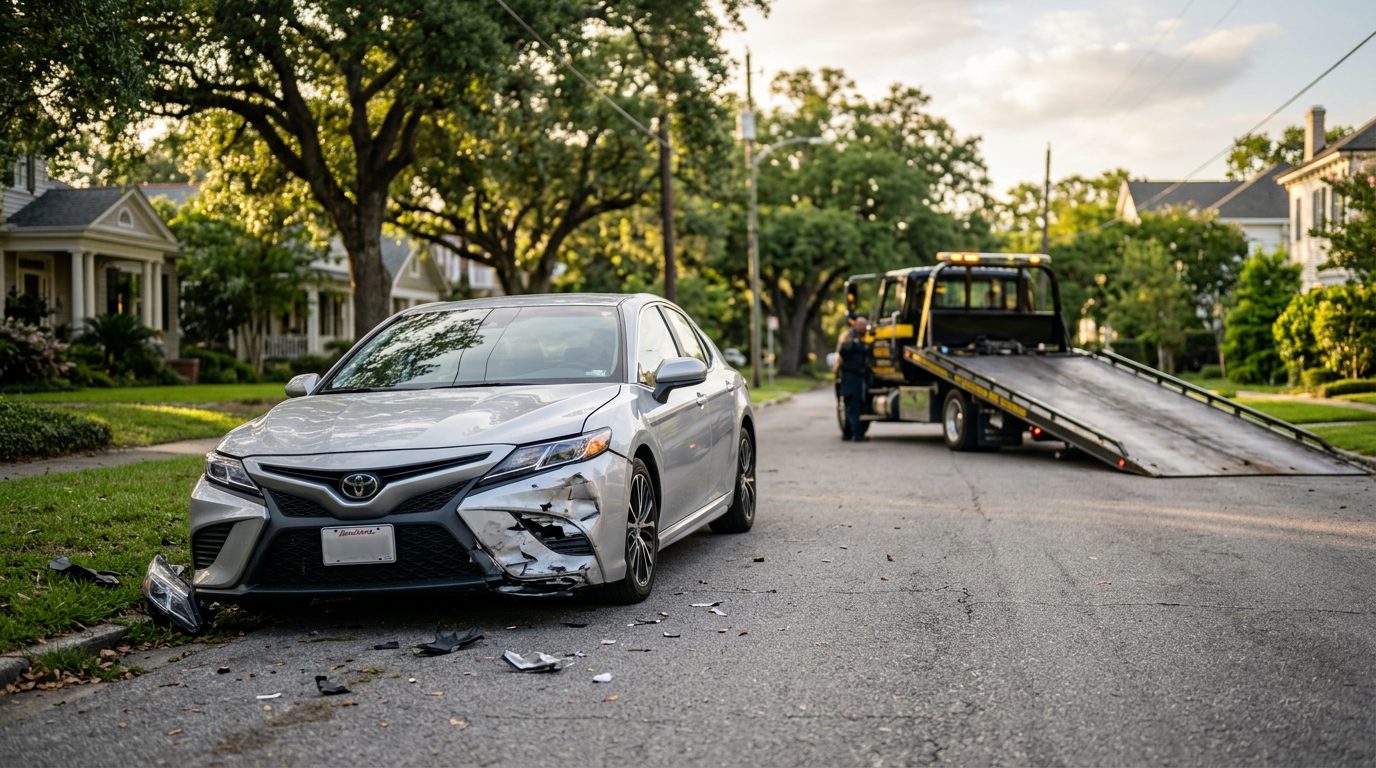
Car Accidents | New Orleans, Louisiana
Hurt in a Streetcar Crash in New Orleans? Learn Your Options
Collisions involving streetcars raise questions that are easy to miss after a crash. Przemek Lubecki and our team at American Trial Lawyer, LLC, in New Orleans, will listen to what happened and explain the steps ahead in plain language.
Your First Step Is Free
Free
First consultation
Confidential
Every conversation stays private
New Orleans
Office in New Orleans, Louisiana
By Przemek Lubecki · Published October 28, 2026
Hit by a Car Near a New Orleans Streetcar Line? Start Here
A streetcar car accident claim in New Orleans asks two basic questions. Who caused the crash, and what losses did it cause? Near streetcar tracks, those questions can involve more parties and more records than an ordinary crash.
If you were hit near the tracks, you may still be recovering. You may be waiting on a police report or getting calls from an insurance adjuster. That’s a lot to handle at once.
This page explains how crashes near streetcar lines can differ, what a car accident claim can include, the usual steps, and how Louisiana fault and deadline rules work. It is written for injured drivers, passengers, pedestrians, and cyclists struck by a car, and for family members helping someone who was hurt. It is general information, not advice about your case.
If a car hit you near a streetcar line and you're now dealing with injuries and insurance calls, you don't have to sort it out alone; request a free case evaluation or call 855-LUBECKI. Talk it through with our team — the first consultation is free, confidential, and carries no obligation.
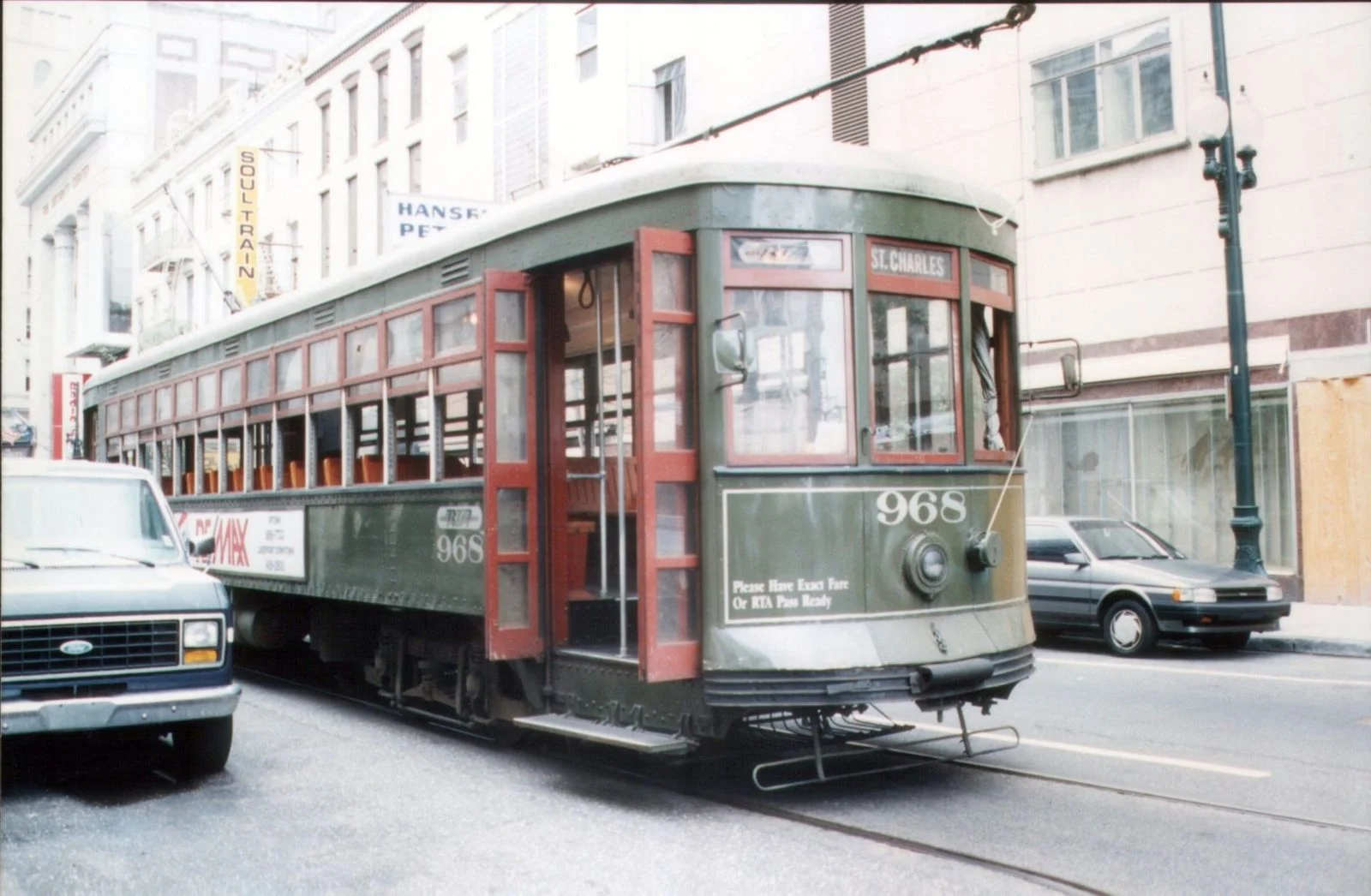
Why Crashes Near a New Orleans Streetcar Line Can Be Different
Streetcar crashes differ because the tracks share the road with regular traffic. Busy corridors such as Canal Street and St. Charles Avenue put cars, buses, bikes, and pedestrians close to the rails.
- Cars may cross, turn, or stop near the tracks. Lane positions can shift during a turn or merge.
- Heavy traffic can make it harder to rebuild how the crash happened. Early photos and notes help.
- A streetcar or other transit vehicle may be involved. When a public body could be responsible, different rules can apply.
- Suits against the state, state agencies, or political subdivisions must be filed in a Louisiana state court. See La. R.S. 13:5106.
- See La. R.S. 9:2800.
- More than one party may share responsibility. An employer can answer for an employee’s work-related acts (employer vicarious liability), but only in certain circumstances. See La. Civ. Code art. 2320.
These points shape which parties and which rules matter in your claim.
What a Car Accident Claim Can Cover
A car accident claim can seek payment for medical bills, lost income, vehicle damage, and other harm. Under La. Civ. Code art. 2315, a person whose fault caused damage must repair it.
- Medical care: emergency treatment, hospital stays, imaging, therapy, and follow-up visits.
- Lost income: wages you missed and any reduced ability to earn.
- Property: your vehicle, personal items, and related transportation costs.
- Non-economic harm: pain, suffering, and effects on daily life, as Louisiana law allows; insurers may also make available, at a reduced premium, uninsured motorist coverage with an exclusion for all noneconomic loss, known as “economic-only” coverage.
- Family losses: loss of consortium, service, and society, recoverable by the same people who could bring a wrongful death claim.
Future medical care has a limit. The same article says future medical costs are not recoverable unless they are directly related to a manifest physical or mental injury or disease. Records from your doctors matter here.
Brain injuries often need longer evaluation before their full effect is clear. If a loved one died in a crash, wrongful death is a separate claim. La. Civ. Code art. 2315.2 lists who may sue, starting with a surviving spouse and children.
How a Car Accident Claim Typically Works, Step by Step
A claim usually moves from medical care and evidence, to talks with insurers, to a demand, and only later, if needed, to a lawsuit.
- Get medical care and keep records. Follow your doctor’s plan. Save bills, discharge papers, and work notes.
- Document the scene. Take photos of the vehicles, tracks, signals, and road. Write down witness names if you know them. Louisiana law also lets a driver file a written accident report with the state, which can list insurance information. See La. R.S. 32:871.
- Handle insurer contact carefully. You don’t have to answer every question on the spot.
- Investigate. A lawyer may request police reports, records, and any video that still exists, and identify who may be responsible.
- Demand and negotiate. A demand to the insurer is based on documented losses and the facts about fault.
- Consider a lawsuit. If a fair resolution isn’t reached, filing may be considered. A lawyer can explain what that involves.
Each claim moves at its own pace. The time needed depends on the injuries, the parties, and whether a government entity is involved.
Louisiana Fault Rules, Insurance, and Time Limits
Under La. Civ. Code art. 2323, if the degree or percentage of negligence attributable to the person suffering injury, death, or loss is equal to or greater than fifty-one percent, that person shall not be entitled to recover damages, unless the injury results partly from the fault of an intentional tortfeasor, in which case the claim shall not be reduced. Under La. Civ. Code art. 2323, if the degree or percentage of negligence attributable to the person suffering injury, death, or loss is less than fifty-one percent, the amount of damages recoverable shall be reduced in proportion to that person’s degree or percentage of negligence, unless the injury results partly from the fault of an intentional tortfeasor, in which case the claim shall not be reduced. See La. Civ. Code art. 2323.
Your own auto policy may matter too. Under La. R.S. 22:1295, auto liability policies must include uninsured and underinsured motorist coverage at not less than the policy’s bodily injury liability limits, unless the named insured rejects it, selects lower limits, or selects economic-only coverage on a form prescribed by the commissioner. Economic-only coverage leaves out non-economic loss, such as pain and suffering.
Insurers may ask for a recorded statement. Under La. R.S. 13:3732, a person who takes a written, recorded, or transcribed statement from an injured person must furnish that person a true and complete copy, and must furnish a copy within twenty days after a written demand. Ask for it.
Deadlines matter. Under La. Civ. Code art. 3493.1, delictual (injury) actions generally have a two-year deadline that starts the day the injury happens. Wrongful death claims follow La. Civ. Code art. 2315.2, which sets the longer of one year from death or two years from the injury, except that for medical malpractice actions the right of action prescribes one year from the death of the deceased. A lawyer can review which deadline applies to your facts.
Common Questions About Streetcar Car Accident Claims
Most questions come down to reporting, fault, and time. The short answers below cover the basics.
Should I report a crash that involved a streetcar?
Yes. Get medical care and a police report, since both document what happened.
Can I still have a claim if I was partly at fault?
Possibly. Under La. Civ. Code art. 2323, if the degree or percentage of negligence attributable to the person suffering injury, death, or loss is less than fifty-one percent, the amount of damages recoverable shall be reduced in proportion to that degree or percentage of negligence, unless the injury results partly from the fault of an intentional tortfeasor, in which case the claim shall not be reduced.
What does the free first consultation involve?
It is a free, confidential conversation with no obligation to continue. The lawyer reviews the basic facts with you.
Will my case go to court?
Some claims resolve without a lawsuit. Others may need one, and a lawyer can explain when filing may be considered.
Who would handle my case?
Przemek Lubecki is the responsible lawyer for this page. The firm has assistants and office staff, and it may associate or refer a case to other law firms.
What if a family member was killed?
Families may have wrongful death options. Louisiana law sets who may bring that claim.
Not sure what your next step is?
Talk it through with our team — the first consultation is free, confidential, and carries no obligation.
Why Talk With American Trial Lawyer About a Streetcar-Area Crash
American Trial Lawyer is a trial law firm with its office in New Orleans. Przemek Lubecki is the responsible lawyer for this page. The firm serves people in Orleans Parish, the New Orleans metro area, and across Louisiana.
The firm focuses on people seriously hurt in truck, commercial vehicle, and car crashes, and on families in wrongful death cases. It also handles rideshare, motorcycle, brain injury, and negligent security matters.
The firm may associate or refer a case to other law firms. The first consultation is free, confidential, and carries no obligation to continue.
If a car hit you near a streetcar line and you’re now dealing with injuries and insurance calls, you don’t have to sort it out alone. Request a free case evaluation or call 855-LUBECKI.
What a Free Consultation Involves
A confidential conversation
Tell us what happened in your own words. The conversation is confidential, and you can share as much or as little as you feel comfortable with.
A review of your crash details
We will look at the basic facts, including the location, the vehicles involved and any reports or medical records you already have.
Plain-language answers
Przemek Lubecki will explain your options without legal jargon, so you can make an informed decision about your next step.
No obligation to continue
The first consultation is free, confidential and without obligation. You decide whether to move forward.
Keep Track of What You Have
Keep copies of any police report, medical records and bills, photos, and the names and contact details of witnesses. Share them with us during your consultation. American Trial Lawyer, LLC may associate or refer your case to other law firms where that is appropriate.
Steps to Consider After a Streetcar Crash
Get medical care
Your health comes first. A medical evaluation can identify injuries that are not immediately obvious, and it creates a record of your condition.
Make a report
Ask for a police report and keep the report number. Official documentation helps describe how the crash happened.
Preserve evidence
Take photos of the scene, your injuries and your vehicle. Save texts, emails and anything else that relates to the crash.
Talk with a trial lawyer
Contact American Trial Lawyer, LLC for a free consultation so we can review your situation with you and discuss your options.