
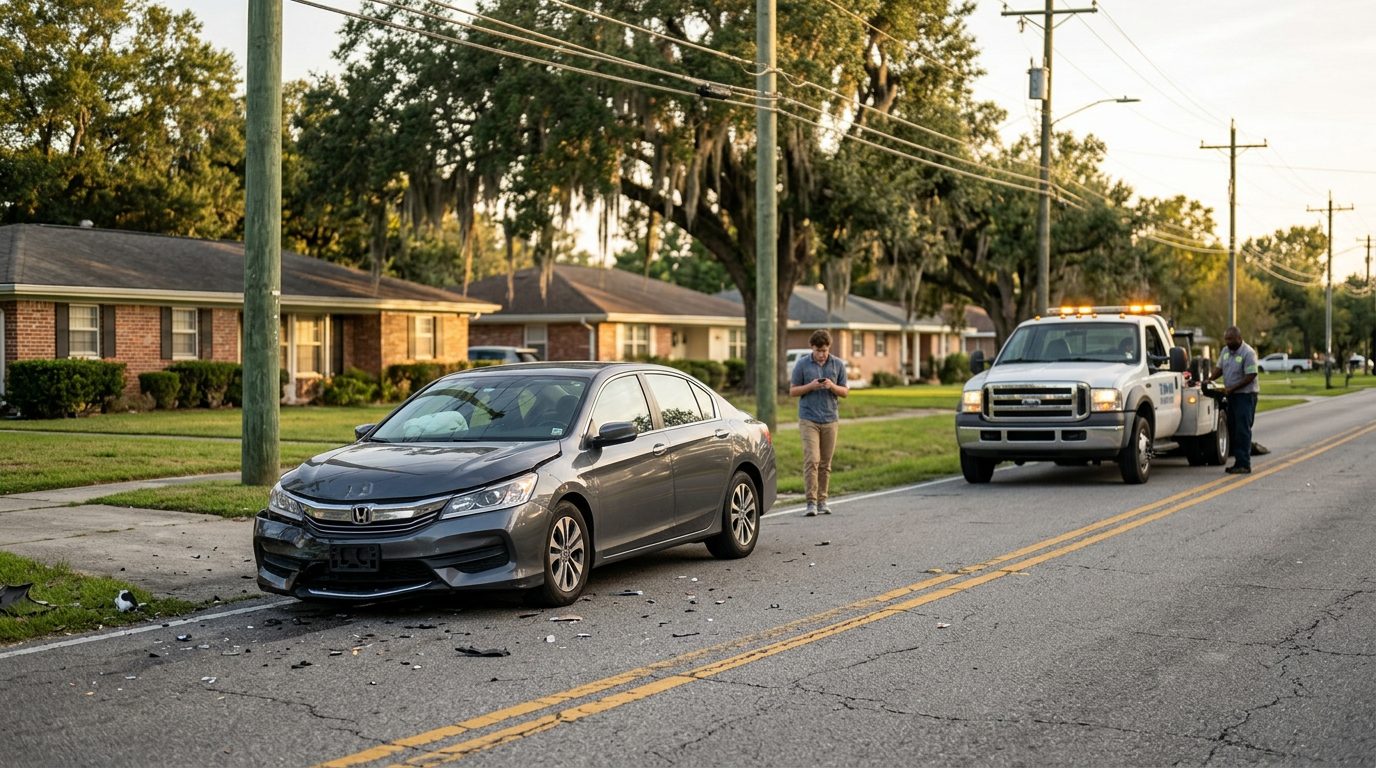
Louisiana car accidents | New Orleans
Your Social Media Posts After a Louisiana Car Accident
Przemek Lubecki, responsible lawyer at American Trial Lawyer, explains how online activity can affect an injury claim and what to think about before you post.
By Przemek Lubecki · Published November 15, 2026
After a car accident, deciding whether to post about it is a personal choice, yet in Louisiana, anything you share online can become part of an injury claim. Insurers and opposing lawyers may review public posts, photos, and check-ins. Under Louisiana car accident laws, your own share of fault matters, and this guide explains how that works. It covers general Louisiana law and is not legal advice about your crash.
Why Social Media Matters After a Car Accident in Louisiana
Social media matters because public posts can become part of the record that insurers and opposing parties review. After a crash, many people want to tell friends they’re safe. A short post can feel harmless. In a claim, though, it may be read next to the police report, medical records, and what you say to an adjuster.
Under Louisiana Civil Code article 2323, for accidents on or after January 1, 2026, Louisiana uses modified comparative fault. The fault of every person who contributed to an injury is determined. Your own share of fault then affects what you can recover, so your words about the crash carry weight.
If you were hurt in a crash and aren't sure what to share online, you don't have to sort it out alone. We can talk through how Louisiana's rules may fit your situation. Talk it through with our team — the first consultation is free, confidential, and carries no obligation.
How Posts Can Be Used in a Louisiana Injury Claim
Posts can be used to question how a crash happened and how serious an injury is. Insurers and attorneys may look at public profiles, tagged photos, and older posts.
That’s why a post about speed, distraction, or being late can matter. A casual line like “I wasn’t paying attention” can be read as an admission. A common mistake is posting before anyone has reviewed the facts, because the post may be read later alongside the full record. Posts also get read out of context. A joke, a caption, or a photo from a good day can look different next to medical notes. Keep crash details in private conversations with a lawyer at our firm, not in public comments.
Posts About the Crash, Police Reports, and Investigations
Some crashes lead to a police investigation beyond the crash report, especially when injuries are serious or the facts are disputed. Not every crash becomes a criminal matter. Under La. R.S. 32:398, state police or the sheriff’s office investigate crashes outside city limits, and city police investigate crashes inside them.
Crash reports are confidential. They are available only to listed people, including parties to the crash, their insurers, healthcare providers who treated them, and their attorneys. Upon request, reports are available within seven working days after the investigation is completed. Agencies also provide crash photos and video on request and may charge a reasonable fee.
Recorded statements matter too. Under La. R.S. 13:3732, anyone who takes a recorded statement from you must give you a true and complete copy. That copy is due within twenty days after written demand. If the person holding the statement refuses that request, the statement cannot be used in a related civil case.
Avoid posting admissions, blame, or guesses while the police report is pending. If police or an adjuster asks for a recorded statement, talk with a lawyer at our firm first.
Photos, Check-Ins, and Everyday Activity After a Crash
Photos and check-ins can be used to question how much an injury limits your daily life. A picture from a party or a day out captures one moment. It doesn’t show the pain that may follow. Still, opposing parties may use it to argue the injury is less serious. Check-ins, tagged locations, and workout apps can also show activity that looks different from what you describe in a claim.
Timing and captions matter. A person can have a hard day and still share a happy moment. That’s human. The most useful step is to be accurate with your doctors about activity limits. Keep what you tell them consistent with what you share online, so your records and posts tell the same story.
Existing Accounts: Privacy Settings and Why Deleting Can Be Risky
Deleting posts after a crash can raise questions in a claim. Relevant content may already be part of the evidence, so removing it can look like hiding it. Changing privacy settings is different from deleting. Many people limit who can see their posts and decline friend or follow requests from people they don’t know. Ask a lawyer at our firm before you make any changes to your accounts.
Until you talk with a lawyer, don’t delete anything on your own. Our team can explain how to handle both privacy settings and content questions.
A Practical Checklist and Talking With a New Orleans Car Accident Lawyer
A few steps protect your claim while you sort out the facts: pause posting, avoid blame, keep records, and delete nothing.
- Pause posting about the crash, your injuries, and your activities.
- Avoid statements about who was at fault or how the crash happened.
- Keep photos, messages, and appointment records in a private place.
- Do not delete posts, photos, or accounts.
- Tell your doctors honestly about symptoms and activity limits.
A general guide can’t predict how a claim will go. Outcomes depend on the crash facts, your injuries, and insurance coverage. No one can promise a result.
Przemek Lubecki is the responsible lawyer for this page. The firm’s office is in New Orleans, and the firm serves Orleans Parish, the New Orleans metro, and Louisiana. The firm may associate or refer a case to other law firms where that is appropriate.
Are car accidents a crime scene in Louisiana?
Not every crash becomes a criminal case. Some crashes lead to a wider police investigation, especially when injuries are serious or the facts are disputed.
Can my social media posts hurt my claim?
They can. Posts may be read next to the crash report and medical records, and a statement about fault can affect how a claim is viewed.
Should I delete posts about my car accident?
Don’t delete anything on your own. Removed content can raise questions in a claim, so talk with our team first.
If you were hurt in a crash and you’re unsure what to share online, you don’t have to sort it out alone. A free, confidential first consultation, with no obligation to continue, is a good place to ask how these rules fit your situation. Request a free case evaluation or call 855-LUBECKI.
Before you post anything
Pause before you share
Hold off on posts about the crash, your injuries, or your activities until you have talked with a lawyer.
Keep your records intact
Do not delete or edit existing posts, messages, or photos without first speaking with a lawyer about what to keep.
Think about who can see it
Privacy settings do not control what can be found, saved, or shared by others, so assume any post may be read.
Protect your recovery
Stay focused on medical care and follow-up appointments rather than discussing the crash online.
A key warning
Do not post or comment about who caused the crash, how you feel about the other driver, or how physically active you have been. Statements like these can be read alongside your crash report and medical records.
Common social media mistakes
Posting about the crash
Describing what happened, apologizing, or blaming someone can be taken out of context later.
Sharing photos of activity
Pictures from trips, workouts, or events can be used to question injuries, even when they were taken on a good day.
Messaging the other side
Direct messages to the other driver, insurers, or witnesses may become part of the record.
Deleting content
Removing posts can raise questions. Talk with a lawyer first about what should be kept.