
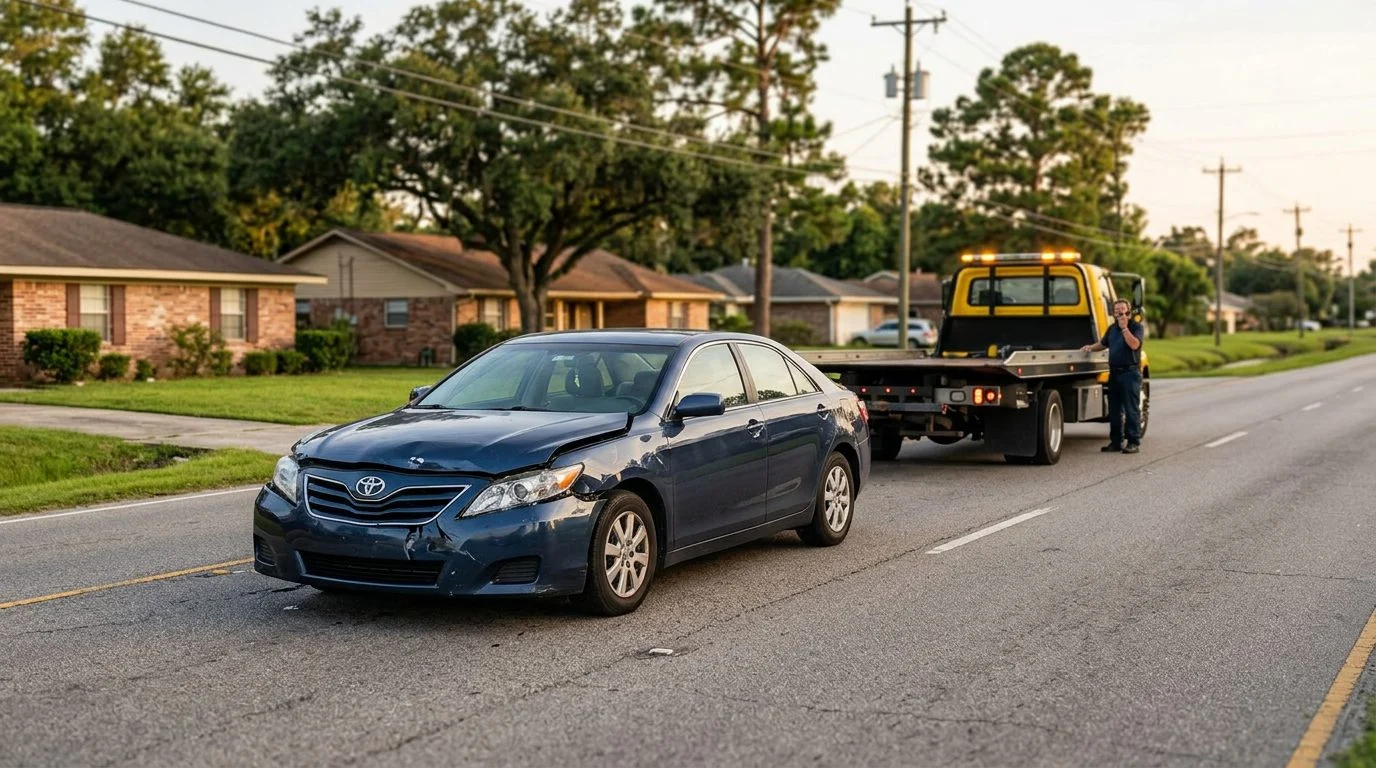
Car accidents | New Orleans, Louisiana
Not Your Fault? Talk to a Trial Lawyer Before You Talk to the Insurer.
Przemek Lubecki and the team at American Trial Lawyer help people hurt in crashes across Louisiana understand their options when insurance companies start calling.
By Przemek Lubecki · Published November 13, 2026
After a crash you did not cause, you may feel sore, shaken, and unsure who to call first. Should I call my insurance if it was not my fault? Usually, yes. Calling your own insurer to report the crash is different from accepting blame for it.
This guide explains why, what to say, what to avoid, and what to keep track of. It is written for Louisiana drivers, passengers, and families dealing with a crash they did not cause.
The Short Answer: Usually, Yes, Call Your Own Insurer
In most cases, you should report the crash to your own insurer, even if the other driver caused it. Many auto policies ask drivers to report accidents promptly, whether or not they were at fault. Reporting the crash opens a claim. It also lets your insurer explain which coverage applies to you. Reporting the facts is not the same as giving a statement about who was at fault. Your own policy may include coverage that matters after a crash caused by someone else, such as uninsured motorist protection, which is covered below.
If a crash you did not cause left you hurt or worried about the other driver's insurer, we are glad to talk through your options with you. Talk it through with our team — the first consultation is free, confidential, and carries no obligation.
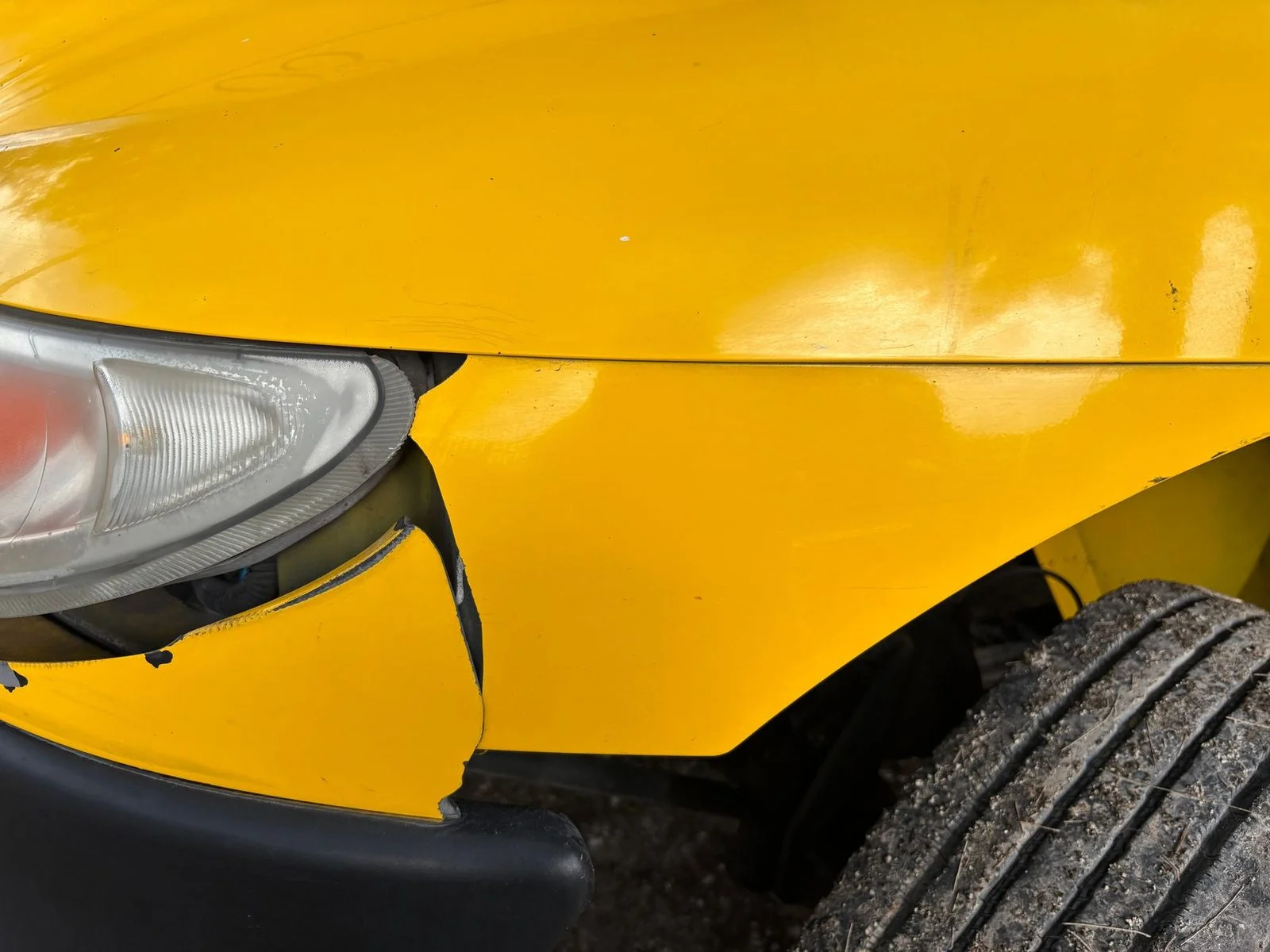
Two Insurance Companies, Two Different Calls
Your insurer and the other driver’s insurer play different roles, so you handle those calls differently. Your insurer is the company you pay. You call it to report the claim and ask about your coverage.
The other driver’s insurer is a separate company. Its adjuster works for that insurer, not for you. You can ask to hold any request for a statement until you understand your options.
If the other driver has no insurance, your own uninsured motorist coverage may matter. La. R.S. 22:1295 covers insured people who are legally entitled to recover nonpunitive damages from owners or operators of uninsured or underinsured vehicles. A policyholder can reject this coverage, choose lower limits, or select economic-only coverage. Reporting promptly helps you keep these options in view.
Every crash is different, and the details of how it happened are worth discussing with a lawyer. For a crash caused by a vehicle that never made physical contact with you or your vehicle, La. R.S. 22:1295 says uninsured motorist coverage includes bodily injury, but you bear the burden of proving, through an independent and disinterested witness, that the injury was caused by the driver of another vehicle whose identity is unknown or who is uninsured or underinsured. The same statute sets that requirement.
Will My Rates Go Up After a Non-Fault Accident?
No one can predict your premium from the accident alone. Each insurer sets its own rating rules and looks at its own claims history.
Being hit by another driver is different from causing a crash. Ask your insurer directly how a claim would be recorded on your policy. Write down the answer, the date, and the name of the person you spoke with.
Reporting the claim promptly and keeping clear records of the crash facts are steps you control. They help no matter how the claim is recorded.
What to Say and What to Avoid When You Call Your Insurer
Stick to facts you can confirm, and leave out guesses about fault. Good facts to share include:
- The date, time, and exact location of the crash.
- The other vehicle, its driver’s name, and its insurer if you have that information.
- Whether a police officer came to the scene, and the report number if one was given.
- Injuries you can see or feel. If you are still being checked, say so.
Avoid guessing about speed, who had the right of way, or what the other driver should have done. Avoid saying “I’m fine” or “I’m sorry.” Either phrase can later be read as an admission, even when it is not one.
Ask what coverages apply to your policy and what documents the insurer needs from you.
Recorded Statements and Calls From the Other Driver’s Insurer
A recorded statement is an interview the adjuster records. If you do give one, Louisiana law gives you a right to a copy.
La. R.S. 13:3732 says a person who takes a written, recorded, or transcribed statement from an injured person must give that person a true and complete copy. The copy must be provided within twenty days after a written demand. A statement cannot be used in a related civil case if the person holding it refused, on request, to provide a copy.
Keep a simple log of every call. Note the date, the adjuster’s name, what was discussed, and any claim number.
Do not sign medical authorizations or releases until you understand your injuries. A release can affect your claim later, so read it closely first.
Common Mistakes People Make After a Crash They Did Not Cause
Most avoidable problems come from waiting, rushing, or posting too soon. Watch for these:
- Waiting too long to report the crash to their own insurer.
- Accepting a quick settlement offer before the full extent of their injuries is known.
- Posting about the crash, their injuries, or their activities on social media. Insurers may review public posts.
- Skipping medical care or delaying evaluation. A gap in care can make injuries harder to document. Read more in our soft tissue whiplash claims guide.
- Not keeping receipts, photos, repair estimates, and records of missed work.
Not sure what your next step is?
Talk it through with our team — the first consultation is free, confidential, and carries no obligation.
Protecting Your Evidence and Your Family’s Options
Start collecting evidence early. Take photos of the vehicles, the scene, the road conditions, and any visible injuries. Write down the names and contact details of witnesses, and keep the police report number.
Louisiana crash reports are confidential, but they are available only to the parties, parents or guardians of a minor party, insurers, insurance support organizations under contract to provide claims and underwriting, healthcare providers who rendered services to a party, succession representatives, attorneys, and a news-gathering organization that requests documents related to a specific crash. La. R.S. 32:398 says that, upon request, these reports are made available within seven working days after the crash investigation is completed. Police may charge up to five dollars for a report of two pages or less, and up to twenty dollars for a longer report, inclusive of all service fees and other charges. Photos and video are available for a reasonable fee.
Louisiana generally sets a two-year time limit for injury claims, counted from the day the injury happened. Under La. Civ. Code art. 3493.1, delictual actions are subject to a two-year liberative prescription. The period does not run against minors or interdicts only in actions involving permanent disability brought under the Louisiana Products Liability Act or state law governing product liability. Time limits can run sooner than many people expect.
Fault also matters. For a crash on or after January 1, 2026, La. Civ. Code art. 2323 bars recovery when a person suffers injury partly from his own negligence and partly from the fault of another, and the degree or percentage of negligence attributable to the injured person is equal to or greater than fifty-one percent; however, notwithstanding that rule, if the other party is an intentional tortfeasor, the claim for recovery of damages shall not be reduced. A smaller share reduces the recovery in proportion to that share.
When a family member is seriously hurt, La. Civ. Code art. 2315 allows damages for loss of consortium, service, and society. The same people who could bring a wrongful death claim may recover these damages. Read our loss of consortium guide for more detail.
For local context, see our Orleans Parish car accident claims guide and our car accident page. American Trial Lawyer, LLC may associate or refer a case to other law firms.
Talk With Przemek Lubecki About Your Situation
If you were hurt, or you are helping someone who was, you may be deciding several things at once. Whether to call your insurer, what to say to the other side, and how to keep your options open all matter. You do not have to sort them out alone.
Do I have to report a crash that was not my fault?
Most auto policies ask you to report accidents promptly, even when you were not at fault. Reporting the facts is not the same as accepting blame.
How long do I have to file an injury claim in Louisiana?
Louisiana generally allows two years for injury claims, counted from the day of the injury. Article 3493.1 has one narrow exception, for minors or interdicts in certain permanent-disability product liability actions, so whether it applies turns on the facts of each case.
Can I get a copy of my recorded statement?
Yes. Under Louisiana law, a person who took or holds your recorded statement must give you a true and complete copy within twenty days after your written demand.
Przemek Lubecki is the responsible lawyer for this page, and the office is in New Orleans. If a crash you did not cause has left you hurt, or you are helping a family member through one, call 855-LUBECKI or request a free case evaluation. The first consultation is free, confidential, and without obligation to continue.
Before you call your insurer
Write down the facts
Record the date, location, weather, road conditions, and what each driver and witness said while the details are fresh.
Be careful with recorded statements
An insurer may ask to record a statement. You can ask to speak with a lawyer first, and it is reasonable to do so.
Keep your medical records
Get checked by a doctor even if you feel you have only minor pain. Keep every bill, prescription receipt and visit summary.
Think before you sign
Do not sign releases or accept a quick settlement offer until you understand what you are giving up.
Key tip
Insurance adjusters work for the insurance company, not for you. Speaking with a lawyer before you give a statement or sign any paperwork can help you understand your position.
Calls you may get after a crash
Your own insurer
Your own carrier may ask about the crash, your injuries and your coverage. Answer questions truthfully and keep copies of everything you send.
The other driver's insurer
The other side's adjuster may call quickly and ask for a recorded statement or a quick settlement. You do not have to decide anything on the first call.
Medical bills and treatment
Bills can arrive while your claim is still open. Share them with your lawyer so the full picture of your care is considered.
A free first conversation
The first consultation is free, confidential and without obligation. We will listen to what happened and explain the next steps in plain language.