
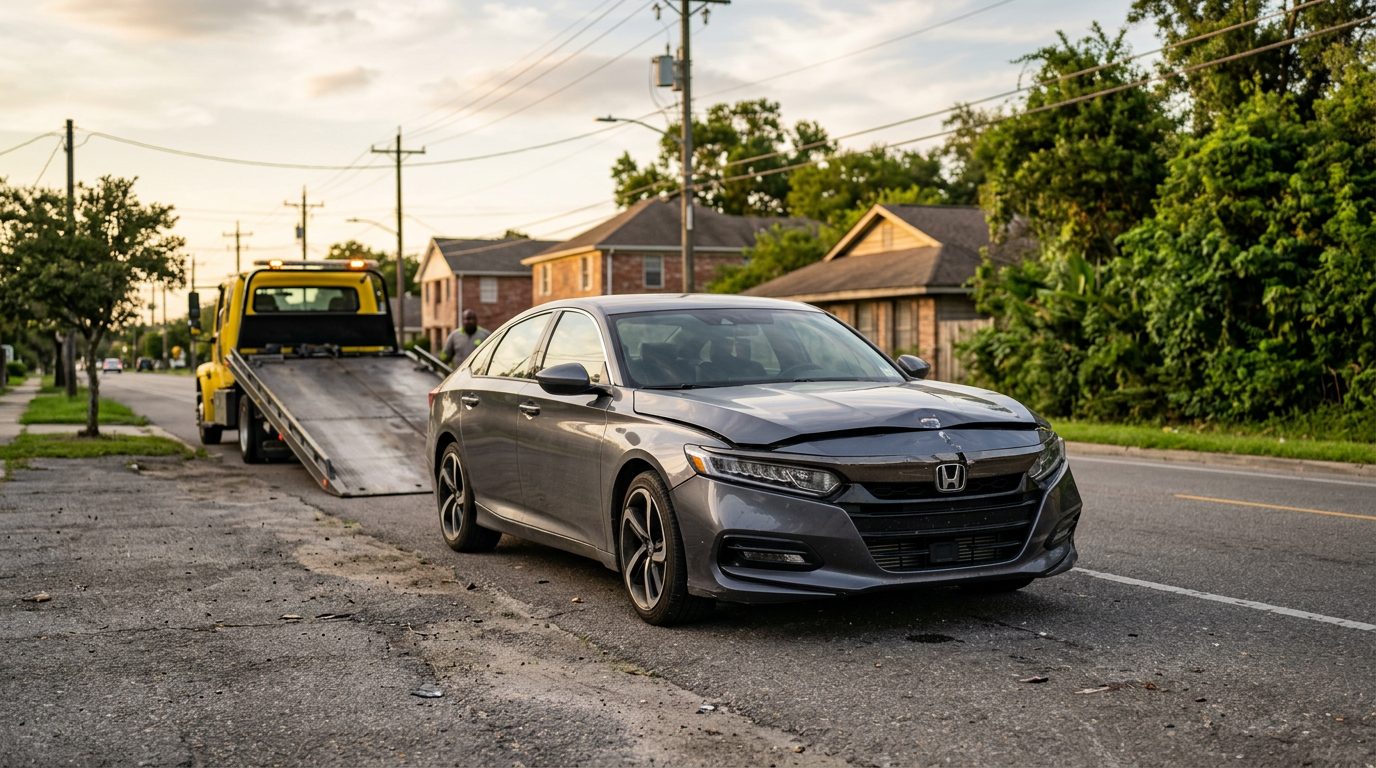
Car Accidents | New Orleans, Louisiana
Wore Your Seat Belt and Still Hurt? Get Clear Answers About Your Claim
By Przemek Lubecki · Published November 15, 2026
You were hurt in a crash, and you weren’t wearing your seat belt. Now you’re wondering whether that one detail will hurt your claim. The defense may point to seat belt use as part of fault, and it can affect which injuries are tied to the crash.
Short Answer: Does Not Wearing a Seat Belt Stop a Claim?
The other driver’s conduct still matters. The seat belt question usually comes down to how much certain injuries were caused by the crash itself. Whether it matters in your case turns on the facts. This page is general information, not a prediction of how any claim will turn out.
Many people assume a seat belt ticket decides who was at fault. It does not. A traffic ticket and an injury claim are different matters. If you’re reading this for a family member or friend, the same questions apply to their claim. This page is part of our series on car accident claims in Orleans Parish, which is covered in our Orleans Parish car accident claims guide.
If a crash left you hurt and seat belt questions have you worried, our team at American Trial Lawyer can talk through what it may mean for you. Talk it through with our team — the first consultation is free, confidential, and carries no obligation.
Louisiana’s Seat Belt Law and the Ticket Question
A seat belt ticket is a traffic matter.
Receiving a ticket and being found at fault for a crash are different questions. Paying or contesting a ticket is one step. Pursuing an injury claim is another. The two can overlap, so review them together when they do. Keep copies of any citation and court notice, and write down the dates you received them.
How Louisiana Comparative Fault Affects a Claim
Louisiana uses comparative fault. That means your own share of fault can reduce what you recover. The rule is in La. Civ. Code art. 2323.
The court looks at everyone who caused or contributed to the injury. This applies whether or not that person is a party to the case. Picture a crash where the other driver ran a red light and you were also not wearing a belt. The fact-finder would weigh both sets of facts. Seat belt use is one piece of that picture, not the whole story.
Seat Belts, Injury Severity, and Causation
Causation asks which injuries came from the crash forces, and which ones a belt would have changed. Injuries from the impact itself may be argued differently than injuries from ejection or contact with the car’s interior. Those questions often shape an injury claim.
Timing matters for how seat belt evidence is used. For later claims, a defendant may offer evidence of non-use. Non-use does not automatically bar recovery. How this evidence comes in depends on the facts of the case and the law applied, so a lawyer should review the specific evidence.
How Insurers and Opposing Parties Raise Seat Belt Non-Use
An insurance adjuster or the other side may raise seat belt use early in a claim. That can happen in a call, a letter, or a request for a recorded statement. Take time to review any statement before you sign it. Keep copies of every letter and message you receive.
If you gave a written or recorded statement, state law gives you a right to a copy. The person who took it must furnish a true and complete copy within twenty days after written demand. A statement by an injured person that the holder refuses to copy, after the request of the person who made it or that person’s personal representative, cannot be used in a civil action relating to the subject matter of the statement (La. R.S. 13:3732).
Crash reports are another source. They are confidential. Upon request, they are available only to the parties, their attorneys, the insurers of a party or an insurance support organization under contract to provide claims and underwriting for a party, parents or guardians of a minor who is a party, healthcare providers or their agents that treated a party, succession representatives of the parties, and news-gathering organizations requesting documents for a specific crash, within seven working days following the completion of the crash investigation (La. R.S. 32:398). Photos, vehicle damage, and witness details can also show how the impact happened.
Wrongful Death and Brain Injury Cases Involving Unbelted Occupants
Louisiana law sets an order for who may sue. The surviving spouse and children come first. Parents come next if there is no spouse or child surviving, unless a father or mother abandoned the child during minority, in which case that parent is deemed not to have survived. Then siblings, if there is no spouse, child, or parent surviving, and then grandparents, if there is no spouse, child, parent, or sibling surviving (La. Civ. Code art. 2315.2).
Louisiana law also allows damages for loss of consortium, service, and society. Those damages are recoverable by the same people who could bring a wrongful death action (La. Civ. Code art. 2315).
Brain injury claims often turn on causation. Head and brain injuries can be harder to see right away. Medical records, imaging, and a clear timeline matter. Getting checked early creates a consistent record of what happened and when. Families who have lost someone in a crash need time to ask questions and gather records. Take that time.
Not sure what your next step is?
Talk it through with our team — the first consultation is free, confidential, and carries no obligation.
Protecting Your Claim: Evidence, Medical Records, and Deadlines
Getting medical care promptly and keeping careful records is a practical first step. Follow the treatment plan your providers give you. Keep every bill, receipt, and insurance letter. Save photos and write down witness names.
Medical bills also affect settlement math. Be honest with your doctors about any earlier problems with the same body part.
Common Questions
Every crash is different, and how a traffic citation relates to an injury claim depends on the specific facts of each case, so it is worth discussing the details with a lawyer.
Does not wearing a seat belt bar recovery in Louisiana?
Not automatically. Non-use can be weighed as part of fault.
How long do I have to file an injury claim?
Under the current text, the general deadline is two years from the day the injury was sustained (La. Civ. Code art. 3493.1). Wrongful death deadlines are set separately, so confirm yours soon.
Next Steps: Talking With Przemek Lubecki in New Orleans
If you were hurt in a crash, or you’re helping a family member through one, seat belt questions can feel overwhelming. Przemek Lubecki is the responsible lawyer for this page. He is a trial lawyer, and the office is in New Orleans, Louisiana.
American Trial Lawyer, LLC may associate or refer a case to other law firms. Your case may be referred or associated with other firms in that way.
Dial 855-LUBECKI or send us a request for a free case evaluation to reach our New Orleans office, and we’ll talk through your options. The first consultation is free, confidential, and without obligation to continue.
How we approach your seat belt car accident claim
Reviewing the crash record
We look at police reports, photos, vehicle damage and medical records to understand how the crash happened and how you were hurt.
Plain-language explanations
We explain the questions insurance companies and courts may raise, including questions about seat belt use, in terms you can follow.
A team focused on your situation
Our team supports Przemek Lubecki, the responsible lawyer for this page, so your questions are handled with care from the first call.
Attention to the whole picture
We consider your injuries, your recovery and the impact on your family, not only the details of the crash.
Speak with a lawyer before giving a statement
Insurance adjusters may ask about your seat belt and how the crash happened. Talk with a lawyer before you give a recorded statement or sign any paperwork. This firm may associate or refer a case to other law firms.
What to gather before your consultation
The crash details
Write down the date, time, location, vehicles involved and any police report number.
Photos and witnesses
Keep photos of the scene, the vehicles and your seat belt, along with names and phone numbers of anyone who saw the crash.
Your injuries and care
List every doctor, clinic and hospital you have visited, and keep copies of bills, prescriptions and treatment notes.
Insurance contacts
Note who contacted you, the company name, claim numbers and what was said, and keep any letters you receive.