
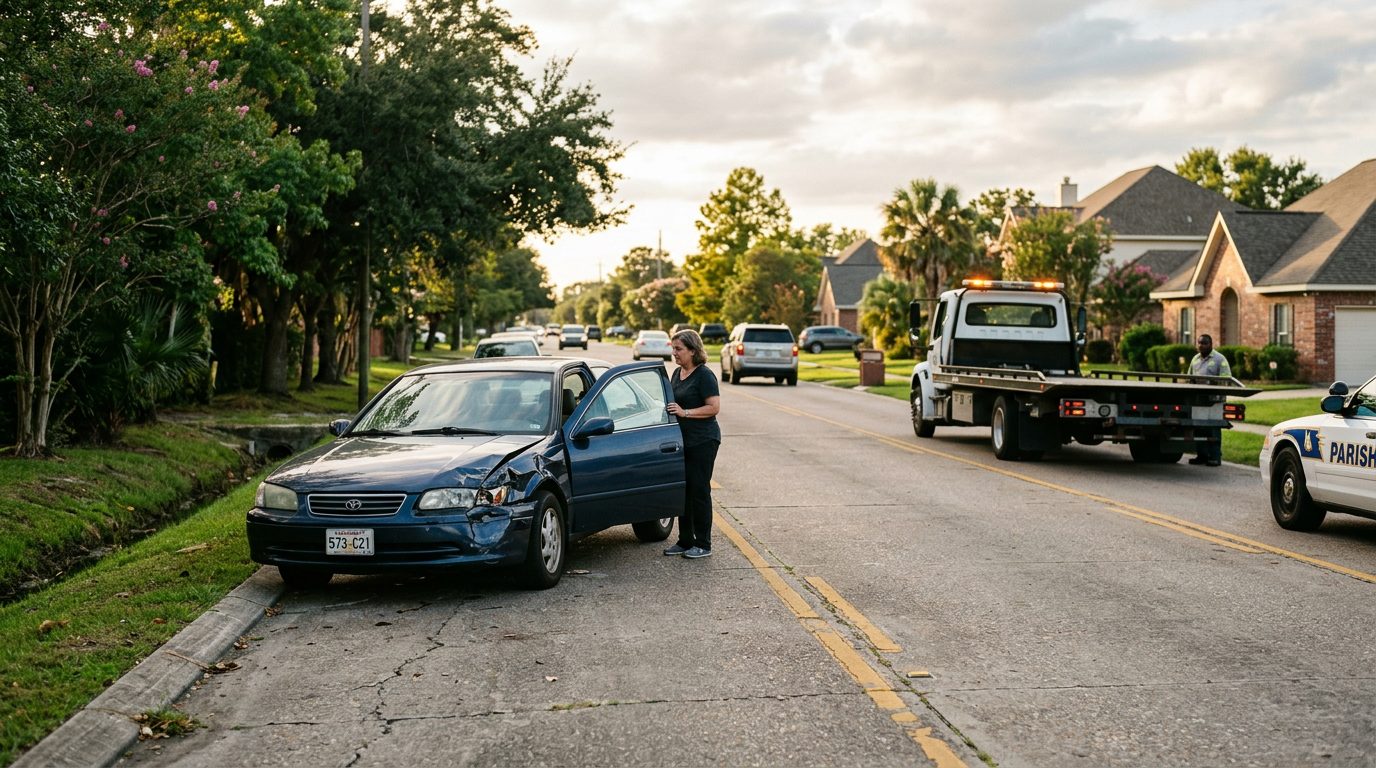
Car Accidents | New Orleans, Louisiana
When more than one driver is to blame, you still need a clear answer
Przemek Lubecki, a trial lawyer at American Trial Lawyer, LLC, helps people hurt in Louisiana crashes understand how fault is shared and what it may mean for their claim. Office in New Orleans.
By Przemek Lubecki · Published November 14, 2026
If a crash left you hurt and you wonder whether you were partly to blame, you may still have a claim. Whether you can recover depends on when the crash happened. For crashes on or after January 1, 2026, a person found 51 percent or more at fault cannot recover damages.
This guide explains how Louisiana’s comparative fault rule works in car, truck and commercial vehicle claims (La. Civ. Code art. 2323). It covers crashes in New Orleans and across Orleans Parish.
Louisiana Comparative Fault in Plain Terms
Comparative fault means the fault for an injury is divided among all persons causing or contributing to it (La. Civ. Code art. 2323). The injured person’s recovery is then adjusted to match that share.
Louisiana’s rule is written in La. Civ. Code art. 2323. It applies to any claim for damages from injury, death or loss, whatever the legal theory behind it.
Under the current text, fault is figured for everyone who caused or contributed to the harm. That includes people who are not parties to the lawsuit. It applies regardless of whether a person can pay or has statutory immunity.
Is there a 51 percent bar in Louisiana?
Yes, for crashes on or after January 1, 2026. An injured person whose fault is 51 percent or more recovers no damages. If the share is less than 51 percent, damages are reduced by that percentage, unless the other fault is that of an intentional tortfeasor, in which case the claim is not reduced (La. Civ. Code art. 2323).
Under the current text, a partial share of fault below fifty-one percent reduces the recovery in proportion but does not bar it, and under art. 2323(C) the claim is not reduced if the other fault is that of an intentional tortfeasor.
If another driver's account of your crash differs from yours, or your family is facing a loss, you don't have to sort out fault on your own. Talk it through with our team — the first consultation is free, confidential, and carries no obligation.
Key Factors in Determining Fault in a Louisiana Car Accident
Fault is determined for all persons causing or contributing to the harm, not just one person’s negligence. Under La. Civ. Code art. 2316, a person is responsible for damage caused by negligence, imprudence or want of skill. Under La. Civ. Code art. 2315, the person whose fault caused the damage must repair it.
The police crash report is one key source. Under La. R.S. 32:398, crash reports are confidential. Crash reports are confidential and are made available only to listed persons, such as the parties to the crash, their insurers, healthcare providers that rendered services, and their attorneys, under La. R.S. 32:398(I)(1)(a). Upon request, they are made available to those persons within seven working days after the investigation is completed. State police, local police departments and sheriff’s offices also provide copies of photographs, video recordings and audio recordings to any interested person on request, and may charge a reasonable fee for such copies (La. R.S. 32:398(E)). You can read more about requesting a crash report.
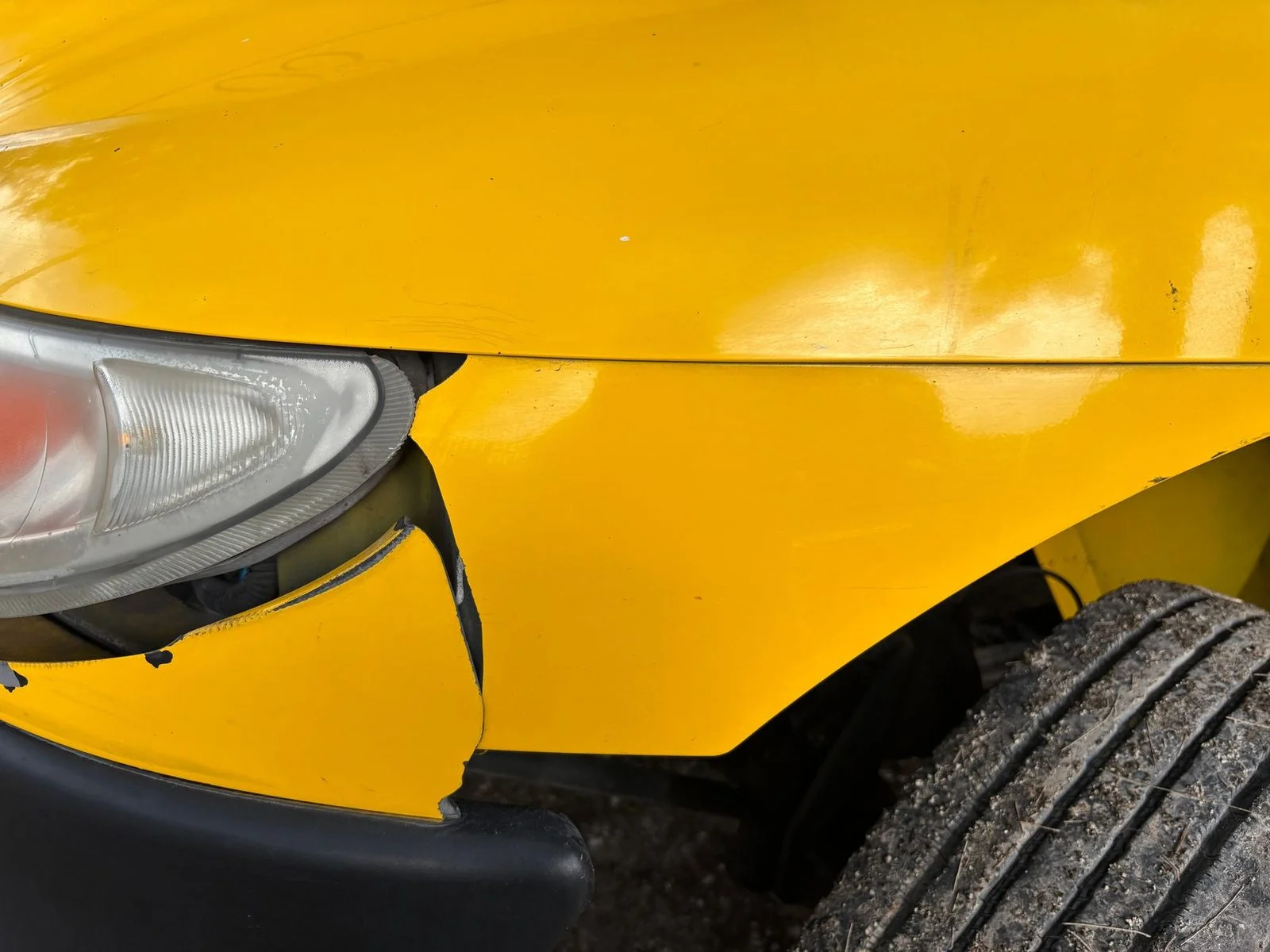
Other evidence can matter too. That includes vehicle damage, traffic signals, witness statements, and phone or dashcam data where it exists. Traffic-law violations are also examined. Under La. R.S. 32:81, a driver may not follow another vehicle more closely than is reasonable and prudent. Under La. R.S. 32:81, a motor truck traveling outside a business or residential area generally may not follow another motor truck within four hundred feet, though this does not prevent one motor truck from overtaking and passing another, and the section does not apply to a non-lead motor vehicle in a platoon.
In New Orleans, crashes on busy corridors such as I-10 and I-610 can involve merging traffic and several vehicles. That makes the sequence of events harder to piece together.
How a Partial Fault Percentage Reduces Your Recovery
Your total damages are figured first. Then your fault percentage reduces that total.
Here is an illustration with round numbers only. It is not a prediction about any real case. Suppose total damages are set at 100 points. At 20 percent fault, the recovery drops by 20 points, to 80. La. R.S. 32:81(A) addresses driving conduct by requiring a driver not to follow another vehicle more closely than is reasonable and prudent; the fault percentages that reduce recovery are set under La. Civ. Code art. 2323, not this traffic rule.
Each percentage point matters. Moving from 20 percent to 30 percent takes 10 more points off the total. That is why a dispute over a few points can change the amount recoverable.
Under La. Civ. Code art. 2323, when a person suffers injury, death, or loss partly as a result of their own negligence and partly as a result of the fault of others, the degree or percentage of fault attributable to all persons causing or contributing to the injury is determined. If the injured person’s share of negligence is equal to or greater than fifty-one percent, they are not entitled to recover damages; if it is less than fifty-one percent, the damages recoverable are reduced in proportion to that percentage of negligence. Notwithstanding those rules, if the injury results partly from the fault of an intentional tortfeasor, the claim is not reduced.
One mistake to avoid is assuming any share of fault ends a claim. Under the rule for crashes on or after January 1, 2026, only 51 percent or more does. Knowing which version of the rule applies matters.
Can a Passenger or Multiple Drivers Be Found at Fault?
Yes. Fault can be split among several people. Under the current article, fault is assigned to each person who caused or contributed to the injury.
Multi-vehicle crashes can involve several drivers and, sometimes, a company or other party. Under La. Civ. Code art. 2324, a joint tortfeasor (one of several people responsible for the same harm) is not liable for more than its own degree of fault. It is not solidarily liable for another person’s share, unless it conspired with that person to commit an intentional or willful act.
When a truck or commercial vehicle is involved, federal driving-time rules may also apply. For property-carrying drivers, 49 CFR 395.3 sets limits, including an 11-hour driving limit.
Can a passenger be found at fault?
Under La. Civ. Code art. 2323(A), when a person suffers injury, death, or loss partly from his own negligence and partly from the fault of another person or persons, he is not entitled to recover damages if his share of negligence is fifty-one percent or greater, and if it is less than fifty-one percent, the damages recoverable are reduced in proportion to that share; under art. 2323(C), if the injury, death, or loss results partly from his own negligence and partly from the fault of an intentional tortfeasor, his claim for recovery of damages shall not be reduced.
Why Fault Can Shift During the Insurance Investigation
An insurer’s early view of fault is a starting point, not a final answer. An adjuster may suggest a fault percentage before all the evidence is in. That number can change once the crash report, photos and statements are reviewed.
Statements matter. Early statements can be used to assign a percentage, so the wording matters. If you gave a written or recorded statement, Louisiana law gives you a right to a copy. Under La. R.S. 13:3732, the person who took the statement must give you a true and complete copy within twenty days after written demand.
A few habits help. Write down what you remember while it’s fresh. Try not to guess about who was to blame at the scene. Keep copies of letters, emails and claim numbers.
How Comparative Fault Affects Settlement Negotiations
In settlement talks, the fault percentage is a central question. It sets how much of the total a person can recover.
Each side may argue for a different number and present its own evidence. The crash report, photos, medical records, repair estimates and witness accounts can all shape that discussion. That record can carry more weight than the first number offered.
Coverage matters too. Under La. R.S. 22:1269, a direct action against an insurer is allowed only in certain situations. It is subject to the policy’s terms and limits. So policy limits can shape what a settlement can cover. No settlement amount or outcome can be predicted from general information.
Not sure what your next step is?
Talk it through with our team — the first consultation is free, confidential, and carries no obligation.
How the Rule Applies to Wrongful Death and Serious Brain Injury Claims
The same fault rules apply when a crash causes a death or a serious brain injury. Families can face the fault question while still dealing with grief and funeral arrangements.
Under La. Civ. Code art. 2315.2, a wrongful death suit may be brought by the surviving spouse and children first. If none of them survive, the parents may sue. If no parents survive, the siblings may, and then the grandparents, in that order.
What is the deadline for a wrongful death claim?
Under La. Civ. Code art. 2315.2(B), the right to bring a wrongful death claim prescribes one year from the death of the deceased or two years from the day the injury or damage was sustained, whichever is longer, so families should contact this firm promptly. La. Civ. Code art. 3493.1 sets a two-year delictual period that “commences to run from the day that injury or damage is sustained.” A wrongful death claim is also subject to the separate period in La. Civ. Code art. 2315.2(B), which prescribes one year from the death of the deceased or two years from the day that injury or damage is sustained, whichever is longer.
Brain injury claims can involve detailed medical records and reviews by medical professionals who can explain how the injury happened. Delictual actions are subject to a two-year liberative prescription under La. Civ. Code art. 3493.1; that article does not measure the injured person’s share of fault. You can read more about brain injury claims.
Talk With Przemek Lubecki About Your Partial Fault Question
If you’re worried you were partly to blame, you’re not alone in trying to understand what that means. Maybe the other driver tells a different story. Maybe an adjuster has put a percentage on your share. Or maybe your family is facing a wrongful death claim while grieving a loss.
If you’re weighing a Louisiana comparative fault car accident claim, general information only goes so far (La. Civ. Code art. 2323). Przemek Lubecki is the responsible lawyer for this page at American Trial Lawyer, LLC, with its office in New Orleans. The first consultation is free, confidential and without obligation. Call 855-LUBECKI or request a free case evaluation.
The firm may associate or refer a case to other law firms.
Frequently Asked Questions
What does comparative fault mean in a Louisiana car accident claim?
Louisiana uses comparative fault, so more than one driver can share blame for a crash, and each person’s compensation is reduced by their own percentage of fault. Under La. Civ. Code art. 2323, if the degree or percentage of negligence attributable to a person suffering injury, death, or loss is equal to or greater than fifty-one percent, that person is not entitled to recover damages, except as Paragraph C of the article provides for fault of an intentional tortfeasor.
Can I still recover compensation if I was partly at fault for a car accident in Louisiana?
In some cases, yes. Under La. Civ. Code art. 2323, if the degree or percentage of negligence attributable to a person suffering injury, death, or loss is less than fifty-one percent, the amount of damages recoverable is reduced in proportion to that percentage of negligence, except as Paragraph C of the article provides for fault of an intentional tortfeasor. How this applies depends on the specific facts, so a lawyer can review your situation.
Who decides how much fault each driver has in a Louisiana crash?
Fault percentages are usually discussed with insurance adjusters during settlement talks, and they may ultimately be decided by a judge or jury. Evidence such as police reports, photos, vehicle damage and witness statements often plays a central role.
How long do I have to file a car accident claim in Louisiana?
Louisiana sets a time limit, called a prescriptive period, for filing injury claims, and recent changes in the law affect how it applies. Because missing the deadline can end a claim, it is important to speak with a lawyer soon after a crash to confirm the deadline that applies to you.
How we approach a shared-fault crash
A lawyer you can reach
Przemek Lubecki is the responsible lawyer for this page. Your questions go to a trial lawyer, not a call center.
Office in New Orleans
Our office is in New Orleans, and we serve people across Orleans Parish, the New Orleans metro and Louisiana.
Careful review of the facts
Fault in a crash is often disputed. We look closely at the police report, photos, witness information and medical records.
Referrals disclosed
If your case is likely to be referred to, or associated with, another law firm, we will tell you so before you decide.
Think before you speak to an insurance adjuster
Statements made to an insurance company, including a recorded statement or a social media post, can later be used to question how the crash happened. Speak with a lawyer before you give a recorded statement.
Practical steps after a crash
Write down what you remember
Note the time, location, weather, lane positions and what each driver said while the details are fresh.
Keep your records
Save photos, repair estimates, medical bills and any messages about the crash in one place.
Get medical care
Follow up with your doctor, even if your injuries seem minor at first. Your records help explain what happened.
Talk with a lawyer early
Early advice can help you protect evidence and understand how comparative fault may apply to your situation.