
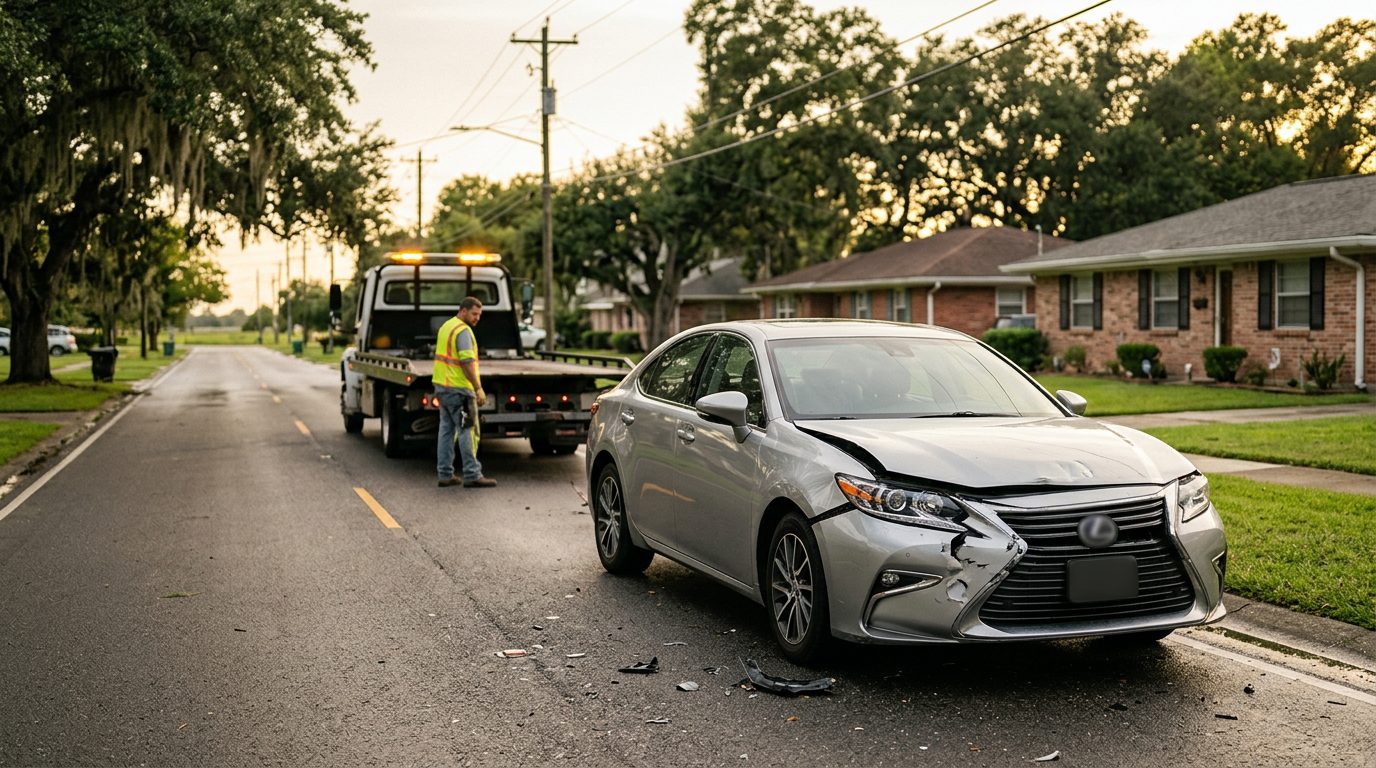
Car Accidents | New Orleans, Louisiana
Hurt in a Car Accident? Hospital Bills Shouldn't Be a Mystery.
Hospital liens can turn medical bills into a second problem. Here is how they work, which questions to ask, and how Przemek Lubecki and the team at American Trial Lawyer can help you sort them out.
By Przemek Lubecki · Published November 16, 2026
You were hurt in a car accident, and now a hospital bill has arrived. Then someone mentions a hospital lien, and you wonder what it means for your case.
The short answer: a hospital lien is a claim a provider can make for unpaid treatment charges. It can come up when money from a settlement is being handled, so it’s worth knowing about before you sign anything. This guide explains the terms in plain language and the questions to ask.
What a Hospital Lien Means After a Crash
A hospital lien is a claim a hospital or other provider may make for the cost of treating an injured patient. That claim is tied to money that may come from someone else, such as the at-fault driver or that driver’s insurer.
Health coverage adds another layer. If you have Medicare and insurance is involved in the crash, that insurance pays first for accident-related care. Medicare pays second, according to CMS secondary payer guidance.
Medicare can also pay early when an insurer is slow. If an insurer does not pay promptly, usually within 120 days, the provider may bill Medicare, according to how Medicare works with other insurance.
A conditional payment is a payment Medicare makes for services another payer may be responsible for. It must be repaid when a settlement, judgment, award or other payment is made. Medicare’s own guidance says you do not have to use your own money to pay the bill in the meantime. See Medicare’s recovery process.
Not sure what your next step is?
Talk it through with our team — the first consultation is free, confidential, and carries no obligation.
Can a Hospital Lien Reach Your Settlement?
A lien can reach money from a settlement, but whether it does depends on the facts of your case. Two questions matter most. Who has a claim to the money? And how much of the bill counts?
Louisiana limits what can be recovered for medical bills that an insurer or Medicare paid to an in-network provider. The recovery is limited to the amount actually paid, plus any cost sharing you paid or owe. It is not the amount billed. See La. R.S. 9:2800.27.
In plain terms, the number on the bill is not always the number that counts. For example, a bill may list one charge while the insurer’s contracted rate is lower.
Medicare’s repayment rights matter too. Federal law takes precedence over state laws and private contracts, according to CMS secondary payer guidance. A Medicare conditional payment letter is not a final amount. A formal recovery demand comes only after a settlement, judgment, award or other payment, per CMS attorney services.
A settlement offer can arrive before every bill is sorted out, so ask early what is still owed. Ask the insurer and the provider for written figures so you are working from the same numbers.
Questions to Ask Before Signing a Settlement or Release
Before you sign, find out whether any hospital, provider or payer has a claim against the money.
- Has a lien been filed? Ask for the amount and the filing details in writing.
- How will the money be paid out? Ask whether liens and medical bills will be resolved from the proceeds before you receive the balance.
- Did Medicare or health insurance pay any bills? Ask whether a repayment claim exists.
- What does the release end? Read it closely, because a release is usually final. Keep copies of everything you sign.
Under 42 C.F.R. § 411.24(g), CMS has a right of action against any entity, including a beneficiary, provider, supplier, physician, attorney, State agency or private insurer, that has received a primary payment. See 42 C.F.R. § 411.24.
For the wider claim process, read our Orleans Parish car accident claim guide.
Frequently asked questions
Does a hospital lien mean I owe the full bill?
Not always.
How long do I have to file a claim in Louisiana?
Louisiana generally allows two years from the day of injury to file a delictual (tort) claim, with some exceptions (La. Civ. Code art. 3493.1).

Time Limits and Fault to Keep in Mind
Louisiana generally gives two years from the day of injury to file a delictual (tort) claim. See La. Civ. Code art. 3493.1.
The clock starts on the day of the injury, not the day a bill or lien notice arrives. The statute has exceptions: it does not run against minors or interdicts in actions involving permanent disability brought pursuant to the Louisiana Products Liability Act or state law governing product liability actions. Treatment, paperwork and insurance discussions can take time, so it often helps to contact our office early to talk through your situation.
Keep the crash date and every medical record in one place.
Fault matters too. Louisiana uses comparative fault (shared fault). A person whose share of fault is 51% or more cannot recover damages, but if the injury is partly the result of an intentional tortfeasor’s fault, the claim is not reduced under Paragraphs A and B. A smaller share reduces damages in proportion, unless the injury is partly the result of an intentional tortfeasor’s fault, in which case the claim is not reduced. Fault can change the value of a claim, so know your share early. See La. Civ. Code art. 2323.
What the Firm Does and Does Not Offer on Medical Bills
American Trial Lawyer, LLC does not provide cash advances and does not pay medical bills in advance.
The firm’s role in a lien question is to review the lien, the bills and the claim with you. Our role is to explain the facts so you can decide what to do next.
The firm may associate or refer a case to other law firms. Any such arrangement would be disclosed to you.
Przemek Lubecki is the responsible lawyer for this page. The firm’s Louisiana office is in New Orleans. The firm represents people hurt in truck, commercial vehicle and car crashes, and families in wrongful death cases, in Orleans Parish, the New Orleans metro and across Louisiana.
Talk With Przemek Lubecki About Your Situation
If a hospital bill, a lien notice or an early settlement offer came in after your crash, you do not have to sort it out alone. Bring the bills, any lien letter and the release or offer you received.
Call 855-LUBECKI or request a free case evaluation to talk it through with Przemek Lubecki and our New Orleans office. The first consultation is free, confidential and without obligation to continue.
Key Questions Before You Sign Anything
Ask whether a lien exists
Find out whether a hospital or provider has filed or asserted a lien tied to your accident care before you accept any settlement offer.
Request an itemized bill
A detailed statement of charges helps you understand what is being claimed and whether every item relates to your injuries.
Review the lien paperwork
Lien notices and release forms can contain terms that affect your recovery. Read them carefully and ask questions before signing.
Keep your records together
Save medical bills, insurance letters, and accident reports in one place so the details are easy to review with your lawyer.
Pause Before You Sign
Do not sign a settlement, lien release, or payment agreement until you understand what it covers. Once paperwork is signed, changing it can be difficult.
How We Help Injured Clients Make Sense of Liens
Plain-language answers
We explain hospital liens, medical bills, and settlement terms in everyday language, without legal jargon.
Careful review of paperwork
We look at the lien notices, itemized bills, and release forms connected to your accident claim.
Empathy for families and drivers
Serious injuries affect your health, your work, and your finances. We take the time to hear your concerns.
Office in New Orleans
Przemek Lubecki and our team serve people across Orleans Parish, the New Orleans metro area, and Louisiana from our New Orleans office. The firm may associate or refer a case to other law firms.