
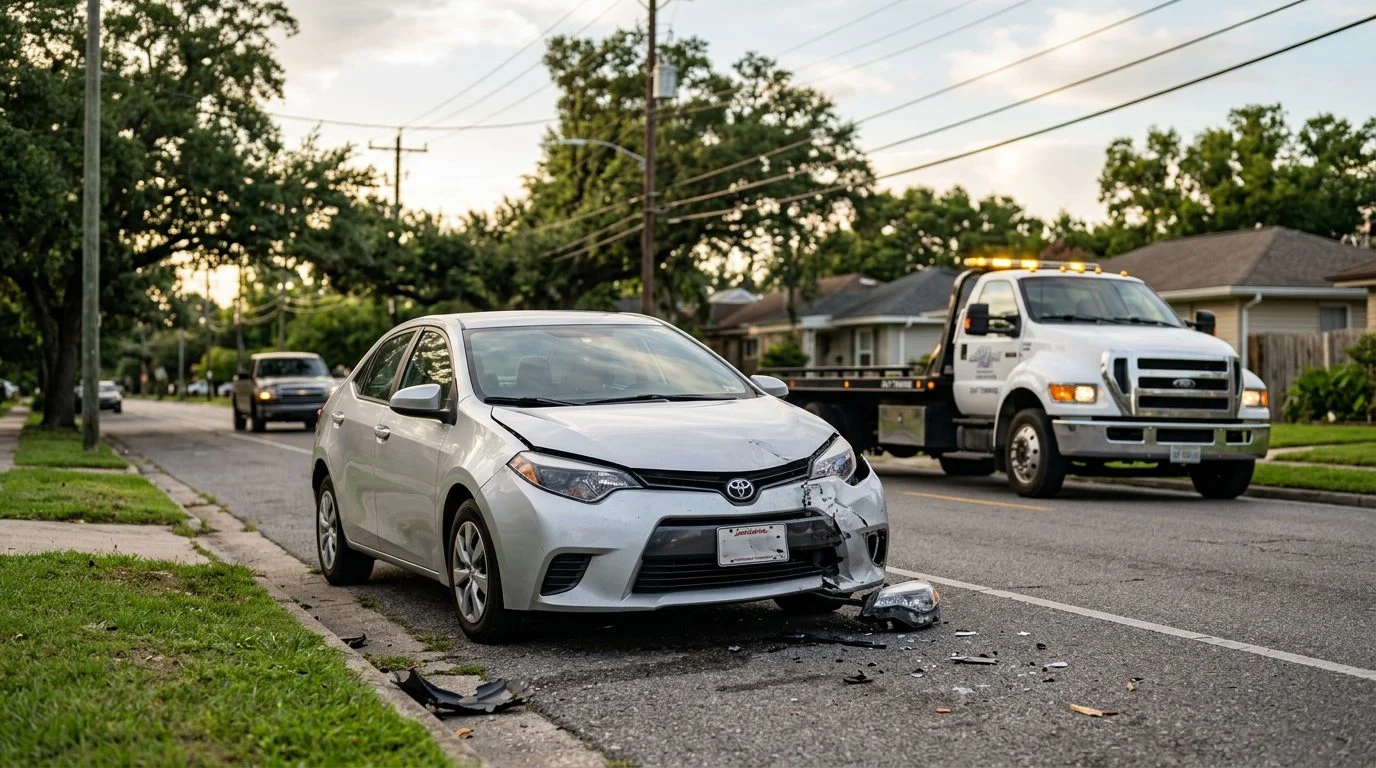
Car Accidents | New Orleans, Louisiana
Who Was at Fault? How Insurance Adjusters Decide
An adjuster's early conclusion is a starting point, not the final word. Here is how fault gets argued and how you can respond.
By Przemek Lubecki · Published November 14, 2026
You were just contacted by an insurance adjuster after a crash, and you want to know what they are really deciding. Adjusters determine who is at fault by comparing each driver’s actions with Louisiana’s traffic rules and the duty to drive carefully. They use the police report, physical evidence, photos, and witness accounts. Louisiana’s fault rules then decide what a fault percentage means for your claim.
Why the Fault Question Matters Right Now
The adjuster’s fault finding shapes what the insurer offers and whether it accepts responsibility for the loss. That is why your early choices matter.
Many readers are still recovering from injuries. Others are dealing with a repair bill, a rental car, or a loss in their family. Whatever your situation, the insurer’s view of who caused the crash often sets the starting point for every later step.
Every claim turns on its own facts, so this page describes the general process rather than any likely result. Przemek Lubecki is the responsible lawyer for this page, and the New Orleans office handles Louisiana matters.
If an adjuster has asked for a recorded statement or proposed a fault split, you don't have to work through it alone. Talk through your facts with our New Orleans office. Talk it through with our team — the first consultation is free, confidential, and carries no obligation.
How Does Insurance Determine Who Is at Fault?
An adjuster, who works for the insurer, decides fault by testing each driver’s conduct against traffic rules and ordinary care.
Louisiana law makes a person responsible for damage caused by negligence, imprudence, or want of skill. Under La. Civ. Code art. 2316, every person is responsible for the damage he occasions not merely by his act, but by his negligence, his imprudence, or his want of skill.
Adjusters often check a few specific driving rules. A driver may not follow another vehicle more closely than is reasonable and prudent (La. R.S. 32:81). A motor truck outside a business or residential area may not follow another motor truck within four hundred feet, but this does not prevent one motor truck from overtaking and passing another (La. R.S. 32:81). On a road with marked lanes, a vehicle must be driven as nearly as practicable entirely within a single lane and must not be moved from that lane until the driver has first ascertained that the movement can be made with safety (La. R.S. 32:79). Any person operating a motor vehicle on the public roads of this state must drive in a careful and prudent manner (La. R.S. 32:58).
Keep in mind that the adjuster works from the insurer’s own file. The conclusion reflects what was gathered and the insurer’s interests, so it is a starting position, not a neutral ruling.
A fault decision can affect both property damage and bodily injury claims, and the two may be valued differently. Ask how the adjuster reached any split, and keep the answer in writing.
Evidence Adjusters Look At to Assign Fault
Adjusters rely most on the police crash report, physical evidence at the scene, photos and video, and what the drivers and witnesses say.
The crash report is one input, not a final verdict. The state police or sheriff’s office investigates all crashes required to be reported by this Section when the crash occurs outside city limits (La. R.S. 32:398). The local police department investigates crashes inside them (La. R.S. 32:398). Crash reports are confidential and are made available only to the parties to the crash, their parents or guardians if a minor is a party, their insurers, an insurance support organization under contract to provide claims and underwriting, healthcare providers or their agents who rendered services, succession representatives, their attorneys, and news-gathering organizations requesting documents related to a specific crash, upon request, within seven working days following the completion of the crash investigation (La. R.S. 32:398).
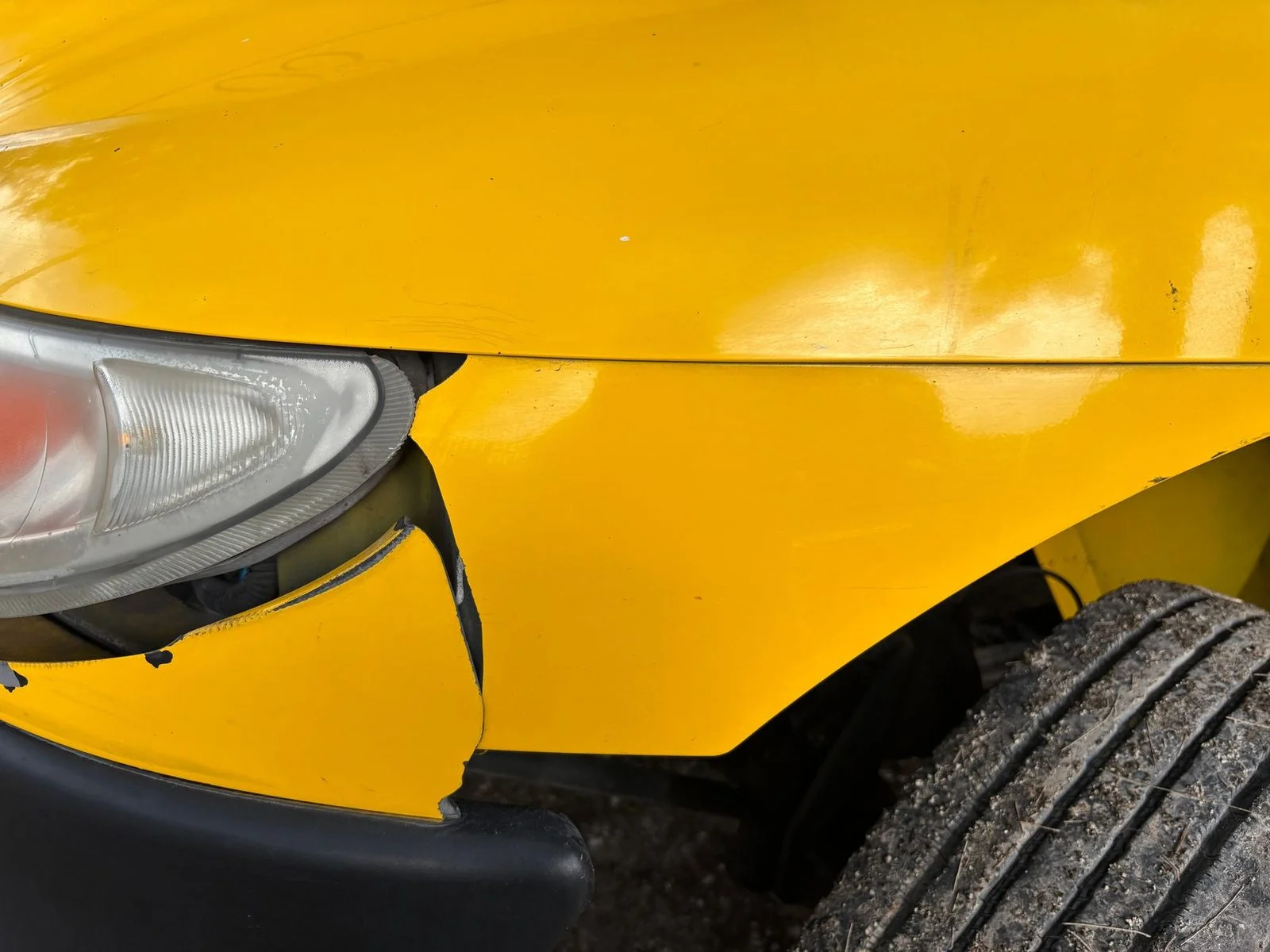
Physical evidence includes vehicle damage patterns, the point of impact, skid marks, debris, where vehicles came to rest, and road conditions. Dashcam footage and nearby business or traffic camera video can show what happened before and after impact. Write down what you remember soon after the crash, because memories fade.
Commercial and rideshare crashes can involve additional records. A motor carrier must require each driver to record duty status for each 24-hour period. Each change of status must name the city, town, or village and the State abbreviation; if a change occurs at a location other than a city, town, or village, show one of the following: the highway number and nearest milepost, the highway number and the name of the service plaza, or the highway numbers of the nearest two intersecting roadways, followed by the name of the nearest city, town, or village and State abbreviation (49 C.F.R. § 395.8). For a rideshare crash, in a claims coverage investigation, the transportation network company and any insurer potentially providing coverage must cooperate to facilitate the exchange of log-on and log-off times in the twelve-hour period immediately preceding and in the twelve-hour period immediately following the accident, within ten business days of a request (La. R.S. 45:201.8).
Medical records and treatment dates can matter too, because adjusters look at how soon care began after the crash.
How Louisiana’s Modified Comparative Fault Rule Affects the Claim
Louisiana reduces a claim by the injured person’s own share of fault (La. Civ. Code art. 2323). For crashes on or after January 1, 2026, a person found 51 percent or more at fault recovers no damages.
Under La. Civ. Code art. 2323, the fault of all persons who caused or contributed to an injury is determined, whether or not they are parties to the case.
Suppose an adjuster assigns you 20 percent of the fault and the other driver 80 percent. Under La. Civ. Code art. 2323, the degree of fault of all persons causing or contributing to an injury is determined whether or not each person is a party to the action, and regardless of insolvency, ability to pay, statutory immunity, or whether the other person’s identity is known. If the split reached 51 percent on your side, that rule would bar recovery.
Fault can also be shared by more than one party, such as another driver, a vehicle owner, or a company. Under La. Civ. Code art. 2324, a joint tortfeasor is not liable for more than its own degree of fault. Which parties share fault is decided on the facts.
An adjuster’s percentage is an opening position. You can dispute it with evidence such as photos, records and witness information.
What to Be Careful About When an Adjuster Calls
You can ask for time before you give a recorded statement, and you should stick to facts you know for sure.
Louisiana law requires a person who takes a written or recorded statement from an injured person to furnish a true and complete copy. The copy is due within twenty days after a written demand (La. R.S. 13:3732). Ask for your copy in writing and keep the request.
Avoid guessing about speed, distance, timing, or who had the light. An early guess can be used later, even if it was honest. Don’t call your injuries minor or say you feel fine before your medical evaluation is complete.
Keep a dated record of every call, the adjuster’s name, the claim number, and what was said. Save receipts, repair estimates, and rental records.
Read any release and any early payment offer carefully before you sign. A release can close off further claims for the same crash.
Frequently Asked Questions
Do I have to give a recorded statement to an adjuster?
You can ask for time before you give one. If you do give one, request a copy in writing.
Can an adjuster’s fault percentage be disputed?
Yes. It is the insurer’s opening position, and photos, records, and witness information can support a different view.
How do I get a copy of a crash report?
Request it from the investigating agency, which may be the state police, a sheriff’s office, or a local police department.
Talk Through Your Crash Facts With the New Orleans Office
If an adjuster has asked for a recorded statement or proposed a fault split, you can talk through your facts before you respond. That is hard to sort out alone, especially while you’re hurt or managing a repair. Przemek Lubecki, the responsible lawyer, and our team can review the details of your crash at the New Orleans office.
Call 855-LUBECKI or request a free case evaluation. The first consultation is free, confidential, and without obligation.
This page covers car, truck, commercial vehicle, motorcycle, and rideshare crashes. American Trial Lawyer, LLC may associate or refer a case to other law firms.
How we approach your claim
Protecting your position
Adjusters work for insurance companies. We help you understand what they are asking and what you do not have to answer on the spot.
Building the record
Photos, police reports, medical records and witness details can all support a different view of how the crash happened.
Led by Przemek Lubecki
Przemek Lubecki is the responsible lawyer for this content. Our team works from our New Orleans office and serves Orleans Parish, the New Orleans metro area and Louisiana.
Clear answers
We explain the process in plain language so you can make informed decisions about your case.
What to gather after a crash
Photos and video
Capture vehicle damage, the scene, traffic signals, skid marks and weather as soon as it is safe.
The police report
Get the report number and note the responding officer's name and agency.
Witness information
Names and phone numbers of anyone who saw the crash can be valuable, since their account is independent.
Medical records
Keep every visit, diagnosis and bill, including follow-up care, so your injuries are documented from the start.
Before you give a recorded statement
You can ask for time before you answer an adjuster's questions. If you do give a statement, ask for a copy in writing. Our firm may associate or refer a case to other law firms.