
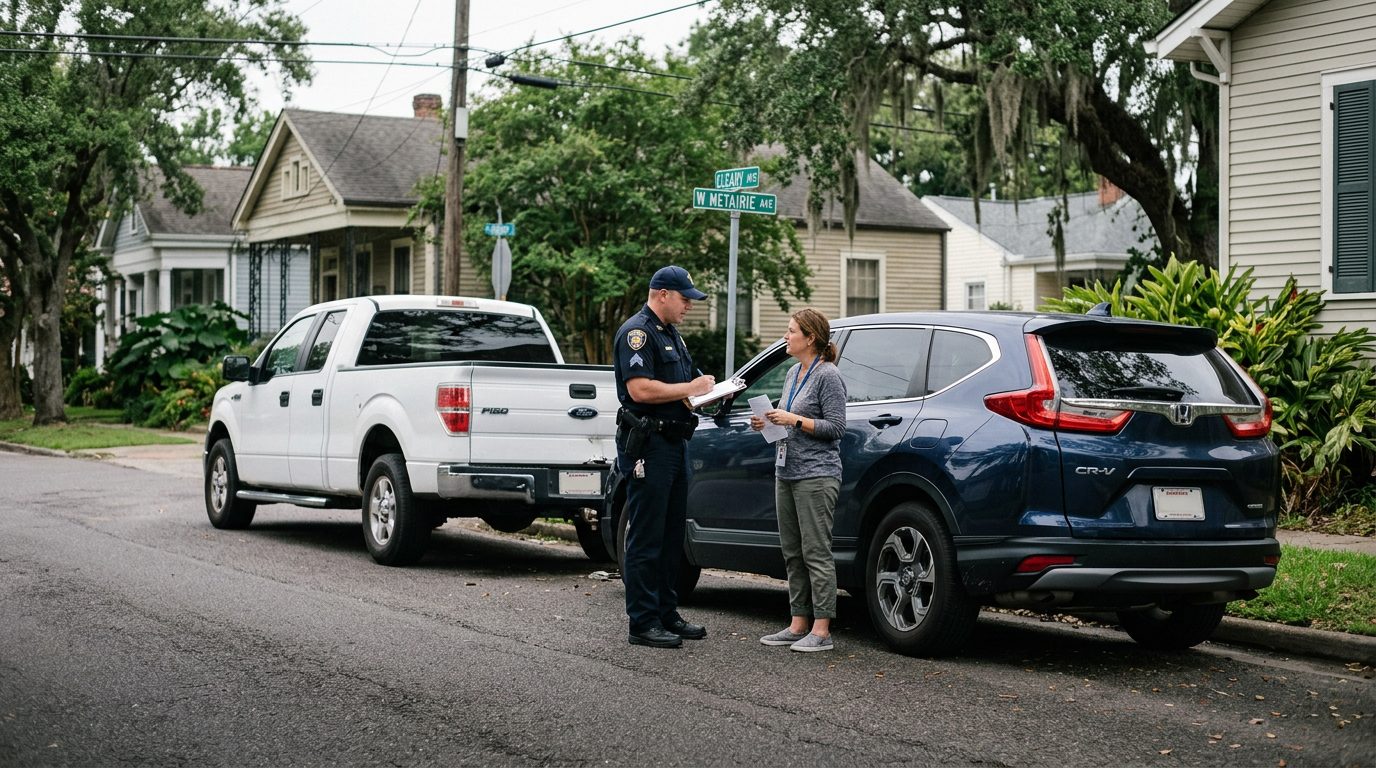
Vehicle accidents | New Orleans, Louisiana
Is Your Crash Report Public Record in Louisiana?
Learn what records may exist after a crash, why they matter, and how a conversation with our New Orleans office can help you understand your options.
By Przemek Lubecki · Published November 13, 2026
If you were in a car crash in Louisiana, or you’re helping someone who was, you may be asking whether vehicle accidents are public record. The short answer is no, not in the way most people expect. Under La. R.S. 32:398, a crash report is confidential and goes only to specific people.
This page explains which records exist, who can get them, how to ask, and what a report can and can’t show. New Orleans and Orleans Parish are the main examples.
Are vehicle accidents public record in Louisiana?
Not as a general rule. The crash is an event, and the records about it are handled in separate ways.
Many articles on this question come from other states. New York, Florida, Ohio and Washington have their own rules, and those rules don’t govern Louisiana. Here, three kinds of records matter most.
The first is the crash report from the investigating agency. The second is a written or recorded statement an injured person gave about the crash. The third is insurance information on the vehicles involved.
A common mistake is searching online for a report and assuming nothing exists. The crash report is not open for anyone to pull up. The request goes to the agency, and only listed people can receive the report.
Each record type has its own rules. A request that gets you one of these does not open the others. A crash report doesn’t give you an insurer’s claim file, and a claim file isn’t a crash report. Keeping them apart helps you ask for the right thing from the right place.
If you're sorting through a crash report while dealing with injuries or a claim, you don't have to do it alone, and a free, confidential consultation is available. Talk it through with our team — the first consultation is free, confidential, and carries no obligation.
What is a crash report, and who creates it?
A crash report is the official written record a law enforcement agency prepares after it responds to or investigates a crash.
The agency that created the report owns it. In New Orleans, the investigating agency may be the New Orleans Police Department. Other crashes may be handled by Louisiana State Police or a sheriff’s office. (La. R.S. 32:398)
The statute puts reporting duties on the driver of a vehicle involved in a crash that causes injury, death, or property damage over five hundred dollars. (La. R.S. 32:398)
The statute also says the investigating agency must forward a copy of the crash report, or the data contained in it, to the Department of Transportation and Development within forty-eight hours after completing the investigation. It should disclose the cause, the conditions then existing, and the persons and vehicles involved. The Department of Public Safety and Corrections’ electronic crash report forms must provide sufficient detailed information to disclose, for a highway crash, the cause, conditions then existing, and the persons and vehicles involved.
A report is not the same as an officer’s notes, a traffic citation, or a later follow-up investigation. Each can be a separate document. Mixing these up leads to requests that come back with the wrong paperwork. Ask for the report itself, and be clear about anything else you need.
Who can get a Louisiana crash report?
Only the people the statute lists can receive a crash report. That list centers on people connected to the crash.
The statute names the parties to the crash. It also names the parents or guardians of a minor who is a party to the crash, and insurers, or an insurance support organization under contract to provide claims and underwriting, of any party. Healthcare providers who treated a party are on the list. So are succession representatives of those parties, and the attorneys for the parties or succession representatives. A news-gathering organization may request documents about a specific crash. (La. R.S. 32:398)
If you’re a family member, check which role you hold. A parent or guardian of a minor party is named in the list. An adult relative who is not a party or a succession representative is not named. Knowing your role before you ask can save time.
One record is different. Under La. R.S. 13:3732, they must provide it within twenty days after your written demand.
How do you request a crash report in New Orleans?
Start with the agency that investigated the crash, because that agency created and holds the report. Ask in writing and keep a copy of your request.
Gather these details so the agency can find the file:
- The date and approximate time of the crash
- The exact location, such as the street or intersection
- The names of the drivers involved
- The report or incident number, if you have one
Ask whether the agency has a standard request form or a preferred way to receive requests. Follow its current procedure.
Photos and video follow a separate rule. (La. R.S. 32:398)
A common mistake is waiting. Some people wait until an insurer asks for the report, then spend weeks chasing it. Asking early gives you time to read the report and notice anything that looks wrong.
What can a crash report show, and what can it leave out?
A crash report records what the investigating officer gathered. It is evidence to review, not the final word on what happened.
Released reports may be redacted. According to the NOPD police reports page, released reports may be redacted to protect privacy and comply with legal restrictions. Some personal details may be blacked out in the copy you receive.
Reports are written at the scene, often quickly. Mistakes happen. A lane, a direction, a name, or a witness may be recorded wrong. Read the narrative and the diagram closely. Then compare them with photos, witness contacts, medical records and repair records.
Your own account matters too. Write down what you remember while it’s fresh. Note any point where the report differs from your memory. Differences are not always errors, but they’re worth noting.
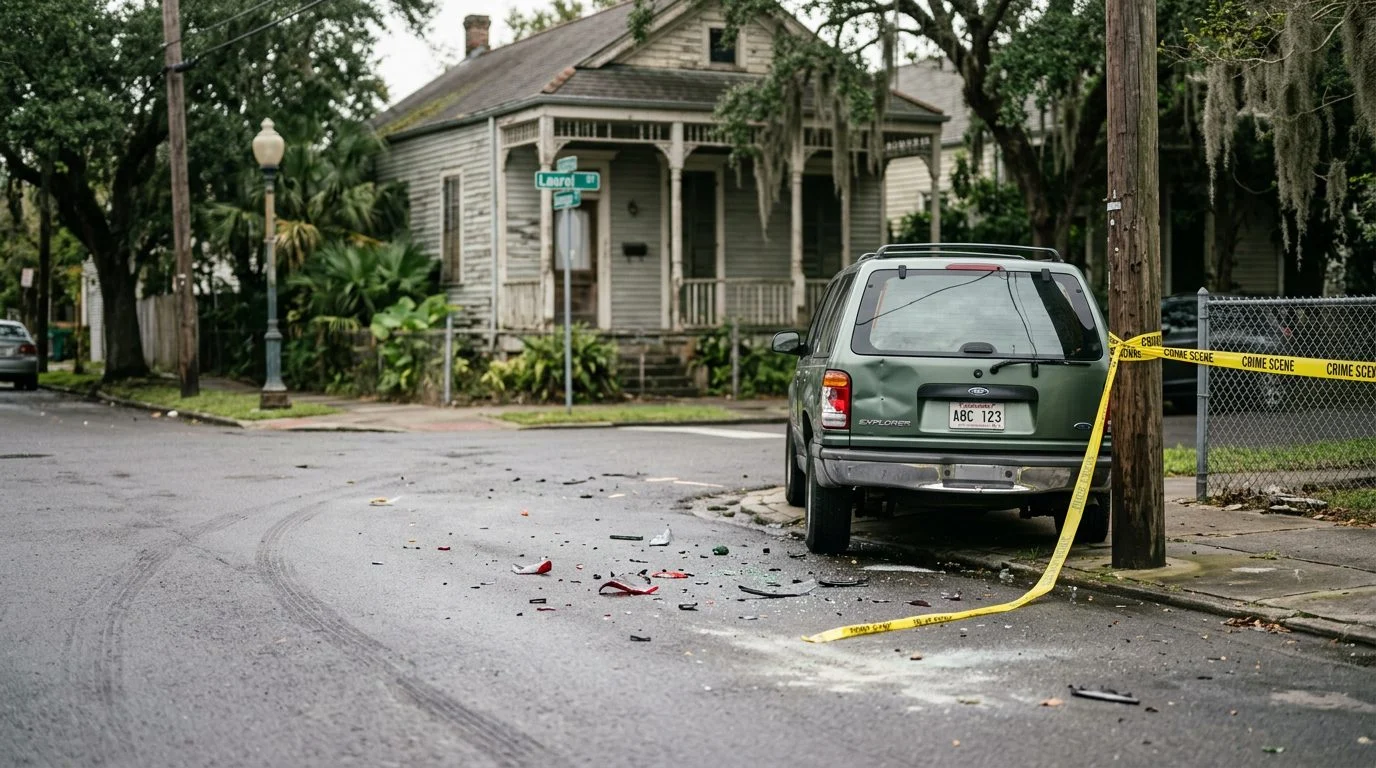
How long does it take to get a crash report?
Under the statute, upon request, crash reports are to be made available to the parties to the crash and certain others, such as their insurers, attorneys, and healthcare providers, within seven working days after the crash investigation is complete (La. R.S. 32:398). (La. R.S. 32:398)
That clock starts when the investigation ends, not on the day of the crash. If the investigation is still open, the seven-day period has not started yet. Ask the agency where the file stands.
(La. R.S. 32:398) Families dealing with a loss may find this helpful to know.
Timing matters because insurance and legal deadlines keep running while paperwork is pending. Ask early, and keep your own timeline of calls, letters and dates.
Not sure what your next step is?
Talk it through with our team — the first consultation is free, confidential, and carries no obligation.
Do car insurance claims require a police report?
A police report is useful in an insurance claim, but it is one piece of the claim, not the whole file.
The report can show the date, location, vehicles involved and the officer’s account. Photos, witness names, medical records and repair estimates can show other parts of what happened. Several sources together give a fuller picture than any one document.
Louisiana law also provides a way to learn about vehicle insurance. Under La. R.S. 32:871, any interested person may request insurance coverage information in writing from the Department of Public Safety and Corrections. The request carries a fifteen dollar fee.
Under La. R.S. 32:871, the operator of every motor vehicle involved in an accident within this state, in which any person is killed or injured or property is damaged, may report in writing to the commissioner a claim for property damages and damages for physical injury. The owner may make that report if the operator is physically unable to do so.
If you don’t have the police report yet, keep records of your injuries, treatment and costs. Keep your photos safe. Reports and claims run on separate tracks. A report doesn’t decide a claim, and an insurer follows its own process.
Are court records and other files public?
Each record type follows its own rules, so a request for one does not open the others.
Louisiana generally gives two years from the day an injury is sustained to file a delictual (tort) action. (La. Civ. Code art. 3493.1) The article says that prescription does not run against minors or interdicts in actions involving permanent disability that are brought under the Louisiana Products Liability Act or other product liability law. Those exceptions are why the two-year rule should be checked against the facts of your case.
A common mistake is waiting for the report, or for a claim to settle, before thinking about the deadline. The clock runs from the injury, not from the day paperwork arrives.
If a lawsuit is ever filed, its papers move through the court on their own schedule. Insurance files, medical records and court papers each have separate access routes, so keep track of which record you’re requesting and from whom.
What should you do if you’re dealing with a crash now?
If you’re reading this after a crash, you may be dealing with pain, vehicle damage, calls from insurance representatives, or the loss of someone you love. You didn’t choose any of that, and paperwork can feel like one more weight.
Can anyone get a Louisiana crash report?
Not just anyone. (La. R.S. 32:398)
How soon can I get a crash report?
Under the statute, upon request, crash reports are to be made available to the persons it lists within seven working days after the investigation is complete. (La. R.S. 32:398) (La. R.S. 32:398)
Can I get photos from a Louisiana crash?
Yes, on request. Crash photos and video are available to any interested person, and the agency may charge a reasonable fee for copies. (La. R.S. 32:398)
If you’re sorting out a crash report while dealing with injuries or a claim, you don’t have to face it alone. Request a free case evaluation or call 855-LUBECKI (Office in New Orleans). The consultation is free, confidential and without obligation. Przemek Lubecki is the responsible lawyer for this page. American Trial Lawyer, LLC may associate with or refer a case to other law firms.
How we can help after a crash
Records review
We can help you understand which crash records and reports may be relevant to your situation and how they fit into the bigger picture.
Focus on serious injuries
Our practice focuses on people seriously hurt in truck, commercial vehicle and car crashes, and on families in wrongful death cases.
Plain-language guidance
We explain legal terms and next steps in clear language so you can make informed decisions at your own pace.
Office in New Orleans
Our office is in New Orleans, and we serve people across Orleans Parish, the New Orleans metro area and Louisiana.
Before you request records
Records and reports can be difficult to track down on your own. Your first consultation with American Trial Lawyer is free, confidential and without obligation. If we take on a case, we may associate or refer it to other law firms, and we will tell you if that happens.
Practical steps to consider now
Keep what you have
Save photos, texts, receipts, medical paperwork and any letters from insurers in one place.
Write down your memory
Note the date, time, location, weather and what you remember while the details are still fresh.
Identify witnesses
If you know of anyone who saw the crash, write down their name and contact information.
Talk with us early
A conversation with our New Orleans office can help you sort out which records matter and what to request next.