
Personal Injury Lawsuits | New Orleans, Louisiana
How to File a Lawsuit in Louisiana: A Step-by-Step Guide
Learn how an injury lawsuit moves from the first call to the courthouse, and when to bring in a lawyer. Prepared under the responsibility of Przemek Lubecki, trial lawyer, American Trial Lawyer, LLC, New Orleans office.
By Przemek Lubecki · Published November 5, 2026
The first thing to check is the deadline, because a missed deadline can end the right to sue. This guide explains each step in plain language.
Start Here: Why the Filing Deadline Comes First
The general rule is that a Louisiana fault-based injury claim must be filed within two years. The clock starts on the day the injury or damage is sustained, under La. Civ. Code art. 3493.1.
Wrongful death has its own timing, covered below. Write down the exact date of the crash, the injury, or the death now.
An insurance claim does not stop this clock on its own. Under La. Civ. Code art. 3462, unless otherwise expressly provided by legislation, prescription is interrupted when the owner commences action against the possessor, or when the obligee commences action against the obligor, in a court of competent jurisdiction and venue. Prescription is interrupted when the action is commenced in a court of competent jurisdiction and venue; if it is commenced in an incompetent court or an improper venue, prescription is interrupted only as to a defendant served by process within the prescriptive period. A letter to an adjuster is not.
If a crash or a death has left you working out your next step, you don't have to face it alone, and our team can talk it through with you in a free, confidential consultation. Talk it through with our team — the first consultation is free, confidential, and carries no obligation.
Claim vs. Lawsuit: What Is the Difference?
An insurance claim is a request for payment made to an insurer or its adjuster. A lawsuit is a formal case filed in a Louisiana court. The two can run side by side. Talks with an insurer can continue while a suit is pending. A suit is often filed when those talks do not resolve the matter.
The two also differ in who may bring them. For a death, La. Civ. Code art. 2315.2 sets out who may sue. The surviving spouse and children may sue. If the deceased left no spouse or child, the surviving parents may sue, except a father or mother who has abandoned the deceased during his minority, who is deemed not to have survived him. Siblings may sue if there is no spouse, child, or parent. Grandparents may sue only if there is also no sibling. Adoptive relatives are included under the same article.
The same article sets the wrongful death deadline. The right of action prescribes one year from the death or two years from the injury, whichever is longer; for medical malpractice actions, the right of action prescribes one year from the death of the deceased.
Who Can Be Sued and Where a Louisiana Case Is Filed
A lawsuit names the people or companies that may be responsible for the harm. In a crash case, that can include the driver. In some cases, it can also include an employer. Under La. Civ. Code art. 2320, an employer is answerable for damage its employees cause while doing their work. The article also says the employer must have been able to prevent the act and did not.
When more than one party shares fault, the rules get more detailed. Under La. Civ. Code art. 2324, a joint tortfeasor generally is not liable for more than its own degree of fault. The main exception is a conspiracy to commit an intentional or willful act. This matters in truck, commercial vehicle, and rideshare crashes, where several parties may share responsibility.
Choosing the right court is part of the filing decision. Small claims court is built for smaller disputes. Serious injury and wrongful death cases are often filed in district court.
The Steps: Drafting, Filing, and Serving the Petition
The petition states the facts, the negligence alleged, the injuries or losses, and the relief requested. Under La. Civ. Code art. 2316, a person is responsible for damage caused by negligence, imprudence, or want of skill.
A filing fee is due when the petition is filed.
Service comes next. Service matters for timing too. Under La. Civil Code art. 3463, if a plaintiff abandons or voluntarily dismisses a suit, or fails to pursue it at trial, the interruption is treated as if it never occurred. A dismissal of a suit pursuant to a compromise does not count as a voluntary dismissal.
Government defendants have a shorter service rule. Under La. R.S. 13:5107, service must be requested within ninety days after the action starts, or after an amended petition names the state, agency, or political subdivision. The defendant may expressly waive this requirement by written waiver. If that is missed, the claim against that entity is dismissed without prejudice after contradictory motion as provided in Code of Civil Procedure Article 1672(C). The filing does not stop the clock as to that entity.
The case then moves into discovery, the exchange of information and evidence.
Louisiana Fault Rules That Shape a Lawsuit
Louisiana uses comparative fault. A person’s own share of fault can reduce what they recover. Under La. Civ. Code art. 2323, effective January 1, 2026, a person whose degree or percentage of negligence is equal to or greater than fifty-one percent is not entitled to recover damages. This bar does not apply where the person’s injury results partly from his own negligence and partly from the fault of an intentional tortfeasor; in that case his claim is not reduced. Under La. Civ. Code art. 2323, if the degree or percentage of negligence attributable to the person suffering injury, death, or loss is less than fifty-one percent, the amount of damages recoverable is reduced in proportion to that percentage. This reduction does not apply where the injury results partly from his own negligence and partly from the fault of an intentional tortfeasor; in that case his claim is not reduced.
Fault is assigned to everyone involved. Article 2323 covers all persons who caused or contributed to the injury. That includes people who are not parties to the lawsuit.
What shapes fault is the evidence. Photos, vehicle data, witness names, repair records, and medical notes all help show how a crash happened. Records can be lost over time, so preserving evidence early matters. Each case gets its own fault analysis based on its own facts.
Can You File Without a Lawyer?
The practical demands are heavy. For commercial motor vehicles, 49 C.F.R. § 390.3T provides that its rules are applicable to all employers, employees, and commercial motor vehicles that transport property or passengers in interstate commerce.
Rideshare and wrongful death cases can involve several parties and many documents. American Trial Lawyer, LLC may associate or refer a case to other law firms. If that is likely in a matter, the page will say so.
Not sure what your next step is?
Talk it through with our team — the first consultation is free, confidential, and carries no obligation.
Frequently Asked Questions
How do you file a civil suit without an attorney?
You prepare a petition, file it with the clerk of court, and have the defendant formally served.
Is there a deadline to sue after a Louisiana car accident?
Yes. The general rule under La. Civ. Code art. 3493.1 is two years from the day the injury is sustained, with some exceptions.
Can a family file a wrongful death lawsuit in Louisiana?
Yes. Under La. Civ. Code art. 2315.2, certain surviving family members may bring the claim, in the order the article sets.
What if the crash involved a truck or rideshare vehicle?
These cases can involve more than one party, such as a driver, an employer, or a vehicle owner. They can also involve more records to review.

Talk Through Your Situation With the New Orleans Office
You may be reading this after a crash or a loss you did not choose. You may be doing it for a parent, a spouse, or another family member. You may not have decided yet whether a lawsuit is the right step.
The first consultation is free, confidential, and without obligation to continue. If a crash or a death has left you working out your next step, you don’t have to face it alone, and our team can talk it through with you. Request a free case evaluation or call 855-LUBECKI.
Responsible lawyer: Przemek Lubecki, American Trial Lawyer, LLC, Office in New Orleans, Louisiana. Our team serves people in Orleans Parish, Jefferson Parish, St. Bernard Parish, and across Louisiana.
Licensure: Przemek Lubecki is licensed to practice law in Louisiana.
Referrals: American Trial Lawyer, LLC may associate or refer a case to other law firms.
The Basic Steps of a Louisiana Lawsuit
1. Gather your information
Keep the police report, photos, medical records, bills, and names of any witnesses. Written notes about how the injury affected your daily life are also helpful.
2. Investigate the claim
Your lawyer reviews the facts, identifies the parties who may be responsible, and looks at insurance coverage. In truck, commercial vehicle and wrongful death matters, this can include records that take time to obtain.
3. Prepare the petition
The petition is the formal document that starts the lawsuit. It describes who was involved, what happened, the injuries and losses, and what the court is asked to do.
4. File and serve
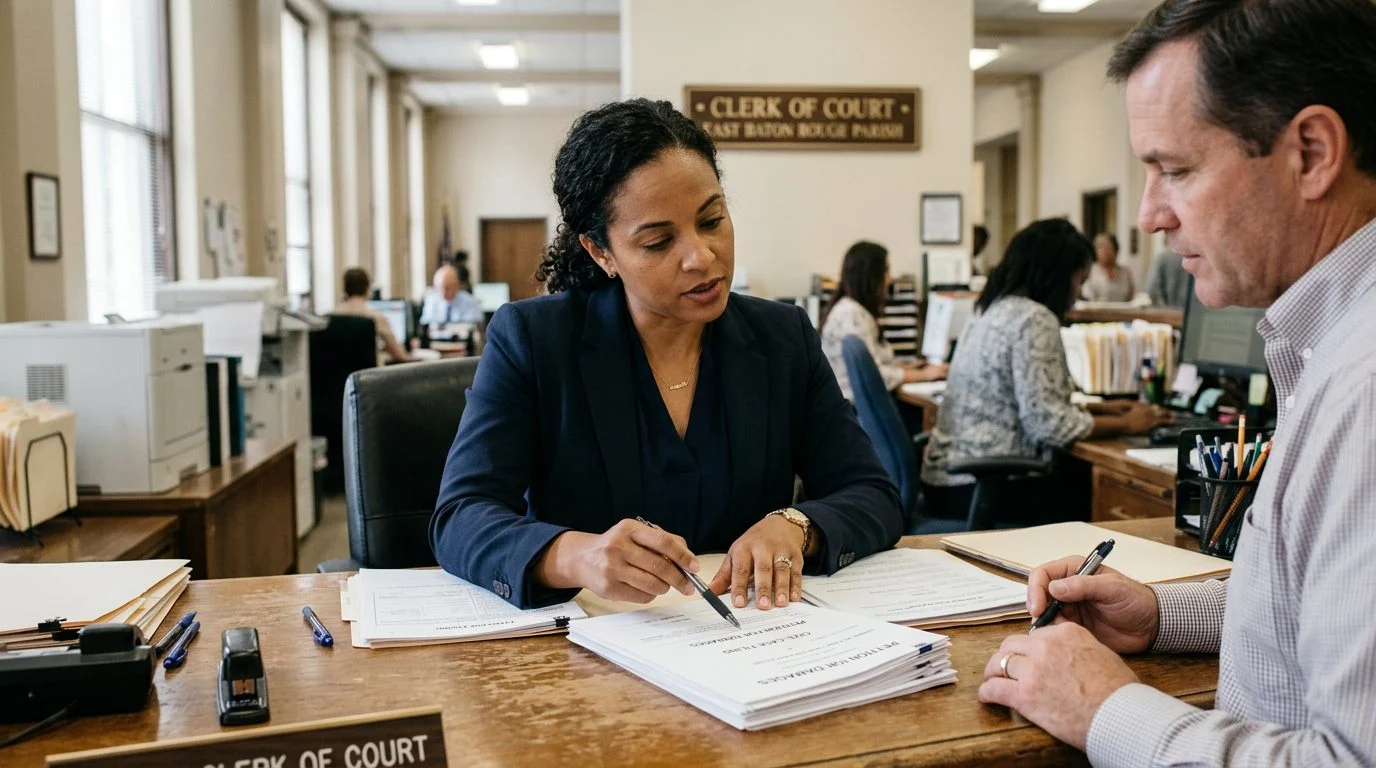
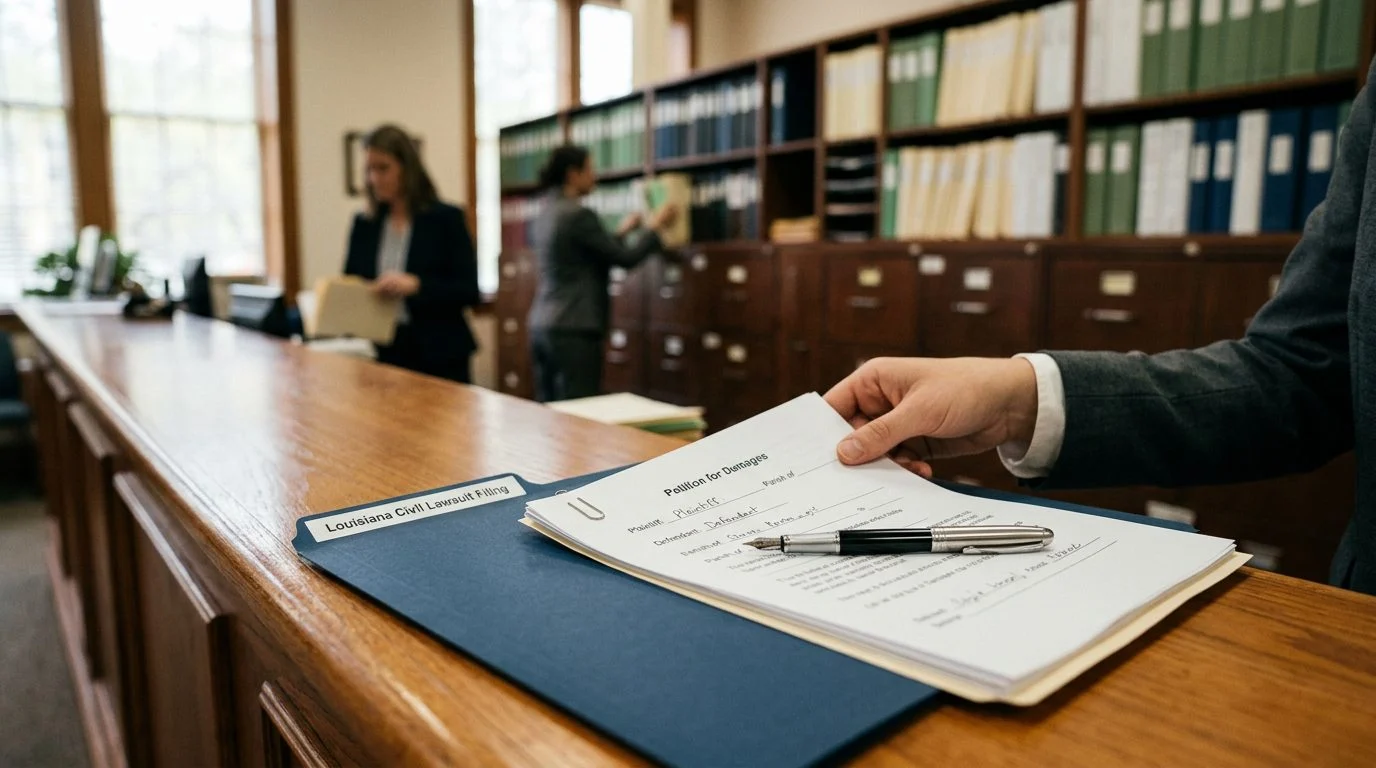
The petition is filed with the clerk of court.
5. Move through the case
After filing, the case moves into discovery, where both sides exchange information. Many cases resolve before trial, while others proceed to a courtroom.
What to Bring to Your First Conversation
Accident and claim paperwork
Crash reports, insurance letters, and any correspondence from other drivers or insurers.
Medical records
Records from emergency care, treating doctors, therapy, and any work restrictions you have received.
A timeline of events
Dates and key moments, from the incident to each medical visit and conversation about the claim.
Witness and family contacts
Names and phone numbers of people who saw the event or who can speak to how the injury changed your life.
Time matters
Injury claims involve timing rules that can affect whether and how a case may proceed. Speak with a lawyer early so important steps are not overlooked. American Trial Lawyer, LLC may associate or refer a case to other law firms.
Talk with a New Orleans trial lawyer about your case. The first consultation is free, confidential and without obligation.
Related practice areas
- Car Accident Claims in Orleans Parish: What Injured Drivers and Passengers Need to Know