
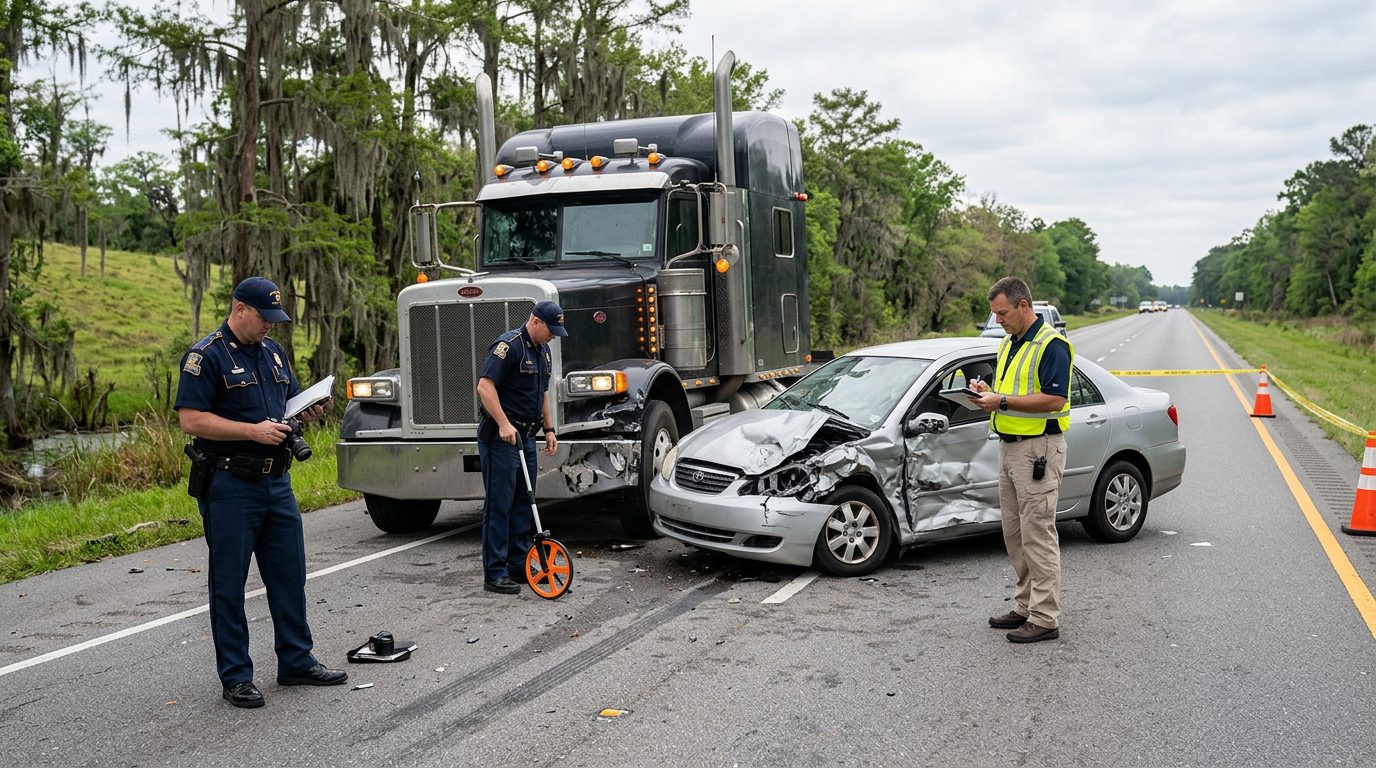
Truck Accidents | New Orleans, Louisiana
Understanding the Value of a Fatal 18-Wheeler Case in Louisiana
Every family's situation is different. Here are the key factors that often shape a wrongful death claim after a tractor-trailer crash, and how we can help you think them through.
By Przemek Lubecki · Published November 8, 2026
No single number applies to every fatal truck crash. Each wrongful death claim is valued on its own facts. Several factors can move a claim up, down, or sideways. They include who may sue, how fault is shared, what insurance applies, what evidence exists, and what losses the family can document.
Why There Is No Single Number for a Fatal 18-Wheeler Case
Every fatal truck crash claim depends on its own facts. Two crashes can look alike on paper and still differ in who was at fault, who depended on the person who died, and how much insurance applies. Treat any single figure you see with caution.
Families who want to understand what affects the value of a fatal 18-wheeler case in Louisiana usually want a clear list of the key factors. This page gives that list. It covers who may sue, the fault rules, insurance and evidence questions, the expenses families document, and the timing rules that matter most.
If you are reading this while planning a funeral and answering calls, you have a lot on your plate. You do not need to master every legal detail today. Start with the factors that apply to your family and take them one at a time. For a broader overview, read the Orleans Parish wrongful death guide.
If your family is facing a fatal 18-wheeler crash, our team can talk through your facts in a free, confidential first consultation with no obligation to continue. Talk it through with our team — the first consultation is free, confidential, and carries no obligation.

Who Can Bring the Claim and What Losses Count
Louisiana law sets an order for who may bring a wrongful death suit. Under La. Civ. Code art. 2315.2, a surviving spouse and child or children may sue first. If the person left no spouse or child, the surviving father and mother may sue.
Brothers and sisters come next, and then grandparents. Each of these groups may sue only when no closer family member survives. The same article also counts adopted children and relatives in the same way.
Louisiana also has a survival claim. Under La. Civ. Code art. 2315.1, the right to recover damages for the injury the person suffered before death survives for one year from the death or two years from the injury, whichever is longer, in favor of the same family groups, and may be urged by the deceased’s succession representative in the absence of any class of beneficiary set out in Paragraph A.
The losses a family can present vary with the facts. Economic losses are money-based items, such as the income and household support the person would have provided. General damages cover harder-to-measure losses, such as the loss of a family relationship. The person’s age, earnings history, family ties, and role at home all shape how these losses are presented.
How Fault Is Decided Under Louisiana Comparative Fault
Fault is shared under Louisiana law. Any fault assigned to the person who died can reduce what the family may recover. Under La. Civ. Code art. 2323, if the degree or percentage of negligence attributable to the person suffering injury, death, or loss is equal to or greater than fifty-one percent, then that person shall not be entitled to recover damages. If the degree or percentage of negligence attributable to the person suffering injury, death, or loss is less than fifty-one percent, then the amount of damages recoverable shall be reduced in proportion to that degree or percentage of negligence.
The law looks at everyone who contributed to the crash, even people who are not parties to the suit. That can include the truck driver and the trucking company. In some cases it can also include an owner, shipper, loader, or maintenance provider. Who is responsible depends on the facts.
Employers can answer for their workers’ conduct. Under La. Civ. Code art. 2320, employers are answerable for damage caused by their employees while they perform their jobs. Responsibility attaches when the employer might have prevented the act that caused the damage and did not.
Claims may also examine a company’s own choices. These include how it hired, trained, supervised, and maintained its drivers and equipment. For more on a driver’s role, see liable commercial driver in a fatal crash.
Insurance Coverage, Policy Limits, and Multiple Policies
Insurance is often a major practical factor in how a fatal truck claim moves. Federal law directs the government to set minimum levels of financial responsibility for the transportation of property by motor carriers in the United States between a place in a State and the places listed in the statute. Those levels cover public liability, property damage, and environmental restoration, as described in 49 U.S.C. § 31139.
These can include a primary policy, excess or umbrella coverage, and other policies that cover the trailer or cargo. Each one can change the total coverage that may be available.
If the driver has no insurance, or coverage is disputed, the picture changes. You can read more about fatal crashes with no insurance.
Take your time before you agree to anything an insurer proposes. Ask what is being offered, and keep written copies of every letter and offer.
Evidence, Early Statements, and Preservation
Evidence often shows how fault and losses are proven, so early records carry real weight. Key items in a fatal truck case often include electronic logging device and hours-of-service records, engine data, dash camera video, inspection and maintenance records, driver qualification files, cargo records, police reports, and scene photographs.
Federal rules set some timelines. Under 49 CFR § 395.8, a motor carrier must keep records of duty status and supporting documents for at least six months from the date of receipt. Under 49 CFR § 379.3, companies may destroy records after their required retention periods end, at the discretion of each company’s management. This does not excuse compliance with the lawful requirements of any other governmental body prescribing longer retention periods for any category of records.
Under La. R.S. 13:3732, a person who takes a written or recorded statement from an injured person must give that person a copy. The copy must be provided within twenty days after written demand.
Funeral Bills, Medical Costs and Other Expenses
Funeral and medical bills are commonly documented in these claims. The way they are presented depends on the facts. Burial costs, emergency care before death, and other out-of-pocket costs all need clear proof.
Keep every receipt, invoice, and contract. Write down who paid each bill and how it was paid. Whether a family member, an insurer, or a credit card covered it, that detail matters later. Keep any insurance explanation statements you receive.
Families often pay bills before any claim is resolved. A simple running list with dates and amounts helps. It also helps the family review these costs alongside fault, coverage, evidence, and losses. None of these factors is reviewed in isolation.
For a fuller explanation, see who pays funeral bills after a fatal crash.
Not sure what your next step is?
Talk it through with our team — the first consultation is free, confidential, and carries no obligation.
Timing, Filing Deadlines, Settlement, and Trial
Louisiana sets a deadline for filing wrongful death claims, and families should learn it early. Under La. Civ. Code art. 2315.2, the right of action prescribes one year from the death or two years from the day the injury was sustained, whichever is longer.
Because the longer of those two periods applies, a family should not rely on the one-year number alone. The same article sets a one-year period for certain medical malpractice wrongful death claims. Different deadlines can apply to different facts.
Some fatal truck claims resolve through negotiation. Others move toward trial. The path depends on disputes over fault, coverage, and evidence.
American Trial Lawyer, LLC is led by Przemek Lubecki, the responsible lawyer for this page. The firm’s office is in New Orleans, Louisiana. American Trial Lawyer, LLC may associate or refer a case to other law firms.
Not sure what your next step is?
If your family is working through a fatal 18-wheeler crash, you do not have to sort out the questions alone.
Common questions
What affects the value of a fatal 18-wheeler case in Louisiana?
Fault, who may sue, family losses, insurance, and evidence all play a part. No single number applies to every case.
How long do families have to file?
Under Louisiana law, the deadline is one year from death or two years from injury, whichever is longer.
Does shared fault reduce a claim?
Under La. Civ. Code art. 2323, if the degree or percentage of negligence attributable to the person suffering injury, death, or loss is equal to or greater than fifty-one percent, that person shall not be entitled to recover damages. This bar does not apply if the other party is an intentional tortfeasor, because a claim partly caused by the claimant’s own negligence and partly by an intentional tortfeasor shall not be reduced. Lower shares reduce it.
Grief, funeral plans, and calls from insurers can all arrive at once. If you want to talk through your family’s facts, our team offers a free, confidential first consultation with no obligation to continue. Przemek Lubecki is the responsible lawyer. Call 855-LUBECKI (Office in New Orleans) or request a free case evaluation.
How we approach these cases
Focused on your family's losses
We listen closely to what your family has lost and take the time to explain each step in plain language.
Careful review of evidence
Crash reports, driver logs and maintenance records can matter a great deal, and we review them with care.
Led by Przemek Lubecki
Przemek Lubecki is the responsible lawyer for this page. Our team keeps families informed as the case moves forward.
Associated firms
Where appropriate, American Trial Lawyer may associate or refer a case to other law firms, and we will tell you if that happens.
Gather what you can, early
Trucking companies and insurers often begin protecting their own interests soon after a crash. If you are able, write down what you remember and keep any paperwork you receive.
Factors that often shape a fatal 18-wheeler case
Fault and liability
Who caused the crash, and which companies or individuals may share responsibility, is often a central question in these cases.
Who may bring a claim
Wrongful death claims are brought by certain family members, and who may take part is a question we can review with you.
The losses your family faces
Financial losses and the human loss of a loved one's life are both part of the conversation about a case.
Insurance and evidence
Commercial trucking policies, employer coverage and the evidence gathered after a crash can all affect how a claim unfolds.