
Car, Truck & Commercial Vehicle Accidents | New Orleans, Louisiana
Not at Fault? Think Through Your Insurance Claim Before You Act
Being hurt in a crash you did not cause is stressful. Here is a plain-language guide to reporting the crash, dealing with insurers and knowing when to talk to a lawyer. Przemek Lubecki and our New Orleans office serve people across Orleans Parish, the New Orleans metro and Louisiana.
By Przemek Lubecki · Published November 7, 2026
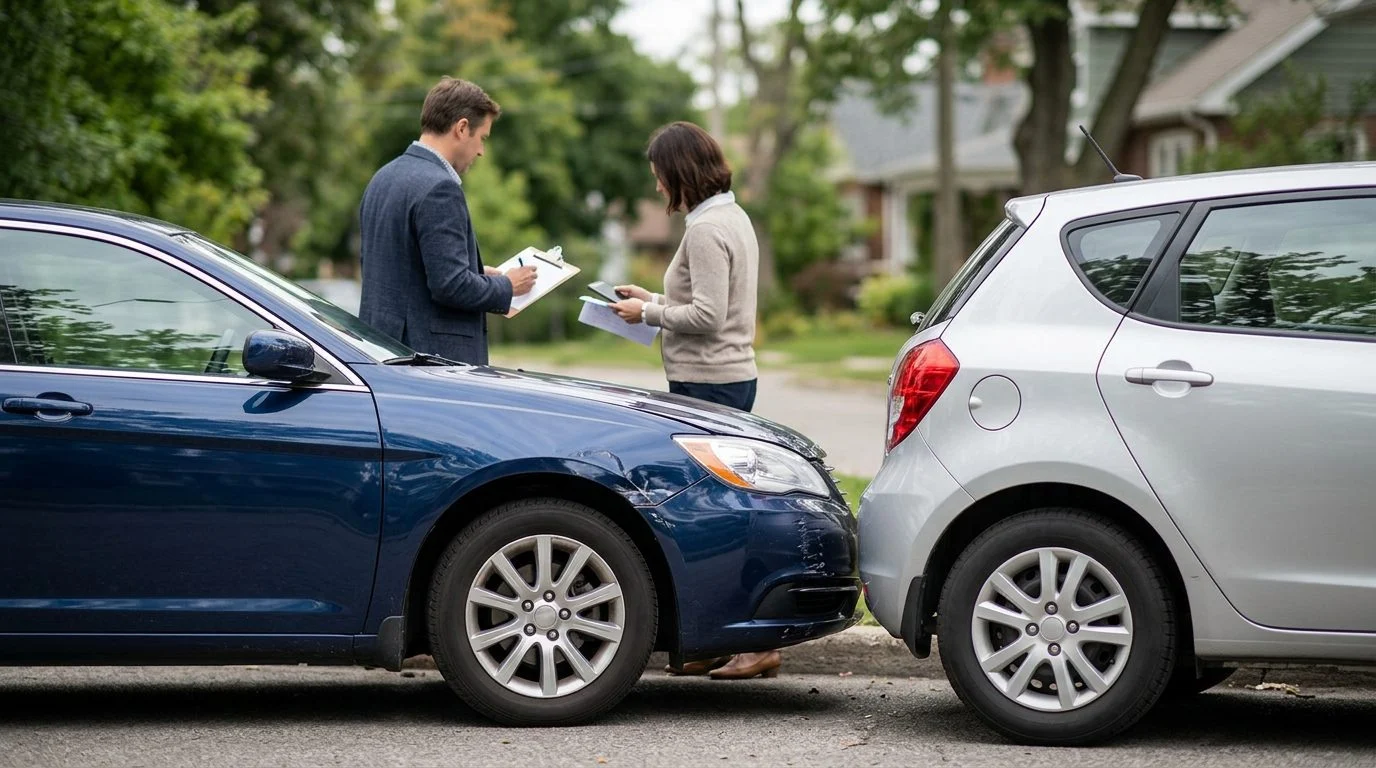
Should I file an insurance claim if I am not at fault? Usually, yes. In most cases, it is worth reporting the crash to your own insurer promptly, even when another driver caused it. This page explains why, how fault works in Louisiana, and what to say and avoid saying.
The short answer: reporting a not-at-fault crash is usually worth doing
Many people believe a crash they did not cause does not need to be reported. That belief can cause problems later. Your own policy sets reporting terms, and it may include coverages you can only use once the crash is on record. Those can include collision, medical payments, and uninsured or underinsured motorist coverage, depending on what you bought.
Reporting to your insurer is not the same as accepting blame. Telling your insurer what happened is a fact-sharing step. It does not decide who was at fault, and it does not mean you agree to any settlement offer.
A short, factual report made while the details are fresh helps your insurer match the facts to your coverage. Read your policy as written. If a deadline or notice term is unclear, ask your insurer to explain it in writing. For more on car crash claims in Louisiana, see our car accident guide.
If a crash you did not cause has you weighing these decisions, we're glad to talk through your options with you, with no obligation. Talk it through with our team — the first consultation is free, confidential, and carries no obligation.
Who is usually at fault if a car hits the back of you?
Fault in a rear-end crash depends on the facts. Louisiana law says a driver shall not follow another vehicle more closely than is reasonable and prudent, given speed, traffic, and road conditions (La. R.S. 32:81). Investigators look at what happened. Did the lead car stop suddenly? Were brake lights or signals used? Did a lane change play a part? What was the weather?
Louisiana uses a fault-based system. Under the Civil Code, every act that causes damage obliges the person at fault to repair it (La. Civ. Code art. 2315). Under La. Civ. Code art. 2323, as amended effective January 1, 2026, a person suffering injury, death, or loss is not entitled to recover damages if the degree or percentage of negligence attributable to that person is equal to or greater than fifty-one percent. When the degree or percentage of negligence attributable to a person suffering injury, death, or loss is less than fifty-one percent, the damages recoverable are reduced in proportion to that share of negligence (La. Civ. Code art. 2323). That is why your own share of fault matters, even when another driver started the chain of events.
Good evidence helps show how a crash happened. Police reports, photos, the vehicles’ final rest positions, witness names, and any dash camera video are common examples. Keep copies of everything.
Your insurer and the other driver’s insurer work for different people
The other driver’s liability insurer handles claims made against its own policyholder. It is not working for you, even when its adjuster is friendly and quick to call.
Your own policy may cover vehicle repairs, rental costs, medical payments, or losses caused by an uninsured or underinsured driver. Louisiana law says uninsured motorist coverage protects people insured under the policy who are legally entitled to recover nonpunitive damages from an owner or operator of an uninsured or underinsured vehicle. That includes damages because of bodily injury, including death resulting from it (La. R.S. 22:1295). Some drivers choose economic-only coverage at a lower premium. That option leaves out noneconomic loss, such as pain and suffering.
A Highway Loss Data Institute bulletin discusses automobile coverages, including collision coverage for damage to your own vehicle.
Decide early which insurer handles each type of loss. Your own coverages and a property damage claim against the other driver’s insurer can run on separate tracks. A lawsuit is a third track, and it follows its own rules.
What to say and what to avoid saying when you make a claim
Share the basic facts: the date, time, and place, the vehicles involved, the other driver’s name and insurer, and the police report number. Keep your account short and accurate.
Avoid guessing. Do not guess at speed, at who was at fault, or at how badly you are hurt. Say what you saw and what you know. If you don’t know something, say so. Injuries can appear hours or days later, so don’t describe yourself as fine before a doctor has checked you. Some injuries need immediate care. MedlinePlus notes that motor vehicle accidents can cause spinal cord injuries, which need immediate medical attention.
Recorded statements deserve a pause. Under Louisiana law, a person who takes a written, recorded, or transcribed statement from an injured person must give that person a true and complete copy. The copy is due within twenty days after written demand (La. R.S. 13:3732). Think before you agree to give one, and ask for a copy if you do.
Get the crash report. Louisiana’s crash reporting statute sets duties for a driver in a crash involving injury, death, or property damage over five hundred dollars (La. R.S. 32:398). Under La. R.S. 32:398(J), when the investigating officer has reason to believe a driver has a medical condition that may be cause for revocation or suspension of a license, notice of that condition goes to the medical/conviction unit of the Office of Motor Vehicles, provided the officer first consults with a superior officer and the superior officer concurs with the issuing officer’s belief. The reports are confidential, but they are made available to the parties to the crash, their insurers, and their attorneys, among others. Keep a dated folder of photos, medical visits, receipts, and insurer communications.
Does a not-at-fault claim affect your insurance or your rates?
The effect on premiums varies by policy and insurer. A claim where you were not at fault is often handled differently from one where you were at fault. Ask your insurer how a report would be recorded on your policy before you decide what to do.
Delay can create problems of its own. Late notice can conflict with the notice terms in your policy, and it can complicate coverage questions. Asking early keeps the timing clear for you and your insurer.
Write down what you are told. Note the date, the name of the person you spoke with, and what they said. Save any written answers. A clear record makes later questions easier to answer.
When a not-at-fault crash involves serious injury or a death
Many readers ask this question because someone they love was killed or seriously hurt, or because their own injuries are lasting. Serious injury and death raise issues beyond a property damage claim.
Louisiana law sets out which family members may sue for a wrongful death. That right of action prescribes one year from the death or two years from the injury, whichever is longer (La. Civ. Code art. 2315.2). For many other injury claims, the general period is two years from the day injury or damage is sustained (La. Civ. Code art. 3493.1). Deadlines can run from different dates, so timing matters early.
Crashes involving large trucks or commercial vehicles can also involve more insurers and company records. Our 18-wheeler wrongful death guide covers that framework. Our wrongful death grounds guide explains the legal basis for these claims. Emotional effects after a crash are real, and our psychological trauma guide covers them.
American Trial Lawyer, LLC handles truck accidents, car accidents, commercial vehicle accidents, rideshare accidents, motorcycle accidents, wrongful death, brain injury, and negligent security matters. Przemek Lubecki is the responsible lawyer for this page, and the firm’s office is in New Orleans. The firm may associate or refer a case to other law firms when that is appropriate.
Not sure what your next step is?
Talk it through with our team — the first consultation is free, confidential, and carries no obligation.
Talking through your situation with the firm
Deciding what to do after a crash you did not cause can feel stressful. It is harder when you are caring for someone who was hurt, or when a family has lost someone. You do not have to sort through these questions alone.
Quick answers
Should I file an insurance claim if I am not at fault?
Usually, yes. Report the crash promptly and ask how it will be recorded.
Does a not-at-fault claim affect my insurance?
It can, depending on your policy and insurer. Ask how a report would be recorded before you decide.
What should I not say to an insurance company?
Don’t guess about speed, fault, or injuries. Share the facts you know, and say when you are not sure.
If a crash you did not cause has you weighing these decisions, call 855-LUBECKI to request a free case evaluation. The first consultation is free, confidential, and without obligation.
Steps that help protect your claim
Report the crash promptly
Contact your own insurer and ask how the claim will be recorded. Ask for the claim number and the name of the adjuster in writing.
Keep your records
Save the police report, photos, repair estimates, medical bills and any notes about missed work. Organized records make every conversation easier.
Be careful with recorded statements
Insurance representatives may ask you for a recorded statement. You can ask to speak with a lawyer first, and it is reasonable to do so.
Read before you sign
Do not sign releases, settlement forms or medical authorizations until you understand what they cover.
Key warning
Do not guess at fault, injuries or the value of your claim in a phone call or an online form. Small statements can be used later, so talk with a lawyer before you give a recorded statement or sign anything.
Questions to think about
How was my claim recorded?
Ask your insurer whether a not-at-fault report will appear on your file and how it could affect your policy.
What did I already say?
Write down what you told the police, other drivers and insurers while the details are fresh.
Who else may be involved?
Commercial vehicles, rideshare trips and employers can add insurers and coverage questions to a crash claim.