
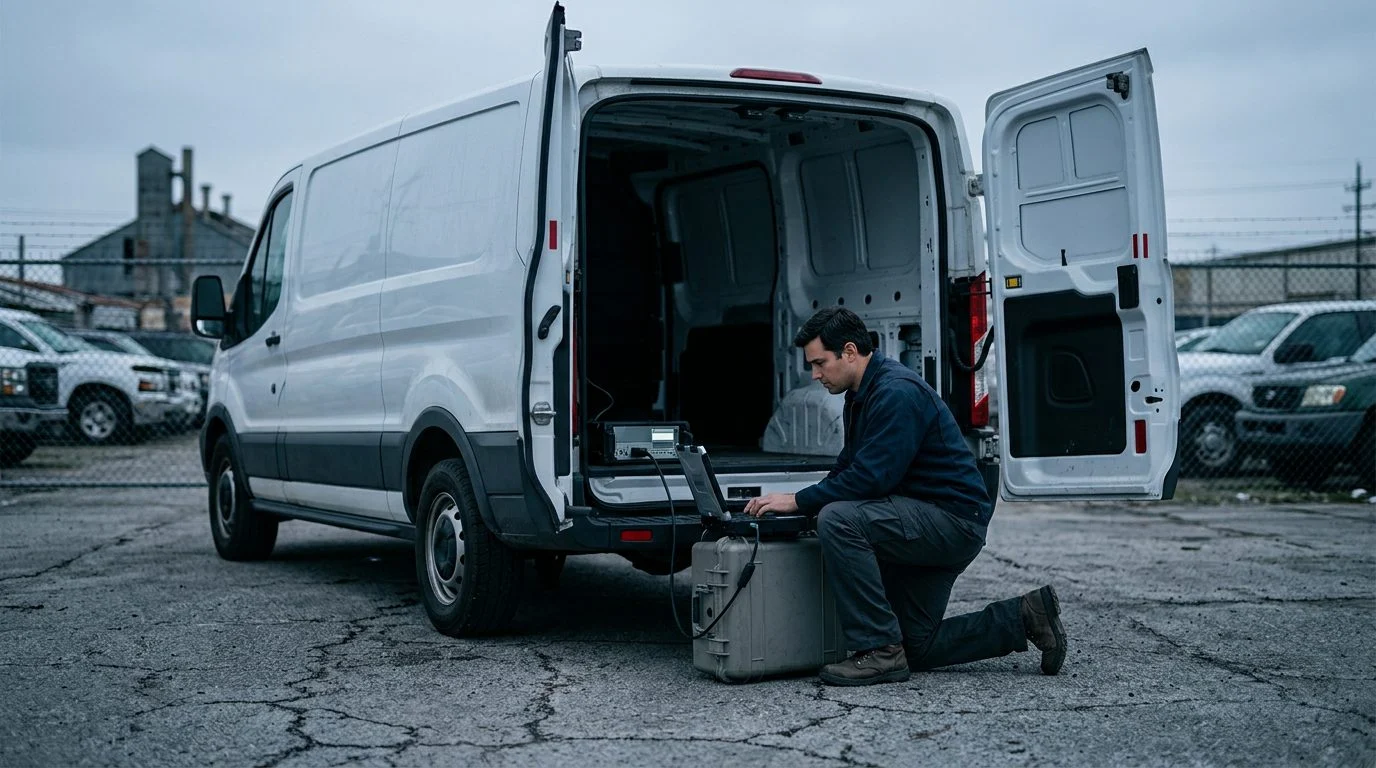
18 Wheeler Wrongful Death New Orleans Family Claims
By Przemek Lubecki · Published October 21, 2026
18 Wheeler Wrongful Death New Orleans: A Guide for Families
This guide explains what 18 wheeler wrongful death New Orleans families should know about who may sue, which records matter and what comes next. A wrongful death claim lets certain family members seek damages after a person dies because of another party’s fault. When an 18-wheeler is involved, the claim may reach more than one party.
If your family is sorting through funeral plans, hospital papers and calls from insurers, you don't have to work out the legal side alone. Talk it through with our team — the first consultation is free, confidential, and carries no obligation.
What a Wrongful Death Claim After an 18-Wheeler Crash Is
A wrongful death claim is a lawsuit brought by surviving family members. It seeks damages for their losses after a death caused by someone else’s fault. Louisiana’s rule sets out who may sue, in a specific order, under La. Civ. Code art. 2315.2.
A fatal truck crash can involve more than the driver. Louisiana law reaches other parties in certain situations:
- The employer. Under La. Civ. Code art. 2320, employers answer for damage caused by employees while doing their jobs, when the employer might have prevented the act and did not.
- The owner or custodian of equipment. Under La. Civ. Code art. 2317.1, the owner or custodian is answerable for damage caused by a defect only if he knew, or should have known, of the defect, the damage could have been prevented with reasonable care, and he failed to use that care.
A separate claim, the survival action, covers the injuries the person suffered before death.
This page covers fatal collisions involving 18-wheelers, tractor-trailers and other commercial vehicles on New Orleans streets and Louisiana highways.
Who Can Bring the Claim and What It May Include
The statute lists the family members who may sue, in order. Each step applies only if the step above it is empty.
- A surviving spouse and child or children, or either of them.
- If there is no spouse, child or parent, the surviving brothers and sisters, or any of them.
- If there is no spouse, child, parent or sibling, the surviving grandparents, or any of them.
Adopted children, parents, brothers, sisters and grandparents count under the same article, and so do a child, brother or sister given in adoption.
Louisiana law allows recovery for loss of consortium, service and society. The same family members may recover these losses under La. Civ. Code art. 2315. The article also limits certain future medical costs unless they are directly related to a manifest physical or mental injury.
Louisiana also looks at the injured person’s share of fault. La. Civ. Code art. 2323 provides that when the degree or percentage of negligence attributable to the person suffering injury, death, or loss is fifty-one percent or more, that person shall not be entitled to recover damages, except where the loss results partly from an intentional tortfeasor’s fault, in which case the claim is not reduced. A smaller share reduces damages in proportion.
No dollar figure can be predicted from a description alone. Any claim’s value depends on the facts. No outcome or settlement amount is promised here.
Why 18-Wheeler Fatal Crashes Are Handled Differently
Commercial trucks create records beyond the police report. Federal rules require a motor carrier subject to these hours-of-service rules, other than a private nonbusiness passenger carrier, to require each driver to record duty status for each 24-hour period, under 49 C.F.R. § 395.8. Those logs can show when a driver was on duty and driving.
Records may be kept by any technology that accurately reflects the information and stays accessible, under 49 C.F.R. § 379.7. Other records may include dispatch and fuel records, inspection and maintenance files, and driver files.
The truck itself is evidence. The tractor, trailer, brakes, tires and cargo securement can show what went wrong. If the truck is repaired, sold or scrapped, that evidence may be lost. Written requests to keep it should go out early.
Trucking claims can also reach the company that chose or supervised the driver. The family must still prove the employer’s own negligence caused the harm.
First Steps for Families in the Days After a Fatal Truck Crash
Start by requesting the crash report and writing down what you remember while it is fresh.
- Request the crash report. Louisiana crash reports are confidential. They are available only to the parties to the crash, parents or guardians of a minor who is a party to the crash, insurers or an insurance support organization under contract to provide claims and underwriting, any healthcare provider or their agent that rendered healthcare services to a party, succession representatives of those parties or the attorneys of the parties or succession representatives, or a news-gathering organization that requests documents related to a specific crash, within seven working days after the investigation is complete, upon request, under La. R.S. 32:398.
- Write down what you remember. Note the scene, weather, lanes, and any statements you heard.
- Keep records. Save hospital, coroner and funeral papers, plus receipts for costs your family paid. Don’t assume any cost will be recovered.
- Be careful with statements. If an injured person gives a written or recorded statement, the person who has it must, at the request of the injured person or his personal representative, furnish a true and complete copy within twenty days after written demand, under La. R.S. 13:3732; if that person refuses, the statement cannot be admitted in evidence or otherwise used in any civil action relating to the subject matter. Read any insurer paperwork before you sign.
- Ask about timing early. Under La. Civ. Code art. 2315.2(B), the right to sue generally runs one year from death or two years from the injury, whichever is longer. Ask about your deadline early, not later.
How the Claim Process Works, Step by Step
Most claims move through five stages, though the timing of each stage varies.
- Intake. A confidential call reviews the crash, your family’s relationship to the person who died, and key dates.
- Investigation. The office requests crash, carrier, driver and vehicle records and works to identify each party who may be responsible.
- Claim presentation. Responsible parties and insurers receive written notice and the family’s claim with supporting documents.
- Evaluation and decisions. The family reviews the evidence and any offer with the lawyer. Settlement decisions belong to the family.
- Filing suit, if needed. If the claim doesn’t resolve, a petition is filed in the proper Louisiana court, which may include Orleans Parish civil court. Discovery and pretrial steps follow.
Some claims resolve before trial and others don’t. The family should expect the case to be prepared as if it may go to a jury.
Not sure what your next step is?
Talk it through with our team — the first consultation is free, confidential, and carries no obligation.
How This New Orleans Firm Handles These Cases
American Trial Lawyer, LLC handles wrongful death, truck, commercial vehicle and car crash claims from its office in New Orleans. Przemek Lubecki is the responsible lawyer for this page and for these matters.
Our team includes support staff who handle intake, records and scheduling. The firm represents people seriously hurt in truck, commercial vehicle and car crashes, and families in wrongful death cases. It serves families across the New Orleans area and throughout Louisiana.
The firm may associate or refer a case to other law firms. If a case is referred, the family will be told.
Questions Families Ask Before Calling
Do I have to hire a lawyer right away?
No. You can take time to understand your options, and the choice to hire is yours.
What does the free first consultation include?
The first consultation is free, confidential and comes with no obligation to continue. You may be responsible for case costs and expenses in addition to the fee.
Could my family’s case be referred to another firm?
Yes, it may be. The firm may associate or refer a case to other law firms, and the family will be told.
How much is an 18 wheeler wrongful death New Orleans claim worth?
The value depends on the facts, and no amount or outcome can be promised before a review.
Can a claim go forward if the trucking company is out of state?
Out-of-state companies and insurers can be involved. Jurisdiction questions are reviewed at intake.
If your family is sorting through funeral plans, hospital papers and calls from insurers, you don’t have to work out the legal side alone. Call 855-LUBECKI to reach the New Orleans office, or request a case evaluation.