

New Orleans · Motorcycle Accident Wrongful Death
When a Motorcycle Crash Takes a Loved One, Know Your Next Steps
Clear, practical guidance for New Orleans families facing the first weeks after a sudden loss, from attorney Przemek Lubecki.
By Przemek Lubecki · Published November 11, 2026
Losing a motorcycle rider is a shock, and the questions arrive all at once. Families in New Orleans often ask what to do first and who can bring a claim.
In short, the first steps are to care for the family, request the crash report, keep the rider’s helmet, gear and phone records, and learn the deadline under Louisiana law. This page walks through each step in order. It is general information, not advice about your specific case.
Your first days after a fatal motorcycle crash
Right now, the family comes first, and a few tasks can’t wait. A death investigation in Orleans Parish runs through the Orleans Parish Coroner’s Office. The police agency that worked the crash may also need to speak with family members. Pick one contact person for both offices and write that name down. Ask one trusted person to handle incoming calls, so the rest of the family can grieve.
Insurance adjusters often reach out quickly, sometimes before a family has had time to rest. Family members can speak with a lawyer before they give any recorded statement. Keep a simple written log of every call. Write down the caller’s name, the company, any claim or report number, and the date. That log helps later, when details blur.
If a motorcycle crash has taken someone you love, you don't have to sort out the crash report, the insurance and the deadlines alone, and our team is ready to talk. Talk it through with our team — the first consultation is free, confidential, and carries no obligation.
Who may bring a wrongful death claim in Louisiana
A surviving spouse and child or children may bring a wrongful death claim. If there is no spouse or child, the parents may sue. The law sets a clear order, so the family structure matters. La. Civil Code art. 2315.2 lists the groups in turn: spouse and children, then parents, then brothers and sisters, then grandparents. A later group may sue only when no earlier group is left. Relatives by adoption are included under the same article, and so are a child, brother or sister who was given in adoption.
A wrongful death claim is separate from any injury claim the rider may have had before dying. For that earlier injury, the law provides a survival action under La. Civil Code art. 2315.1. The deceased’s succession representative may bring it when no listed family group applies. Family members who are unsure whether they qualify can talk it through during a free consultation.
Request the crash report from the investigating agency
It is the first official record of what happened. Under La. R.S. 32:398, the report and its information are confidential. They are shared only with listed people. That list includes the parties, their insurers, succession representatives, and the attorneys of those parties or representatives. Upon request, crash reports shall be made available to the listed persons within seven working days following the completion of the crash investigation.
Photographs, video and audio held by the agency can also be requested. Under the same section, police agencies must provide copies to any interested person on request, and they may charge a reasonable fee. Released reports may be redacted to protect privacy.
A report is one record among others. If you spot an error or a missing detail, don’t change it yourself. Write down what looks wrong, with the report number, and raise it with a lawyer.
Preserve the rider’s helmet, gear and phone records
Keep the helmet, gear, motorcycle and phone in their current condition until a lawyer has reviewed them. Damage patterns and impact marks can matter later. Don’t clean, repair, throw away or return the helmet, jacket, gloves or boots. Store them in a dry, safe place, and label each item with the date and a short note about the crash.
Keep the motorcycle and any parts that came off in the crash. Don’t sell, scrap or repair the bike while questions about the crash remain open. The rider’s phone may hold call logs, text messages and app data tied to the crash. Don’t delete accounts, reset the device or wipe it.
Don’t assume the other side will keep its records. A lawyer can send written requests asking other parties and insurers to keep vehicle and phone data.
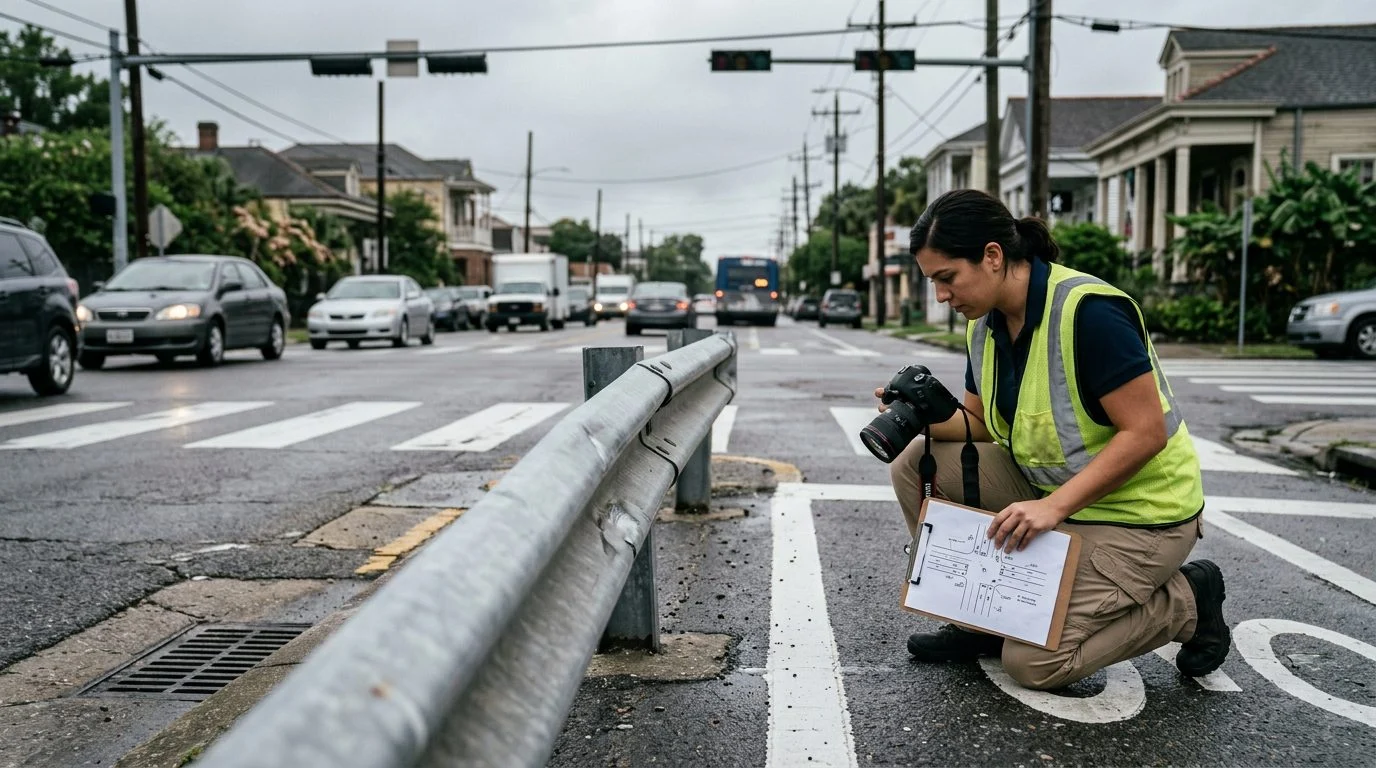
The at-fault driver’s insurance and other coverage
Finding the at-fault driver’s insurance is usually the next step. Under La. R.S. 32:871, an interested person may send a written request and a fifteen-dollar fee to the Department of Public Safety and Corrections. The department then forwards information about the vehicle’s insurance coverage or security. Until the insurer and policy are identified, the coverage amount is unknown.
The rider’s own policy may also matter. Uninsured motorist coverage is one example. Whether it applies depends on the policy in force at the time.
Statements need care. Under La. R.S. 13:3732, a personal representative may ask for a copy of a statement the injured person gave. The person holding it must provide a true and complete copy within twenty days after written demand. Review any quick settlement offer with a lawyer before you respond.
Time limits for a wrongful death claim in Louisiana
Louisiana’s wrongful death deadline is one year from the death or two years from the injury, whichever is longer. La. Civil Code art. 2315.2 sets this period. The longer of the two periods controls. Which one that is depends on the dates of the crash and the death, so the deadline depends on the facts. A lawyer can check those dates with you.
Wrongful death claims are governed by La. Civil Code art. 2315.2, which lets the listed family members sue to recover damages they sustained from the death; that article does not set the general two-year period for other fault-based claims. The right of action under this article prescribes one year from the death of the deceased or two years from the day that injury or damage is sustained, whichever is longer. Under La. Civil Code art. 3493.1, the two-year period for delictual actions begins on the day injury or damage is sustained, and that period does not run for minors or interdicts in product-liability actions involving permanent disability, under the Louisiana Products Liability Act or state law governing product liability in effect at the time of the injury or damage.
Families often expect more time than they have. Evidence can disappear, and witnesses’ memories fade. Acting early gives a lawyer time to request records and review the facts before they go stale.
Not sure what your next step is?
Talk it through with our team — the first consultation is free, confidential, and carries no obligation.
When other parties may be involved
Some fatal motorcycle crashes involve a second car, a commercial truck, or a rideshare driver. Each adds its own insurance and evidence questions.
Louisiana also compares fault among everyone involved. Under the current text of La. Civil Code art. 2323, a person whose share of fault is 51 percent or more cannot recover damages. Paragraph C of that article separately addresses injuries caused partly by the person’s own negligence and partly by an intentional tortfeasor’s fault, and provides that the person’s claim is not reduced in that situation. A smaller share reduces damages in proportion to that share. Families should know this rule exists, but it does not decide any case on its own.
For related situations, see rideshare accidents in New Orleans and wrongful death claims in Louisiana.
American Trial Lawyer may associate or refer a case to other law firms. Lawyers at other firms are not part of American Trial Lawyer, LLC.
Talking with a New Orleans wrongful death lawyer
The first consultation is free, confidential and without obligation to continue. It is a conversation about the crash, your family and the questions in front of you.
Przemek Lubecki is the responsible lawyer for this page. The office for these services is in New Orleans.
Who can get the crash report?
Only the parties to the crash, parents or guardians of a minor party, insurers of a party or insurance support organizations under contract to provide claims and underwriting, healthcare providers (or their agents) that treated a party to the crash, succession representatives of the parties, attorneys for the parties or succession representatives, and news-gathering organizations requesting a specific crash can get the report under La. R.S. 32:398. Ask the investigating agency how to make the request.
How long does a family have to file?
The wrongful death deadline is one year from death or two years from injury, whichever is longer. Dates matter, so check them early.
Is a claim reduced if the rider was partly at fault?
Louisiana reduces damages in proportion to the injured person’s own negligence and bars recovery at 51 percent or more, but when the injured person’s loss is partly from their own negligence and partly from the fault of an intentional tortfeasor, the claim is not reduced. Each situation depends on its facts.
If a motorcycle rider in your family has died, the crash report, the helmet and phone records, and the insurance questions may need attention now. Request a free case evaluation or call 855-LUBECKI.
How American Trial Lawyer Can Help
Compassionate, plain-language guidance
We explain each step in terms you can follow, at a pace that works for your family.
Attention to the evidence
We focus on the details that matter in a motorcycle crash case, so important information is not lost.
Direct communication
You will know who is handling your matter and how to reach them, including when you have questions about insurance contacts.
Honest, unhurried answers
We will tell you what we know, what we do not yet know, and what we would need to learn more.
Be careful before speaking with an insurer
Insurance adjusters may call soon after a crash and ask for a recorded statement. Speaking with a lawyer before you give any statement or sign any document can help protect your family's interests.
Practical Steps for the Days Ahead
Keep records together
Gather the police report number, medical and funeral bills, photos, and any messages or documents about the crash in one folder.
Ask about the crash report
Your family can ask a lawyer to help determine who may obtain the official crash report and how to request it.
Write down what you remember
Notes about what you were told, who you spoke with, and when can be useful later. Write them down while the details are fresh.
Talk with a lawyer about your options
Przemek Lubecki can review your family's situation in a free, confidential consultation with no obligation to continue. American Trial Lawyer may associate or refer a case to other law firms, and any co-counsel is not part of American Trial Lawyer, LLC.
Talk with Przemek Lubecki About Your Family's Next Steps
Related practice areas
- Wrongful Death Claims in New Orleans
- My Loved One Died Weeks After a Crash
- New Orleans Wrongful Death Damages: What Families Can Seek