
Commercial Vehicle Crash Injury Claims, Orleans Parish
By Przemek Lubecki · Published October 21, 2026
A commercial vehicle crash injury case in Orleans Parish usually turns on who owned the vehicle, who was driving, and whether the driver was doing work at the time. This page explains those questions in plain language, the early steps that protect evidence, and how a conversation with American Trial Lawyer can help you decide what to do next. Przemek Lubecki is the responsible lawyer for this page, and the firm’s office is in New Orleans.
What counts as a commercial vehicle crash in Orleans Parish?
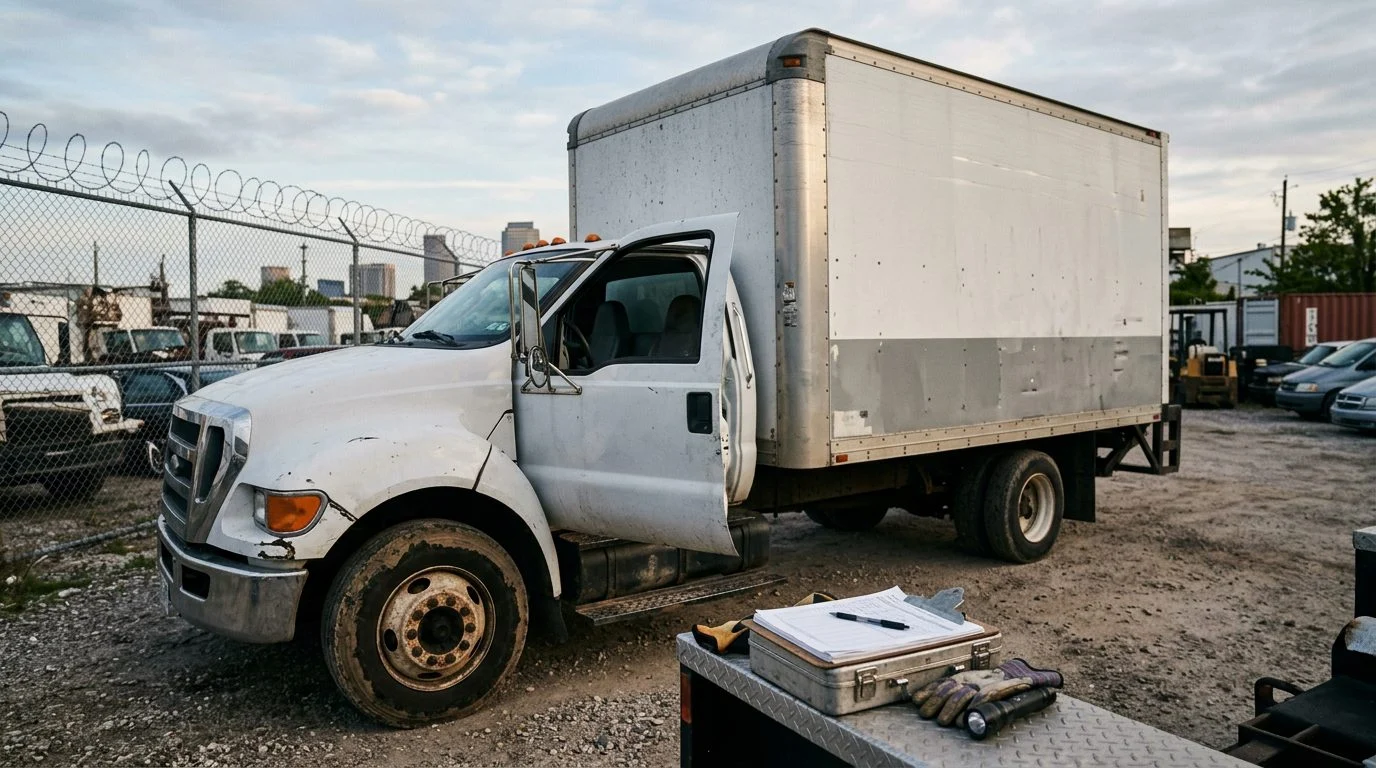
A commercial vehicle crash is one that involves a vehicle operated for business, such as a box truck, delivery van, work truck or company fleet vehicle. These vehicles are not limited to large trucks. A van making deliveries or a pickup used on a job site can raise the same commercial questions.
Company ownership often changes the picture. When a business owns or leases the vehicle, or the driver was working for it, the employer’s role may matter. Questions that usually shape the analysis include:
- Who owned or leased the vehicle?
- Who was driving, and were they an employee or a contractor?
- Was the driver doing a work task when the crash happened?
- Was the trip for business or for personal errands?
Personal-use questions come up often, so write down every trip detail you know. This page is written for drivers, passengers, pedestrians, cyclists and other motorists who were hurt, and for families in wrongful death cases. We serve people injured in Orleans Parish, the New Orleans metro, Metairie, Jefferson Parish, Kenner, St. Bernard Parish, Slidell and across Louisiana.
Not sure what your next step is?
Talk it through with our team — the first consultation is free, confidential, and carries no obligation.
What can a claim include, and who may be responsible?
A claim can seek repayment for losses the crash caused, and more than one party may share responsibility. Under La. Civ. Code art. 2315, a person whose fault causes damage must repair it. A claim may address:
- Medical treatment for the injury, and future medical care directly related to a manifest injury La. Civ. Code art. 2315 reads: “Damages do not include costs for future medical treatment, services, surveillance, or procedures of any kind unless such treatment, services, surveillance, or procedures are directly related to a manifest physical or mental injury or disease.”
- Property damage, including the vehicle
- In a wrongful death case, losses suffered by surviving family members
The driver is one possible responsible party. Under La. Civ. Code art. 2320, employers are answerable for damage caused by their workers while doing the job they were employed to do, and the article says this responsibility attaches when the employer might have prevented the act that caused the damage and did not. Under Louisiana Civil Code article 2320, masters and employers are answerable for the damage occasioned by their servants and overseers in the exercise of the functions in which they are employed, and that responsibility arises only when the masters or employers might have prevented the act which caused the damage and have not done it. Depending on the crash, other parties, such as a maintenance contractor, may also be part of the picture.
Rear-end crashes raise a common question. La. R.S. 32:81 says a driver shall not follow another vehicle more closely than is reasonable and prudent. Under La. R.S. 32:81, the driver of a motor truck traveling upon a highway outside a business or residential area shall not follow another motor truck within four hundred feet, though this does not prevent one motor truck from overtaking and passing another. Fault turns on these facts, not on the position of the vehicles alone.
Fault also reduces what you can recover. Under La. Civ. Code art. 2323, if the degree or percentage of negligence attributable to the person suffering injury, death, or loss is equal to or greater than fifty-one percent, that person is not entitled to recover damages, and if it is less than fifty-one percent, the amount recoverable is reduced in proportion to that degree or percentage of negligence. The reduction does not apply where the person’s injury results partly from his own negligence and partly from the fault of an intentional tortfeasor; in that case, the claim for recovery of damages is not reduced.
What should you do early to protect evidence and your claim?
The most useful early steps are getting medical care and keeping records of the crash, your injuries and the people involved.
- Get medical care and follow the treatment plan you’re given.
- Write down the police report number.
- Photograph the scene, the vehicles and your injuries.
- Collect names and phone numbers of witnesses.
- Note the company name, unit number and plate on the truck or van.
- Keep a simple log of symptoms, missed work and bills.
Commercial vehicles create records that matter. Federal rules require many motor carriers to use electronic logging devices (ELDs) to record driver duty status, with some exceptions (49 CFR 395.8). Dispatch records and onboard data can be lost if no one asks the company to keep them. A preservation letter asks the trucking company or fleet operator to keep this evidence. Federal rules also describe how records may be kept so they can be reproduced later (49 CFR 379.7).
An insurer may call you quickly and ask for a recorded statement. Under La. R.S. 13:3732, a person who takes a recorded statement from an injured person must give that person a copy within twenty days after a written demand. Talking with a lawyer before giving any statement is a sensible step to consider.
How does the process work, and what should you expect?
Most commercial vehicle claims move from a first consultation to an investigation, a claim presentation to insurers and, if needed, a lawsuit. Each case moves at its own pace.
- Consultation. A lawyer reviews the crash facts, your injuries and the questions about ownership and driving.
- Investigation. The work includes identifying the vehicle owner, driver, employer and insurance, requesting records and sending preservation letters.
- Claim presentation. The claim goes to insurers, and the parties negotiate. No outcome or timeline can be promised in advance.
- Lawsuit, if needed. If a fair resolution is not reached, a suit may be filed in the appropriate court. Trial preparation is part of that process.
Deadlines matter. Under La. Civ. Code art. 3493.1, delictual (injury) actions are subject to a two-year period that starts on the day the injury is sustained, but prescription does not run against minors or interdicts in actions involving permanent disability brought under the Louisiana Products Liability Act or state product liability law in effect at the time of the injury. Under La. Civ. Code art. 2315.2, the right of action for wrongful death prescribes one year after the deceased’s death or two years from the day that injury or damage is sustained, whichever is longer. For medical malpractice actions, the right of action prescribes one year after the deceased’s death. Because the exact timing turns on the facts of each claim, review it early.
What does the free consultation include, and what about costs and referrals?
Your first consultation is free, confidential and carries no obligation to continue. You may be responsible for case costs and expenses in addition to the fee. Case costs can include items such as records, filing fees and fees for outside professionals who review the crash. The fee agreement sets out the terms that apply to your case.
American Trial Lawyer may associate or refer a case to other law firms. Commercial vehicle crash claims are among the case types this firm handles, so this applies here. If a case is referred or associated with another firm, you will be told.
Why American Trial Lawyer and Przemek Lubecki?
American Trial Lawyer is a New Orleans firm, and Przemek Lubecki is the responsible lawyer for this page. Przemek Lubecki is a trial lawyer. The firm’s office is in New Orleans, and it also has an office in Park Ridge, Illinois.
The firm’s work covers truck, commercial vehicle, car, motorcycle and rideshare crashes, wrongful death, brain injury and negligent security. Our team explains each step in plain language, so you know what is being done on your claim and why.
Have questions about what happened?
Ask our team directly. The first conversation is free, confidential, and there is no obligation to continue.
Frequently asked questions
Is a box truck or delivery van crash a commercial vehicle case?
It can be. Ownership by a business and whether the driver was working at the time are the key questions.
Who is usually at fault in a rear-end collision?
Fault turns on the facts, including following distance, speed and traffic conditions under La. R.S. 32:81.
Do I have to give a recorded statement to the trucking company’s insurer?
Talking with a lawyer first is a sensible step. If you give a recorded statement, you can request a copy in writing under La. R.S. 13:3732.
How long do I have to file?
Most injury claims have a two-year period from the date of injury, and wrongful death has its own timing. Review your deadline early.
What happens at the first consultation?
A lawyer reviews the crash facts and your injuries with you. You can ask questions about possible next steps.
Talk with a New Orleans trial lawyer about your commercial vehicle crash
If a box truck, delivery van or work truck crash has left you with medical bills, lost work time and insurer calls, you don’t have to sort out the next steps alone. Request a case evaluation through our contact page, or call 855-LUBECKI. The office is in New Orleans, and Przemek Lubecki is the responsible lawyer for this page.
Ready to take the next step?
Related practice areas
- Truck Crash Injury Claims in New Orleans and Orleans Parish | American Trial Lawyer
- Fatal Truck Accident Wrongful Death Claims | Orleans Parish