
Truck Accidents | New Orleans, Louisiana
Who Pays Your Medical Bills After a Truck Accident in Louisiana?
Several kinds of insurance may help cover medical care after a serious truck crash. Przemek Lubecki and our team in New Orleans can help you understand which coverage may apply to your situation.
By Przemek Lubecki · Published October 30, 2026
If you’re asking who pays my medical bills after a truck accident in Louisiana, the short answer is that more than one source may apply. Health insurance, medical payments coverage on your own auto policy, uninsured motorist coverage, and the at-fault party’s liability insurance can each play a part. They don’t always pay in the same order. This page explains how those sources work under Louisiana law. It is general information, not advice about your claim.
Why Medical Bills Pile Up After a Truck Crash
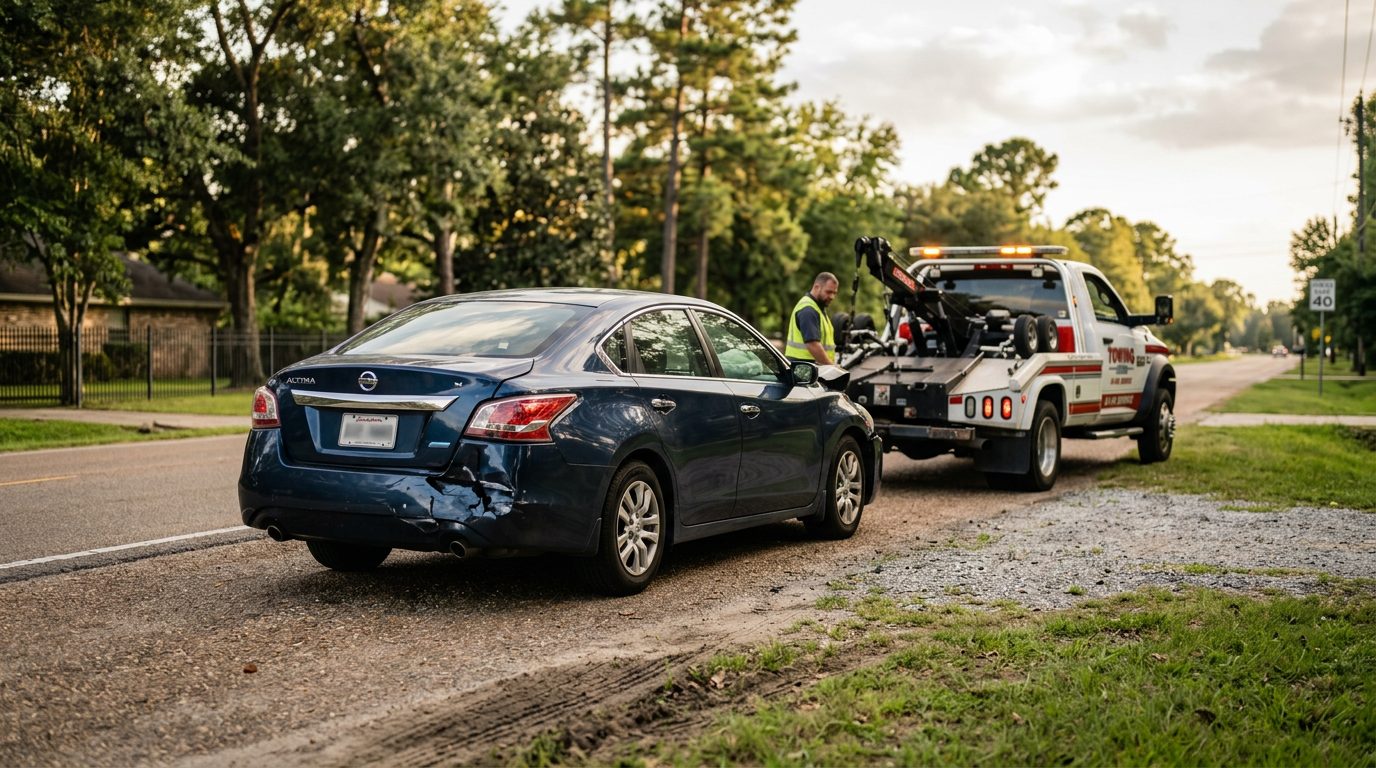
Bills often arrive all at once because truck crashes can cause serious injuries that need care over many weeks. Heavy vehicles and high speeds can mean ambulance rides, emergency room visits, scans, surgery, and rehabilitation in a short period. Many people are still in treatment when the bills start arriving. If you’re waiting on test results or helping a family member through this, the question of who pays can feel urgent. That worry makes sense. Several insurance sources may apply, and the policies and facts of the crash decide which ones matter. Start by listing every provider, every bill, and every insurance card you have. Our truck accident information page covers the wider claim process, and this page focuses on the money side.
If bills keep arriving while you're still in treatment, you don't have to sort out your options alone. Call 855-LUBECKI for a free, confidential consultation. Talk it through with our team — the first consultation is free, confidential, and carries no obligation.
Health Insurance Is Often the First Payer
Your health plan is often the first place medical bills go, especially for emergency and follow-up care. That plan may be a personal policy, an employer plan, or a government program such as Medicare or Medicaid. Coverage depends on the plan’s rules about networks, approvals, and copays. Check whether your plan asks for notice of an injury caused by someone else. Many health plans also have reimbursement rights. That means the plan may ask to be repaid from a later settlement, and the plan’s own terms control that.
Louisiana law also limits what you can recover for medical bills in certain cases, namely where a claimant’s medical expenses have been paid, in whole or in part, by a health insurance issuer or Medicare to a contracted medical provider. When a health insurer or Medicare paid a contracted provider, recovery is limited to the amount actually paid plus your cost-sharing amounts. It is not the full amount billed. See La. R.S. 9:2800.27. In a trial on those expenses, the amounts billed and the amounts actually paid must both be shared with the trier of fact, meaning the judge or jury. Keep every bill and every explanation of benefits. Those papers show what was paid and what is still owed.
Medical Payments Coverage on Your Own Auto Policy
Medical payments coverage, often called MedPay, is an optional part of some auto policies. It can pay medical expenses after a crash, up to the policy limit. Many MedPay coverages pay without first deciding who was at fault. Check the declarations page of your own policy. It shows whether MedPay is included and what the limit is. Don’t assume you have it, and don’t assume you don’t. Look at the actual page.
MedPay has its own rules. The Louisiana limit on recoverable medical expenses in La. R.S. 9:2800.27 does not apply to benefits paid through medical payments coverage on an auto policy. The policy wording sets the deadlines, notice rules, and any reimbursement terms. Read those sections closely, since they can differ from one policy to another.
What Is Uninsured Motorist Coverage in Louisiana?
Uninsured motorist (UM) coverage pays for injuries caused by a driver who has no liability insurance. Underinsured motorist (UIM) coverage can apply when the at-fault driver’s coverage is not enough. Under La. R.S. 22:1295, auto liability policies must provide UM coverage unless the named insured rejects it, selects lower limits, or selects economic-only coverage. Economic-only coverage comes at a reduced premium. It excludes noneconomic loss, such as pain, suffering, and mental anguish.
If you were an occupant of a vehicle with UM coverage, that coverage on that vehicle is primary. An insurer that pays under UM coverage may be entitled to the proceeds of a later recovery from the responsible party, up to the amount it paid. Under La. R.S. 9:5629, actions under UM provisions prescribe two years from the date of the accident. When the at-fault driver is uninsured, your own UM coverage may be the payment source. The claim steps can differ from a standard claim against a liability insurer.
Claims Against the Truck Driver and Trucking Company
The at-fault party’s liability insurance is another source for injury claims. Commercial trucks are often insured under commercial policies, which differ from personal auto policies. Louisiana requires motor vehicle liability policies to serve as proof of financial responsibility under La. R.S. 32:900. Federal law also sets minimum financial responsibility levels for motor carriers. Insurance is one way to meet them, under 49 U.S.C. 31139. The limits in a given case depend on the carrier and how it operates, so the actual policies matter.
More than one party may be responsible. That can include the driver, the employer, or another company tied to the vehicle’s maintenance or loading. Under La. Civ. Code art. 2324, if liability is not solidary, a joint tortfeasor shall not be liable for more than his degree of fault, and one who conspires with another person to commit an intentional or willful act is answerable, in solido, with that person, for the damage caused by such act. Crash reports can help sort out who was involved.
What Not to Tell Your Insurance Company
Stick to what you directly know. Don’t guess about speed, fault, or how the crash happened. Early statements can be used later, so describe injuries accurately. Don’t call an injury minor before a medical evaluation is complete. Keep copies of every letter, form, and recorded statement an insurer asks for.
If you gave a recorded or written statement, you can ask for a copy. Under La. R.S. 13:3732, the person holding it must provide a true and complete copy within twenty days after a written demand. That same section says a statement cannot be used in a civil case if the holder refuses a copy after a request.
Before you give a recorded statement or sign a release, have the form explained. A release signed too early can end your right to seek more money later. Read every word first.
Not sure what your next step is?
Talk it through with our team — the first consultation is free, confidential, and carries no obligation.
Fault, Rear-End Collisions, and the Time Limit to Sue
Fault in a rear-end crash depends on the facts, not just on which car was hit. Investigators look at following distance, braking, lighting, road conditions, and any sudden stops. Being hit from behind does not automatically decide fault against one driver.
Louisiana compares fault. Under La. Civ. Code art. 2323, as amended, a person suffering injury, death, or loss is not entitled to recover damages if the degree or percentage of negligence attributable to that person is equal to or greater than fifty-one percent, except that if the injury results partly from his own negligence and partly from the fault of an intentional tortfeasor, his claim for recovery of damages shall not be reduced. Under La. Civ. Code art. 2323, if the degree or percentage of negligence attributable to the person suffering injury, death, or loss is less than fifty-one percent, the amount of damages recoverable is reduced in proportion to that degree or percentage of negligence, unless the injury results partly from the fault of an intentional tortfeasor, in which case his claim for recovery of damages shall not be reduced.
For injuries occurring after July 1, 2024, Louisiana law generally sets a two-year deadline to file a delictual (personal injury) action, starting from the day the injury is sustained; the deadline does not run against minors or interdicts in actions involving permanent disability brought under the Louisiana Products Liability Act or state product liability law (La. Civ. Code art. 3493.1). See La. Civ. Code art. 3493.1. Older injuries may fall under an earlier deadline, so the date of injury matters. Write down the crash date now. Treatment can run for months, and the deadline keeps running during it.
Demand Letters, Medical Liens, and Settlement Bills
A demand letter is a written request asking an insurer to pay a claim. It usually includes medical records, itemized bills, and proof of lost income. Some providers agree to wait for payment until a claim is resolved. These arrangements are often called liens or letters of protection. Read their terms carefully. Ask the provider to explain its billing terms in writing, so the amounts and any conditions are clear.
Health plans, MedPay carriers, and some providers may have repayment interests. Those must be identified and resolved before money is distributed. Medicare follows a similar path. Louisiana’s medical-expense statute also counts amounts still owed to a provider as part of what can be recovered. See La. R.S. 9:2800.27.
Keep a running list of bills, payments, and balances. That list helps you see the whole picture. Bills and repayment claims are usually sorted out before a settlement is final, so having the list ready makes that step easier.
Key Takeaways for Louisiana Truck Crash Victims
The usual payment sources are health insurance, MedPay on your own policy, uninsured or underinsured motorist coverage, and the at-fault party’s liability insurance. The order and amount depend on the policies, the facts of the crash, and the parties involved. Keep records, review releases before signing, and note the two-year deadline for injury claims (La. Civ. Code art. 3493.1).
Przemek Lubecki is the responsible lawyer for this page. The firm’s office is in New Orleans, Louisiana. American Trial Lawyer, LLC may associate or refer a case to other law firms when that is appropriate. Any such arrangement would be disclosed as the matter proceeds.
Who pays my medical bills after a truck accident in Louisiana?
Health insurance is often the first payer. MedPay, UM coverage, and liability insurance may also apply, depending on the policies and the facts.
Is there a deadline for a truck accident injury claim in Louisiana?
For injuries after July 1, 2024, Louisiana generally allows two years from the date of injury (La. Civ. Code art. 3493.1). Older injuries may have a different deadline.
Does uninsured motorist coverage pay after a truck crash?
It can, when your own policy includes UM coverage and the at-fault driver has no liability insurance. Your policy limits set how much is available.
Talk With Przemek Lubecki About Your Medical Bills
You may still be in treatment, watching bills arrive, and unsure whether to talk about the crash with a lawyer. That is a hard place to be, and you don’t have to sort out your options alone. Request a free case evaluation or call 855-LUBECKI. The first consultation is free, confidential, and carries no obligation to continue. Our office is in New Orleans.
Coverage that may help pay your medical care
Your health insurance
Your own health plan is often the first place medical bills are sent. Coverage details vary, so the plan's terms matter.
Medical payments (MedPay) coverage
Some auto policies include MedPay, which may pay medical expenses regardless of who caused the crash. Not every policy includes it.
Liability insurance
The at-fault party's insurance may respond to injury claims. Commercial trucks often carry larger policies, and the details depend on the facts of the crash.
Uninsured and underinsured motorist coverage
If the other driver has too little insurance or none at all, your own policy may offer additional protection. Whether it applies depends on the policy language.
Keep every record
Save every bill, receipt, prescription label, and insurance letter, and keep a written log of your treatment. Organized records help whoever reviews your medical costs.
How our firm can help
Review your coverage
We look at your health plan, auto policies, and any commercial insurance involved to see which sources of payment may apply.
Coordinate with providers and insurers
Our team works to keep communication with medical offices and insurance companies organized, so you can focus on recovering.
Explain your options in plain language
Przemek Lubecki will walk you through how each source of payment may work and what questions to ask before making decisions.
Referral to other firms if needed
Depending on the facts, our firm may associate or refer a case to other law firms. If that is a possibility in your matter, we will tell you before any decision is made.