
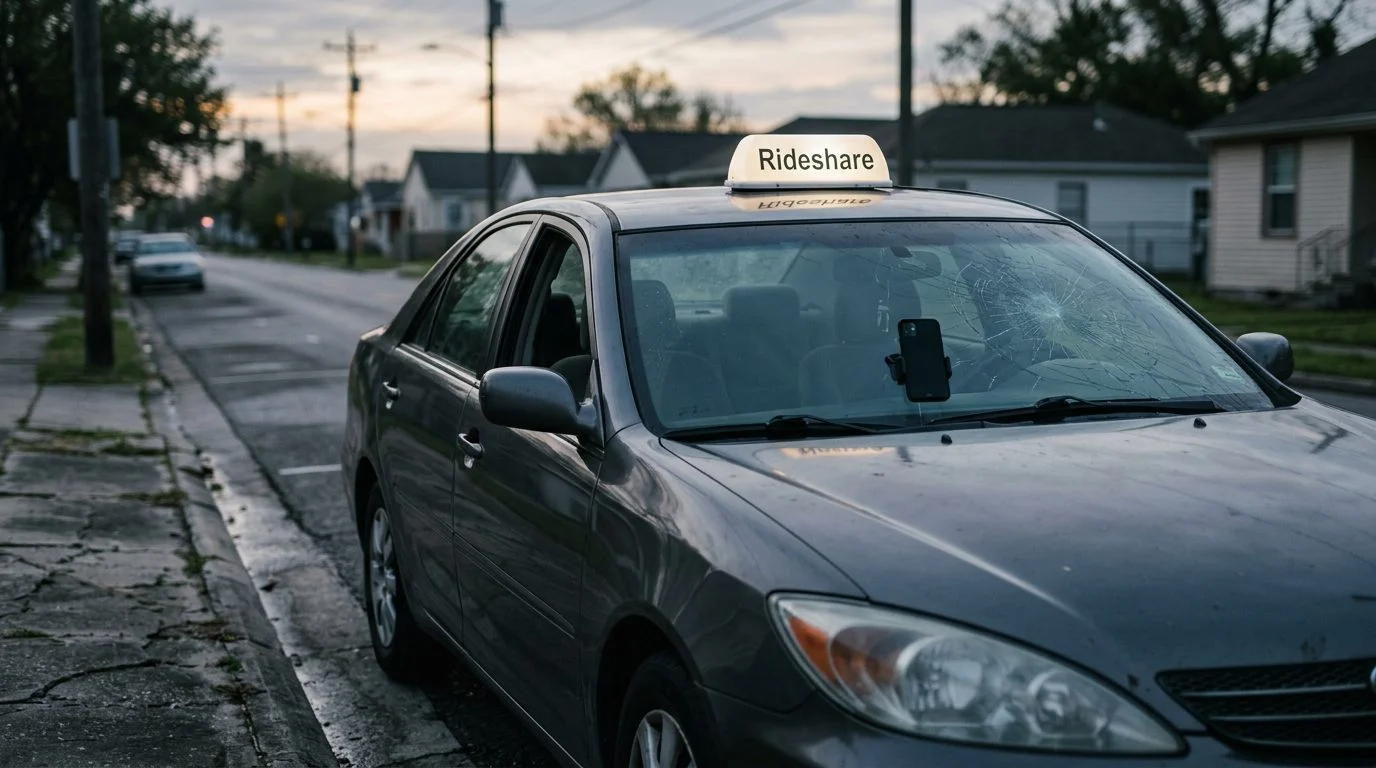
Rideshare Accidents | St. Bernard Parish
Hurt in an Uber or Lyft crash in St. Bernard Parish? Get clear answers.
Przemek Lubecki, trial lawyer, office in New Orleans. Your first consultation is free, confidential and without obligation. You may be responsible for case costs and expenses in addition to the fee.
By Przemek Lubecki · Published October 18, 2026
Rideshare Accidents St. Bernard Parish: What to Do After an Uber or Lyft Crash
Rideshare accidents in St. Bernard Parish can leave people hurt, confused and unsure who pays. The driver’s app status at the time of the crash shapes which insurance may apply. Louisiana also sets firm time limits for filing claims. This page explains these points in plain language, with the law linked for each one.

Not sure what your next step is?
Talk it through with our team — the first consultation is free, confidential, and carries no obligation.
Rideshare Crashes in St. Bernard Parish: Who This Page Is For
This page is for people hurt in a crash involving an Uber, Lyft or similar app-based vehicle in St. Bernard Parish. It covers Chalmette, Arabi, Meraux, Violet, Poydras and nearby areas of the parish.
It can help injured passengers, rideshare drivers, other drivers, pedestrians and cyclists. It can also help families after a death. You may be reading this while still sore, shaken or waiting on a phone call from an insurer.
American Trial Lawyer handles rideshare accident matters. Przemek Lubecki is the responsible lawyer for this page, and the firm’s office is in New Orleans. This page is general information. It is not advice about your specific claim.
Where Rideshare Crashes Happen on St. Bernard Roads
Rideshare crashes can happen on busy main roads and on quiet neighborhood streets. St. Bernard Highway, Paris Road and Judge Perez Drive are main routes through the parish. Traffic on them merges, turns and stops often.
Pickup and drop-off stops can happen near shopping areas, schools and business districts in Chalmette and Arabi. A driver may stop suddenly to let a passenger out. Other drivers may not expect it, and that can lead to a rear-end or side impact.
Residential streets carry risk too. A car that stops on a quiet block can be struck by a driver who is not paying attention. Drivers should plan for stops, but other people on the road may not.
These Louisiana laws are not limited to St. Bernard Parish. If you were hurt in Orleans Parish or Jefferson Parish, the same points about insurance, fault and deadlines still matter.
Who Can Be Hurt and Who May Be Involved
Several people can be hurt in one rideshare crash. The injured may include passengers in the rideshare vehicle, the rideshare driver, people in other cars, pedestrians, bicyclists and motorcyclists.
A crash may involve the rideshare driver, another driver, the owner of a vehicle, a rideshare company, or more than one of these. Louisiana law says that when liability is not solidary, each at-fault person is not liable for more than his or her own degree of fault. La. Civ. Code art. 2324 sets out that rule. So the question of who is at fault matters a great deal.
If a crash causes a death, the family may have a claim. Louisiana law sets who may bring a wrongful death suit. A surviving spouse and children may sue. If there is no spouse or child, the surviving parents may sue, unless a father or mother has abandoned the deceased during his minority, in which case that parent is deemed not to have survived him. If there is no spouse, child or parent, surviving siblings may sue. If none of those survive, surviving grandparents may sue. La. Civ. Code art. 2315.2 lists these groups.
How App Status Shapes the Insurance Picture
Which insurance may apply often turns on what the driver’s app was doing at the moment of the crash. Louisiana law sets separate rules for the pre-trip acceptance period (the time before a driver accepts a trip) and for a prearranged ride.
During a prearranged ride, the insurance required by La. R.S. 45:201.6 must meet the minimum limits for death, bodily injury and property damage. La. R.S. 45:201.6 sets these amounts.
Under the same statute, coverage through the company does not wait for a personal insurer to deny the claim first. If a driver’s insurance has lapsed or falls short, the company must provide the required coverage from the first dollar of a claim. It also has the duty to defend that claim.
Louisiana’s insurance requirements for transportation network company drivers are set out in La. R.S. 45:201.6. A personal policy may therefore not respond to a trip. The Louisiana Department of Transportation and Development describes the state’s framework for companies like Uber and Lyft. The Insurance Information Institute explains in general terms how auto liability coverage works after an at-fault crash.
Louisiana also uses comparative fault. Under La. Civ. Code art. 2323, as amended effective January 1, 2026, if a person suffers injury partly from his own negligence and partly from another’s fault, and his own negligence is equal to or greater than fifty-one percent, he shall not be entitled to recover damages; but if the other party is an intentional tortfeasor, his claim is not reduced. Where a person’s own negligence is less than fifty-one percent of the fault, La. Civ. Code art. 2323 reduces the damages recoverable in proportion to that person’s share of negligence. La. Civ. Code art. 2323 states this rule.
Report the crash to your own insurer. Don’t assume the company’s coverage applies until someone has reviewed the trip timeline.
Steps to Take in the First Days After a Crash
Medical care, the police report and app records matter most in the first days. Start with your health, then write down what you can.
Get medical care promptly, even when injuries seem minor. MedlinePlus notes that motor vehicle accidents can cause spinal cord injuries, which need immediate medical attention.
Call the police and ask for a crash report. Louisiana law requires a driver involved in a crash resulting in injury to or death of any person, or property damage in excess of five hundred dollars, to give his or her name, address and registration number to any person injured in the crash or to the driver or occupant of any vehicle or property damaged in the crash. On request, and if available, the driver must also show his or her license or permit to drive to any person injured in the crash or to the driver or occupant of any vehicle or property damaged in the crash, and must show it to any police officer at the scene or investigating the crash. La. R.S. 32:398 sets these duties.
Write down the report number and the responding agency.
Photograph the vehicles, the roadway, lane markings, traffic signals and any visible injuries. Note the time and place. Save trip details from the app, including the trip ID, receipts, pickup and drop-off points, times and screenshots of the trip status.
Record the other driver’s name, license plate, insurer and contact information. Write down the names and phone numbers of any witnesses. Keep a written log of medical visits, prescriptions, missed work and out-of-pocket costs.
Have questions about what happened?
Ask our team directly. The first conversation is free, confidential, and there is no obligation to continue.
Evidence That Can Disappear Quickly
Some evidence is lost early, so timing matters. Dashcam footage, nearby business video, vehicle event data, phone location data, app GPS logs and the vehicle itself can all disappear. Video systems can overwrite old footage, and repairs can change or erase physical damage.
Phone location data and app records are held by phones and companies, not by you. A lawyer can send written requests asking the parties and companies to keep records relevant to the crash. Those requests can help protect records that would otherwise be lost.
Witness memories fade, too. Names, times and what someone saw are easier to recall in the days after a crash than months later. Keep photos of the scene, and keep any parts that came off the vehicle if you can.
Louisiana Deadlines and Why Timing Matters
Missing a deadline can end a claim, so the dates matter as much as the facts.
For injury claims, Louisiana generally allows two years from the day the injury or damage is sustained. La. Civ. Code art. 3493.1 sets this two-year period for delictual actions, which are claims for injury caused by someone’s fault.
Under [La. Civ. Code art. 3493.1], delictual actions are generally subject to a liberative prescription of two years that commences to run from the day injury or damage is sustained. La. Civ. Code art. 3493.1 sets this rule. Because a death can follow a crash by weeks or months, the periods can be easy to misread.
Deadlines can differ by claim type. Early review helps injured people and families line up the dates while there is still time to act.
Brain Injury and Wrongful Death After a Rideshare Crash
Any change in how you think, feel, sleep or move after a crash should go to your doctor. Changes can begin days or weeks after the crash, so keep watching for them.
Keep a written record of headaches, memory problems, dizziness, mood changes and sleep changes. Note the date each one starts and how it affects work, driving and family life. Tell your doctor about every change, including ones you think are minor.
When a crash causes a death, surviving family members may have a claim. La. Civ. Code art. 2315 says damages may include loss of consortium, service and society. La. Civ. Code art. 2315 reads: “Damages do not include costs for future medical treatment, services, surveillance, or procedures of any kind unless such treatment, services, surveillance, or procedures are directly related to a manifest physical or mental injury or disease.” Damages for loss of consortium, service, and society may be recovered by the same respective categories of persons who would have had a cause of action for wrongful death of an injured person.
These claims involve medical records, bills and crash records. Early review can help a family gather them in order and understand its options.
Questions Readers Ask About Rideshare Crashes in St. Bernard Parish
Can I sue Uber or Lyft after a crash?
Whether a rideshare company can be part of a claim depends on the facts, including app status and who caused the crash. The insurance rules for app status are set out above.
Do I need a lawyer if I was only a passenger?
Passengers can be hurt badly and still have questions about insurance and the other drivers involved. A consultation can help you sort out those questions for your situation.
Do I still need a doctor if I feel fine?
Yes. A medical record made soon after the crash matters, even if you feel fine at the scene.
Who will handle my case?
Przemek Lubecki is the responsible lawyer for this page. The firm’s office is in New Orleans.
Talk With Przemek Lubecki About Your Rideshare Crash
If you were hurt in a crash with an Uber or Lyft vehicle, you can talk with Przemek Lubecki now. Insurance questions and filing deadlines are easier to manage when they’re reviewed early.
The firm offers a free first consultation that is confidential and carries no obligation to continue. You may be responsible for case costs and expenses in addition to the fee.
The firm may associate or refer a case to other law firms. The firm’s office is in New Orleans. No outcome or settlement amount is promised, and every crash is different.
If an Uber or Lyft vehicle was part of your crash, request a case evaluation or call 855-LUBECKI, and we’ll go over what happened with you.
Want to know where you stand?
Tell us what happened and our team will walk you through the options available to you, at no cost.
How our firm approaches a rideshare case
Careful review of the facts
We look at the app status, the trip records and the crash report to understand which insurance may apply.
Attention to deadlines
Louisiana sets time limits for claims. We help you understand the timing so important steps are not missed.
Before you talk to an insurance company
Insurance adjusters may contact you soon after a crash. Seek medical care, keep records of your treatment and avoid giving recorded statements until you have spoken with a lawyer.
Common questions after a rideshare crash
Was the app on?
Whether the driver was logged in, waiting for a ride or carrying a passenger can affect which insurance policies may apply.
Who pays medical bills?
Medical costs, lost income and vehicle damage are all part of the picture. We explain the options in plain language during a free consultation.
What if I was a passenger?
Passengers, pedestrians and drivers in other vehicles may all be affected. Tell us what happened and we will explain your situation.
How our firm works
This firm may associate or refer a case to other law firms. You may be responsible for case costs and expenses in addition to the fee.