
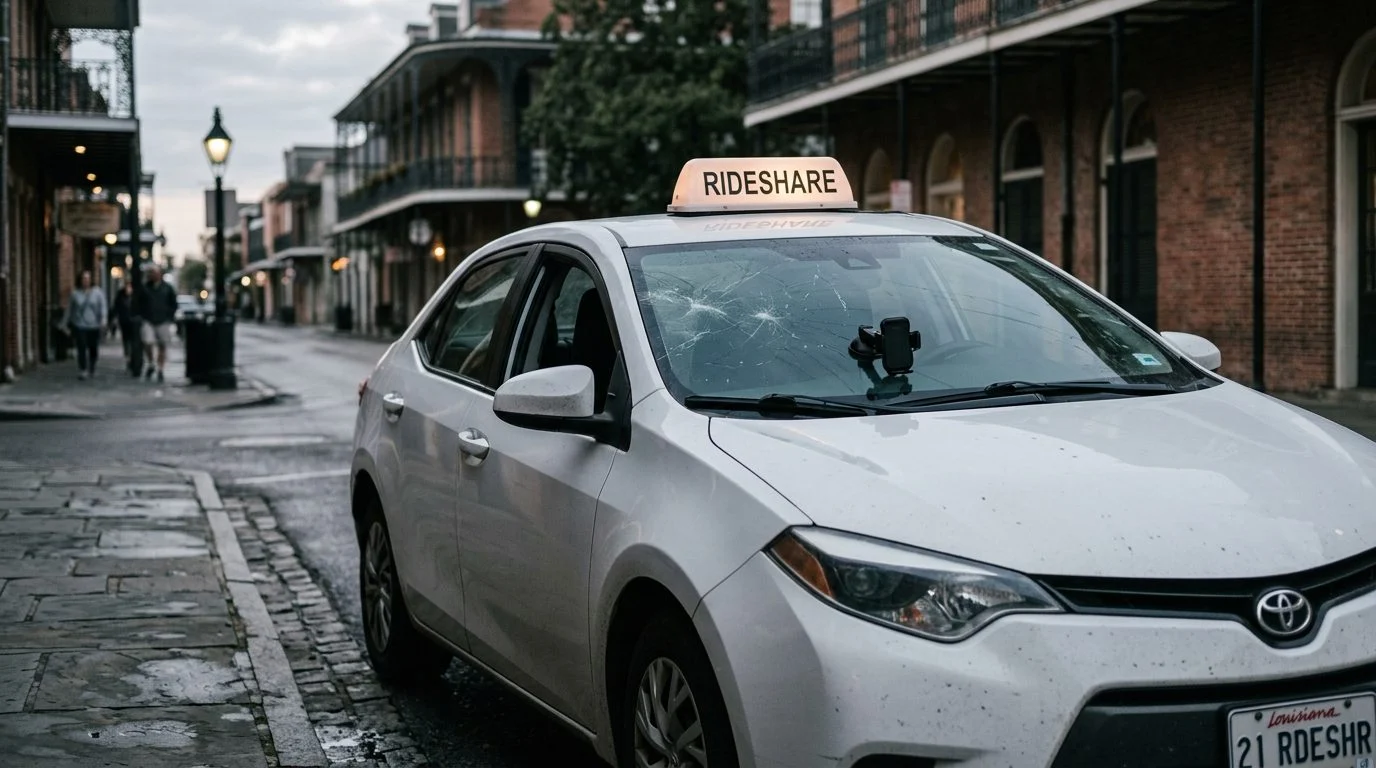
Rideshare Accidents | New Orleans and Louisiana
Hurt in a Rideshare Crash? Start With the Right Questions
Rideshare crashes can involve more than one insurance policy and difficult questions about fault. Przemek Lubecki, the responsible lawyer for this page, works from our New Orleans office with passengers, drivers and families across Louisiana. Your first consultation is free, confidential and without obligation. You may be responsible for case costs and expenses in addition to any fee.
By Przemek Lubecki · Published October 19, 2026
Rideshare Accidents in Louisiana: What Injured Passengers, Drivers and Families Should Know
Rideshare accidents in Louisiana can involve several insurance policies, short deadlines and hard questions about fault. The first fact to pin down is the driver’s app status at the time of the crash. That status can affect which insurance may apply. This guide explains what to check next, in plain language. Przemek Lubecki is the responsible lawyer for this page, and the office is in New Orleans.

Not sure what your next step is?
Talk it through with our team — the first consultation is free, confidential, and carries no obligation.
Rideshare crashes across Louisiana: passengers, drivers and everyone else on the road
A rideshare crash can injure more people than the passenger in the car. The injured person may be a passenger, the app driver, another motorist, a pedestrian or a cyclist. After a fatal crash, a spouse, child, parent or other family member may have a claim too.
Rideshare trips cross Orleans Parish, Metairie, Kenner and Jefferson Parish. They also reach St. Bernard Parish and St. Tammany Parish, including Slidell. A crash on any of these roads can raise the same questions about insurance and fault.
American Trial Lawyer handles rideshare accidents in Louisiana as part of its work on car, truck, commercial vehicle and wrongful death cases. Przemek Lubecki is the responsible lawyer, and the office is in New Orleans.
Why the rideshare app status at the time of the crash matters
The app status at the moment of impact is one of the first facts to confirm. A driver may have the app off, on and waiting for a request, en route to a pickup, or carrying a passenger. Each status can change which insurance may apply.
Several sources of coverage may come into play. These can include the driver’s personal auto policy, coverage tied to the rideshare company and the other motorist’s policy. Louisiana requires motor vehicle liability insurance, according to the Louisiana Office of Motor Vehicles. Auto liability insurance generally pays for injury a driver causes to others in an at-fault crash, according to the Insurance Information Institute.
Louisiana also oversees transportation network companies. The Louisiana Department of Transportation and Development describes the statutory framework and its permit process for services such as Uber and Lyft.
The answer depends on the facts of each crash. Time limits matter too. Louisiana generally gives two years from the day injury is sustained to file a delictual (injury) claim, under La. Civ. Code art. 3493.1. The article has exceptions, so the timing should be checked early.
Common causes of rideshare crashes on Louisiana roads
Many rideshare crashes involve driver conduct that can be examined in a claim. Distraction is one common issue. A driver may look at a phone or in-app navigation instead of the road. Fatigue after a long shift can slow reactions. Impaired driving is another cause that can be investigated.
Some crashes happen during the trip itself. Sudden lane changes, rushed pickups and drop-offs on busy streets, and turns at crowded intersections can all lead to collisions. A driver trying to reach a pickup point quickly may take risks they would not take otherwise.
Other factors matter too. Weather, road conditions and other drivers’ choices can all contribute. The police report, witness statements and vehicle damage help show how the crash happened. Review them together, because each one fills in part of the picture.
Injuries that can appear days or weeks after a rideshare crash
Some injuries do not show up at the scene. Neck pain, back pain, headaches and dizziness can develop after the crash. Pain that seems minor at first can turn out to be part of a larger injury.
Head injuries deserve special attention. Warning signs can include confusion, memory trouble, sensitivity to light and changes in mood or sleep. If you notice any of these signs, get checked by a medical provider promptly.
Medical records create the link between the crash and your injuries. They also affect how medical expenses are counted. Under La. R.S. 9:2800.27, when a health insurer or Medicare paid a contracted provider, recovery of medical expenses is limited to the amount actually paid and any applicable cost sharing. The amount billed is not the measure in those cases. The firm also handles brain injury matters, which often need careful medical documentation.
Evidence and records to preserve after a rideshare crash
Start with the crash report, photos and medical records. A driver in a crash involving injury, death, or property damage over five hundred dollars must give their name, address and registration number. Under La. R.S. 32:398, the driver must also show a license on request to any person injured in the crash, if one is available.
State police or the sheriff’s office investigate crashes outside city limits. The police department investigates crashes inside city limits. The Department of Public Safety and Corrections prepares the crash report forms, which describe the cause, the conditions and the people and vehicles involved.
Photos of the vehicles and scene help. Write down the names and contact details of any witnesses. Keep every bill, receipt and missed-work note.
Rideshare trip records are key evidence. These include pickup and drop-off times and the app status at the time of the crash. These records can be requested as part of a claim, so note the trip date and time now.
Finally, keep a simple written timeline. List your symptoms, medical visits, missed work and out-of-pocket costs. Bring it to your first consultation so nothing gets lost.
Have questions about what happened?
Ask our team directly. The first conversation is free, confidential, and there is no obligation to continue.
Who may share responsibility for your losses
More than one person or company may share responsibility for a rideshare crash. Under La. Civ. Code art. 2315, every act of man that causes damage to another obliges the person by whose fault it happened to repair it.
In some cases, an employer answers for harm caused by an employee under La. Civ. Code art. 2320; art. 2315 also obliges the person by whose fault damage happened to repair it. Under La. Civ. Code art. 2320, this applies to acts in the functions the employee was hired to perform. Responsibility attaches only when the employer might have prevented the act and did not. Whether this applies to a given driver requires review of the facts.
Louisiana also compares fault among everyone involved. Under the current La. Civ. Code art. 2323, which took effect January 1, 2026, a person whose own negligence is equal to or greater than fifty-one percent cannot recover damages. A person whose own negligence is less than fifty-one percent can recover, but the amount of damages is reduced in proportion to that person’s percentage of negligence.
For a fatal crash, the law lists who may sue. Under La. Civ. Code art. 2315.2, a surviving spouse and children may sue first. If none survive, parents may sue, then siblings, then grandparents. The right of action generally prescribes one year from death or two years from the injury, whichever is longer.
The firm may associate or refer a case to other law firms.
What to expect from a free case consultation
The first consultation is confidential and carries no obligation to continue. You can share the crash facts, the report number, photos, medical records and your timeline. The first consultation is free, and you may be responsible for case costs and expenses in addition to the fee.
Przemek Lubecki is the responsible lawyer for this content. He is licensed to practice law in Louisiana. The office serving this page is in New Orleans.
Quick answers
How long do I have to file after a rideshare crash in Louisiana? Louisiana generally gives two years from the day injury is sustained, but the law has exceptions (La. Civ. Code art. 3493.1). Wrongful death claims follow their own timing.
Can I recover if I was partly at fault? Under La. Civ. Code art. 2323, you cannot recover damages if your own negligence is equal to or greater than fifty-one percent. Below that, your damages are reduced by your share.
Is the rideshare company always responsible? No. Responsibility depends on the app status and the specific facts of the trip.
Talk with Przemek Lubecki about your rideshare crash
If you were hurt as a rideshare passenger, driver or pedestrian, or lost a family member in a rideshare crash, you may be facing insurance calls and hard decisions right now. Call 855-LUBECKI to set up a consultation with Przemek Lubecki at the New Orleans office, or request a case evaluation online through the contact page on this website. Bring the crash report number and your timeline.
Why people bring their rideshare cases to us
Passengers, drivers and families
We represent injured passengers, drivers who were hurt, and families who have lost a loved one in a crash.
Clear answers about insurance
We explain how the driver's app status and the available coverage may affect your claim, in plain language.
Serious injury focus
Our practice focuses on truck, car, motorcycle and rideshare crashes, brain injury, and wrongful death cases.
Speak with the lawyer
Przemek Lubecki is the responsible lawyer for this page. Call 855-LUBECKI or reach our New Orleans office to start the conversation.
Think before you speak to an insurer
Insurance companies may contact you soon after a rideshare crash. Before you give a recorded statement or sign any release, consider speaking with a lawyer first.
Information that can help your case
Trip and app details
Screenshots of the app, trip receipts and the time of the crash help show the driver's status when the crash happened.
Photos and scene notes
Photos of vehicles, roadway conditions, traffic signals and visible injuries can be useful later.
Medical records
Keep every visit, diagnosis, bill and prescription, including follow-up care for headaches, memory changes or other symptoms.
Contact information
Write down the names and contact details of the driver, passengers and any witnesses, along with the police report number.
Want to know where you stand?
Tell us what happened and our team will walk you through the options available to you, at no cost.