
Rideshare Accidents | Jefferson Parish
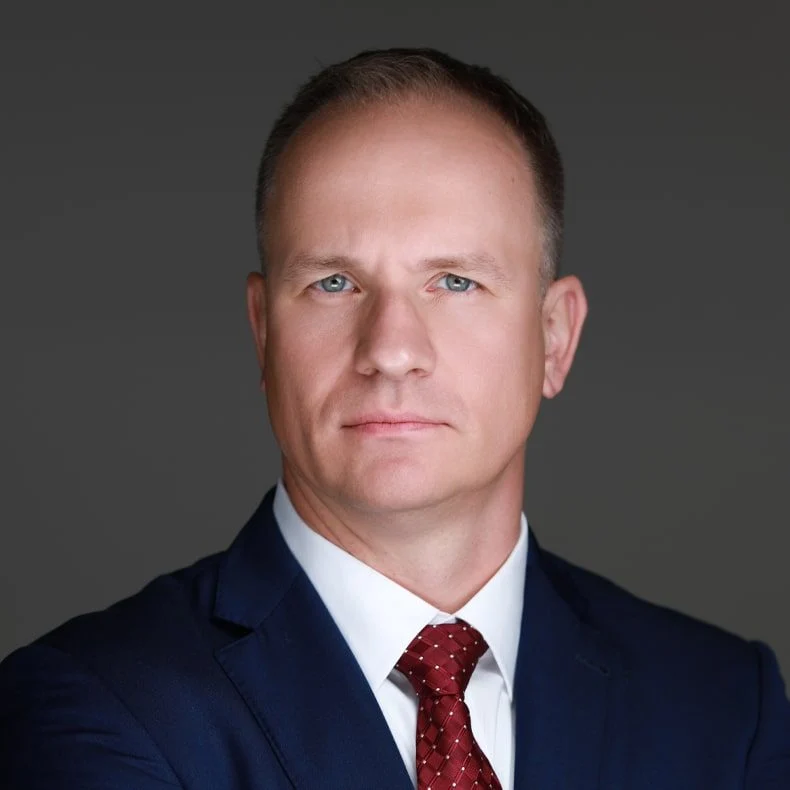
Hurt in a Rideshare Crash in Jefferson Parish? Talk With Przemek Lubecki
Trial lawyer Przemek Lubecki, with an office in New Orleans, represents people injured in rideshare crashes in Jefferson Parish, Metairie, Kenner, and across Louisiana. You may be responsible for case costs and expenses in addition to the fee.
By Przemek Lubecki · Published October 18, 2026
In Louisiana, whether a driver’s rideshare app was on at the time of a crash helps decide which insurance may apply. For rideshare accidents Jefferson Parish families face, one fact often matters most. This page explains those rules in plain language, along with the steps and records that come up after a crash.
Rideshare Crashes on Jefferson Parish Roads
Passengers, drivers, pedestrians and cyclists can all be hurt in a rideshare crash. Families of people killed in these crashes have questions too, and this page is written for them.
Rideshare drivers pick up and drop off riders on busy roads across the parish, including the Westbank Expressway, the Huey P. Long Bridge corridor, Veterans Memorial Boulevard in Metairie and the Causeway approaches. A crash on a route like this can involve several vehicles, a rideshare app and more than one insurance company.
Przemek Lubecki handles rideshare accident cases from the New Orleans office of American Trial Lawyer, LLC. He serves people across Jefferson Parish, including Metairie, Harahan, Kenner, Westwego, Marrero, Gretna and Harvey.
This page gives general information about Louisiana law. Every crash turns on its own facts, so it is not advice about your situation.
If you were hurt in a rideshare crash, you may be dealing with an adjuster, medical bills and questions about who is responsible, all at once. Talk it through with our team — the first consultation is free, confidential, and carries no obligation.
What to Do Right After a Rideshare Crash
Get medical care first, then make sure police respond so a crash report is made. Quick, clear notes help later.
Write down the other vehicle’s plate, the other driver’s name and insurance details, and the rideshare company’s name. Note any witnesses, and take photos of the vehicles, the road and any visible injuries.
Louisiana treats crash reports as confidential. Under La. R.S. 32:398, the report is available only to the parties, parents or guardians of a minor party, insurers, or an insurance support organization under contract to provide claims and underwriting, of any party which is the subject of the report; healthcare providers who rendered services to a party, succession representatives, attorneys of the parties or succession representatives, or a news-gathering organization that requests documents related to a specific crash. Upon request, the report is made available to those persons within seven working days after the crash investigation is complete.
Save your app records too. Take screenshots of the trip, the pickup and drop-off points, and the times shown. The rideshare company keeps its own trip data, so an early written request to keep that data can help.
Gaps in medical treatment can make it harder to link injuries to a crash. Tell your providers about every symptom, even the small ones.
If an insurer asks for a recorded statement, know what Louisiana law provides. Under La. R.S. 13:3732, a person who takes a recorded statement from an injured person must give that person a true and complete copy. The copy is due within twenty days after written demand.
How the App Status Changes Your Insurance
Louisiana’s rideshare insurance rules depend on whether the app is on and whether a passenger is in the car.
The second is a prearranged ride, when the driver is engaged in one.
Under La. R.S. 45:201.6, automobile insurance during the pre-trip acceptance period must be in the amount of not less than fifty thousand dollars for death and bodily injury per person, not less than one hundred thousand dollars for death and bodily injury per incident, and not less than twenty-five thousand dollars for property damage. During a prearranged ride, La. R.S. 45:201.6 requires automobile insurance to be in the amount of not less than one million dollars for death, bodily injury, and property damage. See La. R.S. 45:201.6.
A driver’s personal auto policy may not cover the trip. La. R.S. 45:201.6 provides that a transportation network company may satisfy its obligations under this Section through a policy of insurance obtained by a participating driver only if the transportation network company verifies that the policy is maintained by the driver and is specifically written to cover the driver’s use of a vehicle related to a transportation network company’s digital network, and La. R.S. 45:201.7 provides that insurers that write automobile insurance may exclude coverage for any loss or injury that occurs while a driver is logged on to a transportation network company’s digital network during the pre-trip acceptance period or while a driver is engaged in a prearranged ride. Nothing in that section requires a personal policy to cover them.
Under La. R.S. 45:201.7, the section does not imply or require that a personal automobile insurance policy provide coverage while the driver is logged on to a transportation network company’s digital network during the pre-trip acceptance period or while the driver is engaged in a prearranged ride, and an insurer that excludes such a claim has no duty to defend or indemnify it. That is why the exact time of the crash, backed by app records, is a key fact to document.
Who May Be Responsible After a Rideshare Crash
More than one person or company can share responsibility, and the facts decide who.
Louisiana’s negligence rules say a person whose negligence, imprudence or want of skill causes harm must repair it. Under La. Civ. Code art. 2316, every person is responsible for the damage he occasions not merely by his act, but by his negligence, his imprudence, or his want of skill.
Possible responsible parties include the rideshare driver, another driver whose negligence contributed, and in some cases the rideshare company. For a company, a key question is whether the driver was working for it at the time.
Under La. Civ. Code art. 2320, employers answer for damage caused by workers in the functions they were employed to perform. The article also says responsibility attaches only when the employer might have prevented the act and did not.
Louisiana also divides fault. Under La. Civ. Code art. 2323, if the degree or percentage of negligence attributable to the person suffering injury, death, or loss is equal to or greater than fifty-one percent, that person shall not be entitled to recover damages. The text of La. Civ. Code art. 2323 provides that, when the negligence attributable to the person suffering injury, death, or loss is less than fifty-one percent, the amount of damages recoverable is reduced in proportion to that degree or percentage of negligence.
Under La. Civ. Code art. 2324, a joint tortfeasor is generally not liable for more than its own degree of fault and is not solidarily liable for another’s fault, unless it conspires with another person to commit an intentional or willful act, in which case it is answerable in solido with that person for the damage caused by that act.
A passenger may have claims against more than one party. A pedestrian or cyclist struck by a rideshare vehicle may also have a claim if someone’s negligence caused the harm.
This firm may associate or refer a case to other law firms. If that happens, the firm will tell you.
Records and Deadlines That Matter Most
The records that matter most in rideshare accidents Jefferson Parish claims include the crash report, photos, app trip records, medical records and bills, and lost-wage records.
Keep every bill, pharmacy receipt and pay record. Write a short daily note about pain, activity limits and missed work. Dates, names and phone numbers are easier to use later when written down as they happen.
Deadlines matter too. Under La. Civ. Code art. 3493.1, delictual (tort) actions carry a two-year prescription (filing deadline) that starts on the day injury or damage is sustained. Some exceptions can apply, so each case’s timing needs a close look.
Family members should keep the death certificate and any medical examiner or coroner records. Those papers are central to a wrongful death claim.
When a Rideshare Crash Causes Serious Injury or Death
Serious injuries can need long medical care, and a death gives certain family members their own claim.
Spinal cord injuries are one example. MedlinePlus spinal cord injury notes that motor vehicle accidents can cause spinal cord injuries, which need immediate medical attention. NINDS spinal cord injury states that an injury between the C1 and C4 segments can stop breathing.
Brain injuries can also be serious. Those claims often rest on detailed medical records and medical opinions about how the crash caused the injury.
Wrongful death suits follow La. Civ. Code art. 2315.2. A parent who abandoned the deceased during his minority is treated as not having survived him. A parent who abandoned the deceased during his minority is treated as not having survived him. The deadline is one year from the death or two years from the injury, whichever is longer, except that for medical malpractice actions the right of action prescribes one year from the death of the deceased.
Damages may include loss of consortium, service, and society, under La. Civ. Code art. 2315, and these damages are recoverable by the same respective categories of persons who would have had a cause of action for wrongful death of an injured person. La. Civ. Code art. 2315 reads: “Damages do not include costs for future medical treatment, services, surveillance, or procedures of any kind unless such treatment, services, surveillance, or procedures are directly related to a manifest physical or mental injury or disease.” For a person who has died, the injured person’s own damages are covered by the survival rules in La. Civ. Code art. 2315.1.
For an overview of these claims, see our rideshare accident claims overview.
Not sure what your next step is?
Talk it through with our team — the first consultation is free, confidential, and carries no obligation.
Talk With Przemek Lubecki About Your Rideshare Crash
If you were hurt in a rideshare crash, you may be dealing with an adjuster, medical bills and questions about who is responsible, all at once. A conversation can help you sort out which insurance and which parties may be involved.
Przemek Lubecki is the lawyer responsible for this page’s content. He is licensed to practice law in Louisiana, and the office is in New Orleans. The firm also serves readers in Kenner, St. Bernard Parish and Slidell.
If an adjuster is pressing you or bills are piling up, you don’t have to work out who is responsible alone. Request a case evaluation or call 855-LUBECKI to speak with the New Orleans office. The first consultation is free, confidential and comes with no obligation to continue. You may be responsible for case costs and expenses in addition to the fee.
Common Questions
Does my personal auto policy cover me if I was driving for Uber with the app on?
It may not. Louisiana law lets insurers exclude coverage during the app-on periods.
Do the same rules apply to rideshare accidents Jefferson Parish crashes?
The general negligence rules apply to any crash. Louisiana’s rideshare insurance statutes add rules for the app-on periods.
How long do I have to file a rideshare injury claim?
Louisiana generally gives two years from the day of injury for tort claims, though some exceptions can apply (La. Civ. Code art. 3493.1).
Can I still recover damages if I was partly at fault?
Possibly. Under La. Civ. Code art. 2323, a person whose negligence is less than fifty-one percent may still recover damages, but the amount recoverable is reduced in proportion to that negligence.
Can I get a copy of my recorded statement?
Yes.
What Sets a Rideshare Case Apart
Insurance Questions Take Careful Review
A rideshare crash can involve more than one insurance policy, depending on what the driver was doing at the time.
Focused Trial Representation
Przemek Lubecki is a trial lawyer who prepares each case as though it may go before a jury, from the first investigation to the final day.
Our office is in New Orleans, and we serve injured people and families throughout Jefferson Parish, Metairie, Kenner, and the surrounding area.
Clear Communication
We explain your options in plain language and keep you informed as your case moves forward.
Be Careful With Early Insurance Contact
Insurance adjusters may reach out quickly after a crash. Before you give a recorded statement or sign any paperwork, consider speaking with a lawyer who can explain what you are being asked to do.
How We Work With You
1. Free Consultation
Call 855-LUBECKI or request a case evaluation. Your first consultation is confidential and carries no obligation to continue. You may owe case costs and expenses in addition to any fee.
2. Case Review
We gather the facts of your crash, including the rideshare app status, the medical records, and the insurance information that may apply.
3. Clear Next Steps
We explain what we see in your case and what options are available, so you can decide what makes sense for you.
4. Referral Disclosure
Our firm may associate or refer a case to other law firms. If that is a possibility for your matter, we will tell you before any decision is made.