
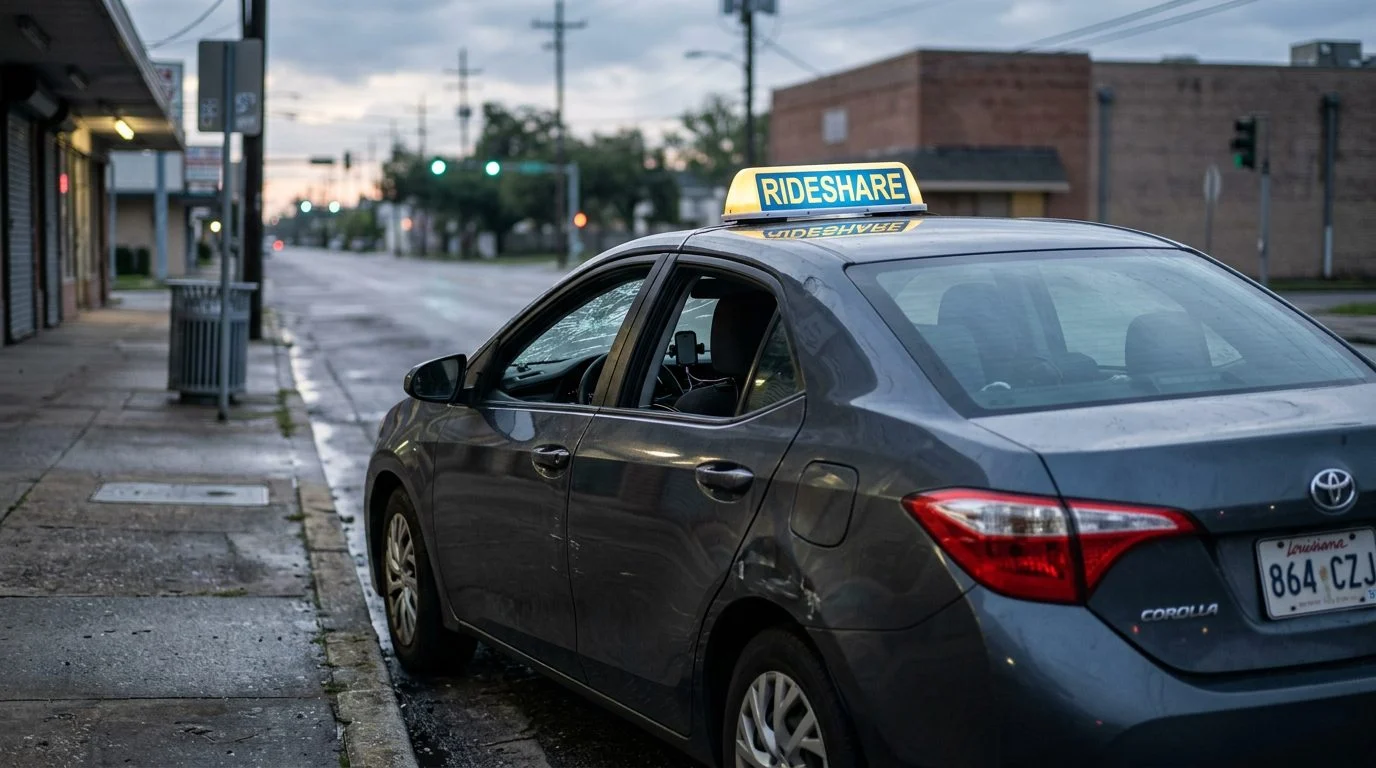
Rideshare Wrongful Death | Metairie and New Orleans
When a Rideshare Trip Ends in a Fatal Crash, Your Family Deserves Answers
Przemek Lubecki, trial lawyer, represents families who lost a loved one as a passenger in a rideshare crash. Office in New Orleans, serving Metairie, Jefferson Parish and across Louisiana. Your first consultation is free, confidential and without obligation.
By Przemek Lubecki · Published October 23, 2026
Who This Page Is For and What We Handle
If a rideshare passenger died in a crash, Louisiana law may allow certain family members to bring a wrongful death claim. American Trial Lawyer represents families in these cases. Przemek Lubecki is the responsible lawyer for this page, and the New Orleans office handles these matters.
Families in Metairie, Jefferson Parish, Kenner, St. Bernard Parish, Slidell and across Louisiana may contact the New Orleans office. We also handle truck accidents, car accidents, commercial vehicle accidents, motorcycle accidents, brain injury and negligent security matters. This page focuses on rideshare passenger deaths.
The first consultation is free, confidential and without obligation. Call 855-LUBECKI or request a free case evaluation to talk with the New Orleans office.
If a rideshare trip ended in your loved one's death, you don't have to face the crash report, insurance questions and deadlines alone. Reach out to our New Orleans office. Talk it through with our team — the first consultation is free, confidential, and carries no obligation.
What a Rideshare Passenger Wrongful Death Claim Covers
A wrongful death claim lets eligible family members seek damages after a person dies because of another party’s fault. Louisiana law sets the order of who may bring it. Under La. Civ. Code art. 2315.2, the surviving spouse and children come first. If there is no spouse or child, the surviving parents may sue, unless a father or mother abandoned the deceased during his minority, in which case that parent is deemed not to have survived him. Brothers and sisters and then grandparents follow, depending on who survived.
A related claim is the survival action. Under La. Civ. Code art. 2315.1, the right to recover damages for injury the person suffered before death can pass to the same family members. If there is no family member in those classes, the succession representative may pursue it.
Families often discuss several kinds of loss with counsel:
- Medical and funeral expenses
- Lost income and financial support
- Loss of companionship and guidance
- Loss of the future the person would have had
A criminal case and a civil claim are separate matters. Each follows its own process. If the driver’s intoxication while operating a motor vehicle was a cause in fact of the injuries, Louisiana law allows exemplary damages, in addition to general and special damages, upon proof that the injuries were caused by a wanton or reckless disregard for the rights and safety of others, under La. Civ. Code art. 2315.4.
Who May Be Responsible After a Rideshare Crash
Responsibility depends on the facts of each crash, and more than one party may be involved. Families often look at these possibilities:
- Another driver whose speeding, distraction or impairment helped cause the crash.
- The rideshare driver, whose conduct at the time of the crash matters.
- An employer or company, in some cases. Under La. Civ. Code art. 2320, employers answer for damage caused by employees in their work, but only when the employer might have prevented the act and did not.
- Article 2320 of the Louisiana Civil Code makes masters and employers answerable for the damage caused by their servants and overseers in the exercise of the functions in which they are employed, and makes teachers and artisans answerable for damage caused by their scholars or apprentices while under their superintendence. It does not mention vehicle owners.
Insurance works differently than many families expect. Louisiana’s direct action statute, La. R.S. 22:1269, generally does not allow an injured person to bring a claim directly against the at-fault party’s liability insurer, except in listed situations such as the insured’s insolvency or bankruptcy, the insured’s death, or a claim against an uninsured-motorist carrier. Direct action is allowed only in certain situations, such as when the insured is insolvent or bankrupt.
Under La. Civ. Code art. 2323, if a person suffers injury, death, or loss partly as the result of his own negligence and partly as the result of the fault of another person or persons, and the degree or percentage of negligence attributable to that person is equal to or greater than fifty-one percent, then that person is not entitled to recover damages; but if the other fault is that of an intentional tortfeasor, the claim is not reduced. A smaller share reduces damages in proportion.
If we associate or refer a case to other law firms, the family will be told.
Evidence Families Should Ask About Early
Early evidence matters because records and vehicles can change or disappear. The most useful items usually include:
- The crash report. Under La. R.S. 32:398, crash reports are confidential and are available only to the parties, parents or guardians of a minor party, insurers or insurance support organizations under contract for claims and underwriting, healthcare providers who treated a party, the succession representatives or attorneys of the parties, and news-gathering organizations that request documents related to a specific crash. Upon request, they are available within seven working days after the investigation is complete.
- Photographs and video. Police agencies provide crash photos and video recordings to any interested person on request, and may charge a reasonable fee for copies.
- Trip details from the rideshare app, such as pickup and drop-off times and the route. These details can show what happened during the trip.
- Vehicle records. Repairs or sales can remove damage and data, so ask early about preserving the vehicle.
- Death and coroner records. A coroner must report a crash death to the state transportation department within sixty days, with the crash circumstances, under La. R.S. 32:398.
- A simple written list of medical bills, funeral costs, lost income and daily family losses.
How the Process Works, Step by Step
Most cases start with a free, confidential consultation, then move through record review, investigation, insurance discussions and, if needed, a lawsuit. Timelines vary, and no two cases move at the same pace.
- Consultation. The family shares the basic facts, and the lawyer explains the options.
- Record review. The team reviews the crash report, trip records, medical and death records and insurance information.
- Identifying parties. The team looks at who may be responsible and which insurers may be involved.
- Investigation. Records requests and evidence preservation steps begin.
- Negotiation. The family is kept informed as insurers respond.
- Lawsuit, if needed. If a fair resolution is not reached, the case may be filed and prepared for trial.
Deadlines matter. Under La. Civ. Code art. 2315.2, the wrongful death right of action prescribes one year from the death or two years from the injury, whichever is longer. General delictual actions are subject to a two-year period under La. Civ. Code art. 3493.1. Because dates depend on the facts, families should talk with a lawyer early.
Why Families Bring Their Case to American Trial Lawyer
American Trial Lawyer is a trial law firm. We plan each case with the possibility of a courtroom in mind, so evidence and deadlines stay organized from the start.
- Responsible lawyer: Przemek Lubecki, with the New Orleans office serving Orleans Parish, the New Orleans metro and Louisiana.
- Support staff help with scheduling and communication, so families are not left managing every detail alone.
- Plain-language updates. Each step is explained, including the decisions the family controls.
- No promised outcome. Every case depends on its own facts, evidence and law. No lawyer can promise a result, and this page does not promise one.
Not sure what your next step is?
Talk it through with our team — the first consultation is free, confidential, and carries no obligation.

Frequently Asked Questions
Can we still bring a claim if the driver was charged with a crime?
Yes, a civil claim and a criminal case are separate matters. The civil claim is reviewed on its own facts.
Who can file a wrongful death claim in Louisiana?
Louisiana law lists eligible family members in order, starting with a spouse and children. The consultation reviews who may qualify.
What if the death happened weeks after the crash?
Timing still matters, because the deadlines run from set dates. Talk with a lawyer soon.
Does the consultation cost anything?
The first consultation is free, confidential and without obligation.
Will the firm handle the case alone?
The firm may associate or refer a case to other law firms, and the family will be told if that happens.
If a rideshare crash took someone your family loved, you don’t have to work through the crash report, insurance questions and deadlines alone. Reach out to our New Orleans office.
How We Approach a Rideshare Wrongful Death Case
Compassion First
We understand that a sudden loss is painful. We listen carefully and give your family time to ask questions at your own pace.
Careful Investigation
Rideshare crashes can involve more than one driver, company and insurer. We focus on gathering the records and facts that matter to your family's situation.
Trial-Ready Preparation
Our approach is built on preparing every case as if it may need to be tried before a jury, so families are not left without a plan.
Clear Communication
We explain each step in plain language so you know what is happening and what to expect next.
Good to Know
This firm may associate or refer a case to other law firms. Tell us about your loss during your free consultation, and we will explain how any case would be handled.
Questions Families Often Ask
Can we still bring a claim if the driver was charged with a crime?
A criminal case and a civil claim are separate matters. A civil claim is reviewed on its own facts, and we can discuss how that applies to your family during a consultation.
Who can bring a wrongful death claim in Louisiana?
Louisiana law lists eligible family members in a specific order. Your consultation is a good place to review who may qualify and what information will be needed.
What should we do first?
Keep any messages, receipts and trip details you have, and write down what you remember. Then call us so we can talk through your family's next steps.