
Wrongful Death | New Orleans, Louisiana
Fatal Crash Report in Louisiana: A Plain-Language Guide to Getting One
After a fatal crash, families often need the official report. Przemek Lubecki and the team at American Trial Lawyer, LLC, based in our New Orleans office, explain how to request it and what to expect.
By Przemek Lubecki · Published November 2, 2026
If you are asking how do I get a fatal crash report in Louisiana, start with the agency that investigated the crash. That agency creates the report and owns it. You request your copy from its records unit, after confirming you qualify to receive it.
This page is general information, not legal advice. It explains where the report comes from, how to ask for it, and what it can and cannot show.
What a Fatal Crash Report Is and Why Families Ask for It Early
A fatal crash report is the official record a law enforcement agency creates after a crash that causes a death. It holds more detail than a routine crash report.
La. R.S. 32:398 makes these crash reports confidential and limits who may receive them. The same statute, La. R.S. 32:398, makes these reports confidential. Only certain listed people can receive them.
Families often ask for the report early for a simple reason. It puts the date, time, place, vehicles, and people involved in one document. That can help when you are trying to understand what happened.
Asking for paperwork soon after a death can feel painful. That reaction is normal. Taking one small, specific step at a time can make a hard season feel more manageable.
If you are holding a fatal crash report and wondering what comes next, our team invites you to talk with Przemek Lubecki about it. Talk it through with our team — the first consultation is free, confidential, and carries no obligation.
Which Agency Issues the Report in Louisiana
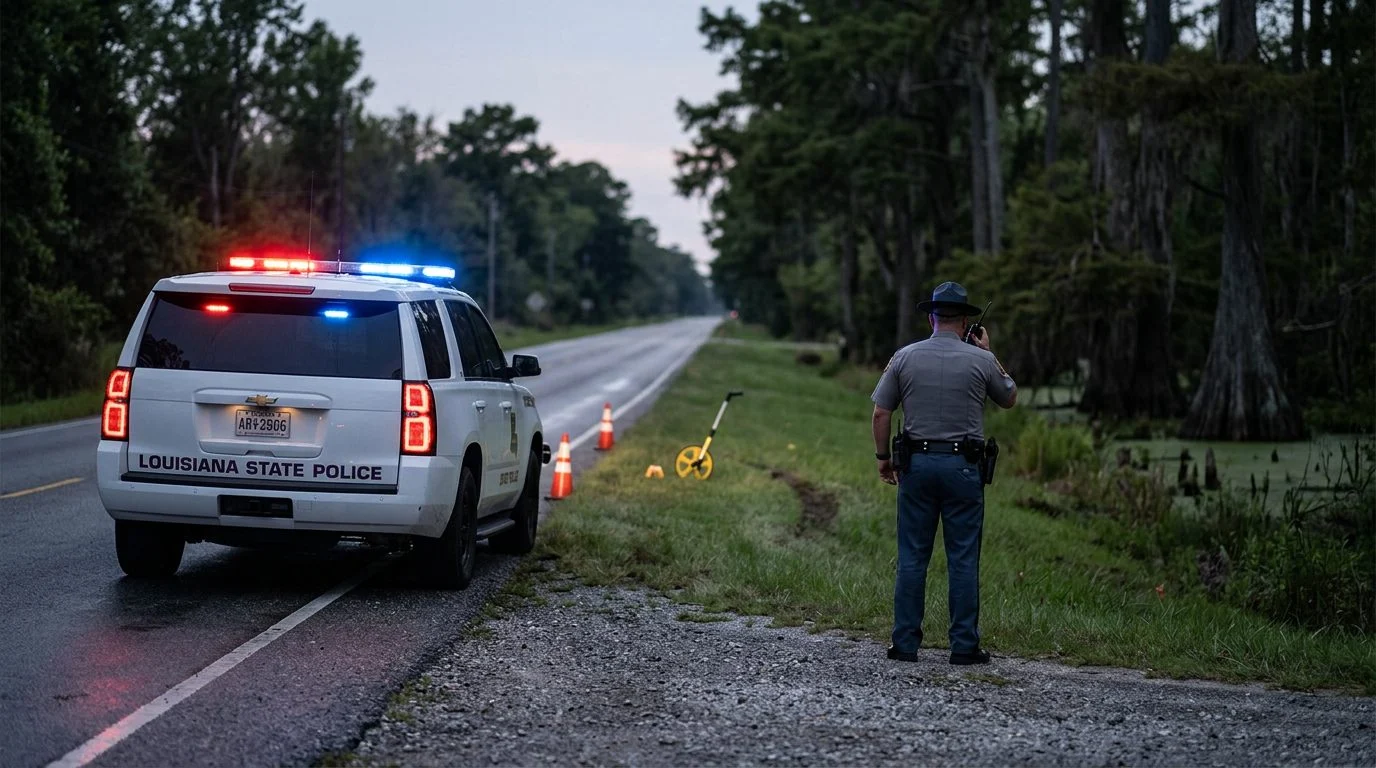
The investigating agency issues the crash report, so your request starts there. The responding unit depends on where the crash happened. In the New Orleans area, it may be the New Orleans Police Department. On state roads, it may be the Louisiana State Police. In some parishes, a sheriff’s office handles the investigation.
The city, parish, or highway where the crash occurred usually decides which agency investigated. A crash on a highway may fall to a different unit than one on a city street.
Before you call, write down what you know:
- The crash date and approximate time
- The roadway, intersection, or mile marker
- Any incident or case number given at the scene
- The name or badge number of an officer, if someone gave it to you
These details help the agency find the right file.
How to Request the Fatal Crash Report Step by Step
To request the report, confirm the agency first. Then ask its records unit for its current process.
- Confirm the basics. Gather the crash date, the location, and the full names of the people involved.
- Contact the records or crash report unit. Ask whether requests are made online, in person, or by mail. The agency sets its own requirements.
- Ask whether the report is final. Fatal investigations may take longer than other crashes. Under La. R.S. 32:398, reports must be made available to listed persons within seven working days after the investigation is completed.
- Show proof of your role. You may need identification or proof of relationship. The statute lists who may receive reports, including the parties to the crash, their insurers, and succession representatives. Ask the agency whether you qualify. Don’t assume a family tie settles access on its own.
- Ask about fees. The statute allows agencies to charge a reasonable fee for copies of photographs, video recordings, audio recordings, extraordinary-sized documents, and documents stored on electronic media.
- Keep a record. Save a copy of your request and any reference number.
What the Report Usually Contains and What It Does Not Settle
A crash report records what the investigating officer saw and was told at the scene. It usually includes the date, time, and location. It also lists the vehicles and drivers involved.
It may include a diagram, the officer’s written narrative, and witness details when they are recorded. For highway crashes, the state’s electronic crash forms are built to disclose the cause, the conditions at the time, and the persons and vehicles involved. See La. R.S. 32:398.
The report is not the final word. It captures what was observed and reported at the time. Photos, witness accounts, and repair records may add to that picture or show it differently.
A report is one important piece of evidence. By itself, it does not decide who is responsible. How much weight a particular report carries depends on the facts of the crash.
Other Records That Can Work Alongside the Crash Report
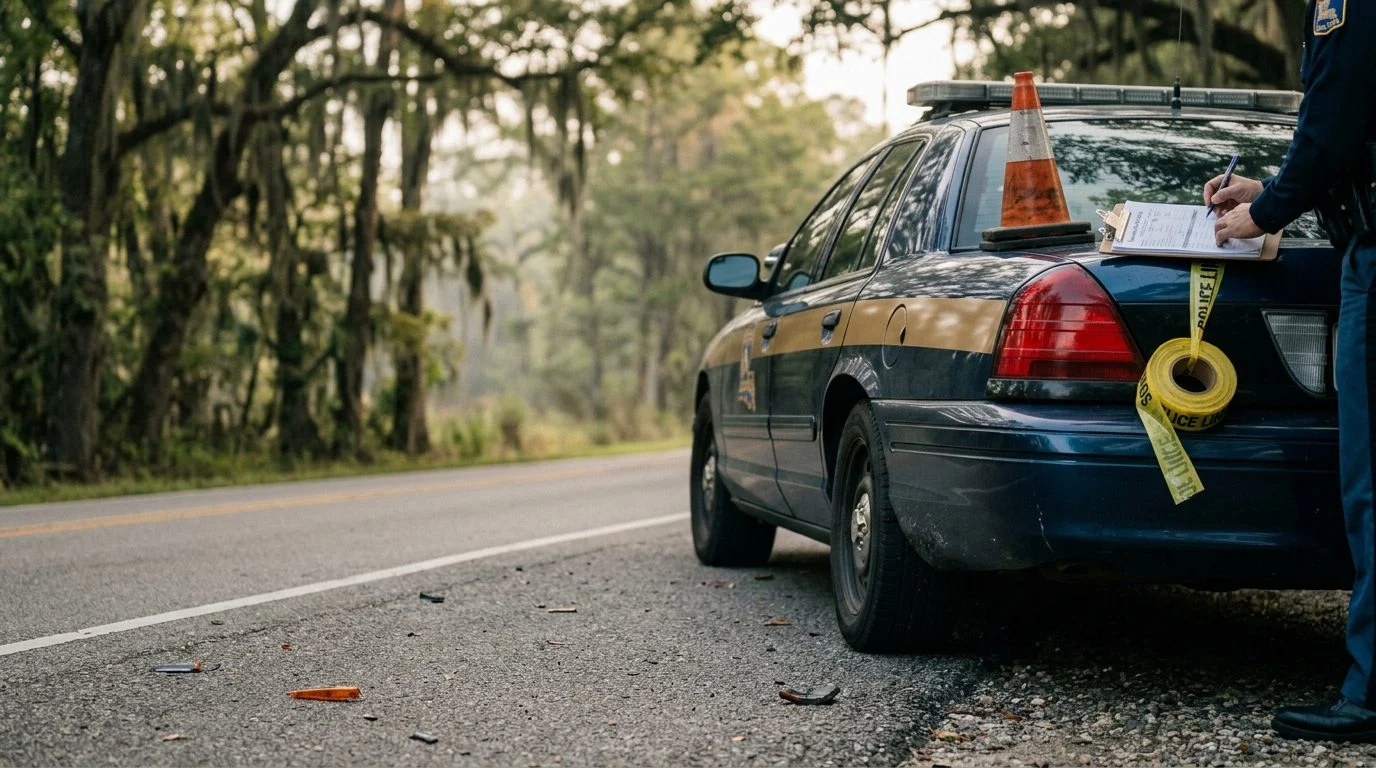
Other records often fill gaps the crash report leaves open. Gathering them early gives you a fuller picture to review later.
- Photos and video. Pictures taken by family members, witnesses, or responders can show the scene. Agencies may also hold photos and recordings for a fee.
- Witness details. Names and phone numbers gathered soon after the crash can matter if memories change.
- Vehicle and repair records. Damage records and repair estimates document what happened to each vehicle.
- Commercial vehicle paperwork. In truck and commercial vehicle crashes, trip and inspection records may be relevant. Under 49 CFR § 395.20, this subpart applies to ELDs used to record a driver’s hours of service under § 395.8(a), and an ELD used after December 18, 2017 must meet the requirements of this subpart.
- Insurance information. The Department of Public Safety and Corrections keeps a record of insurance declared after an accident. An interested person can make a written request and pay a fifteen dollar fee to have that information forwarded, under La. R.S. 32:871.
- Medical and emergency response records. These can document the timeline and the injuries involved.
Reviewing these records together with the crash report gives a fuller view than the report alone.
Why Timing Matters in a Wrongful Death Matter
Louisiana sets a filing deadline for wrongful death claims. This deadline, called prescription (a time limit to file), is one year from the death or two years from the injury, whichever is longer. Under the current text, the right to sue prescribes one year from the death or two years from the day the injury was sustained, whichever is longer, except that for medical malpractice actions it prescribes one year from the death of the deceased. See La. Civ. Code art. 2315.2. See La. Civ. Code art. 2315.2.
The same article also sets who may sue. The surviving spouse and children come first. If there is no spouse or child, the surviving parents may sue, except that a father or mother who has abandoned the deceased during his minority is deemed not to have survived him. Siblings and then grandparents follow, in that order, when no closer relative survives.
Louisiana also uses comparative fault (shared fault). Under La. Civ. Code art. 2323, as amended effective January 1, 2026, if a person suffers injury, death, or loss partly as the result of his own negligence and partly as a result of the fault of another person or persons, and the degree or percentage of negligence attributable to that person is equal to or greater than fifty-one percent, that person shall not be entitled to recover damages. This bar does not apply where the other fault is that of an intentional tortfeasor. Under La. Civ. Code art. 2323, if a person suffers injury, death, or loss partly as the result of his own negligence and partly as a result of the fault of another person or persons, and the degree or percentage of negligence attributable to that person is less than fifty-one percent, the amount of damages recoverable shall be reduced in proportion to that degree or percentage of negligence. This reduction does not apply where the other fault is that of an intentional tortfeasor.
Early review of the crash report helps families see the timeline before important decisions are made. Keep the report, photos, and any letters from insurers in one folder.
American Trial Lawyer may associate or refer a case to other law firms. A wrongful death or crash matter may be handled that way.
Not sure what your next step is?
Talk it through with our team — the first consultation is free, confidential, and carries no obligation.
Reviewing the Crash Report With Przemek Lubecki
Przemek Lubecki is the responsible lawyer for this page. He is a trial lawyer who represents families in wrongful death cases.
The firm’s office is in New Orleans. The firm serves Orleans Parish, the New Orleans metro area, and Louisiana. The first consultation is free, confidential, and without obligation to continue.
Bring the crash report, any photos, insurer letters, and medical or emergency response records you have. Write down your questions. A consultation is a good place to go through them together.
How do I get a fatal crash report in Louisiana?
Ask the agency that investigated the crash for its report. Confirm first that you qualify to receive it under La. R.S. 32:398.
How long does it take to get the report?
Under La. R.S. 32:398, upon request, crash reports must be made available to the listed persons within seven working days following the completion of the crash investigation. Fatal investigations may take longer.
Does the crash report decide who is at fault?
No. A crash report records what was observed and reported at the time. It is one piece of evidence and does not decide fault by itself.
If you’re holding a fatal crash report and unsure what comes next, call 855-LUBECKI or request a free case evaluation.
How to Request the Report
1. Identify the investigating agency
The agency that investigated the crash holds the official report. Knowing which agency responded is the first step.
2. Gather the basic crash details
Have the date, location, and names of the parties involved, along with any case or reference numbers you have, ready when you make your request.
3. Submit a written request
Ask the agency for the report in writing and keep copies of everything you send and receive.
4. Review the report with a lawyer
Reports can be detailed and technical. A lawyer can help you read the report and understand what it contains. American Trial Lawyer, LLC may associate or refer a case to other law firms.
Keep Your Family's Questions in View
Reports can take time to arrive, and the information in them may be incomplete or open to interpretation. Do not rely on a single document alone. Keep copies of all correspondence and bring any questions to a lawyer as soon as you can.
Why Families Contact American Trial Lawyer
Focus on serious injury and loss
The firm focuses on truck, car, commercial vehicle, rideshare, and motorcycle crashes, as well as wrongful death and brain injury cases.
Trial-focused representation
Przemek Lubecki is the responsible lawyer for this page. The firm prepares each case as though it may go to trial.
A free first consultation
Your first consultation is free, confidential, and comes with no obligation to continue.
Based in New Orleans
Our New Orleans office serves families in Orleans Parish, the New Orleans metro, and across Louisiana.