
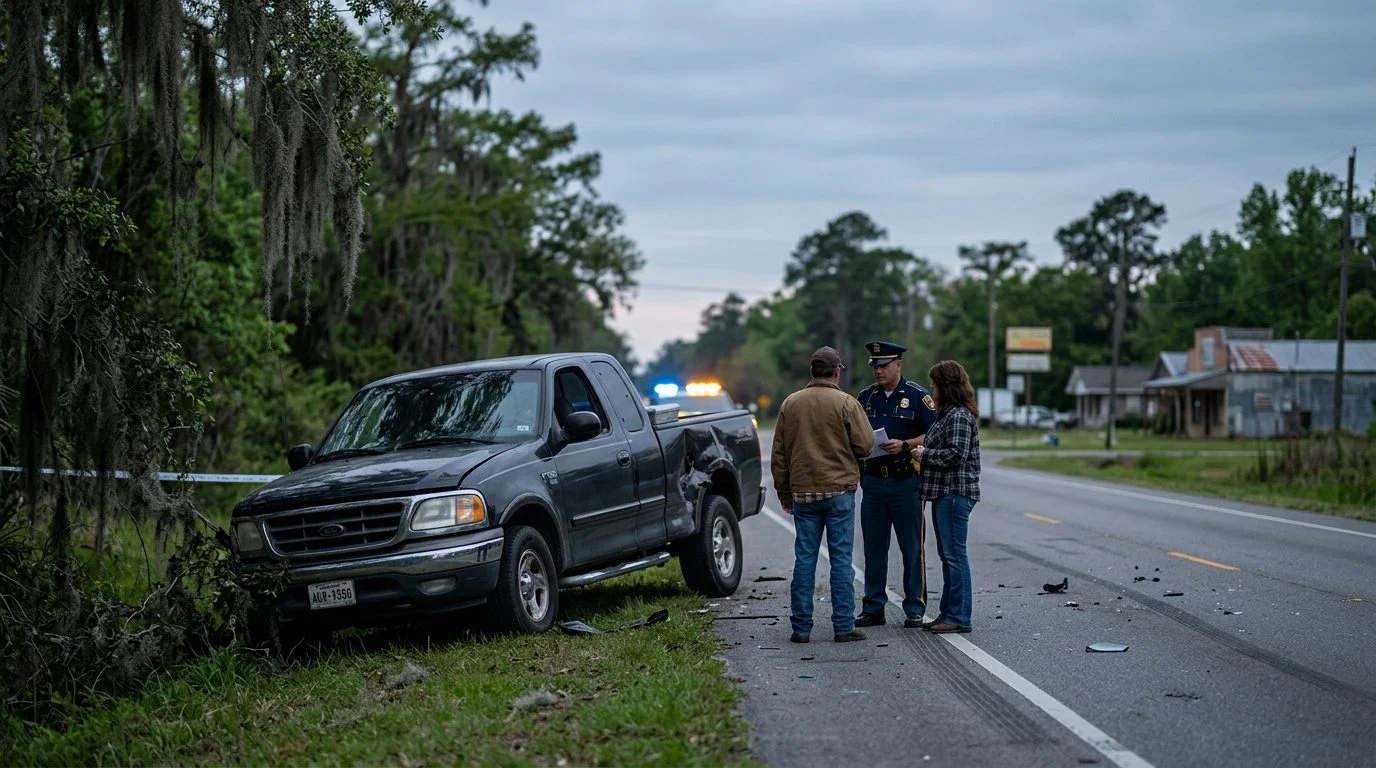
Wrongful Death | New Orleans, Louisiana
Before You Speak With an Insurance Adjuster After a Louisiana Crash Death
Insurance companies may reach out quickly after a fatal crash, often while your family is still grieving. Przemek Lubecki and our team at our New Orleans office can help you understand your options before you answer questions.
By Przemek Lubecki · Published October 30, 2026
Where Your Family May Be Right Now
Should I talk to the insurance company after a loved one died in a crash in Louisiana? You can take time before you do, and it helps to know what that call is for.
Losing someone in a crash is hard. Families often get phone calls, paperwork and decisions in the same days they are making funeral plans. This page covers one common question: whether to speak with an insurer, and what to think about first. It is general information about Louisiana crash claims, not advice about your family’s case. For the broader steps, read our guide on filing a wrongful death lawsuit in Orleans Parish. Przemek Lubecki is the responsible lawyer for this page, and the firm’s office is in New Orleans.
If your family is weighing that insurance call while still grieving, you don't have to sort it out alone, and our New Orleans office offers a free, confidential first consultation. Talk it through with our team — the first consultation is free, confidential, and carries no obligation.

Who the Other Driver’s Adjuster Works For
The adjuster calling your family works for an insurance company, not for your family. An adjuster for the at-fault driver’s insurer works for that insurer, which has its own financial interest in the claim. Calls can come quickly after a death, sometimes before the family has spoken with anyone else. The tone may be friendly. Even so, questions about the decedent’s health, habits, driving or the minutes before the crash can shape how the claim is valued later.
You can ask a few plain questions. Who is calling? Which insurer and claim number apply? Can all further contact be in writing? Under La. R.S. 32:398, a driver involved in a crash resulting in injury to or death of any person, or property damage in excess of five hundred dollars, must give their name, address, and the registration number of the vehicle they were driving to any person injured in the crash or to the driver or occupant of, or person attending, any vehicle or other property damaged in the crash. La. R.S. 32:398 says that when the investigating officer has reason to believe a driver has a medical condition that is cause for license revocation or suspension, notification goes to the office of motor vehicles’ medical/conviction unit, “provided that the law enforcement officer first consults with his superior officer as to his specific observations and his superior officer concurs with the issuing officer’s belief.” Separately, the investigating law enforcement officer must instruct each driver to report the name of the liability carrier for the vehicle and the name, address, and telephone number of the insurance agent who procured the liability policy to all parties suffering injury or property damage as an apparent result of the crash. Those details give you a starting point. They do not mean you must answer every question on the first call.
Recorded Statements and Your Right to a Copy
A recorded statement is an account given to an insurer and captured on audio, video or in writing. You can ask for the request in writing and ask to schedule it for a later date. You can also tell the adjuster that your family is not ready to talk. Only people with direct knowledge of the crash should describe what happened. A relative who was not present should say so, rather than guess at the sequence of events.
Louisiana law gives a right to a copy. Under La. R.S. 13:3732, a person who takes a recorded statement from an injured person must give that person a true and complete copy. On written request, the copy is due within twenty days. The statute also covers the injured person’s personal representative, so keep a copy of any written request you send. Write down the date, time, caller’s name and what was asked, while memory is fresh.
Your Family’s Own Auto Policy and Prompt Notice
Your family may have its own auto policy, and that policy may include uninsured or underinsured motorist coverage. Under La. R.S. 22:1295, this coverage protects insured persons who are legally entitled to recover nonpunitive damages from owners or operators of uninsured or underinsured vehicles. That includes death resulting from bodily injury. The named insured may reject this coverage, choose lower limits or choose economic-only coverage.
The same statute says the coverage does not apply in some situations. One is bodily injury or death while occupying a vehicle owned by the insured, if that vehicle is not described in the policy or is not a newly acquired or replacement vehicle covered under the policy; this exclusion does not apply to uninsured motorist coverage provided in a policy that does not describe specific vehicles. Report the loss to your own insurer promptly, since the policy may require it. Read the policy before giving any statement. Medical payments coverage, if listed, may apply to some expenses under its terms. Keep copies of every policy page, letter, claim number and adjuster name in one folder.
Settlement Offers, Releases and Filing Deadlines
An early settlement offer often comes with a release. A release is a legal document, and signing it can end the claim. Read it closely. Do not sign until you understand what rights it gives up.
Louisiana sets time limits by statute. Under La. Civ. Code art. 2315.2, a wrongful death right of action prescribes one year from the death or two years from the day the injury or damage is sustained, whichever is longer. Prescription is the legal time limit to file. The survival action under La. Civ. Code art. 2315.1 runs on the same periods. Claims under uninsured motorist provisions follow a separate two-year period from the accident, under La. R.S. 9:5629.
Deadlines have changed in recent years, and the date of death can matter. Do not assume you have more time than the law gives.
Records to Gather Before Any Insurance Conversation
The most useful records are the crash report, the decedent’s medical and emergency records, and receipts for funeral and other expenses. Under La. R.S. 32:398, crash reports are confidential. On request, they are made available only to certain people, such as the parties to the crash, their insurers, succession representatives and the parties’ attorneys, within seven working days after the investigation is completed, under La. R.S. 32:398.
Preserve phone records, photos and messages connected to the crash. Do not delete anything, even messages that seem unimportant. Some evidence is time-sensitive. Review traffic camera and 911 recordings soon after the crash. Medical records after a death have their own steps, covered in medical records after a loved one dies. If other people were hurt in the same crash, see combined claims in a multi-vehicle crash.
Not sure what your next step is?
Talk it through with our team — the first consultation is free, confidential, and carries no obligation.
Talk With a New Orleans Trial Lawyer Before You Talk to the Insurer
A conversation with a lawyer before you speak with the insurer can help your family sort through these steps. Przemek Lubecki is the responsible lawyer for this page, and the firm’s office is in New Orleans. The firm may associate or refer a case to other law firms.
Quick Answers to Common Questions
Do I have to give a recorded statement to the insurer?
You can ask for the request in writing and ask to schedule it for later.
Who can bring a wrongful death claim in Louisiana?
Under La. Civ. Code art. 2315.2, a surviving spouse and children may sue first. If the deceased left no spouse or child surviving, either parent may sue, unless that parent abandoned the deceased during his minority, in which case that parent is deemed not to have survived him; then siblings if no parent survives, then grandparents if no sibling survives.
How long does a family have to file?
Louisiana sets the time limit by statute, and the date of death matters. Review the timing early.
If your family is weighing that insurance call while still grieving, you don’t have to sort it out alone. Call 855-LUBECKI or request a free case evaluation to schedule a free, confidential first consultation, with no obligation to continue, at our New Orleans office.
A key warning
An insurance adjuster works for the insurance company, not for your family. Anything you say, including in a recorded statement, can be used when the company evaluates the claim. You can ask for any request to be made in writing and scheduled for a later date.
Practical steps while you decide what to do
Ask who is calling
Get the adjuster's name, the company they represent and the reason for the call. Write these down before you discuss the crash.
Ask for requests in writing
Ask for any request for information or a statement in writing, and schedule it for a time when you have had a chance to talk with a lawyer.
Keep your records together
Keep the police report number, medical and funeral bills, photos, and any letters or forms from the insurer in one place.
Speak with a lawyer first
Przemek Lubecki can explain what to expect from the insurer and what questions to raise before you make decisions about the claim.
How the firm can help your family
Free, confidential first consultation
The first consultation is free, confidential and without obligation to continue.
Office in New Orleans
Przemek Lubecki, the responsible lawyer for this page, works from our New Orleans office and serves families in Orleans Parish, the New Orleans metro and across Louisiana.
Possible referral to other firms
The firm may associate or refer a case to other law firms.