
Wrongful Death · New Orleans, Louisiana
If Your Loved One Was Partly at Fault, Your Family Still Has Questions
Louisiana's fault rules can be complex in wrongful death cases. Przemek Lubecki of American Trial Lawyer, LLC, with our office in New Orleans, helps families understand where their situation stands. We may associate or refer a case to other law firms.
By Przemek Lubecki · Published October 24, 2026
Can my family still sue if my loved one was partly at fault in a crash? In most cases in Louisiana, the answer is usually yes. Partial fault usually lowers what a family can recover, but it doesn’t automatically end the claim. This guide explains how Louisiana law treats shared fault, how fault gets decided after a New Orleans-area crash, and what families should know about insurers. Every crash has its own facts, so every claim needs its own review.
The Short Answer: Partial Fault Does Not Automatically End a Family’s Claim
A family may usually still bring a wrongful death claim when the person who died is found partly at fault. Louisiana uses comparative fault, which means shared fault. Under La. Civ. Code art. 2323, the fault of every person who contributed to a death is determined.
Two questions matter here. The first is who may bring the claim. The second is how much may be recovered. Partial fault mostly affects the second question.
The percentage matters. If the injury, death, or loss resulted partly from the fault of an intentional tortfeasor, the claim for recovery of damages shall not be reduced. If the degree or percentage of negligence attributable to the person suffering injury, death, or loss is less than fifty-one percent, the amount of damages recoverable is reduced in proportion to that percentage, unless the injury, death, or loss resulted partly from the fault of an intentional tortfeasor, in which case the claim is not reduced (La. Civ. Code art. 2323).
If your family is facing a fatal crash, fault questions and insurer calls at the same time, you don't have to sort it out alone. We offer a free, confidential first consultation with no obligation. Talk it through with our team — the first consultation is free, confidential, and carries no obligation.

How Fault Is Assessed After a New Orleans-Area Crash
Fault is decided from many pieces of evidence, not from one document. Investigators look at the scene, the vehicles and what each driver and witness reported.
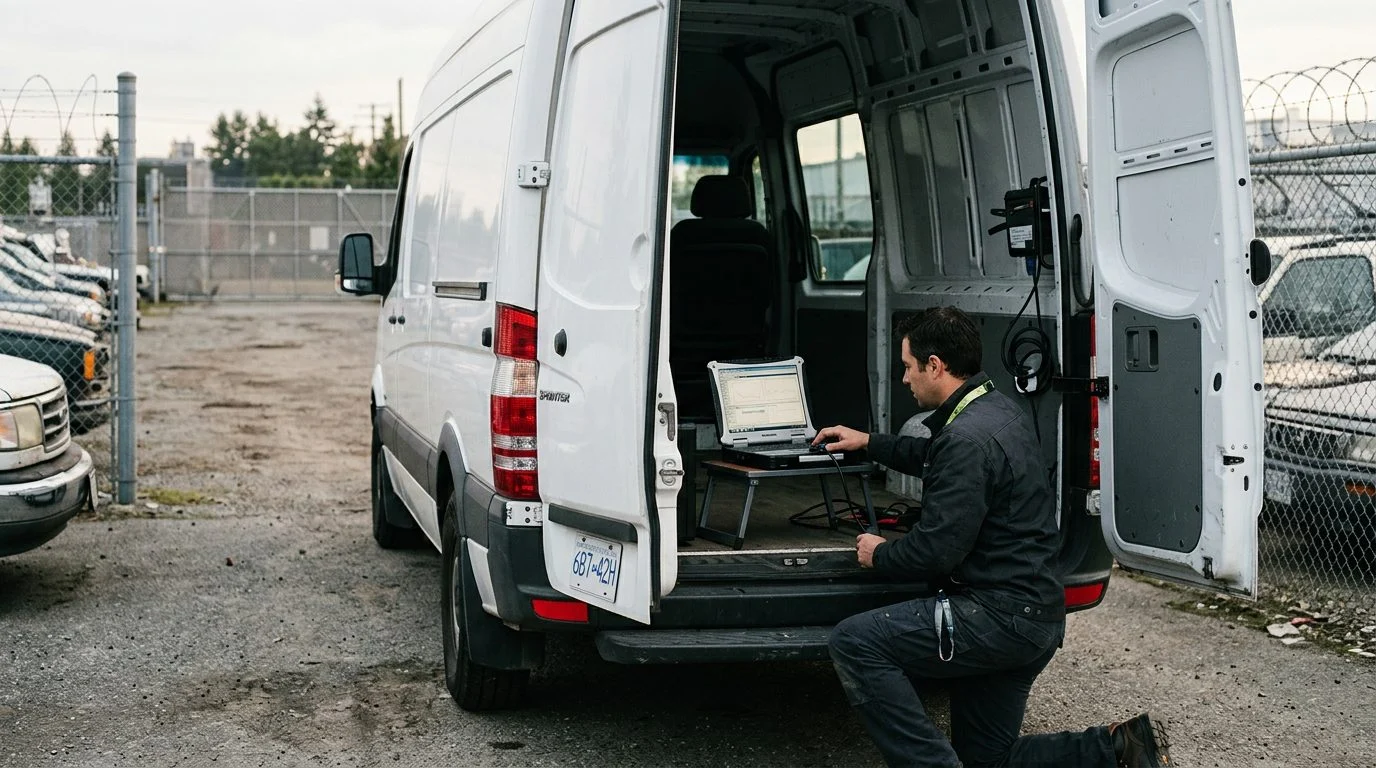
In Louisiana, city police investigate crashes inside city limits. State police or the sheriff’s office handle crashes outside those limits, under La. R.S. 32:398. Crash reports are confidential. The statute says that, upon request, crash reports are made available to the listed persons within seven working days after the crash investigation is complete. Photographs and video can also be requested, and the agency may charge a reasonable fee for copies.
More than one party can share fault. A commercial truck, a rideshare vehicle or a roadway condition may each play a part. Under La. Civ. Code art. 2324, a joint tortfeasor (a person who shares fault for the same harm) is not liable for more than his own degree of fault, unless he conspired with another person to commit an intentional or willful act, in which case he is answerable in solido with that person for the damage caused by that act. Each party answers for its own share, except that a person who conspires with another person to commit an intentional or willful act is answerable in solido with that person for the damage caused by that act.
Early statements can matter later. Under La. R.S. 13:3732, anyone who takes a written or recorded statement from an injured person must furnish a copy. The copy is due within twenty days after written demand by that person or the person’s personal representative. Reports can change as an investigation moves forward, so early conclusions may not stay the same.
How a Partial-Fault Percentage Reduces a Wrongful Death Recovery
Where the person who suffered injury, death, or loss is found less than fifty-one percent at fault, the damages recoverable are reduced in proportion to that share, unless the injury, death, or loss resulted partly from the fault of an intentional tortfeasor, in which case the claim is not reduced (La. Civ. Code art. 2323). The person who died is called the decedent in the law.
Here is a hypothetical example, for illustration only. Suppose total damages are measured at 100 on a made-up scale. No dollars are used here. Suppose the decedent is found 20% at fault. Under La. Civ. Code art. 2323, the reduction is made in proportion to the share of negligence attributed to the person who suffered injury, death, or loss. Under La. Civ. Code art. 2323, a claim is not barred when the share of negligence attributed to the person who suffered injury, death, or loss is less than fifty-one percent.
Now change one fact. Suppose the decedent is found 51% at fault. The same crash, with a different split of fault, leads to a very different result.
Fault percentages come from the evidence. Families often disagree about them. Insurers may argue for a higher share against the decedent. A percentage alone does not show what a case is worth.
Who in the Family May Bring the Claim
The law lists who may bring a wrongful death suit, and the order matters. Under La. Civ. Code art. 2315.2, the surviving spouse and child or children may sue. If the decedent left no spouse or child, the surviving father and mother may sue, but a father or mother who has abandoned the deceased during his minority is deemed not to have survived him. If there is no spouse, child or parent, surviving brothers and sisters may sue. If there is no spouse, child, parent or sibling, surviving grandparents may sue. The article treats adoptive relatives in the same terms.
A related article covers the damages the decedent could have claimed before death. Under La. Civ. Code art. 2315.1, the same classes of survivors hold that right. If no class exists, the succession representative may urge the claim.
Relatives who disagree about fault should still find out where they stand. The order above is the starting point for that conversation.
Insurance Contact and Partial-Fault Arguments After a Fatal Crash
An insurer may argue that the decedent was partly at fault, and that argument can shape its offer. Families often hear from insurers soon after a death.
Auto policies include bodily-injury liability coverage, which relates to injury and death claims. The NAIC auto insurance consumer guidance discusses this coverage. Policy wording controls what is covered, and some policies contain exclusions. The exact language matters.
A call from an insurer is not the same as accepting an offer. An early offer may come before the family knows the full losses from the death. Families can take time to review the facts before they answer. Before you sign anything from an insurer after a fatal crash, it helps to have the facts reviewed first.
Deadlines, Next Steps and Speaking With a New Orleans Lawyer
Louisiana sets a filing deadline for wrongful death claims, so timing matters. Under La. Civ. Code art. 2315.2, the right of action prescribes (runs out) one year from the death or two years from the day the injury or damage is sustained, whichever is longer, except that for medical malpractice actions it prescribes one year from the death of the deceased. Other rules can affect how that time runs. Waiting can also make evidence harder to gather.
Przemek Lubecki is the responsible lawyer for this page. The office is in New Orleans. A case may be referred to, or associated with, other law firms.
Frequently asked questions
Can my family still pursue damages if my loved one was partly at fault in a crash?
Under La. Civ. Code art. 2323, if a person suffers injury, death, or loss partly as the result of his own negligence and partly as a result of the fault of another person or persons, a share of negligence equal to or greater than fifty-one percent means no damages are recoverable, while a share below that reduces recovery in proportion to the share. If the other party is an intentional tortfeasor, the claim for recovery of damages shall not be reduced.
At what fault share is recovery barred?
Under La. Civ. Code art. 2323, where a person suffers injury, death, or loss partly as the result of his own negligence and partly as a result of the fault of another person or persons, a share of negligence equal to or greater than fifty-one percent means the person who suffered injury, death, or loss is not entitled to recover damages.
Who can bring a wrongful death claim in Louisiana?
The surviving spouse and children come first. Parents, siblings and grandparents follow in the order the law sets.
How long does a family have to file?
Under the current text, one year from the death or two years from the injury, whichever is longer.
If your family is facing a fatal crash, fault questions and insurer calls may arrive all at once. You don’t have to sort it out alone. Request a free case evaluation for a free, confidential first consultation, with no obligation to continue.
How We Approach These Cases
Family first
We take time to understand who your loved one was and what your family has lost.
Careful review of the facts
Crash reports, medical records and witness accounts can all bear on how fault is viewed, so we review them closely.
Plain-language answers
We explain the process in terms you can follow, without legal jargon.
Free, confidential first consultation
Your first consultation is free, confidential and comes with no obligation to continue.
Before you speak with an insurance company
Insurance representatives may contact your family soon after a crash. Speaking with them before you understand your options can affect what happens next. You are welcome to call us first.
Questions Families Often Ask
Was my loved one partly to blame?
Shared fault comes up often in crash cases. Every situation depends on its facts, and we review them carefully with you.
Can our family still move forward?
Whether a claim can go forward depends on the facts and how fault is assessed. Przemek Lubecki can look at your specific situation with you.
Where should we start?
Many families begin with a conversation. Call for a free, confidential consultation with no obligation to continue.
Talk with Przemek Lubecki about your family's situation
Related practice areas
- How to File a Wrongful Death Lawsuit in Orleans Parish: A Family’s Step-by-Step Guide