
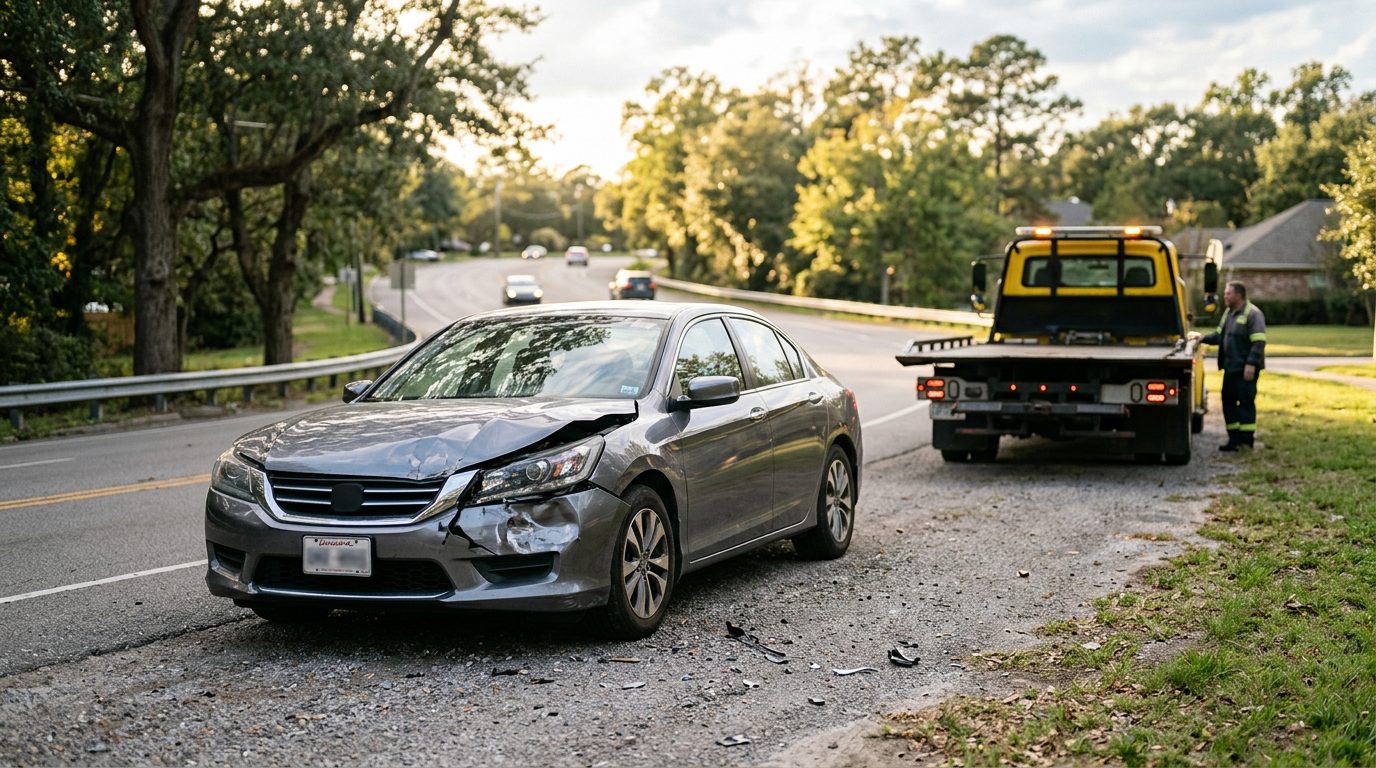
Wrongful Death | New Orleans, Louisiana
Your Family Lost Someone Weeks After a Car Accident. You Shouldn't Have to Sort It Out Alone.
Przemek Lubecki and our team at American Trial Lawyer, LLC help families in New Orleans and across Louisiana understand wrongful death questions that follow a car crash. Our first consultation is free, confidential and without obligation.
By Przemek Lubecki · Published October 31, 2026
If a loved one died weeks after a car accident, the family can often still bring a wrongful death claim in Louisiana. The key question is whether another person’s fault caused the death. Louisiana law sets who may sue, how long they have, and what they can seek. This guide explains those rules in plain language, so you know what to ask about.
Can a Family Still File After a Death Weeks Later?
Yes, in many cases a death that comes weeks after a crash does not by itself end the claim. Louisiana law says suit may be brought by the persons listed in the article when a person dies due to the fault of another. La. Civ. Code art. 2315.2 sets out who may sue and what they may recover.
The filing deadline is one year from the death of the deceased or two years from the day that injury or damage is sustained, whichever is longer, and is covered below. The death itself is not the only question. The law asks whether the fault of another person led to the death.
Medical treatment between the crash and the death is usually a central part of the story. Hospital records, emergency care notes and treatment history show how the injury developed over time. Those records are evidence. They are not a barrier to a claim.
For the full filing steps, read our guide to how to file a wrongful death lawsuit in Orleans Parish.
If a crash has left your family facing a death and hard deadlines, you do not have to sort it out alone; our team can talk through your options in a free, confidential consultation. Talk it through with our team — the first consultation is free, confidential, and carries no obligation.
How Are Wrongful Death and Survival Claims Different?
Under La. Civ. Code art. 2315.2, if a person dies due to the fault of another, suit may be brought by the persons listed in the article to recover damages they sustained as a result of the death. A wrongful death claim covers the survivors’ own losses caused by the death. A survival claim carries forward the injured person’s own damages, meaning the harm they suffered before they died.
Louisiana law treats these claims as distinct. La. Civ. Code art. 2315.1 covers the right to recover damages for injury to a person who was hurt and later died. That includes the period of pain, treatment and suffering between the crash and the death.
This is why a death weeks after a crash often involves both claims. Records from the hospital and the treatment period matter most for the survival claim. The family’s own losses matter for the wrongful death claim.
Families should not assume one claim covers everything the other does. Each claim needs its own proof, so it helps to ask early what each one requires.
Who Is Allowed to File a Wrongful Death Claim in Louisiana?
Louisiana law names the survivors who may bring a wrongful death claim, and it sets an order. The surviving spouse and children come first. If there is no spouse or child, the surviving father and mother, or either of them, may sue, unless a father or mother has abandoned the deceased during his minority, in which case that parent is deemed not to have survived him. Brothers and sisters come next, when there is no spouse, child or parent. Grandparents come last, when no spouse, child, parent or sibling survives. La. Civ. Code art. 2315.2 states this order.
The statute also counts adopted children, parents, siblings and grandparents in these categories. The test is the family relationship the statute describes, but for purposes of this article a father or mother who abandoned the deceased during his minority is deemed not to have survived him.
Here is an example. When a husband dies after a crash, his surviving wife falls in the first group, along with any surviving children. Her position depends on who else survives him. Because the order matters, a family should confirm who qualifies before anyone signs papers.
Each family member’s exact standing turns on who survives the person who died. A lawyer can review that with the family.
What Damages Can a Family Seek?
Families can seek damages for losses tied to the death, and for the injured person’s own harm before death. Louisiana law says damages may include loss of consortium, service and society. Those are recoverable by the same categories of people who could bring a wrongful death claim. La. Civ. Code art. 2315 states this rule.
The injured person’s own damages continue through the survival claim under La. Civ. Code art. 2315.1. That includes the injury and treatment period before death.
Medical bills follow special limits. When a health insurer or Medicare paid a contracted provider, recovery of those bills is limited to the amount actually paid, plus cost sharing. It is not the full amount billed. La. R.S. 9:2800.27 sets this rule.
Fault also matters. Under La. Civ. Code art. 2323, if the injured person shares some fault, damages may be reduced. Under La. Civ. Code art. 2323, if the degree or percentage of negligence attributable to the person suffering injury, death, or loss is equal to or greater than fifty-one percent, that person shall not be entitled to recover damages.
What a family can prove depends on the evidence in its own case. No result or dollar amount can be promised in advance.
How Long Do You Have to File a Louisiana Wrongful Death Claim?
The filing deadline is one year from the death or two years from the injury, whichever is longer. That rule comes from La. Civ. Code art. 2315.2. The survival claim follows the same whichever-is-longer period under art. 2315.1.
For a death that follows a crash by only weeks, the two years counted from the crash is usually the longer period. A one-year count from the death would be shorter in that case.
Medical malpractice survival claims under art. 2315.1 are governed by R.S. 9:5628, while medical malpractice wrongful death claims under art. 2315.2 prescribe one year from the death. That is a different rule from a crash claim, so the type of claim matters.
Louisiana has amended these rules in recent years. Check the dates of the crash, the injury and the death against the current text of the law. A short deadline can end a claim, so the calendar deserves early attention.
Why Does the Deadline Matter So Much?
Acting early protects evidence, which can fade or be lost over time. Crash reports, vehicle information, witness names and medical records all support a claim.
On request, crash reports are made available within seven working days after the crash investigation is complete. A copy may carry a small fee set by statute.
Commercial trucks add more records to the list. Federal rules may require drug and alcohol testing after a truck crash. The Federal Motor Carrier Safety Administration explains when those tests are required. Families in a truck or commercial vehicle case should ask about these records early.
Grief makes all of this harder. Families often handle funeral arrangements, work and children at the same time. A timeline can feel overwhelming in that season. Still, a missed deadline can end a claim no matter how strong the facts are. Writing down dates, names and records now can ease the load later.
Not sure what your next step is?
Talk it through with our team — the first consultation is free, confidential, and carries no obligation.
What If the At-Fault Driver Dies?
A driver’s death does not automatically end a claim. Who can be pursued after a driver dies depends on the circumstances, including the driver’s estate and insurance. Families should not assume the claim is gone without a review.
A succession is the court-supervised process of settling a person’s estate. It is a separate process from a wrongful death claim.
Louisiana law also lets a succession representative urge the injured person’s right to recover damages when no class of survivors exists. La. Civ. Code art. 2315.1 sets that rule for the injured person’s claim.
Whether a roadway, a public body or another party is involved is a separate question. These questions can involve several parties, and they should be reviewed early with a lawyer.
Key Takeaways
A death weeks after a Louisiana crash does not by itself bar a wrongful death claim. Here are the main points to remember:
- Wrongful death and survival claims are separate, and both can apply.
- Louisiana law names who may sue, and it sets an order.
- The filing deadline is one year from death or two years from injury, whichever is longer.
- Crash, medical and vehicle records support both claims.
A case on this topic may be associated with, or referred to, other law firms. American Trial Lawyer, LLC has its office in New Orleans.
Can a family sue if someone died weeks after a car accident in Louisiana?
Often yes. A death weeks after a crash does not by itself end a wrongful death claim under Louisiana law.
How long do you have to file?
Generally, one year from death or two years from injury, whichever is longer. Check the dates early.
Who can file a wrongful death lawsuit in Louisiana?
The surviving spouse and children come first, then parents, siblings and grandparents, depending on who survives.
Talk With a New Orleans Office About Your Family’s Situation
If your family is facing a sudden death after a crash, you do not have to sort out the deadlines and paperwork alone. Many people reading about this are still grieving and are looking into it for someone else. Our team at American Trial Lawyer, LLC can talk through your questions.
To call, dial 855-LUBECKI, or request a free case evaluation. The first consultation is free, confidential and without obligation.
Responsible lawyer: Przemek Lubecki. Office: New Orleans, Louisiana. Licensed to practice law in: Louisiana.
What families often need to gather
Crash and police reports
Records from the crash scene can help show how the collision happened and who was involved.
Medical records
Hospital, emergency and treatment records help connect the injuries from the crash to the time that followed.
A timeline of care
Dates of treatment, hospital stays and changes in health help explain how the injuries progressed.
Family information
Details about who depended on your loved one and how their loss has affected the household.
Questions for a lawyer
Write down your questions now. A confidential conversation can help you understand what applies to your situation.
Who is responsible for this content, and where we are based
Przemek Lubecki is the responsible lawyer for this page. American Trial Lawyer, LLC is based in New Orleans, Louisiana. The firm may associate or refer a case to other law firms. If your matter is associated with or referred to another firm, we will tell you before you decide.
How we can help
Wrongful death after a car crash
We listen to the facts of the crash and the death, and explain the questions a family may face in Louisiana.
Truck and commercial vehicle crashes
Collisions involving large trucks and commercial vehicles often raise additional questions. We can talk through them with you.
Families across the New Orleans metro
We serve families in Orleans Parish, Metairie, Jefferson Parish, Kenner, St. Bernard Parish, Slidell and throughout Louisiana.