
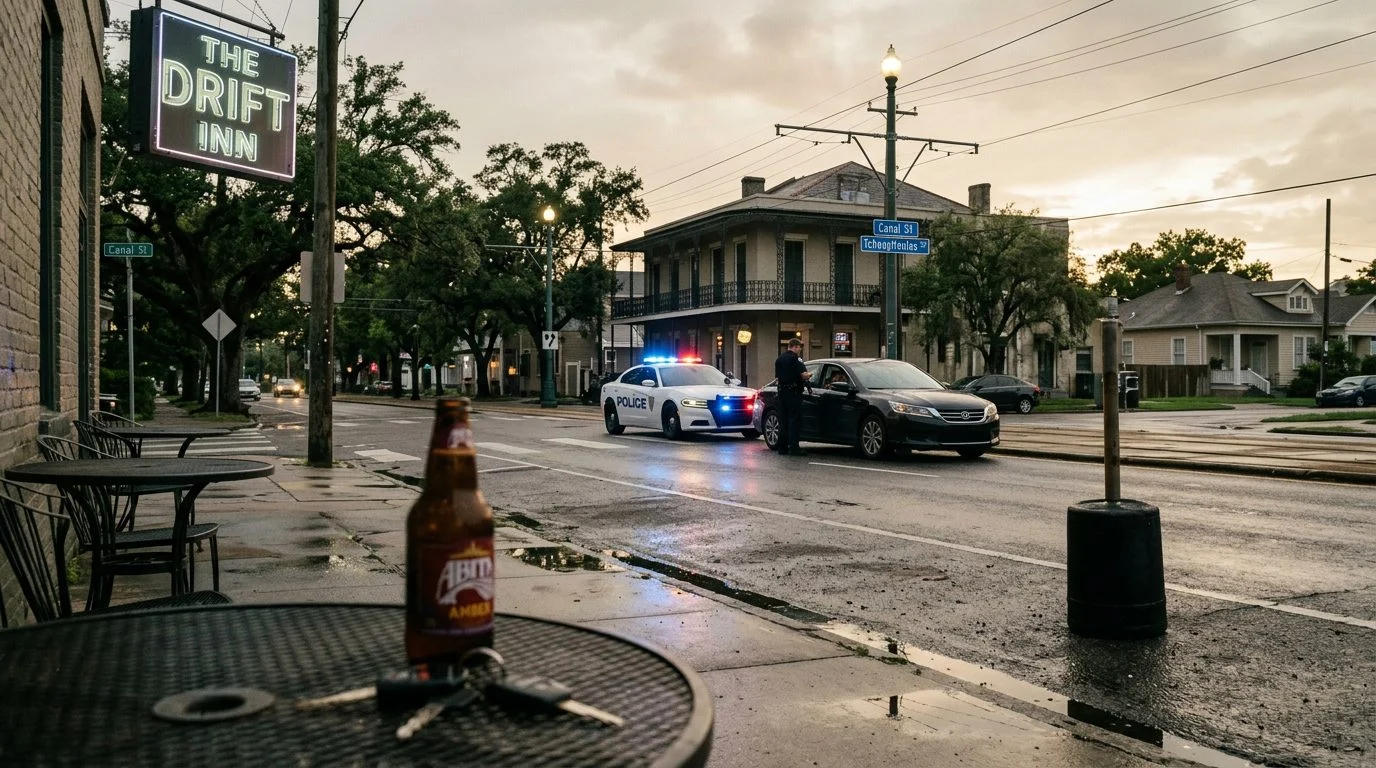
Car Accidents | New Orleans, Louisiana
When a Drunk Driver Leaves a Bar, Who Else Could Be Responsible?
Przemek Lubecki, a trial lawyer with the New Orleans office, explains how Louisiana law treats claims against bars and other alcohol providers after an impaired-driving crash.
By Przemek Lubecki · Published November 17, 2026
If someone you love was hurt or killed by a drunk driver, you may be asking who else is responsible. That question often comes up while you’re handling medical care, work and paperwork.
Under R.S. 9:2800.1, Louisiana treats drinking alcohol, not serving it, as the cause of injuries an intoxicated person causes. A licensed seller or social host who serves an adult of lawful drinking age is generally not liable for injuries suffered off the premises because of that person’s intoxication, but the immunity has exceptions, including service to someone under the lawful drinking age, injuries suffered on the premises, and cases where a person is forced to drink or is falsely told a drink has no alcohol, so the facts still matter. Here is how the rules work, in plain words.
The short answer: can a bar be held responsible?
Usually not, when the driver was an adult the bar served and the crash happened away from the bar. Louisiana’s main statute, La. R.S. 9:2800.1, says the consumption of alcohol, not its sale or service, is the proximate cause of injuries an intoxicated person inflicts. Proximate cause means the legal cause of harm.
The driver’s own conduct is usually where a claim starts. Louisiana law says every person is responsible for damage caused by their negligence, imprudence or want of skill, under La. Civ. Code art. 2316. Negligence means a failure to use reasonable care.
A civil claim asks a court for money damages to make up for harm. A criminal case is separate. It can lead to charges and penalties, but it does not decide a civil claim by itself.
Early questions usually focus on the facts: who was driving, where the drinks were bought, and what happened next. Those facts shape every later step.
If someone you love was hurt in a crash involving alcohol, we're glad to talk through who may be responsible and which questions to ask first. Talk it through with our team — the first consultation is free, confidential, and carries no obligation.
If you’re asking this after a crash that hurt someone you love
Many people ask this question for a spouse, parent, child or friend who was hurt or killed in a crash. You may be handling medical bills, time off work and calls with insurers at the same time. It’s a lot to carry.
Questions about responsibility often come up early, before anyone knows the full picture of the crash. Early answers can help you plan, but they can change as more facts come in.
This page is general information, not legal advice about your situation. Every crash is different, and the same rule can apply in different ways to different facts.
Keep what you can now. Receipts, photos, medical records, text messages and witness names can all be useful later. Write down what you remember while it is still fresh.
How Louisiana law treats bars and the people they serve
Louisiana’s main rule protects bars and their staff from claims for off-premises injuries caused by an adult customer’s intoxication. The rule is found in La. R.S. 9:2800.1.
Louisiana’s rule on injuries caused by an intoxicated person is set out in R.S. 9:2800.1. It refers to laws about businesses that serve alcohol.
Under the statute, a permit holder, or its agent, servant or employee, is not liable for off-premises injuries, including wrongful death, because of a customer’s intoxication. The protection applies when the person served was over the age for the lawful purchase of alcohol.
A minor is different. The protection is written for adults of lawful drinking age, so a case involving someone under that age needs its own review.
The protection also has a limit. It does not cover a person who causes or contributes to the drinking by force, or by falsely saying a drink has no alcohol.
What a claim against a bar would generally have to show
A claim that gets past the main rule would need to fit one of the exceptions. The facts about the service would matter a great deal.
The exceptions are specific. They focus on force and on false statements about alcohol content. Facts that people and lawyers often look at include:
- Whether anyone forced a person to drink
- Whether someone falsely said a drink contained no alcohol
- Tabs, receipts and payment records showing what was served and when
- Video from the bar, if any exists
- Witness accounts of what staff and the customer said and did
Timing matters too. Note when the drinks were served, when the person left, and when the crash happened. Gaps in these records can make the story harder to prove, so write them down early.
Every case depends on its own facts and evidence. The question is what someone did or failed to do, and how that caused the harm.
Who else may be considered after a drunk driving crash
Other people can be part of the picture, but each person’s role turns on the specific facts.
Social hosts have a similar rule. Under La. R.S. 9:2800.1, a social host who serves an adult of lawful drinking age is not liable for off-premises injuries caused by that adult’s intoxication.
The same statute covers a host whose premises were used, without consent and in the host’s absence, for an adult’s drinking.
Insurance is another part of the statute. Subsection (D) says the insurer of the intoxicated person is primarily liable for injuries suffered by third persons.
Whether a car owner who lets someone drive can be part of a claim is a separate question. The answer depends on what happened in that situation. Insurance coverage can also differ from one party to another, so it’s worth identifying each policy early.
Is drunk driving considered negligence?
Yes, in a civil case, driving while impaired is commonly argued as negligence. That means a failure to use reasonable care that causes harm.
Louisiana law can also allow extra damages. Under La. Civ. Code art. 2315.4, exemplary damages may be awarded in addition to general and special damages. That requires proof that the defendant’s intoxication while operating a motor vehicle was a cause in fact of the injuries, and that the defendant acted with wanton or reckless disregard for others’ safety.
Fault can also be shared. Under La. Civ. Code art. 2323, an injured person found 51 percent or more at fault cannot recover damages. A smaller share reduces the recovery in proportion to that person’s fault. The current text of this article took effect January 1, 2026.
A criminal case and a civil claim are separate proceedings. Each one follows its own process.
Not sure what your next step is?
Talk it through with our team — the first consultation is free, confidential, and carries no obligation.
How this fits into a wrongful death claim in Orleans Parish
A wrongful death claim is a civil lawsuit that certain surviving family members may bring when another person’s fault causes a death.
Louisiana law sets an order for who may sue. Under La. Civ. Code art. 2315.2, the surviving spouse and child or children come first. If the deceased left no spouse or child, the surviving father and mother may sue. Then come surviving brothers and sisters, and then grandparents, under the conditions in the same article.
Time limits matter. Under the same article, the right to sue prescribes, meaning the deadline runs out, one year from the death or two years from the day the injury was sustained, whichever is longer; for medical malpractice actions, the right of action granted by this Article prescribes one year from the death of the deceased.
For many other injury claims, La. Civ. Code art. 3493.1 sets a two-year time limit that starts on the day the injury or damage is sustained.
Crash reports can help early. Under La. R.S. 32:398, crash reports are confidential. The parties to the crash, parents or guardians of a minor party, insurers of a party, an insurance support organization under contract to provide claims and underwriting, any healthcare provider that treated a party or their agent, succession representatives, attorneys of the parties, and news-gathering organizations requesting a specific crash report can request them. Upon request, they must be made available within seven working days after the crash investigation is complete.
These Louisiana rules apply statewide, including in Orleans Parish, Jefferson Parish and St. Bernard Parish.
Talking with Przemek Lubecki about your situation
Przemek Lubecki is the responsible lawyer for this page, and the office is in New Orleans. The firm handles truck accidents, car accidents, commercial vehicle accidents, rideshare accidents, motorcycle accidents, wrongful death, brain injury and negligent security matters.
The firm may associate or refer a case to other law firms where that is likely. Other firms remain separate from American Trial Lawyer, LLC.
Can bartenders be held liable for drunk drivers?
Under Louisiana’s main statute, a bar’s staff generally is not liable for off-premises injuries caused by an adult customer’s intoxication. Exceptions include force and false statements about alcohol content.
Is drunk driving considered negligence?
In a civil case, it is commonly argued as negligence. Louisiana can also allow exemplary damages when a driver’s intoxication and reckless disregard caused the injuries.
How long do I have to file a wrongful death claim in Louisiana?
For wrongful death claims under La. Civ. Code art. 2315.2, the right to sue generally prescribes one year from the death or two years from the day the injury was sustained, whichever is longer; for medical malpractice actions, the right of action prescribes one year from the death of the deceased. Because these dates run from specific events, acting early helps.
Can I get a crash report in Louisiana?
Under Louisiana law, several categories of people may request a copy of a crash report, including the parties to the crash and their attorneys, insurers, succession representatives, and healthcare providers that rendered services to a party or their agent. The law also extends access to parents or guardians of a minor party, insurance support organizations under contract to provide claims and underwriting services, and news-gathering organizations requesting documents related to a specific crash (La. R.S. 32:398(I)(1)(a)). Upon request, it must be made available within seven working days after the crash investigation is complete.
If someone you love was hurt or killed and you’re trying to work out who may be responsible, you don’t have to sort through it alone. You can request a free case evaluation or call 855-LUBECKI at our New Orleans office. The first consultation is free, confidential and without obligation to continue.
This page is general information, not legal advice. Reading it does not create an attorney-client relationship. Every case turns on its own facts, and no outcome is promised.
How We Can Help
Speak With Przemek Lubecki
Call 855-LUBECKI to talk through what happened. Office in New Orleans.
Careful Review of the Facts
We look closely at where the drinking happened, what the staff knew, and how the crash unfolded.
Organized Records
We help gather police reports, receipts, and other documents that show the timeline of the night.
Support for Families
When a loved one has died or been seriously hurt, we explain the options in plain language.
Important to Know
Every case depends on its own facts and records. This firm may associate or refer a case to other law firms when that serves the client.
What to Bring to Your Consultation
The Crash Details
Date, time, location, and any police or insurance report you received.
Where the Drinking Happened
Names of the bar or venue, and any receipts, tabs, or card statements from that night.
Medical Records
Hospital, emergency room, and treatment records, including bills and discharge notes.
Questions You Have
Write down what you want to know so we can answer it during the conversation.